Illuminating the challenges of today’s America, Jocelyn Bioh’s play arrives at the Mark Taper Forum as a vibrant, essential work of theater that should not be missed.
By John Lavitt
Los Angeles, CA (The Hollywood Times) 10-07-2025
This production of Jaja’s African Hair Braiding is more than just a workplace comedy. It’s a powerful and humorous look at West African immigrant women discovering dignity and freedom through their work. The play highlights the intersection of truth and laughter in the daily challenges faced by immigrant women, who weave beauty into survival through their craft.
Each lively exchange and braid captures the heat of a Harlem summer and the ongoing uncertainty of being outsiders. Director Whitney White shapes the story into a vibrant, joyful celebration of fierce independence. Moreover, the entire company is fabulous with shining moments of drama, comedy, and celebration by each of the actors.
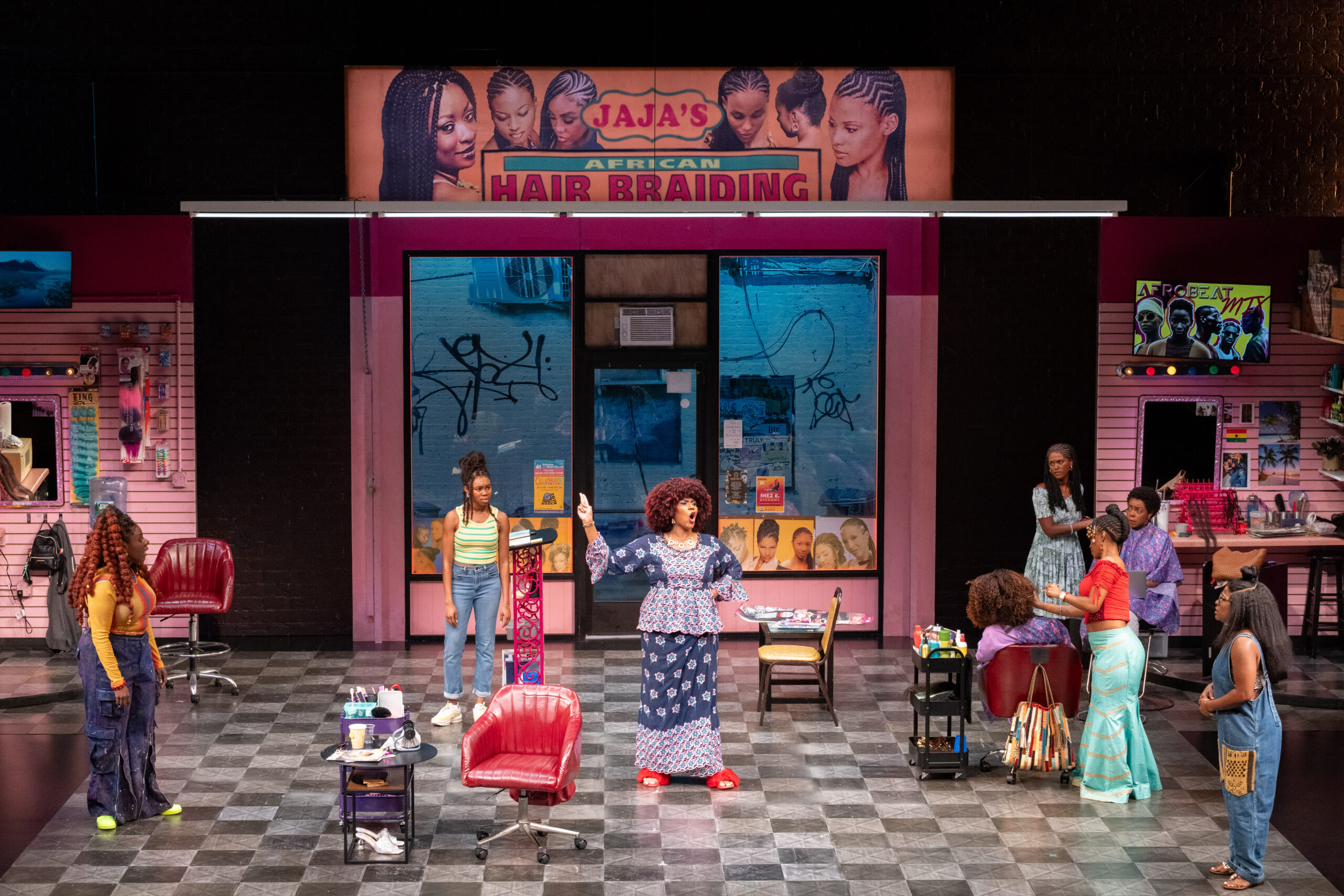
The action happens entirely in Jaja’s lively, colorful salon, a hub of independence. This cozy spot is a beloved neighborhood favorite. The women, including Miriam, Ndidi, and Aminata, work hard from morning till night to create stunning, intricate styles. Their hands move with skill and grace, transforming the locals’ hair into living art. This daily effort gives the women more than just a paycheck; it also provides them with a sense of purpose. Their constant work brings self-sufficiency and a deep, well-earned sense of self-worth.
Beneath the laughter and lively chatter of the shop, a deep current of uncertainty runs through every scene. These independent women live on the edge of legality in the United States. Each joke and burst of gossip masks a deeper, ongoing fear of deportation or an uncertain future. The salon becomes both a much-needed safe space and a daily battleground for these strong, resilient women. In fact, their skilled braiding is a deliberate act of resistance, demonstrating an unstoppable desire to survive and thrive.
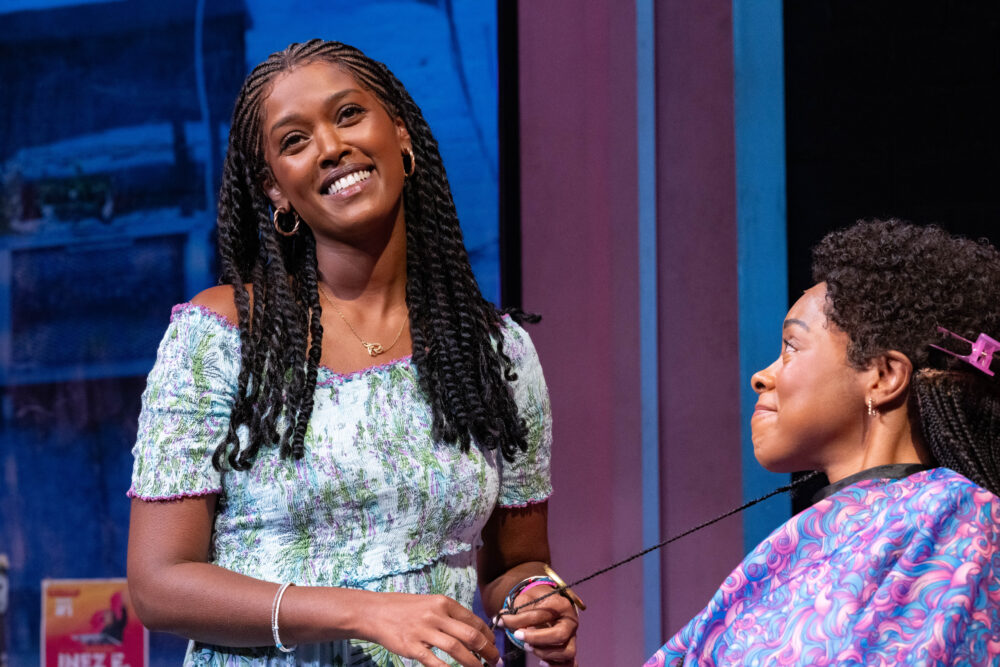
The outstanding cast delivers vivid, memorable performances that bring the play’s emotional truth to life. From the opening moments, Jordan Rice as Marie, Jaja’s bright but undocumented daughter, and Bisserat Tseggai as Miriam, a Sierra Leonean stylist with the heart of a lioness, shine with resilience and humanity throughout the ninety-minute show. Victoire Charles plays Jaja with quiet, undeniable strength and the necessary gravity, her offstage pursuit of citizenship constantly highlighting the high stakes.
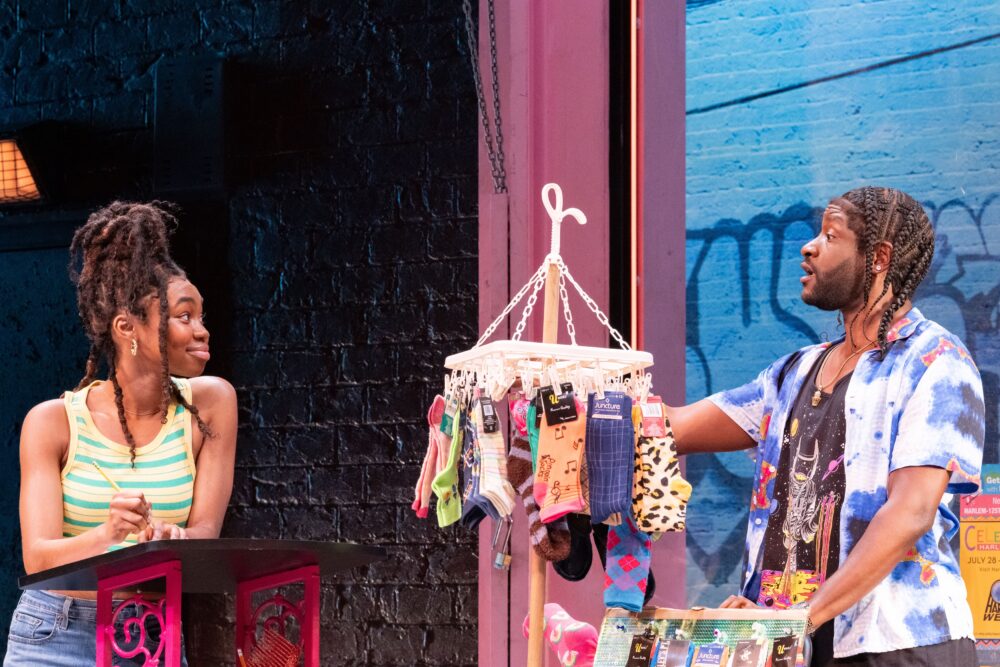
Claudia Logan, as the fiery Bea, adds much of the show’s sharp comedic energy. Her pointed exchanges with Abigail C. Onwunali’s younger, quicker stylist, Ndidi, reveal the heat of competition under pressure. Additionally, Tiffany Renee Johnson’s Aminata balances warmth and strength, defending her integrity with the same energy she puts into her dancing. Michael Oloyede, playing various roles as all the men who enter the salon during the day, impresses with his remarkable versatility.
The production’s artistic elements deepen the play’s themes. Nikiya Mathis’ vibrant hair and wig designs turn the craft into a striking visual statement of cultural pride. Dede Ayite’s bold costumes and David Zinn’s realistic scenic design immerse the audience in a lively, vibrant space. The rhythm of the performance, seamlessly blended with Justin Ellington’s music and Jiyoun Chang’s stunning lighting, weaves a tapestry of everyday chaos and unexpected elegance.
Jaja’s African Hair Braiding is a story of steadfast resistance and essential viewing for Los Angeles theater fans. The show powerfully highlights that behind every immigrant’s struggle lies courage and a significant contribution to the American story. These women, constantly threatened by their legal status, refuse to be defined only by fear.
By the final scene, the audience sees that freedom isn’t just a one-time victory but a daily act of resilience. In Jaja’s salon, beauty becomes a form of resistance, and laughter becomes a means of survival. Their stories remind us that behind every braid is a beating heart.
The applause at the curtain call feels like more than gratitude; it feels like recognition. At the Mark Taper Forum, these women claim their space, their stories, and their joy, showing us all that real freedom is something we build together—one braid at a time.
You need to see this remarkable show.
Photo by Javier Vasquez, Courtesy of the Center Theatre Group