
LOS ANGELES (The Hollywood Times) March 15, 2026 — In 31 Candles, writer-director and star Jonah Feingold crafts a romantic comedy that glows with something deeper than its playful premise suggests. At first glance, the story follows Leo Kadner, a New York director who decides to have the bar mitzvah he never celebrated at thirteen. What unfolds becomes an awakening to identity, memory, and tradition that Leo begins to claim for himself as an adult.
The film opens with playful nostalgia—an AOL-style chat exchange recalling the early days of digital courtship—before quickly leaning into a style of slapstick comedy with layered humor, where the jokes arrive quickly enough that it can be difficult to catch them all in a single sitting. Even the soundtrack signals something intentional. A Tin Pan Alley–style number from the 1920s, with the lyric “It’s getting harder to please you every year,” plays prominently in the opening moments. The song later returns when Eva performs it during an audition seeking agency representation, part of her goal of eventually making her way onto the Broadway stage.
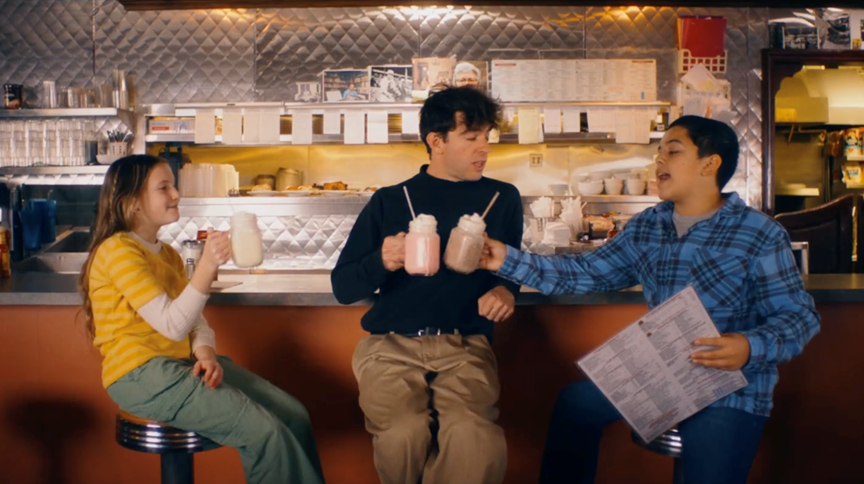
The humor throughout 31 Candles often leans into situational comedy grounded in modern dating culture. Leo navigates a string of encounters that feel distinctly contemporary—most memorably a dinner date who abruptly turns the evening into a live podcast recording. She places a microphone in front of him and begins bantering with her followers.
 After a moment of confusion, Leo simply adjusts, realizing, “Oh… we’re podcasting.” What makes the scene so funny is how his entire demeanor shifts. Rather than becoming awkward, he settles into the exchange with surprising calm as his date continues to offer theatrical commentary, matter-of-factly explaining that in New York, Harlem, and Brooklyn might as well qualify as a long-distance relationship.
Beneath the comedy sits Leo’s more vulnerable reality. Raised “Jew-ish,” culturally connected but not particularly religious, he has little knowledge of Hebrew. His relationships up to this point have been superficial and convenient, and he admits he doesn’t fully understand love. His decision to pursue a bar mitzvah at thirty-one grows out of his lingering love for Eva, his childhood Jewish summer camp crush. Asking her to tutor him for the ceremony becomes his way of reconnecting with her, in hopes that she will fall in love with him. Ironically, their tutoring begins just thirteen weeks before his thirty-first birthday.
As Leo studies with Eva, he begins learning Torah in ways he never experienced growing up. Their time together slowly moves his curiosity beyond romance toward something deeper.
That shift becomes clearer during a visit to the Museum of Jewish Heritage. Walking through exhibits recounting Jewish resilience—including the Warsaw Ghetto Uprising—Leo begins to recognize that Jewish identity carries a depth he had not previously considered. What started as an effort to reconnect with Eva begins expanding into a broader encounter with history, memory, and belonging.
Throughout the film, Leo frequently seeks guidance from his Grammy, whose presence shapes many of his decisions. Their conversations feel warm and insightful. I loved the relationship Leo shares with her. Watching their conversations reminded me of the quiet, unconditional acceptance that often exists between grandparents and grandchildren. It stirred memories of my own Bubbe, whose love still lingers in moments that unexpectedly tighten the throat and warm the heart. Later, a quiet moment at their park bench reframes those conversations, giving them deeper meaning.
Viewed through a therapeutic lens, Leo’s journey touches on questions many people quietly carry. The film opens with him reflecting beside a museum dinosaur skeleton on what it might mean to face extinction without ever having fallen in love—a surprisingly existential starting point for a romantic comedy. From there, the story explores themes of family expectations, grief, identity, and the courage to open oneself to genuine connection.
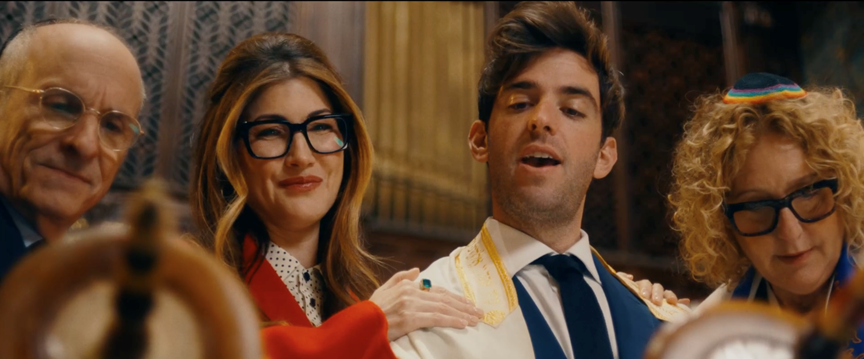
By the time Leo approaches the synagogue for his bar mitzvah, the moment carries the weight of everything he has been wrestling with—love, family expectations, faith, and the lingering desire for his Grammy’s approval.
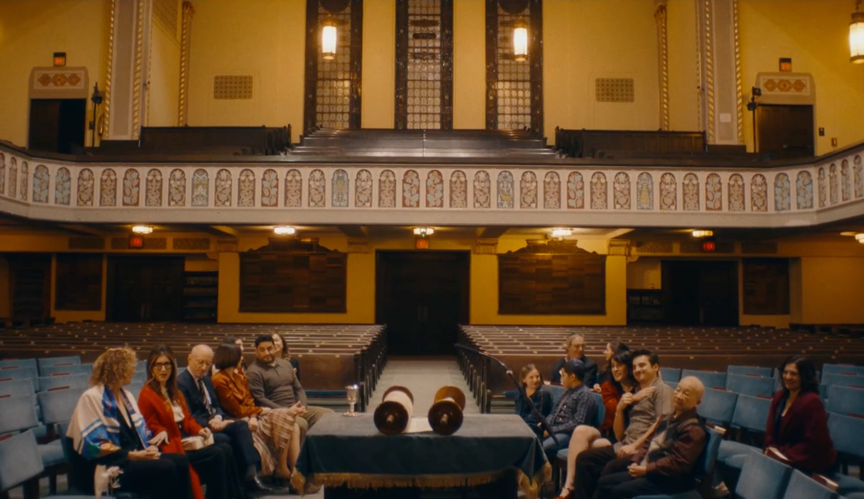
Inside the sanctuary, the scene is strikingly intimate. The synagogue is large and beautiful, and only a small circle of family and friends gathers near the bimah. A female rabbi stands to the side, wearing her tallit, the Torah scrolls waiting patiently. Leo arrives breathless, clutching his kippah, embodying the tension between ritual structure and his own uncertainty.

Leo completes the ceremony and delivers his drasha reflecting on the Parshat Vayetzei, the portion in which Jacob meets Rachel at the well. Leo jokingly calls it a kind of biblical “meet cute,” yet the story quietly mirrors his own longing for connection. Later, during the celebration that follows the leyning, 31 guests gather for Leo’s 31st bar mitzvah.
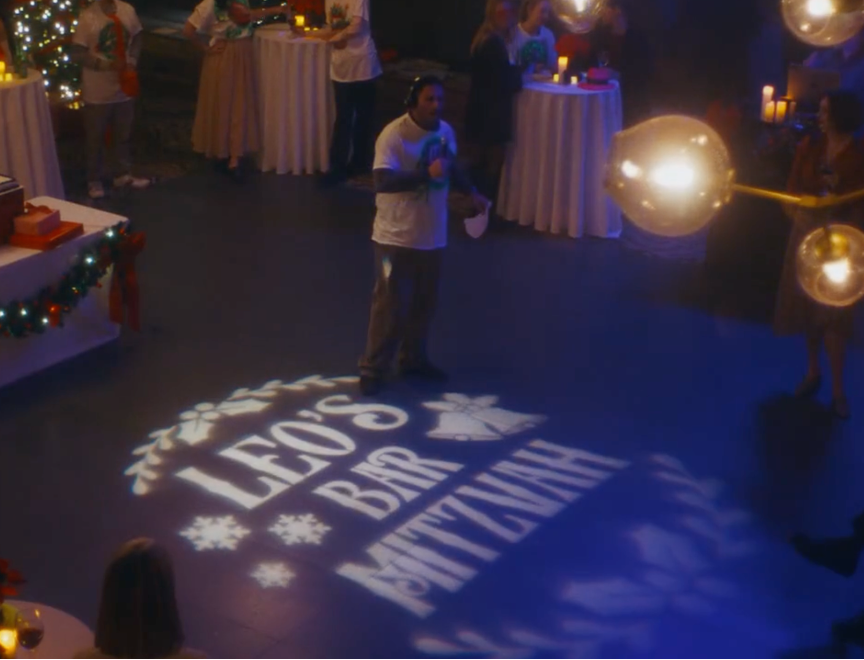
By the film’s close, Leo’s bar mitzvah becomes a genuine arrival. In a final ironic twist, the Christmas-movie director learns that the studio now wants him to direct a Hanukkah film next year. The moment lands as both a joke and a quiet resolution, suggesting that identity sometimes finds its way into our lives just when we are finally ready to claim it.

Like the candles that give the film its name—birthday candles marking another year, Shabbat candles welcoming sacred time, and the quiet yahrzeit candle of remembrance—31 Candles reminds us that identity, love, and memory illuminate our lives in ways we may not fully understand until we are ready to be the light ourselves.