In the last few years, we have lost some of the biggest icons of Los Angeles. In 2020, we lost Kobe Byrant, the face of the Los Angeles Lakers franchise. After that, we lost Vin Scully, the poet laureate of the city. Men like them can be credited with helping make the city what it is today. But now we’ve lost someone who LITERALLY helped build this city.
Frank Gehry, the architect whose work was so identifiable that he guest starred on The Simpsons, is dead at 96. Meaghan Lloyd, chief of staff at Gehry Partners LLP, told the Associated Press that Gehry died in his Santa Monica home after a brief respiratory illness.
Frank Gehry was born in February 1929 in Toronto, Canada. His work—bold, unconventional, and endlessly inventive—remains a source of inspiration for designers and dreamers around the world. Gehry’s early life shaped his later path. After World War II, his family relocated to Los Angeles, where he later recalled experiences of antisemitism that contributed to him changing his surname from Goldberg.
He studied architecture at the University of Southern California in 1954 and expanded his education with urban planning courses at Harvard. He spoke of being influenced by Cubism, Dadaism, Roman architecture, and the paintings of Van Gogh, a synthesis that would crystallize in what many call deconstructivist design—a willingness to challenge conventional form and function.
A hallmark of Gehry’s practice was his hands-on approach. Beyond drawing, he built physical models to explore form and structure, a habit that complemented his embrace of evolving tools. He adopted computer-aided design (CAD) later in his career, blending traditional craft with digital precision to realize his vision. His love for material experimentation—stainless steel, titanium, and wood with Japanese influences—made his buildings instantly recognizable. As he once remarked, “You don’t have to get fancy materials.”

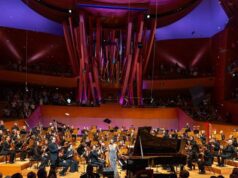
Gehry’s portfolio spans iconic works across the United States and abroad. In the U.S., notable projects include 8 Spruce Street in New York, the Museum of Pop Culture in Seattle, and the Weisman Art Museum in Minneapolis. Internationally, he left his imprint on the Guggenheim Bilbao Museum in Spain, the Serpentine Pavilion in London, the Dancing House in the Czech Republic, and the Vitra Design Museum in Germany. Yet the city of Los Angeles remains a perennial testament to his influence, most vividly through the Grand LA project and the Walt Disney Concert Hall, landmarks that have reshaped the cityscape. As Gehry himself put it, “I didn’t mean to change the city. I just wanted to be part of the city.”

Gehry’s work defied easy labels; while he rejected the term “destructivist,” his architecture consistently broke the rules when glass, concrete, or plywood were involved. Growing up around his grandfather’s hardware store, he learned to build with whatever materials were at hand—an ethos that carried into his celebrated career. His legacy was celebrated when he received the highest honor in architecture, the Pritzker Prize. Jurors of the prize praised Gehry as “refreshingly original and total America.”
Frank Gehry’s buildings invite us to rethink what architecture can be: dynamic, human, and unapologetically imaginative. May his contributions continue to inspire future generations to design with courage and curiosity.