

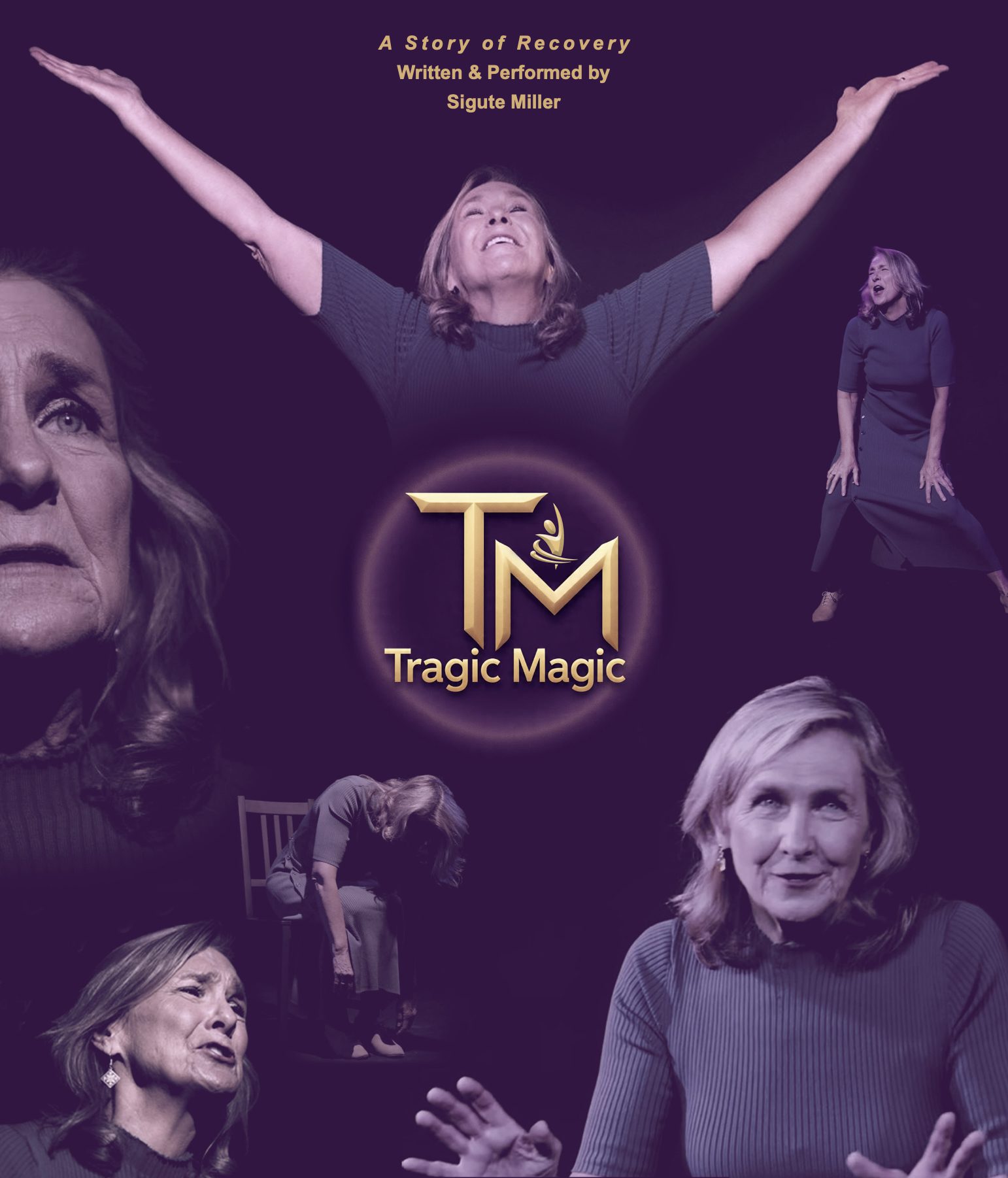
At the Whitefire Theatre’s SoloFest, Sigute Miller’s one-person show, Tragic Magic, offered a harrowing yet redemptive exploration of alcoholism’s dark depths.
By John Lavitt
Sherman Oaks, CA (The Hollywood Times) 10-05-2026
Often, without warning, a solo show can capture the heart and soul of a universal disease that affects so many. In Tragic Magic, written and performed by Lithuanian actress Sigute Miller, the dark evolution and widespread effects of alcoholism as a family disease are revealed in a way that is both heartrending and illuminating.
Developed and directed by Beth Bornstein Dunnington, the one-person show is dedicated to the memory of Sigute’s brother, Algis Mikutaitis, whose alcoholism led directly to his untimely death in his early twenties. The performance shows, in almost painful detail, how alcoholism can tear apart the sacred bonds of family.
At the same time, it celebrates the miracle of recovery and how such profound damage can be repaired over time through making amends. By changing behavioral patterns and living a dedicated life in recovery, longstanding, understandable doubts can be replaced with faith and love.
A wild child from birth, embracing the ’80s ethos of sex, drugs, and rock ’n’ roll, Sigute came to Los Angeles in search of adventure. On the wild streets of Beverly Hills, amid the “bucking broncos” of Rodeo Drive — as she jokingly calls it — she found refuge in upscale retail, where her alcoholism and addiction exploded.
Freebasing in the basement and courting celebrities on the ground floor, her disease of perception told her this was the life. To find out what happened, you will need to seek out the next performance of Sigute’s show.
It is not surprising that the show has been named among the “Best of the Fest” multiple years in a row at the Whitefire Theatre, which hosts the second-largest SoloFest in the United States. A thirty-year member of LA’s Lithuanian theater company Sambūris, Sigute has brought her show back to her homeland and performed it where the family’s story began so many years ago.
Indeed, it was one of those full-circle moments that the miracle of recovery so often brings. A spiritual tree hugger, she found it profound to perform on the soil that gave root to so many of her oldest and most energetic wooden friends.
As the solo show evolves on stage, Sigute’s older daughter remains as omnipresent as her brother. She was present as a child during the darkest days. The exploration of addiction as a family disease proves most harrowing in this context, as the memories do not fade but remain present and terrifying years later.
At the same time, forgiveness proves possible. Sigute reminds us that we, too, can overcome the depths of our worst selves and find the grace of what is sacred within. After all, if her light could turn on again and shine so brightly, then redemption is possible for all who have fallen.


