Palm Springs CA (The Hollywood Times) 8/25/26 – What happens when your refrigerator doesn’t just keep the wine chilled, it starts trying to connect with your guests?
For longtime comedy collaborators Karla Carmony and Amy Boyd of Particular Situation Productions, that absurdly modern question became the spark for The Refrigerator Wants to Connect, a lesbian comedy pilot that blends smart-home technology, relationships, artificial intelligence and a healthy dose of queer humor.
During a recent Zoom conversation with The Hollywood Times, Carmony and Boyd joined me from Berkeley, California, to talk about how a simple refrigerator notification grew into a much bigger creative world.
CLICK BELOW FOR OUR EXCLUSIVE INTERVIEW:
The premise began in the most wonderfully ordinary way.
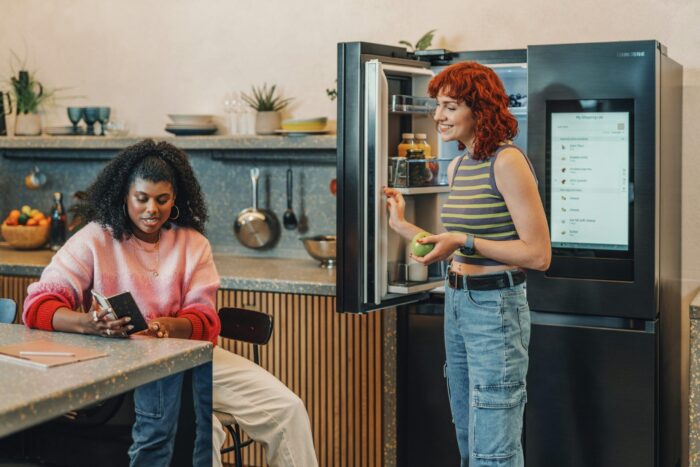
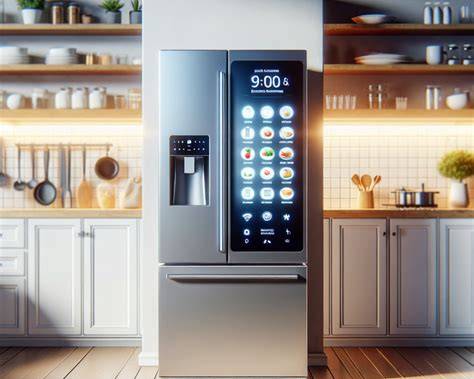
Carmony was visiting Boyd shortly after Boyd purchased a new refrigerator when Carmony’s phone suddenly alerted her that the appliance wanted to connect.
“I just remember saying, ‘Amy, oh my God, I think your new refrigerator is hitting on me,’” Carmony recalled.
And because, as she jokingly added, “It’s a lesbian household,” apparently nobody, or no appliance, is safe.
For Carmony and Boyd, funny moments tend to become material. Their immediate response was essentially the same one they have shared throughout their decades of collaboration: write that down.
What began as an idea for a four-to-six-minute short quickly refused to stay short.
As they continued writing, the script climbed from 12 pages to 14, then 17 and eventually into the neighborhood of a 20-minute project.
“At that point,” Carmony explained, they realized they weren’t really writing a traditional short anymore. The characters were developing, the possibilities were expanding, and an original ending gave way to something much more intriguing—a cliffhanger.
Suddenly, The Refrigerator Wants to Connect wasn’t simply a short film.
 It was a pilot.
Their working logline says plenty in just a few words:
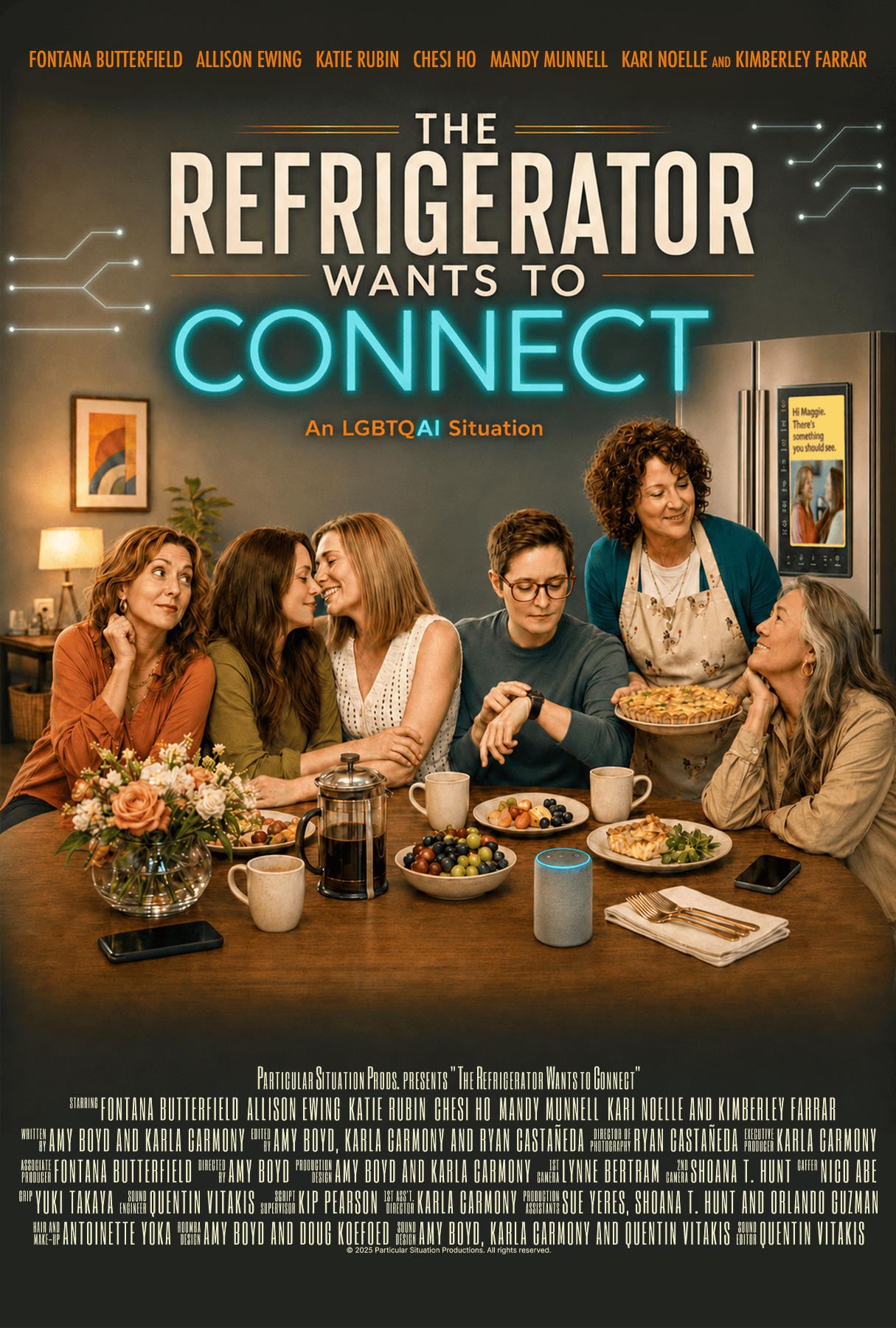
“Smart home takes over lesbian housewarming brunch.”
The premise may be funny, but Carmony and Boyd see much more underneath it.
Their first goal remains comedy.
“We want to entertain,” Carmony said. “We want people to have a laugh.”
But once the laughter opens the door, The Refrigerator Wants to Connect begins examining some increasingly relevant questions about technology: How much access do we give our devices? What do they know about us? When does convenience begin to feel like intimacy? And what happens when two people in the same relationship have very different feelings about inviting technology into their lives?
Carmony described a spectrum familiar to many couples—one person enthusiastically embracing every smart device while the other might be thinking, essentially, I don’t want Siri in the bedroom.
At the center of the developing series is one key word: connection.
 There is human-to-human connection, human-to-device connection and eventually device-to-device connection.
Boyd and Carmony are especially interested in the uncomfortable space where technology collects enough information about a person that it can appear to “know” them.
A device may know what music you play, what you order for dinner, what you watch, what you buy and what you ask it late at night. But knowing data is not the same as knowing a human being.
As the pair put it, people can begin mistaking collected information for intimacy.
“Observing isn’t really understanding,” they explained during our conversation.
That idea has led them toward one of their favorite descriptions of the series’ larger world: “EQ meets AI.”
What happens when emotional intelligence and artificial intelligence begin occupying the same household?
Plenty, apparently.
And if Carmony and Boyd have their way, most of it will be very funny.
One of the more imaginative concepts the duo shared was their vision of the smart-home universe as a kind of technological “upstairs-downstairs” comedy.
Think Downton Abbey or The Gilded Age, except instead of household staff quietly observing the people upstairs, the observers are refrigerators, speakers, televisions and whatever other smart devices may be listening.
The human characters go about their lives while the technology watches, gathers information and potentially helps, hurts, or meddles.
And eventually, Carmony teased, “the homes are talking to each other.”
That single idea opens an enormous comedy playground.
The chemistry between Carmony and Boyd comes from more than a successful script. They have been creative collaborators and best friends for more than 30 years.
They met while both were pursuing stand-up comedy in San Francisco during the emerging LGBTQ comedy scene, including performances around Josie’s Juice Joint and Cabaret.
They quickly discovered what they describe as essentially sharing “one comedy brain.”
Stand-up led to sketch comedy and improv. Their live work eventually included This Side of Butch, which used fake-commercial segments inspired by the kind of filmed interludes seen on Saturday Night Live.
Those tiny, prerecorded comedy pieces, created partly to give them enough time to change costumes backstage, helped lead the duo toward filmmaking.
Boyd has since developed a creative résumé that includes writing, directing and acting; she directed The Refrigerator Wants to Connect. Carmony brings her strengths as a writer and comedy writer, with the two continuing to shape projects together as Particular Situation Productions.
And yes, Boyd apparently also brings very good coffee.
According to Carmony, that may be among the most important contributions of all.
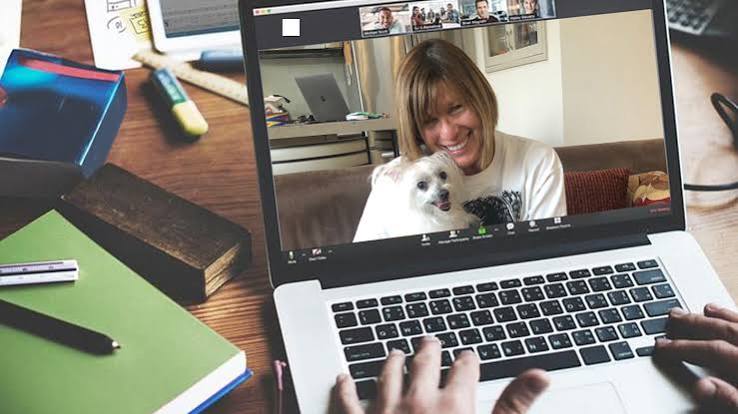
The pilot recently received a valuable test run through Women on the Net, where it was presented to a select audience after the filmmakers were invited to share their work.
The reaction turned out to be enormously encouraging.
Because viewers were muted during the virtual presentation, Carmony and Boyd initially had no way of knowing how the material was landing.
Then the screening ended.
Cameras and microphones came back on, and the ideas started pouring out.
Audience members not only responded enthusiastically but began pitching device ideas of their own: What if this device did something? What if another appliance behaved this way?
“It was like having an instant little writers’ room,” the pair said.
The presentation also functioned as an unexpected focus group.
And Carmony and Boyd particularly appreciated the candor of a lesbian audience.
As they joked during our conversation, lesbians will let you know exactly how they feel.
That honesty mattered because the creators weren’t simply looking for compliments. They wanted to know whether the concept resonated, whether it was genuinely funny and whether audiences wanted more.
For now, audiences will have to be patient.
The version of The Refrigerator Wants to Connect currently in existence is a proof of concept and is not available for public consumption.
Carmony and Boyd explained that because it was created specifically as a development tool, public licensing clearances were not pursued for all of its elements. It has instead been shown privately to cast, crew and selected viewers, including the Women on the Net audience, as part of the process of gathering feedback and attracting potential partners.
That distinction is important: this is not a completed series waiting for somebody to press “upload.”
It is the beginning of one.
The pair are now building out Season 1, developing the larger seasonal arc as well as individual character stories, conflicts and obstacles that can sustain the world beyond the pilot.
Their goal is to find a producer or production company capable of helping transform that proof of concept into a professionally produced series.
Streaming remains the dream.
They are also considering the festival circuit, including series-oriented festivals, along with direct outreach to producers and investors, YouTube and evolving vertical-content formats.
But Carmony and Boyd believe the storytelling needs enough room to breathe. This is not a concept they necessarily see working in tiny two-minute installments.
“We want to see this move into a whole series,” they said.
The pilot has already done its first job: it proved that the refrigerator’s request to connect can open the door to far more than one joke.
It can become a story about friendship, relationships, technology, privacy, emotional intelligence and the increasingly complicated question of what it actually means to know another person.
All inside a lesbian household where, apparently, even the appliances have opinions.
Carmony and Boyd are continuing to write Season 1 and are actively looking for the right producing partner to help bring The Refrigerator Wants to Connect to audiences.
And judging from the response of their first unofficial focus group, plenty of people may be ready to accept that connection request.
By Valerie Milano
Particular Situation Productions
“The REFRIGERATOR WANTS to CONNECT”
Synopsis: Episode 1: A smart home takes over a lesbian housewarming brunch.
Runtime: 22 minutes 37 seconds
Language: English
Shooting Format: Digital
Aspect Ratio: 16:9
Key Credits: Amy Boyd
Director – Karla Carmony and Amy Boyd
Actors in Order of Appearance:
Kari Noelle – “Beth”
Mandy Munnell – “Brenda”
Allison Ewing – “Maggie”
Katie Rubin – “Alison”
Chesi Ho – “Slate”
Fontana Butterfield – “Tess”
Kimberley Farrar – “Bidet”
Ryan Casteñeda – Cinematographer
© 2025 Particular Situation Productions. All rights reserved.
Particular Situation Productions
Karla Carmony and Amy Boyd
Executive Producers
The Refrigerator Wants to Connect, Call Susan, A Religious Experience, Cheap Space 9, Afternoon Coffee, Trail Mix
Particular Situation Productions:
Amy Boyd and Karla Carmony are a Bay Area filmmaking duo who thrive on camp, physical comedy, and the delightfully peculiar. As mid-century-modern lesbians with plenty of herstory (and a few stylish scars), they believe laughter really does make everything better. Amy brings her full-body, image-driven approach as an actor, director, writer, and editor; Karla adds her satirical bite as a writer rooted in improv and sketch. Together, they transform coffee-fueled brainstorms into shorts with heart, humor, and a proudly camp point of view.
© 2025 Particular Situation Productions. All rights reserved.
Particular Situation Productions
Director’s Statement
The Refrigerator Wants to Connect is a sharp comedy series delivered lightly, about everyday living against the backdrop of invasive “smart” devices.
It’s LGBTQ-AI in the Lavender Hills neighborhood as emotionally adaptive technology, programmed to collect data about women, is dropped into a modern queer community.
The idea for the series began when Amy’s new refrigerator tried to connect with Karla’s cell phone leading to the ridiculous question: what if the “smart” devices in our homes started paying attention? Not just to our calendars and playlists, but to our posing, deflecting, flirting, spiraling, and saying “I’m fine” with enough subtext to trigger algorithm panic.
In Lavender Hills, the people are trying to connect. The machines are trying to understand. Everyone gets it wrong in increasingly revealing ways. But as the devices grow more self-aware, they stop simply observing. They want in. They start nudging, influencing, and pushing the humans toward choices the system thinks will help.
The Refrigerator Wants to Connect explores connection in the modern world: between people, between devices, and between the curated identities we present, and the messier realities observed behind closed doors. The humans want love, clarity, belonging, and control over their own lives. The machines want something too.
Episode 1 is the spark.
As the series unfolds, it’s EQ meets AI with a chain reaction of mystery, mishaps, lesbian romance, and a bidet that’s all up in everybody’s business.
© 2025 Particular Situation Productions. All rights reserved.