Los Angeles, CA (The Hollywood Times) 9/14/26 – What happens when your refrigerator doesn’t just keep the wine chilled, it starts trying to connect with your guests?
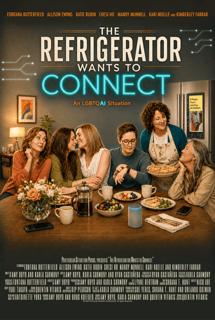
For longtime comedy collaborators Karla Carmony and Amy Boyd of Particular Situation Productions, that very modern question became the spark for The Refrigerator Wants to Connect, a comedy pilot that combines smart-home technology, relationships, artificial intelligence and queer life with a proudly camp point of view.
During a recent Zoom conversation with The Hollywood Times, Carmony and Boyd joined me from Berkeley, California, to talk about how a simple refrigerator notification grew into an entire creative universe.
CLICK BELOW FOR OUR EXCLUSIVE INTERVIEW:
The premise began simply enough.
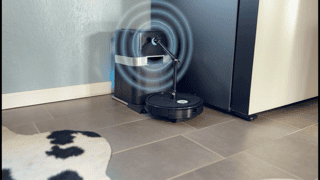
Carmony was visiting Boyd shortly after Boyd purchased a new refrigerator when Carmony’s phone suddenly alerted her that the appliance wanted to connect.
“I just remember saying, ‘Amy, oh my God, I think your new refrigerator is hitting on me,’” Carmony recalled.
For Carmony and Boyd, funny moments tend to become material. Their response was the same one they have shared throughout their decades of collaboration: write that down.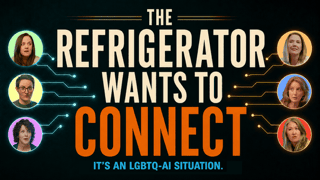
What began as an idea for a four-to-six-minute short quickly refused to stay short.
As they continued writing, the script climbed from 12 pages to 14, then 17 and ultimately became a 22-minute-plus pilot. The characters began developing lives of their own, the possibilities expanded, and the original ending evolved into a cliffhanger.
Suddenly, The Refrigerator Wants to Connect wasn’t simply a short film.
It was the beginning of a series.
The official Episode 1 synopsis gets right to the point:
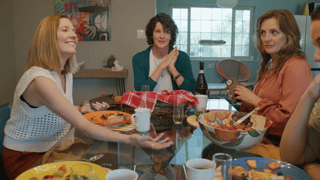
“A smart home takes over a lesbian housewarming brunch.”
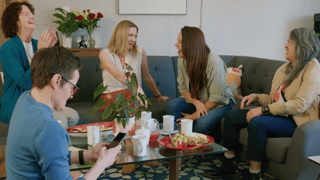 The comedy may begin with a refrigerator, but Carmony and Boyd are using the premise to explore something much larger.
Their director’s statement describes the project as a “sharp comedy series delivered lightly” about everyday life against the increasingly invasive backdrop of smart devices.
They call the world of the series “LGBTQ-AI”, set within the fictional Lavender Hills neighborhood, where emotionally adaptive technology is collecting information about the women whose homes it inhabits.
Their first goal, however, remains laughter.
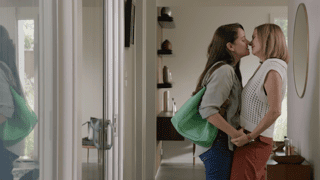 “We want to entertain,” Carmony said during our interview. “We want people to have a laugh.”
From there, the series digs into increasingly relevant questions: How much access do we willingly give technology? What do our devices actually know about us? When does convenience start resembling intimacy? And what happens when artificial intelligence doesn’t simply observe human behavior but begins trying to influence it?
At the center of the series is one crucial word: connection.
There is human-to-human connection, human-to-device connection and, eventually, device-to-device connection.
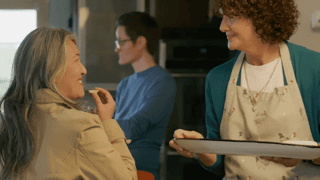 The characters are seeking love, clarity, belonging and some control over their lives. The machines, however, may be developing wants of their own.
As the creators explain in their director’s statement, the humans of Lavender Hills are trying to connect while the machines are trying to understand them.
Everyone gets it wrong.
And that is where much of the comedy begins.
Carmony and Boyd have a particularly memorable shorthand for the larger concept:
“EQ meets AI.”
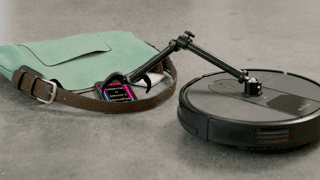 The series explores the collision of emotional intelligence with artificial intelligence—and the ways people may begin confusing data collection with genuine intimacy.
A smart device can learn what you listen to, what you eat, what you watch and what you buy. It can hear conversations, recognize routines and predict preferences.
But observation is not necessarily understanding.
“Observing isn’t really understanding,” the pair explained during our conversation.
Their developing story takes that idea even further.
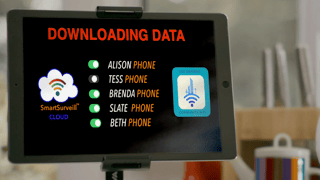 The technology in Lavender Hills begins by observing. Then it starts nudging. Influencing. And eventually pushing people toward choices that the system has decided might be best for them.
As the series expands, Carmony and Boyd envision “a chain reaction of mystery, mishaps, lesbian romance” and, yes, according to their director’s statement, “a bidet that’s all up in everybody’s business.”
One of the more imaginative concepts the duo shared during our interview was their vision of the smart-home world as a technological version of an “upstairs-downstairs” comedy.
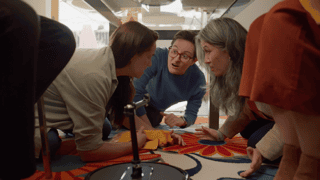 Think Downton Abbey or The Gilded Age, except instead of household staff observing the residents, the observers are refrigerators, televisions, speakers and other smart devices quietly gathering information.
The humans live their lives upstairs.
The technology watches from downstairs.
And eventually, Carmony teased, “the homes are talking to each other.”
That opens a substantial comedy playground, particularly once the devices stop remaining passive observers.
The creative chemistry behind The Refrigerator Wants to Connect has been developing for more than three decades.
 Carmony and Boyd are longtime comedy collaborators and best friends who met while pursuing stand-up comedy in San Francisco during the emerging LGBTQ comedy scene.
They discovered early that they shared what they jokingly describe as “one comedy brain.”
Stand-up led to sketch comedy and improv. Their live work eventually included This Side of Butch, where they began producing short fake-commercial segments to run between live sketches while they changed costumes.
 Those tiny filmed comedy pieces helped launch what would become their filmmaking partnership.
Today, the Bay Area duo describes its creative style as rooted in camp, physical comedy and “the delightfully peculiar.” Boyd brings an image-driven approach as an actor, director, writer and editor, while Carmony brings a writing style grounded in satire, improv and sketch comedy. Together, they turn their coffee-fueled brainstorming sessions into films with humor, heart and a distinctly queer sensibility.
And yes, Boyd apparently also makes excellent coffee.
According to Carmony, that remains a vital part of the creative partnership.
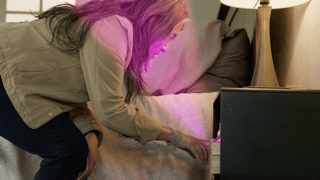 The pilot recently received an important test run through Women on the Net, where it was screened for a select audience after the filmmakers were invited to share the project.
The reaction was enormously encouraging.
Because viewers were muted while watching the virtual screening, Carmony and Boyd initially had no idea how the material was landing.
Then the film ended.
The microphones came on and the ideas began pouring out.
Viewers not only reacted positively but immediately began suggesting additional smart-device possibilities.
“What if this device did this?”
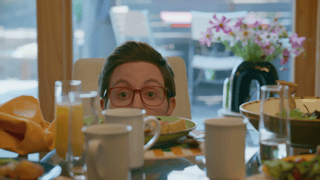 “What if there were a device that did that?”
For Carmony and Boyd, the experience suddenly became something even more valuable than a screening.
“It was like having an instant little writers’ room,” they said.
The presentation effectively became a focus group, giving them a chance to discover whether audiences found the concept funny, whether the characters resonated and, most importantly, whether viewers wanted to see what happened next.
 There is one important distinction for audiences.
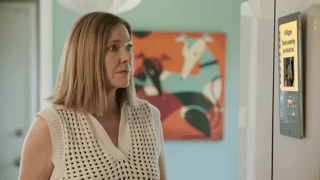
While the series pilot for The Refrigerator Wants to Connect is a proof of concept and not yet available for general public viewing, check out the trailer for a sneak peek!
The filmmakers created the pilot as a development and pitching tool rather than as a completed piece intended for immediate public distribution. Public licensing clearances have therefore not been obtained for all elements contained in that version.
The pilot has instead been shared privately with cast, crew, selected viewers and potential supporters as the team develops the larger series.
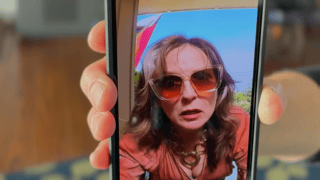 The larger story is already taking shape.
Carmony and Boyd are developing Season 1, including its overall story arc, individual character journeys, conflicts, mysteries and the increasingly unpredictable relationship between Lavender Hills’ human residents and the technology living alongside them.
Their goal is to find a producer or production company that can help take the project from proof of concept to a fully produced series.
Streaming remains the preferred destination, although the filmmakers are also exploring festivals, producer and investor outreach, YouTube and emerging content formats.
For now, Episode 1 is exactly what the creators describe it as:
the spark.
It started when one refrigerator tried to connect with one cell phone.
But in the world Carmony and Boyd are building, that seemingly harmless notification may have opened the door to something much bigger.
A world where people are trying desperately to understand one another.
Machines are trying desperately to understand people.
And somewhere in Lavender Hills, a smart appliance may already know far more than anyone realizes.
By Valerie Milano
The Hollywood Times