The Optimist captivated my heart, left me verklempt, and had me wrestling with ancestral memories while recollecting flashbacks of my own. It deepened my understanding of Holocaust atrocities I thought I already knew, bringing me face-to-face with their devastating human reality. Through it all, I found myself confronting something equally profound: how hope itself can become a tactic for survival.
As a Jew raised with the knowledge of my Polish great-grandfather’s survival of the Holocaust, and his eventual life in Los Angeles, California, I found myself on the edge of my seat following Herbert’s story. There were moments when I had to pause, grab my neck, and feel the tightness in my throat. I was mesmerized by images I had never encountered in such an intimate portrayal of Holocaust history.

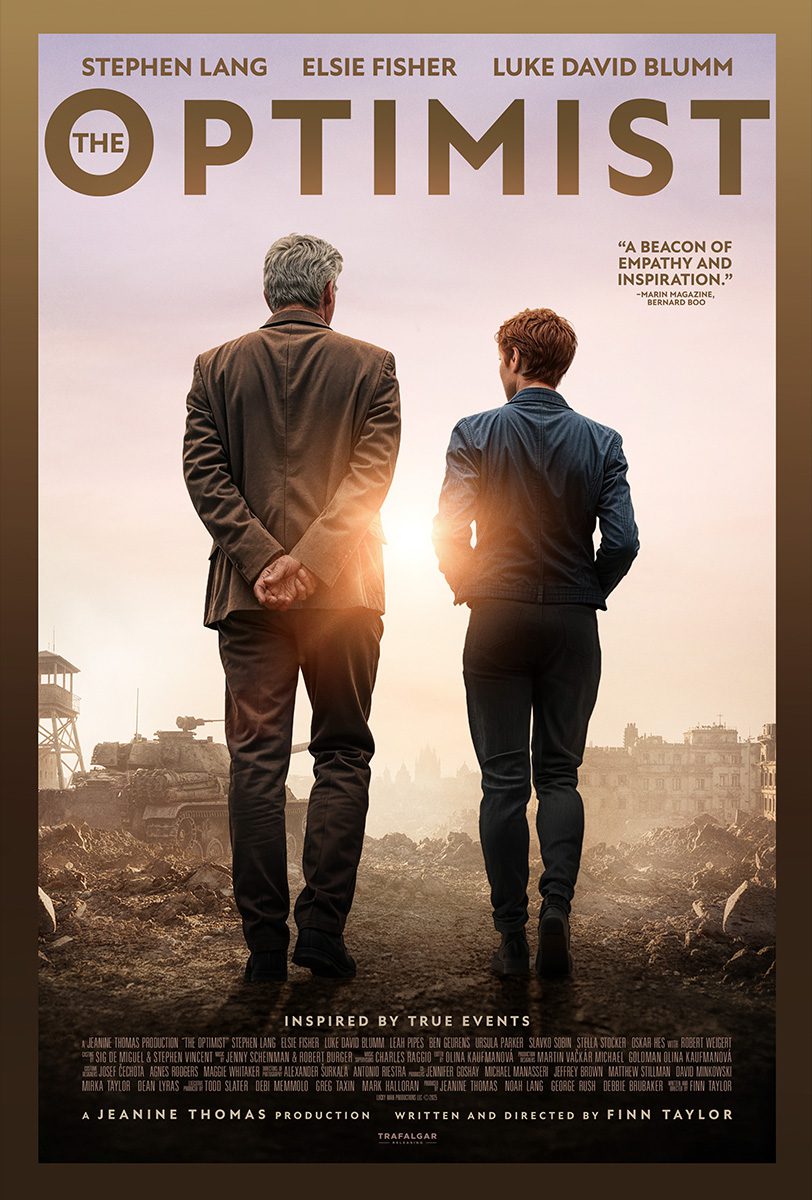
Directed by Finn Taylor and inspired by the life of Holocaust survivor Herbert Heller, The Optimist begins in Marin County, California, in 2004. Rain falls among towering redwoods as an aging Herbert, portrayed by Stephen Lang, receives troubling medical news. Ordinary moments begin triggering fragments of his past. A children’s clothing store, a police officer approaching him, and a fleeting image of blood become pathways into memories he has carried for sixty years.
At a rehabilitation center, Herbert meets Abby, a young woman of modern times who carries her own devastation. Encouraged to record Herbert’s testimony, she gradually earns his trust. As we share an intimate secret with her, we are drawn through imagery, music, and sensation into Herbert’s memories of having a front-row seat to the end of the world.
The film returns to Prague in 1941, where young Herbert lives with his parents, Karel and Melanie, and his older brother, Heinz. Childhood unfolds through ordinary pleasures: a shoe store with an X-ray fitting machine, soccer with neighborhood boys, and a family outing to the circus. As Nazi persecution intensifies, those familiar experiences become increasingly dangerous. Friends reject Herbert because he is Jewish, and the family struggles to understand how quickly their world is changing.
Within the Heller family, we encounter four distinct ways of facing the same terrifying circumstances. Karel, the father, holds tightly to optimism, believing that circumstances will improve and that his family will survive. Melanie, the mother, expresses hope through tenderness, protection, and the love she stitches into her children’s clothing. Heinz, the older brother, confronts the danger with anger, urgency, and a determination to recognize the truth. Young Herbert observes, questions, and tries to understand a world changing before his eyes.
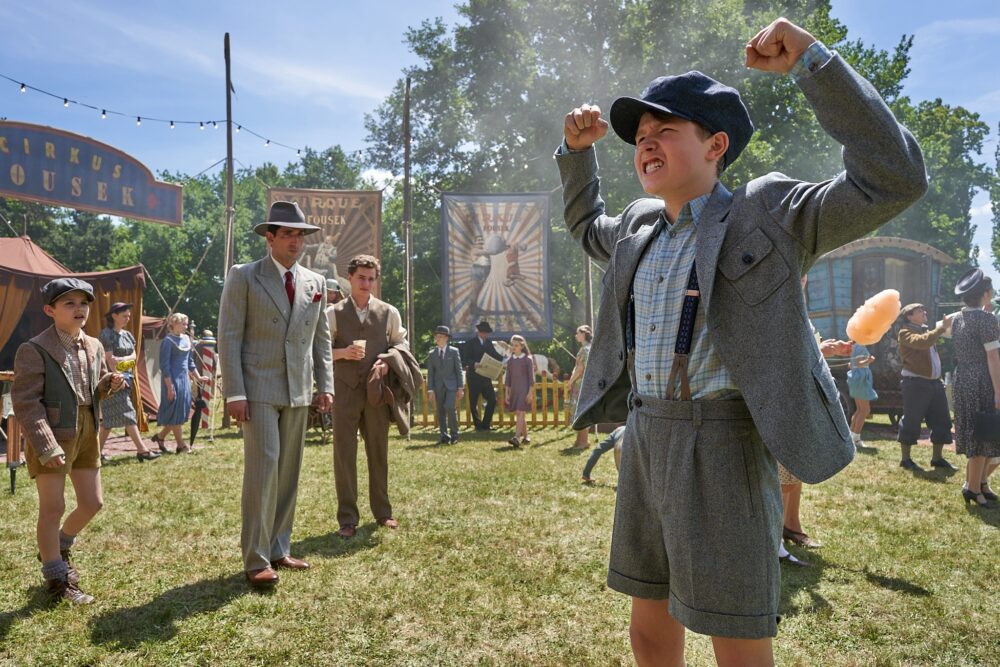
Everybody sees life through different glasses, tasting the world with a different flavor. Hope itself can be implanted just as trauma can, whether through something we experience in our own lifetime or something passed down through generations. Family unification, human connection, and doing something for another person, regardless of the risk, can bring joy to the heart even in the darkest circumstances.
One of the film’s most tender moments involves Melanie sewing yellow Stars of David onto her sons’ clothing with her finest silk thread. She wants them to remember her love whenever they touch the stitches. That thread becomes a recurring symbol, carrying a mother’s affection through the most devastating circumstances.
As Jewish families are forced through Prague’s streets, the film confronts us with images of people ending their lives by jumping from buildings. These scenes brought back the horrifying images of September 11. We carry memories, intrusive thoughts, and experiences that resurface throughout our lives. The longer we live, the more we accumulate. Some are our own, while others reach us through generations of family history.
The film exposes the cruelty of public executions, the humiliation of prisoners, and the collection of human hair for use as a resource by the Nazis. These are details I hesitate to reveal in a review because their impact deserves to be experienced within the film itself. Yet their presence contributes to the extraordinary historical and emotional weight of the storytelling.
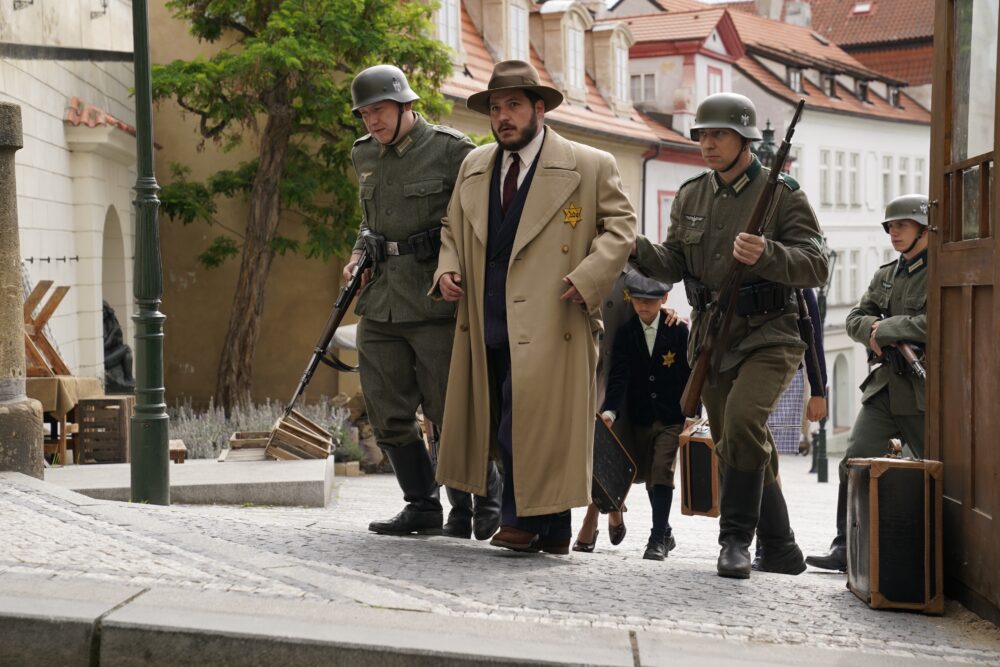
The family’s deportation to Terezín introduces another dimension of Holocaust history. Herbert works in the gardens, searching for ways to bring food to his family. Heinz draws the camp buildings as a birthday gift for his father, demonstrating how artistic expression can preserve affection and connection even under extraordinary deprivation.
Terezín, also known as Theresienstadt, was later exploited by the Nazis as a propaganda showcase. A staged 1944 Red Cross visit presented a carefully manipulated appearance of normalcy, concealing the reality of persecution and deportation. This history makes Karel’s continuing belief that the outside world will intervene especially poignant.
Music becomes another means of sustaining humanity. Herbert recalls that talented prisoners were sometimes permitted to perform. Among the composers imprisoned at Terezín was Viktor Ullmann, who continued creating music before his murder at Auschwitz. Abby’s later interest in his compositions connects Herbert’s memories with the present, offering a powerful way to recollect and engage emotions somatically.
Throughout the film, the musical score and sound design are extraordinary. The shifting strings, muffled voices, sudden silences, and buzzing of an electrified fence create a sensory experience that reaches into the body. At times, I was reminded of the emotional power of Itzhak Perlman’s violin in Schindler’s List. The music seems to enter the spaces where words become difficult.
As the story moves into Auschwitz, the bonds between Herbert and his family become increasingly central. The smallest gestures carry extraordinary meaning: a glance across barbed wire, a mother’s attempt to blow a kiss, a father’s reassurance, and a remembered sewing stitch.
Karel’s optimism remains one of the film’s most affecting elements. Even as his circumstances become increasingly desperate, he continues imagining a future for Herbert, speaking of the children his son might someday have and the life waiting beyond the camps. His determination to comfort Herbert reveals a father’s love struggling to endure under unimaginable cruelty.
At one particularly harrowing moment, Herbert stands near an electrified fence, contemplating the unbearable weight of his circumstances. The buzzing of the wires becomes almost physically overwhelming. Someone calls out to him, reminding him that there is still work to be done. That small intervention carries extraordinary significance. Sometimes another person’s belief that our life still has purpose becomes the very thing that keeps us moving forward.
The film also confronts the physical and psychological consequences of survival. During a winter death march, Herbert must make decisions in conditions of exhaustion, starvation, and bitter cold. His eventual escape unfolds through a series of extraordinary risks, including discovering a sack of clothing, hiding in a haystack, and following enemy troops to find his way toward a railway station.
Even after losing so much, Herbert describes losing his fear as well. Taking a bicycle becomes a small victory, a moment of reclaimed choice after years of captivity that helps him return to Prague.
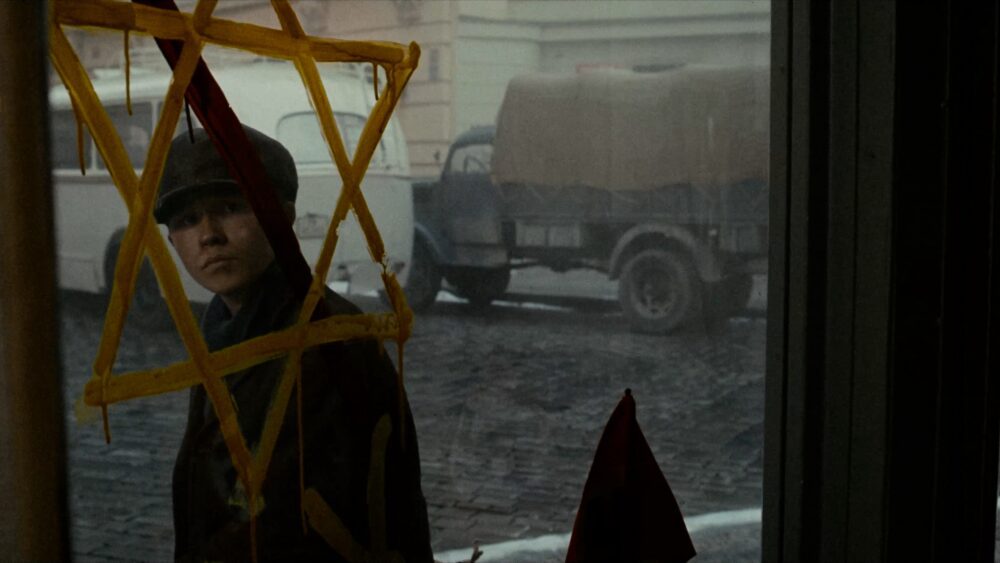
There, an act of kindness from his childhood comes full circle. A woman who once protected him from antisemitic violence had promised that he could always come to her. Years later, that promise becomes a source of refuge. Her willingness to help reinforces one of the film’s most meaningful observations: a single act of compassion can reach far beyond the moment in which it occurs.
Meanwhile, Abby begins expressing Herbert’s memories through drawings. Her sketchbook contains images drawn from his testimony, including the haunting sight of a young boy waving from a building.
Bringing in the concepts of artistic journaling through processing, discovery, and therapeutic response art is something near to my heart, and I was thrilled to see that act become part of the film’s delivery. As a mental health counselor and graduate student of art therapy, I found these scenes particularly meaningful. Creative expression can provide a way to explore experiences that are difficult to communicate through spoken language. Abby’s drawings reveal how deeply Herbert’s story has affected her, while their developing relationship illustrates the importance of connection in processing trauma.
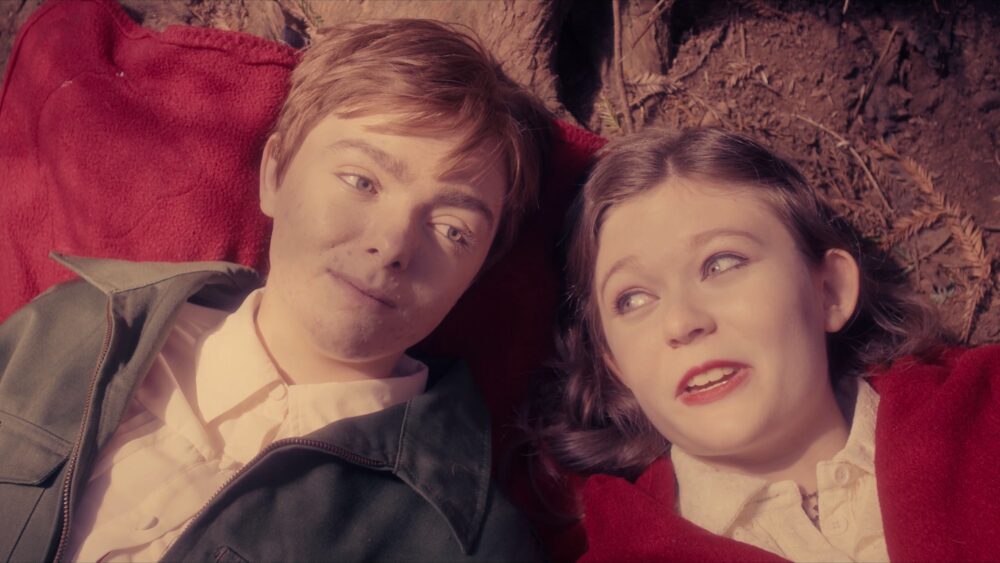
As Abby’s own history emerges, the parallels between their experiences become increasingly apparent. Herbert has spent decades questioning why he survived when so many others did not. Abby also carries the burden of surviving a devastating loss.
When she disappears from a scheduled interview, Herbert searches for her in the forest. Finding her in distress, he reflects on his own survivor’s guilt and reminds her that she has yet to hear his entire story. Their relationship becomes one of reciprocity. Abby’s willingness to listen allows Herbert to begin speaking about memories he has carried in silence, while Herbert’s testimony offers Abby a different perspective on survival.
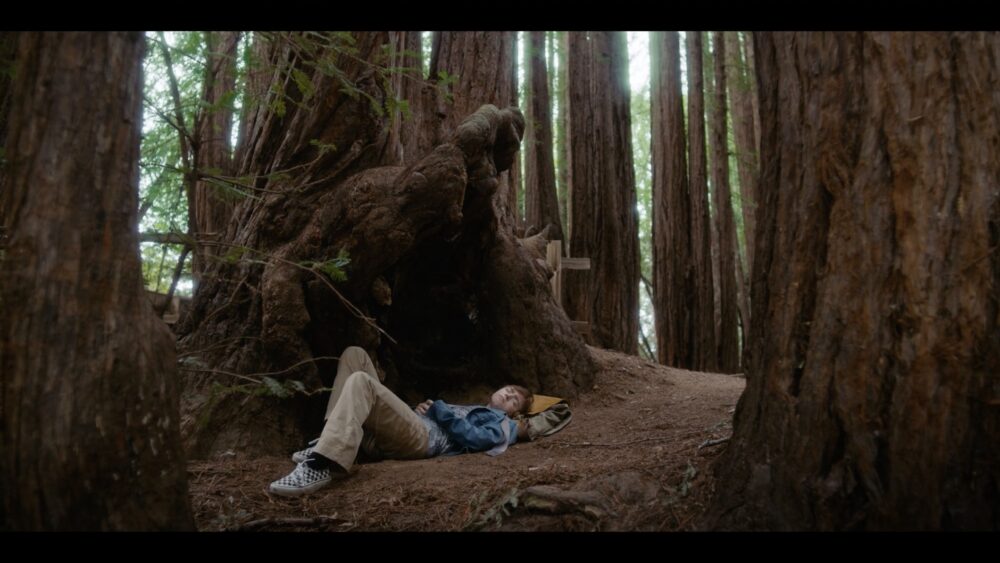
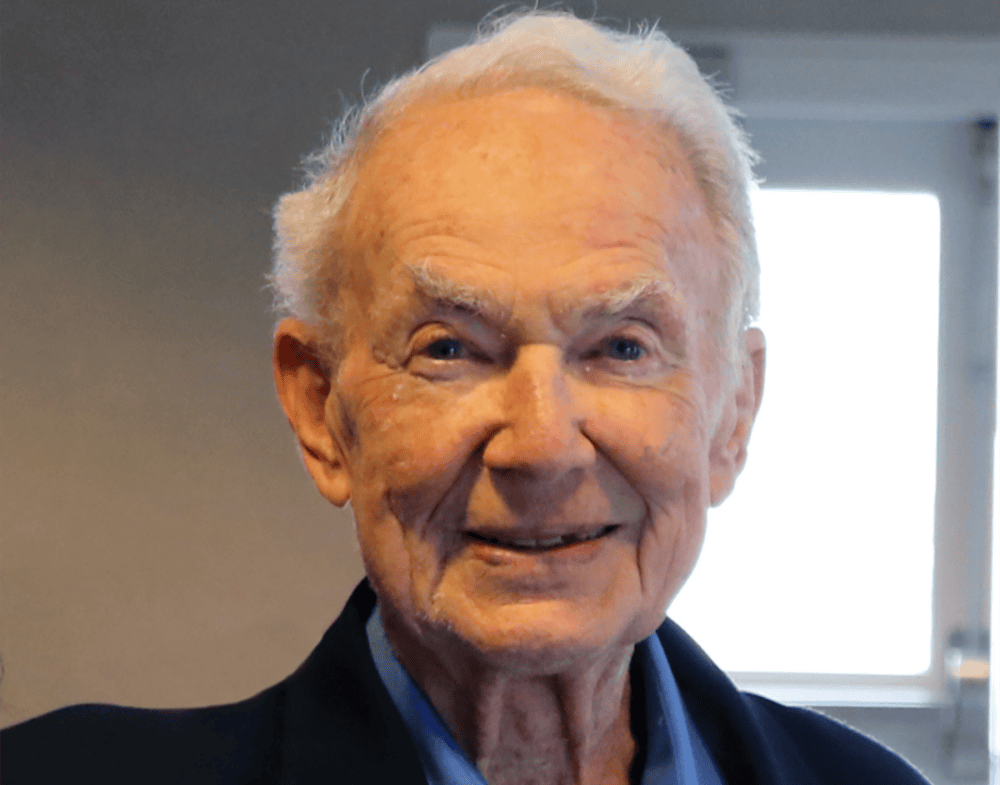
The film’s final passages bring these themes together through archival photographs and glimpses of the real Herbert Heller. We see the smiling young boy he was before the camps and the man who later operated a children’s clothing store in Marin County. The closing images return to the magnificent redwoods, connecting the beginning and ending of his story.
The troubling medical news that initially prompted Herbert to put his affairs in order ultimately leads to a remarkable realization. Having survived another impending threat to his life, he is given more years to share his Holocaust testimony with thousands of students, helping younger generations understand the human reality behind historical events.
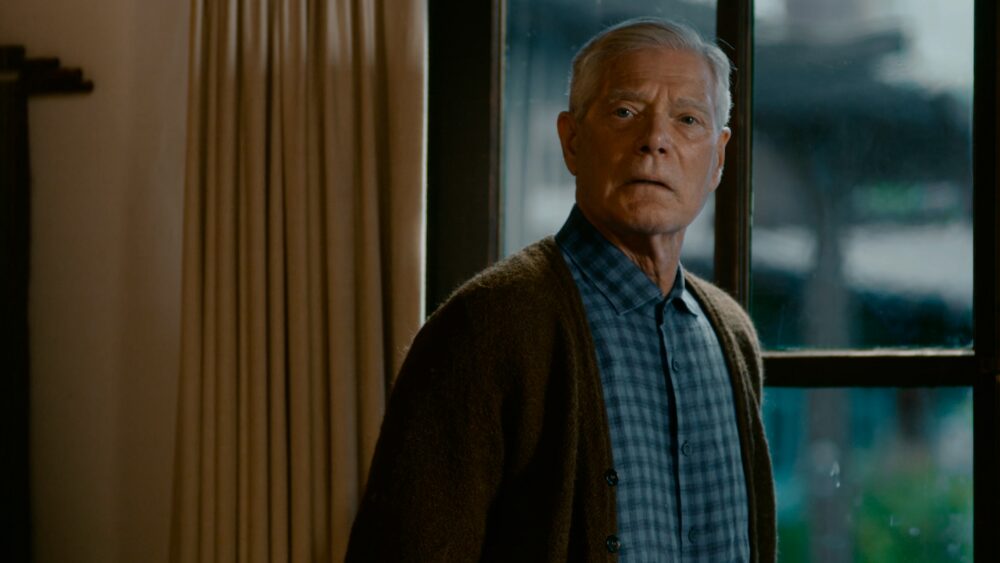
In one of the film’s final moments, a teenage student, overcome with emotion, thanks Herbert for sharing his story, describing it as one of the most meaningful experiences of her high school years. Herbert responds with the gentle reassurance that his story ultimately had a good ending.
And there it is. The Optimist.
I found myself returning to Karel, whose optimism had seemed almost impossible to understand as his family’s world collapsed around him. Melanie stitched love into her children’s clothing, Heinz confronted danger with urgency, and Herbert carried their memories into a lifetime that would eventually touch thousands of others.
Everybody sees life through different glasses, tasting the world with a different flavor. We inherit memories, fears, and sometimes wounds from generations before us. Yet hope can find its way through those same generations, carried in a mother’s tenderness, a father’s reassurance, or the courage of someone willing to risk everything to help another human being.
Perhaps that is what captivated my heart and clogged my throat most profoundly. After witnessing so much devastation, I was left contemplating how something as fragile as hope could become so powerful.
Hope itself can become a tactic for survival. And sometimes, the greatest act of survival is living long enough to give that hope to someone else.
In 2021, Herbert Heller left us at the age of 92. What a blessing that his story remains with us, inspiring generations to carry hope, compassion, and determination forward.
May his name be remembered, may his acts of kindness continue to be a light unto the nations, and may his memory forever be a blessing.
זכרונו לברכה