By Robert St. Martin
Los Angeles, CA (The Hollywood Times) 5/1/25 – Selected as the opening night film at this year’s 20th Anniversary SEEfest – Southeast European Film Festival – took place on Wednesday, April 30, at the Writers Guild in Beverly Hills – was Bogdan Muresanu’s The New Year That Never Came (Romania, 2024). Set in Bucharest in December 1989, the lives of six different people play out in ways that they could have scarce imagined just a few months, weeks or days before thanks to the end of Nicolae Ceauşescu’s rule being far closer to taking place than they thought possible. You probably know this is you can recall the historical facts of that time period in Romania and/or were alive when the totalitarian state he presided over fell. Knowing this would hardly make for an interesting film but what director Bodgan Mursenu does is to follows the lives of multiple protagonists on the verge of a nervous breakdown, as they are making life-changing decisions in December 1989.
 The New Year That Never Came came out of director-scriptwriter Bogdan Muresanu’s The Christmas Gift, a 2018 short film that “evoked a child’s -eye-view of political terror via an inadvertent act of protest. There’s a nod in this feature length film to this by way of a child’s letter to Grandfather Frost (Santa Claus) containing a line about “Uncle Nick” that causes his father, Gelu (portrayed by Adrian Vancica), to comically but also understandably freak out and worry that he will get into big trouble. He finds out that his young son has just mailed a letter to Santa, in which he expresses his wish for “uncle Nick to die” as a Christmas gift for his father, “Uncle Nick” being a nickname the entire country gave to the all-powerful dictator Nicolae Ceauşescu.
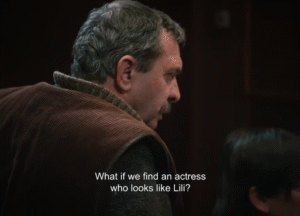
Gelu also happens to work in a TV studio where trouble brews too for TV show producer Stefan (played by Mihai Calin): professionally, by way of a leading actress in his latest production having suddenly defected to the West and consequently needing to be replaced; and, personally, by way of his university student son, Laurentiu (essayed by Andrei Miercure), having plans of his own to flee the country. Gelu appears as well in the lives of Margareta (played by Emilia Dobrin), a disenchanted former Communist Party member, and her cop/secret service officer son, Ionut (portrayed Iulian Postelnicu), who appears cool at work but less so in the presence of the two main women in his life: his wife; and, especially, his mother.
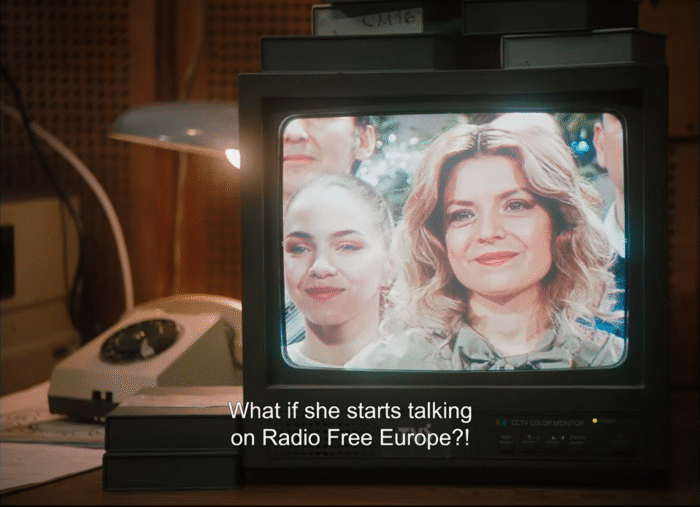
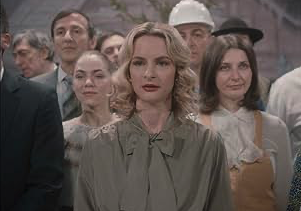 A working class “nobody”, Gelu turns out to be the one of the six characters in focus with the most consequential part to play in The New Year That Never Comes. But Nicoleta Hancu, the actress playing an actress, it is who has the showiest role; as her Florina wears her heart on her sleeve and is, among other things, the most visibly affected by news of a massacre in another Romanian town of Timisoara that seeps into Bucharest by way of such as Radio Free Europe and openly upset about having to do things she finds morally disagreeable, even reprehensible.
Seeing what the often fearful, upset and unhappy characters face and deal with in their fairly mundane lives makes the end scenes of this historical tragicomedy so very satisfying. And if you have lived or are living through similar periods of repression in your home territory, they are downright inspirational as well as wonderfully cathartic.
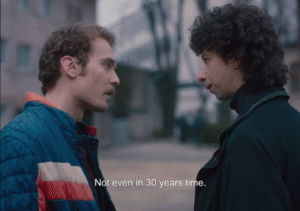 Mureşanu imbues his screenplay with a plethora of absurd moments, which might prompt some viewers, less prone to pondering how “big history” has a habit of crushing personal stories in totalitarian countries, to think of it as a feel-good movie, but the overarching, rarefied atmosphere is the main strength here. Aided by excellent art direction, the director manages to recreate that long-gone Romania where citizens used to retreat into their tiny flats, at once cold and stifling, where they at least had the comfort of finally being honest with themselves and getting their dose of truth and freedom from quietly listening to Radio Free Europe.
This historical drama takes us into the final days of the Socialist Republic of Romania and shows what happens when a fragile society is ruled with an iron fist. Those who endure the initial disorientation and the mid-stream lull will be rewarded with a long, brilliant ending.
 The ending is a real blast. One could already criticize the film for—for all its historical justification—relying on typical, almost clichéd narrative themes and forms: loss of homeland, agony, escape, fear of loss, masquerade. And then, at the climax—hallelujah! —the paragon of the endless loop, which is endlessly quoted, is resorted to in what feels like an endless loop: Maurice Ravel’s Boléro.
“Despite well-documented horrors of the regime that lasted years – Ceaușescu served as the country’s head of state from 1967 to 1989 – Romanians aren’t that critical of it anymore,” argues Mureşanu. “People tend to forget, that’s it. They just remember they used to be young back then and it probably wasn’t ‘that bad.’ But this film should function as a reminder of how bad it really was,” he notes.
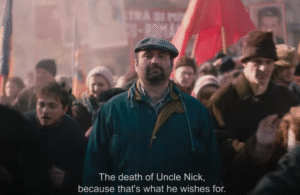 “Personally, I think communism was always doomed to failure. When you try to reach a utopia, you end up with a dystopia instead. Many of these stories are inspired by real life events and most of them actually happened. The circumstances of his protagonists can be dire, but they are also absurd. That’s our Romanian trademark: this absurd, black humor. Just think of [playwright] Ionesco. Maybe it’s our way of coping with the unexpected, also historically. We just make fun of everything.”