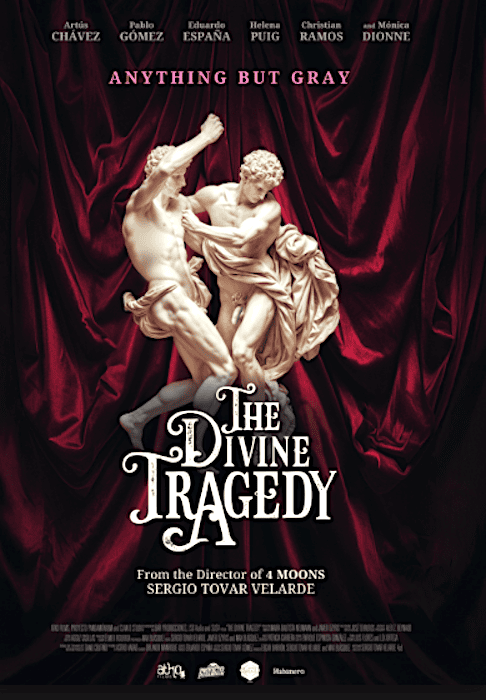
Recently, at the Cinema Diverse Film Festival in Palm Springs, there was a screening of a Mexican comedy entitled The Divine Tragedy, directed by Sergio Tova Valarde. Winner of the Audience Award for Best Feature Film at the Boston LGBT Film Festival 2026, The Divine Tragedy is an ode to gay diversity and brotherly reconciliation set in the upscale barrio of Roma in Mexico City. This comedy has been popular at various film festivals with its satiric edge in depicting two very different gay men – both from the same social class in Mexico City.
The film follows Cristián (Artús Chávez), a refined and somewhat pompous old-fashioned homosexual who is abandoned by his rich husband Carlos (Rosendo Gazpei) after Carlos decides to end the 24-year relationship as married partners. Carlos has an upscale residence in the Mexico City barrio of Roma where the two middle-aged men have lived for a number of years. Cristían was planning a vacation on a cruise ship for the two, when Carlos announces that he is done with Cristían being a homebody who does not work and fusses endlessly over small details like an aging “queen.” When he was younger, Cristían acted in television novellas and had a more interesting life.

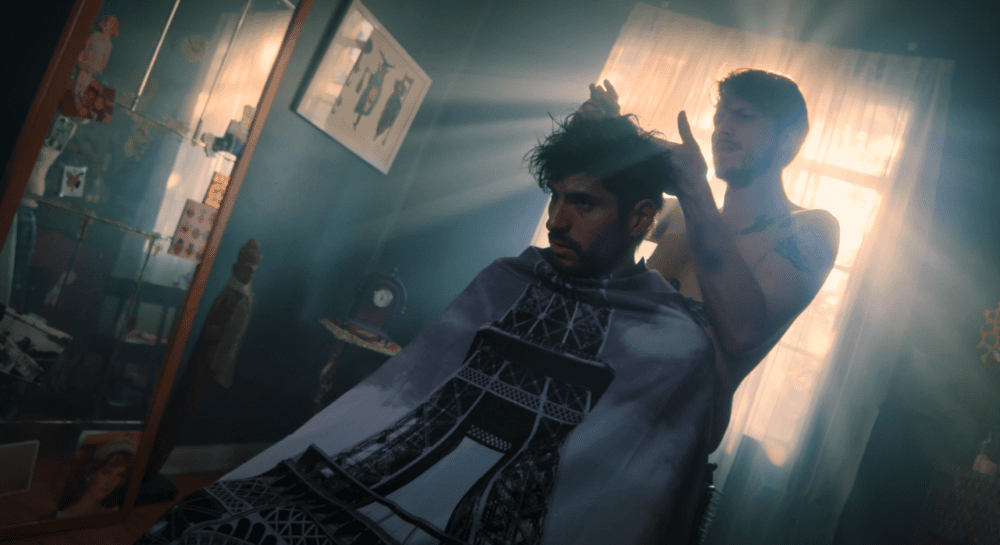
Literally in your face, the film opens with a wild sex scene involving Cristían’s half-brother Roy (Pablo Gómez) who has an apartment in the Roma district and works as a barber in his home. When Cristían is kicked out by his long-time partner Carlos, he tried to check into a hotel but discovers that Carlos has cancelled his credit cards and no longer will answer phone calls from Crístían. So, running out of options, Cristían ends up knocking on the door of the apartment where his half-brother Roy lives. He asks to stay at the apartment and even sleep on the sofa, but Roy has a roommate Jacobito (Eduardo España), who is not happy about being displaced by Cristían who wants Jacobito’s bedroom.
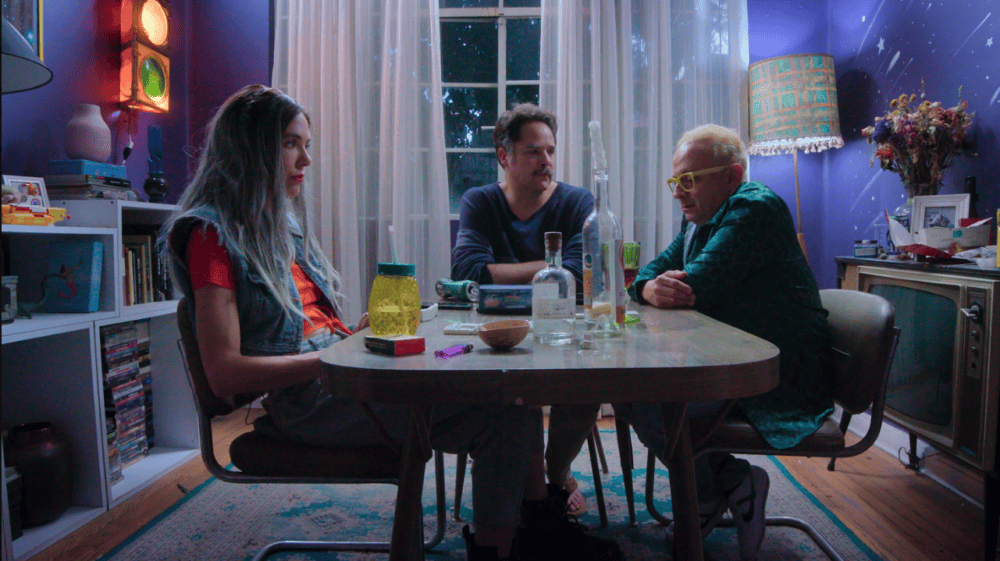
It is Roy’s apartment where most of the scenes happen in this film. From the very beginning of the film, we see Roy having mapcap sex with various men, some of whom come to his apartment for haircuts. Given the caricature of Roy as a sex-obsessed gay man, it is not easy to like him and his hedonistic ways. He is good looking and seems to use his apartment for endless sexual encounters -always sniffing poppers and occasionally cocaine. (I guess that we are to assume that the sexual antics of Roy are tempered by PrEP to prevent HIV.) Cristían is not used to this life-style of Roy, with whom he shares the same father but not the same mother. The ever-amusing Jacobito has no place to go, so he stays on in Roy’s apartment sleeping on the sofa – as Cristían has his belongings boxed and delivered to Roy’s apartment.
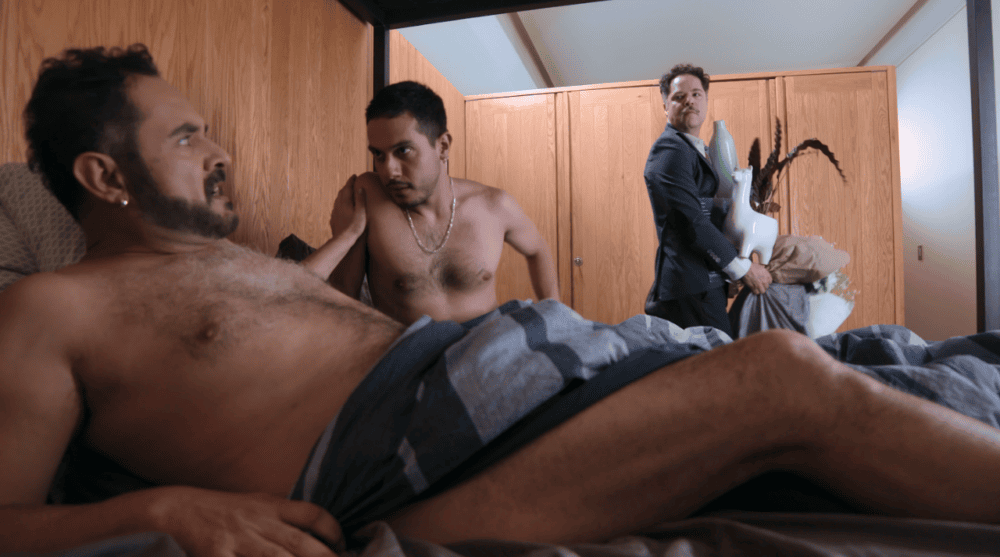
Cristían tends to whine and weep quite a bit and Roy has no patience with that. He is too busy hosting gay orgies in the apartment as Roy tries to figure out what to do with his life now that is technically single and being divorced by his legally-married husband Carlos. Roy has a female friend Maggie (Mónica Dionne) who reads fortunes and predicts the future by the rather unorthodox method of sucking men’s dicks. Roy recommends that she do that for Cristían, who has never been with a woman. It does take much for Maggie to ascertain Cristían’s problems and what he can do to Improve his unhappy situation: She says he needs to return to acting and writing. That is exactly that Cristían will do. After trying to build a resumé of job skills, he can only list organizing gay parties. The satire is rich with implications about how some gay men manage to survive in an exclusively gay environment. His half-brother is no better, as his idea of work is cutting men’s hair and then having sex with as many as possible.
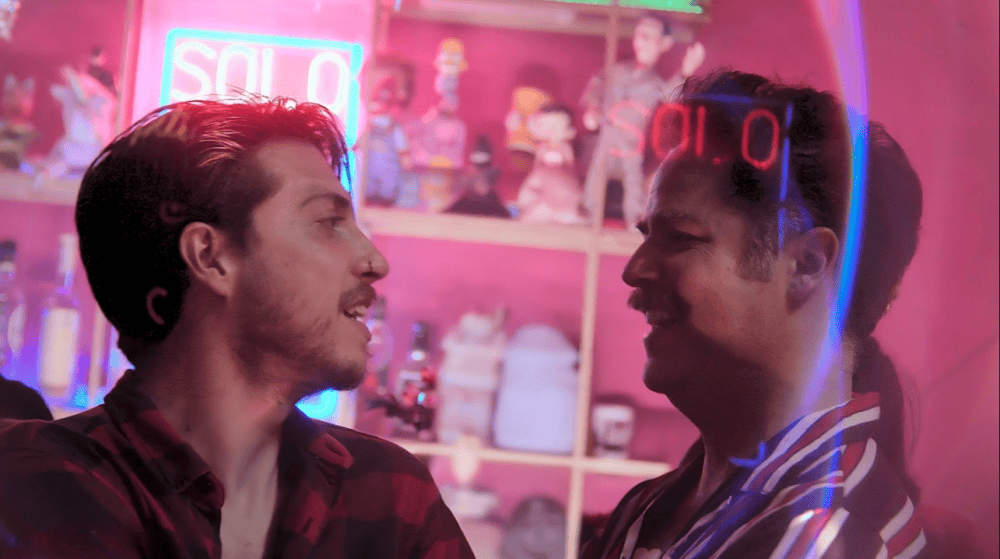
Cristían is a typical obsessive house-cleaner and soon Roy’s apartment is well-organized. Cristían’s fussiness is amusing but also a character trait. Jacobito, who is on the “queeny” side himself warms up to Cristían. Meanwhile Roy tries to push Cristían into being more sociable and up-to-date in his style. It is Jacobito and Maggie who help him. We learn that Roy first met Maggie while selling fancy scented candles – a dubious business, but obviously meant to be a laugh. Since Roy’s circle likes to use and misuse drugs, they are often high on marijuana. Maggie convinces Cristían who likes to cook to start making tasty dessert treats – and they include a little “MJ” in them.
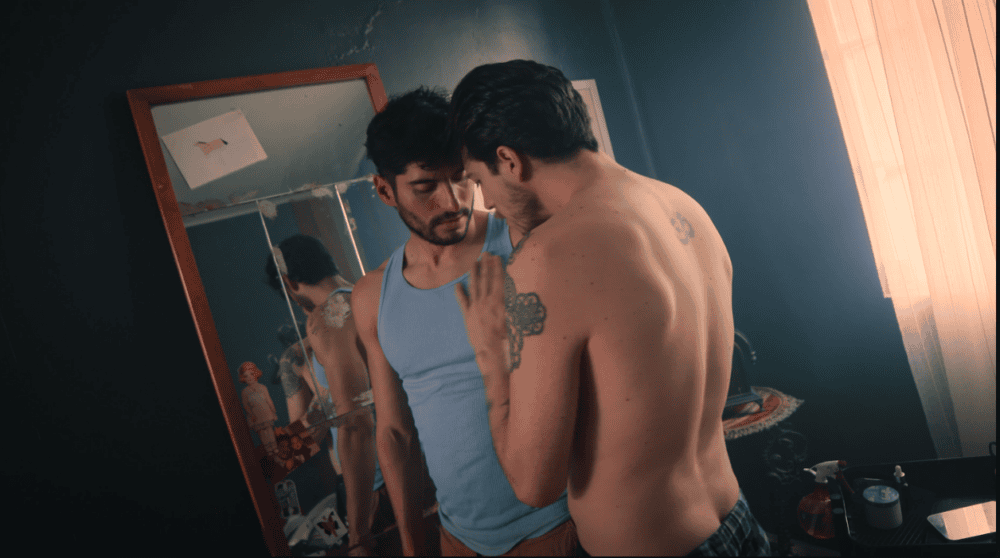
Meanwhile, a good-looking gay man is moving into the apartment above Roy’s place. Estaban (Christian Ramos) is supposedly in Mexico City to live with his partner, but that man never shows up and we discover that the relationship was abusive. Roy befriends Estaban and ends up in bed with him right away, as is his tendency. Estaban is not interested in casual sex with poppers, so he soon explains that his life-style is not that of Roy. These catches Roy off-guard because he has never associated random sex with any love interest.
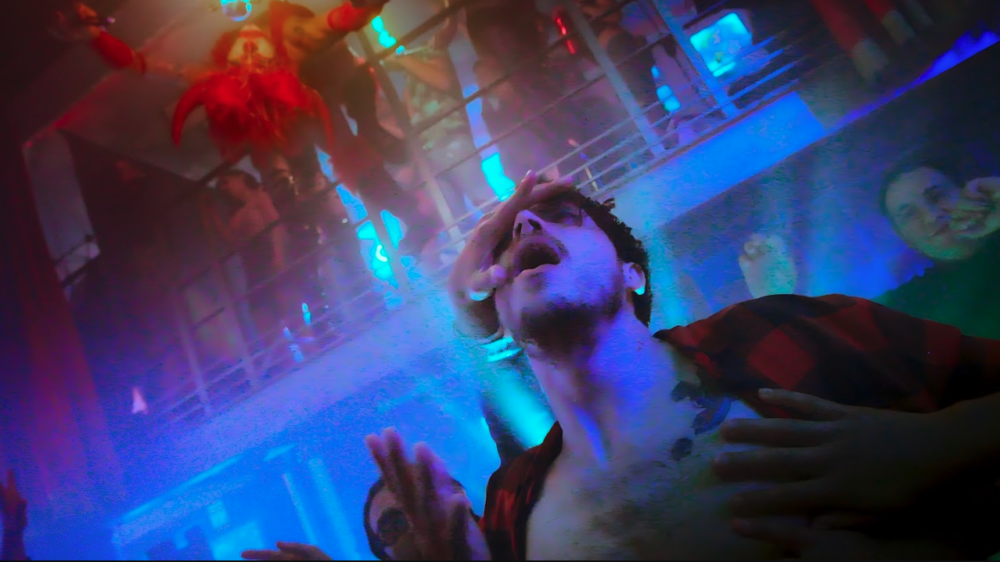
The plot of this madcap tale of two half-brothers takes off from there and the second half of the film reveals more about the characters than their seemingly superficial daily lives. There is discovery and growth – as Cristían begins to find himself as more than a gay husband sitting at home and Roy comes to realize (thanks to Cristían) that casual sex is not all that rewarding. The crazy antics of this group of characters require personal growth, and, in its own way, both Cristían and Roy received a “wake-up call” about their life choices. The people surrounding them – Jacobito, Maggie, Gracía the sculptor (Meteora Fontana), and Roy’s mother Rosita (Helena Puig) – all play a part in this. Estaban who Roy snubbed ends up part of the solution as well.

The Divine Tragedy, obviously playing on the title of Dante’s Divine Comedy, is not really a “tragedy.” Comic melodrama is the proper genre, but the characters in over-reacting and misjudging situations act like things could be “tragic.” This film is an amusing joyride and not meant to taken too seriously. The cast is well-chosen and carry the story along at a steady pace. The cinematography of Alex Z. Reynaud fills the scenes with color and light. Director Sergio Tova Velarde is a successful film director and known for 4 Moons (2014) and The Voice of the Cicadas (2005). The Divine Tragedy is being distributed by Cinephobia Releasing.