By Valerie Milano
Los Angeles, CA (The Hollywood Times) 9/12/25 – When a film manages to make you laugh, cry, and reflect on the meaning of identity in America, it’s safe to say it has struck a chord. Spencer Cohen’s award-winning dramedy The Compatriots does just that, blending humor and poignancy into a story that feels at once intimate and universal.

At its center is Javi (played with layered vulnerability by Rafael Silva), an undocumented immigrant facing deportation. His unlikely ally in the struggle is Hunter (Denis Shepard), a flamboyant but big-hearted friend whose free-spirited antics often clash with Javi’s very real fears. Together, the two embark on a journey that is as much about paperwork and citizenship as it is about belonging, friendship, and the kaleidoscope of identities that make up America.
In my recent conversation with Silva for The Hollywood Times, he described how personal the role was to him: “The big drawing factor for me with The Compatriots is the fact that he is an immigrant. I came to this country when I was nine years old, born in Brazil, and growing up here I went through so many of the same experiences Javi did, bullying, not belonging, struggling with my identity. And being queer added another layer. I was able to see my younger self in this script.” That lived experience radiates on screen. Silva gives Javi both fragility and quiet strength, making his every decision resonate with authenticity.
 The film hinges on the relationship between Javi and Hunter, and the authenticity of their dynamic is undeniable. Silva shared that before filming, he and Shepard spent a day walking Boston’s Freedom Trail, eating Italian subs, and riding the T to build a bond. “Over the course of six hours, we really understood each other’s perspectives as humans and as fellow brothers,” Silva recalled. That connection translates into a friendship onscreen that is messy, heartfelt, and deeply believable.
While The Compatriots tackles weighty subjects, immigration, queer identity, and questions of citizenship, it never feels heavy-handed. Silva credits humor as the bridge between audience and story: “The humor allows us to draw people in, keep their attention, and then really connect with the heart. Life has highs and lows, and when you surround yourself with people with wonderful hearts, you can ride through those waves.” This balance of levity and pathos is what makes the film shine. It never shies away from pain, but it reminds us that laughter is often part of survival.
The release of The Compatriots coincides with Citizen’s Day in the United States, something Silva found deeply meaningful. “In Portuguese and Spanish, ‘compatriots’ is part of everyday language, it means we’re from the same country, we’re neighbors. Maybe we won’t see everything eye to eye, but at the end of the day, we are here together. That’s what it means to be a citizen.” The film’s title, therefore, feels less like a label and more like a call to unity in a divided world.
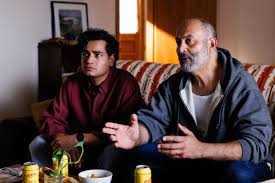 Silva has worked on large-scale productions such as Little Women and Don’t Look Up, but he found something special in The Compatriots: “It was intimate. Smaller, yes, but everything was there to tell a compelling story. And Spencer Cohen gave us so much liberty and space, so much improv came into play. It felt like a melting pot, just like America itself.” That intimacy radiates on screen, making The Compatriots feel personal while speaking to a larger cultural moment.
With heartfelt performances, sharp writing, and a message that could not be timelier, The Compatriots is more than just a Friday night watch. It’s a conversation starter. As Silva told me, “Hopefully this can be an icebreaker for people, to talk about what it means to be a citizen, what it means to be a compatriot. We need this film right now with everything that’s going on.” He’s right. And in the end, The Compatriots reminds us that while our stories may differ, our humanity is shared. That is the true power of cinema.
Enjoy our interview with Silva discussing more about the film here: