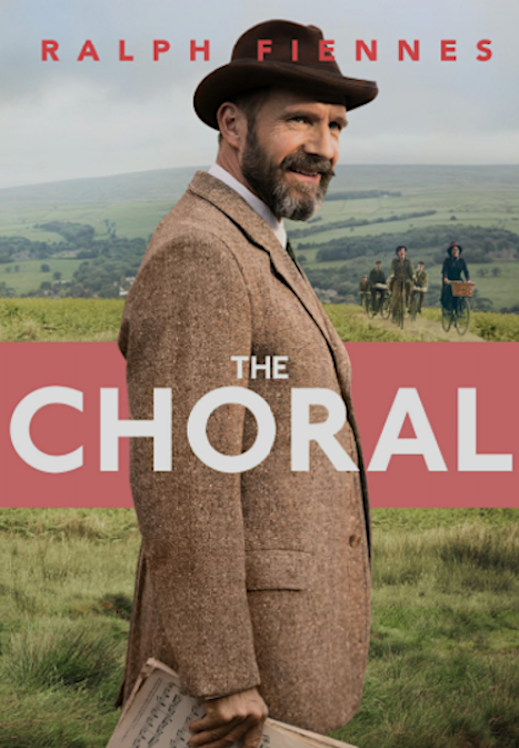
One crowd-pleasing film at this year’s Palm Springs International Film Feature is The Choral, written by English playwright Alan Bennett and directed by Nicholas Hytner. The Choral is a quiet and consistent pleasure: An unsentimental but deeply felt drama which subcontracts actual passion to the music of Elgar and leaves us with a heartbeat of wit, poignancy and common sense. Set in 1916 during World War I, music itself mysteriously exalts and redeems the community of this English town. As war rages on the Western Front, the Choral Society in Ramsden, Yorkshire has lost most of its men to the army.
The Choral’s ambitious committee, headed by factory owner Mr. Fyton (Mark Addy) is determined to press ahead, and decides to recruit local young males to swell their ranks. They must also engage a new chorus master, and despite their suspicions that he has something to hide, their best bet seems to be Dr. Henry Guthrie (Ralph Fiennes) – driven, uncompromising, and recently returned from a career in Germany.
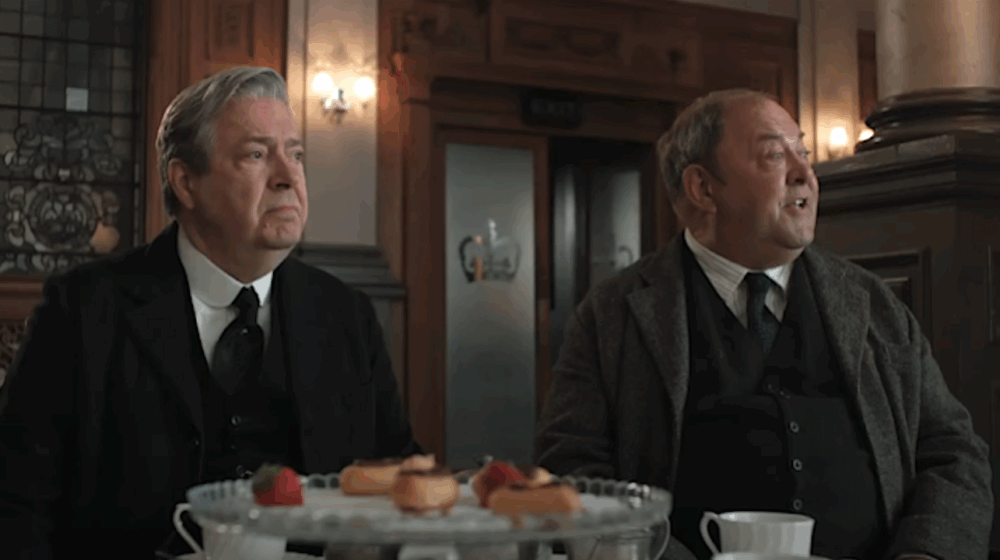
As conscription papers start to arrive, the whole community discovers that the best response to the chaos that is laying waste to their lives is to make music together. The film is about men in a fictional Yorkshire town during the First World War who are either too old or too young to fight, and the women who have to deal with the menfolk’s repressed emotions and their own.
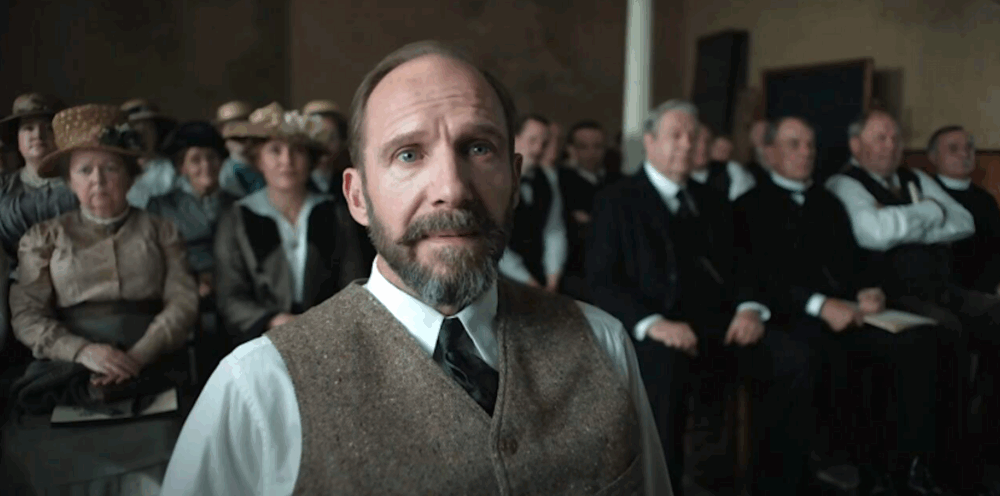
The place is upended by the arrival of Dr Guthrie (Ralph Fiennes) who is to be the choirmaster, directing the music society’s annual production; he scandalizes some with the fact that he once lived in Germany and has a scholar’s love of that country’s literature and music – as well as the fact that he is a bachelor who had a close friendship with another young man now serving overseas. That aspect is left understated, but does function as a back story that is left mostly untouched.
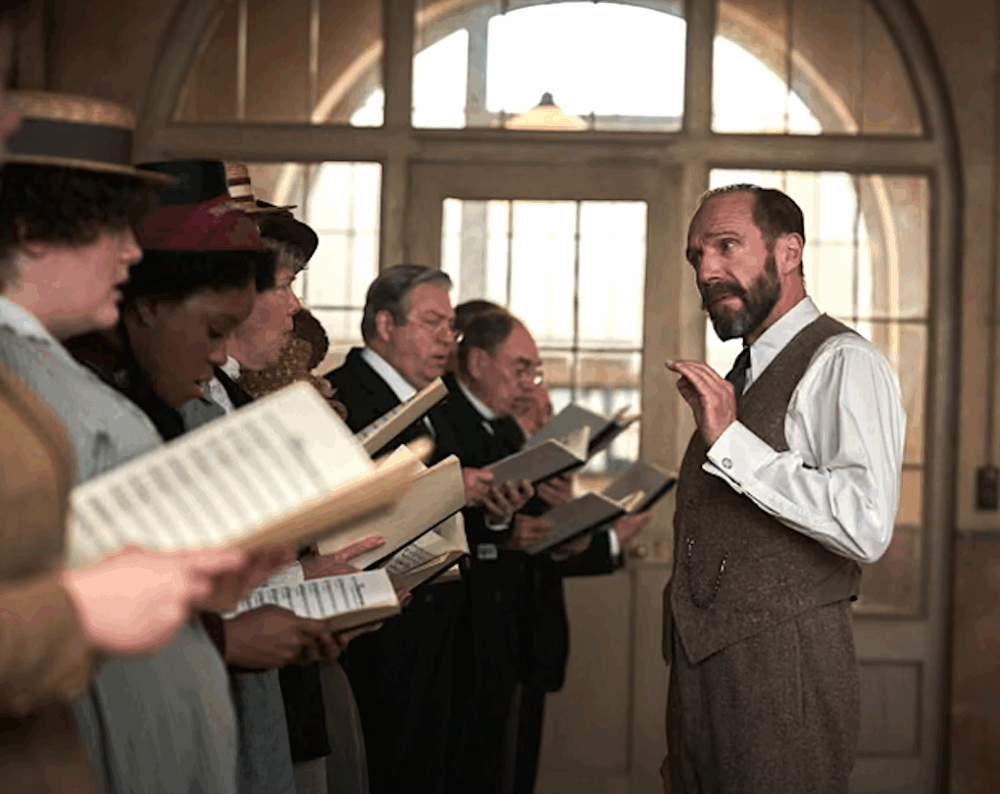
German composers such as Bach, Beethoven and Handel being unacceptable, Dr. Guthrie proposes to his ragtag crew of amateurs a radical new production of English composer Edward Elgar’s oratorio “The Dream of Gerontius,” its theme of death being the more heart-wrenching in the circumstances. He gets permission from Elgar (Simon Russell Beale) himself for this performance, though not his daringly interpretive new variations. But things change as Dr. Guthrie decides to make some changes in the score to better reflect the gruesome reality of English deaths in the trench warfare in Flanders.
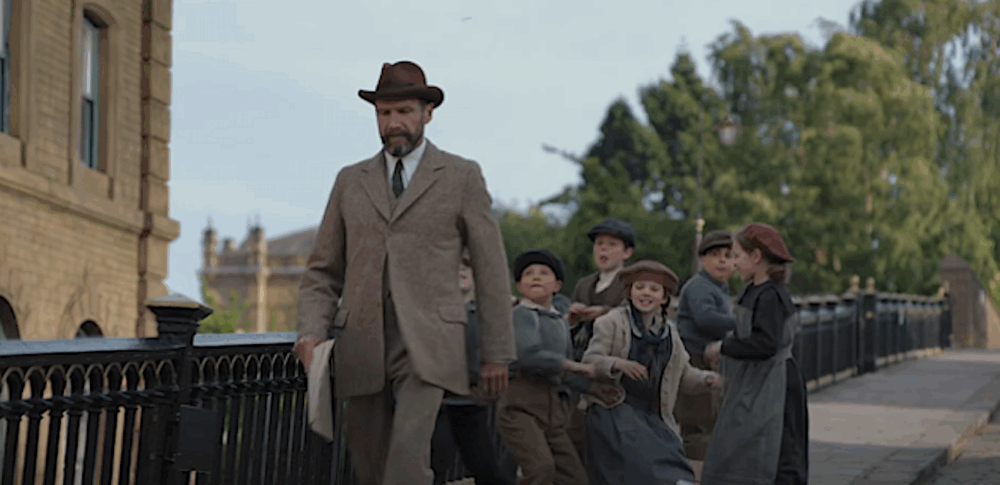
The film is set in 1916, in the middle of the First World War. As the war on the Western Front intensifies, the small town of Ramsden in Yorkshire has seen many of its young men waved off to war, meaning that its choral society is a little short on the male-voice front – even their best tenor is missing in action, presumed dead. So, Dr. Guthrie even visits a hospital for wounded soldiers to solicit male singers about the wounded and those missing limbs.
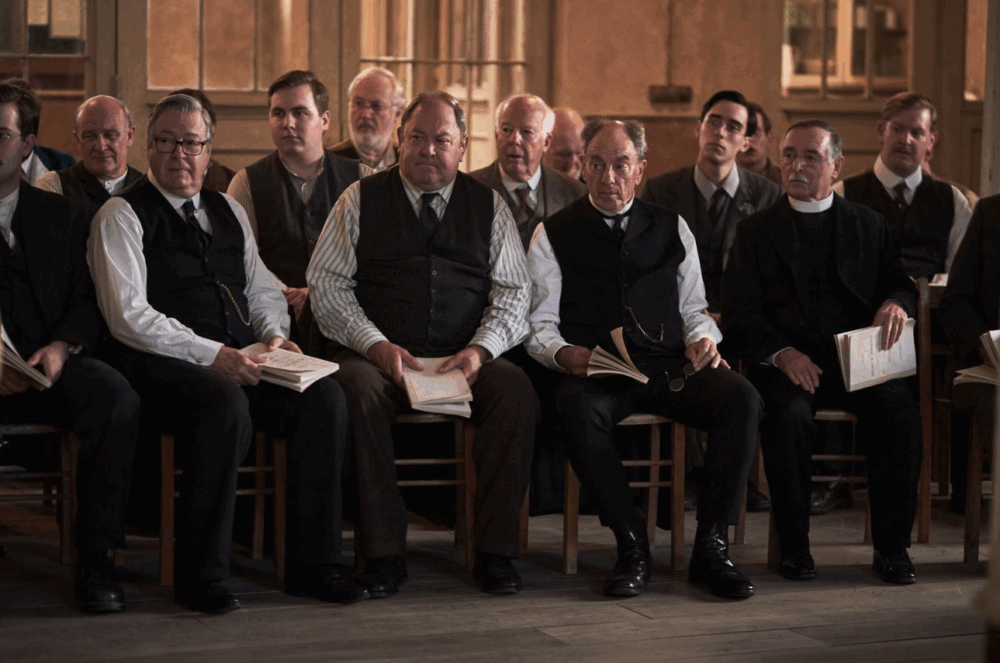
With a triplet of themes – resilience, recovery and reconciliation – The Choral looks to be a film that is much needed at the moment. As you might expect from a script by Alan Bennett, the humor is very British. One of the great lines from the beginning of the film occurs when Fiennes’ character is revealed to be an atheist, Mr. Fyton’s character (Mark Addy) says: “There are atheists now. There’s one in Bradford.” Pure, undiluted Bennett. This is one of those screenplays that makes it worth seeing the film.
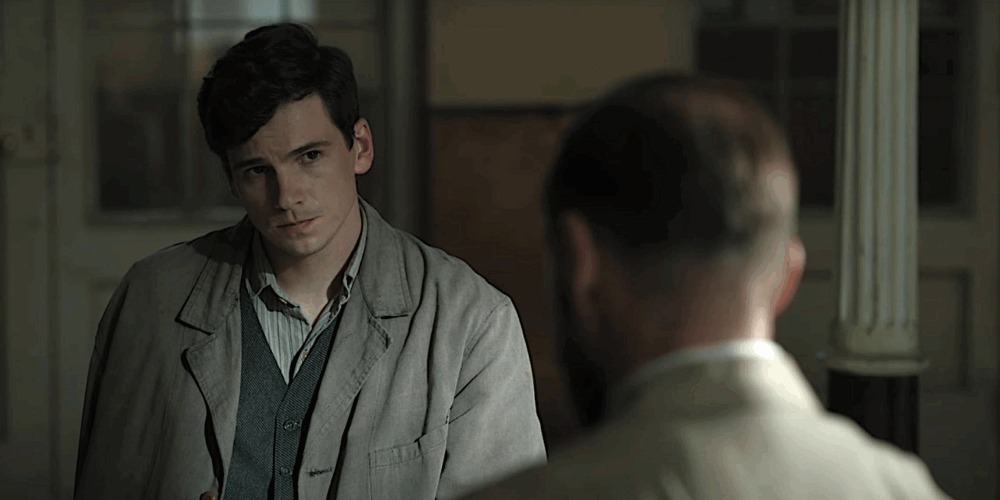
As new screenplay by Alan Bennett, The Choral, the new film directed by Nicholas Hytner is a crowd-pleaser. Apparently, it’s Bennett’s first original screenplay in over 40 years. He is best known as acclaimed film like The Madness of King George, The History Boys, and The Lady in The Van. Plus, the film is jam-packed with British acting talent, including the likes of Ralph Fiennes (Harry Potter, 28 Years Later), Roger Allam (V for Vendetta, Pirates of the Caribbean), Mark Addy (Game of Thrones, Robin Hood), Alun Armstrong (The Mummy Returns, Van Helsing), Robert Emms (Andor, Atlantis), Simon Russell Beale (House of the Dragon, Thor: Love and Thunder), Thomas Howes (Downton Abbey, Dark Angel), Lyndsey Marshal (Being Human UK, Dracula), Jacob Dudman (The Last Kingdom, Medici) and relative newcomer Amara Okereke (Andor).
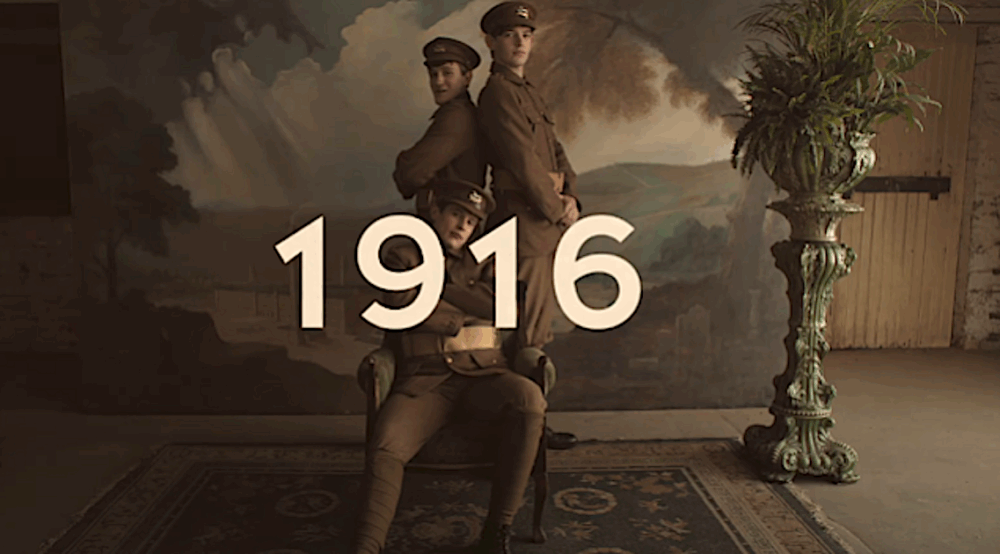
The theatrical origin of Bennett and Hytner is noticeable, as “The Choral” is staged more like a play rather than a movie. This scenic rigidity doesn’t always translate well to cinematic language, appearing at times claustrophobic rather than expansive. In contrast, the humor is efficient. The jokes, especially those delivered with impeccable timing by Taylor Uttley (Young Wallander), got many chuckles from the audience. Although there might be an excess of sexual observations, the chemistry among the young actors provides lightness and vibrancy to the interaction.
The film’s central idea – the search for shelter in art during times of grief and uncertainty – is noble and potentially powerful. The music, namely the oratorio “The Dream of Gerontius,” should be the bridge for healing pain and providing a distraction from the horrors of war. Pain and mourning are depicted on the screen, but the approach is quite reserved and never delves deeper in the emotional impact it promises. Dr. Guthrie is a controversial persona, with immense emotional potential to explore personal grief, secrets – like his sexual orientation and ties to Germany – or even the rigidity of his method, is reduced to a set of inflexible traits without any compelling character arc. This lack of evolution affects the entire cast. The various storylines, from teenage romances to the lives of older members, all remain at a surface level, failing to make us genuinely invest in the fate of each individual, even when the threat of conscription becomes real.
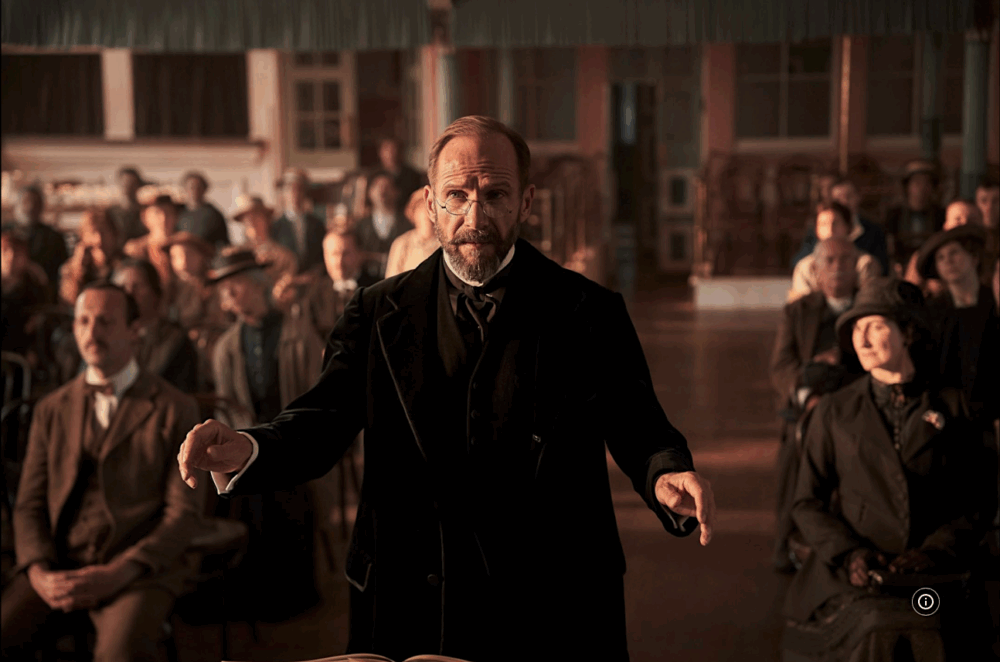
From a technical and musical standpoint, This is a well-made film. The vocal performances are angelic, and the singing sequences are well-shot, with some even standing out visually. The performances, in general, are good, but the lack of emotional investment in the characters’ journeys prevents the culminating moment – the grand concert under Dr. Guthrie’s direction – from being truly moving. Surely the angelic soprano voice of Mary (Amara Okereke) will haunt you.
A Choral has been released in theatres this past week but is included in the offerings of the Palm Springs International Film Festival, with two screenings: Sunday, January 2, 2026, at 4:00 PM, at the Festival Theatres 1; Sunday, January 11, 2026, at 10:00 AM in Festival Theaters 1.