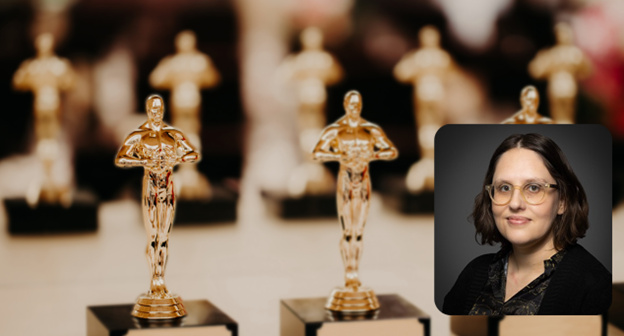
Dr. Monica Sandler’s The Oscar Industry Arrives Ahead of the 100th Oscars
The Academy Awards are one of the most important entertainment culture events in the Western world. But their history is more complicated than the red carpet suggests. They are a ceremony, a television event, a marketing engine, a career-maker, and a civic ritual in Los Angeles. For nearly a century, the Oscars have helped shape how Hollywood explains itself to the world.
That is why Dr. Monica R. Sandler’s forthcoming book, The Oscar Industry: Creative Labor, Cultural Production, and the Awards System in Media Industry, feels so well timed. Due out in 2028, the same year as the 100th Academy Awards, the book examines how the Oscars became more than an annual prize ceremony. Sandler looks at the Awards as a system built from labor politics, public relations, studio power, artistic ambition, and public fascination.
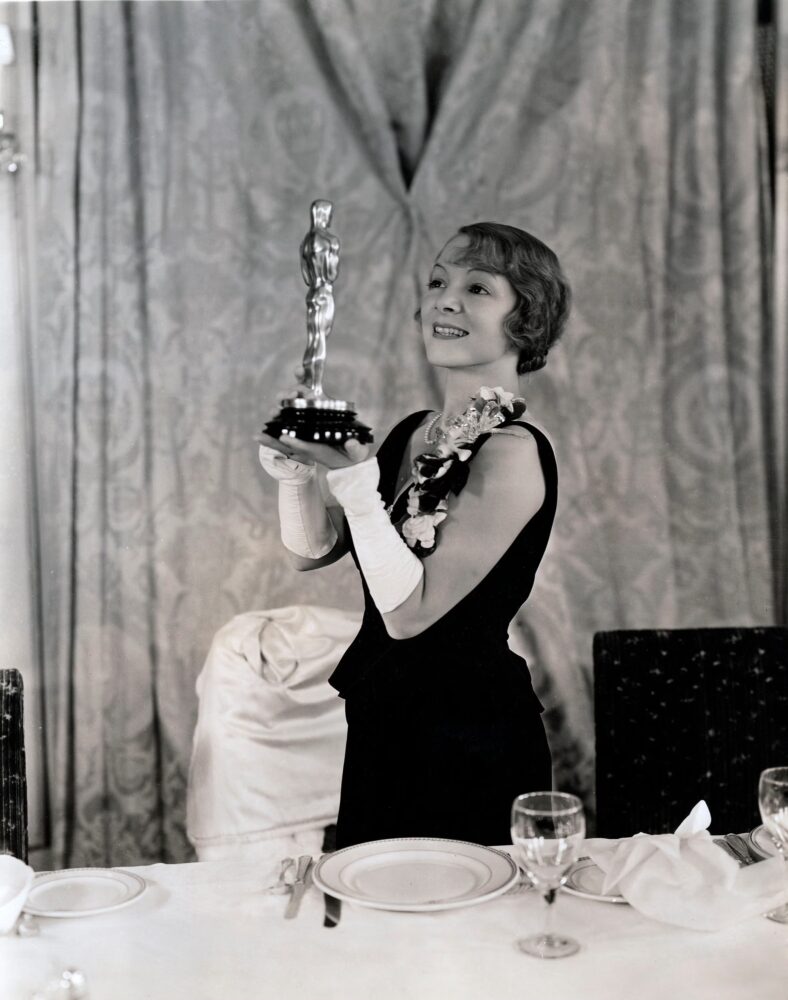
1929: A Ceremony Is Born
I learned from Sandler’s work that the first Academy Awards ceremony was held in 1929, but the Academy of Motion Picture Arts and Sciences had been formed two years earlier, in 1927, at a time when the motion picture industry was fighting for legitimacy. Hollywood was under attack from censorship groups, religious organizations, politicians, and reform advocates who viewed the movie business as morally suspect. The industry needed a more unified and polished public face. It needed to present filmmaking as a serious craft and its workers as artists and professionals.
The Awards helped do that. What began as a private industry dinner quickly became a stage on which Hollywood could honor itself while also improving its reputation. The ceremony carried purpose. It created an image of Hollywood as beautiful, disciplined, artistic, and worthy of admiration. But there is more to this story.
1933: Labor Enters the Story
By 1933, the motion picture industry was under serious financial pressure. The Great Depression had changed the business, audiences were not filling theaters in the same way, and studio heads wanted wage cuts and contract changes. At the same time, actors, writers, directors, and technical workers were increasingly dissatisfied with the limited influence the Academy had on their behalf. Smaller labor groups and guilds began building real collective bargaining power.
This is where Sandler’s investigation becomes especially interesting. Her research shows that the Academy Awards did not simply reflect Hollywood’s labor conflicts. The ceremony became part of those conflicts. According to Sandler, unions used threats to boycott the Oscars to pressure studios during labor negotiations.
That is an important turn in this history. The Oscars began as a public relations tool for the industry, but by the 1930s, they had also become a bargaining tool. The same ceremony that helped Hollywood sell itself to the public became valuable enough that labor groups could use it as leverage.
Sandler’s work shows how both sides understood the power of the Oscars. They could be leveraged by talent who might boycott them to get what they wanted and they were also about studios and financiers who had power, who had access, and who could make the industry listen.
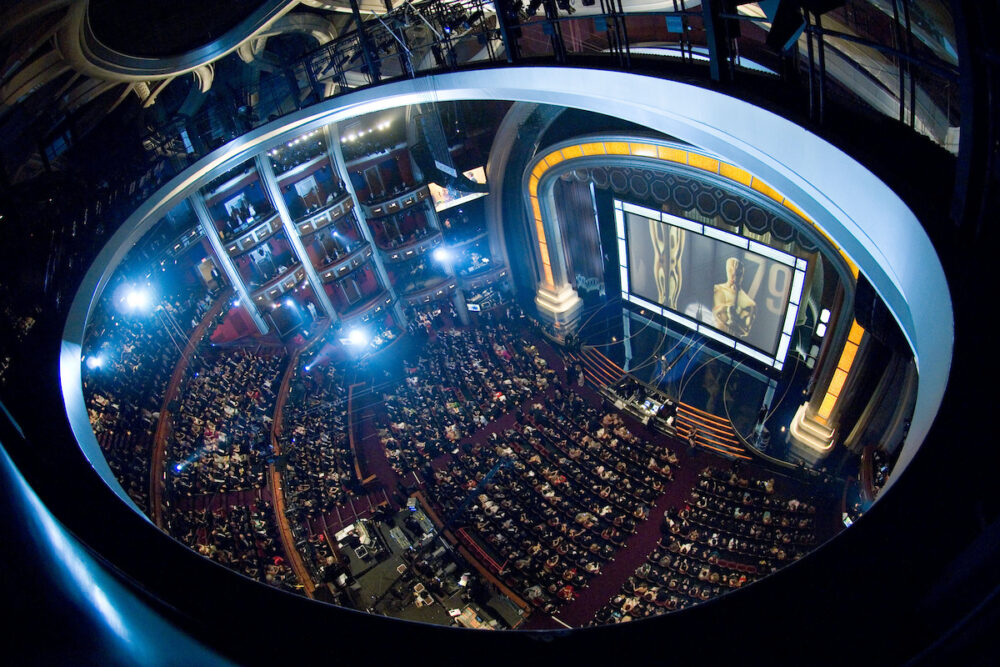
2026: The Centennial Comes into View
The Academy has now officially begun the long approach to its 100th ceremony. In Hollywood, where trends rise and disappear quickly, and studios reinvent themselves often, one hundred years of a cultural institution is extraordinary. The date announcement two years ahead may seem like a small calendar note, but the centennial is not small.
The Academy of Motion Picture Arts and Sciences and ABC announced last month that the 99th Oscars will take place on Sunday, March 14, 2027, and the 100th Oscars will take place on Sunday, March 5, 2028. Both ceremonies will air live from the Dolby Theatre at Ovation Hollywood and will be broadcast in more than 200 territories worldwide.
Those two Sundays represent nearly a century of cinema’s highest ritual: envelopes opened, speeches given, and film history written in real time. For anyone who cares about film as entertainment, culture, industry, and power, the approach to the 100th Oscars raises important questions.
How did a private industry dinner become the defining awards ceremony of global cinema? How did it gain so much influence? What has it celebrated, what has it ignored, and how has its system shaped the industry around it? Sandler’s book dives into those questions.
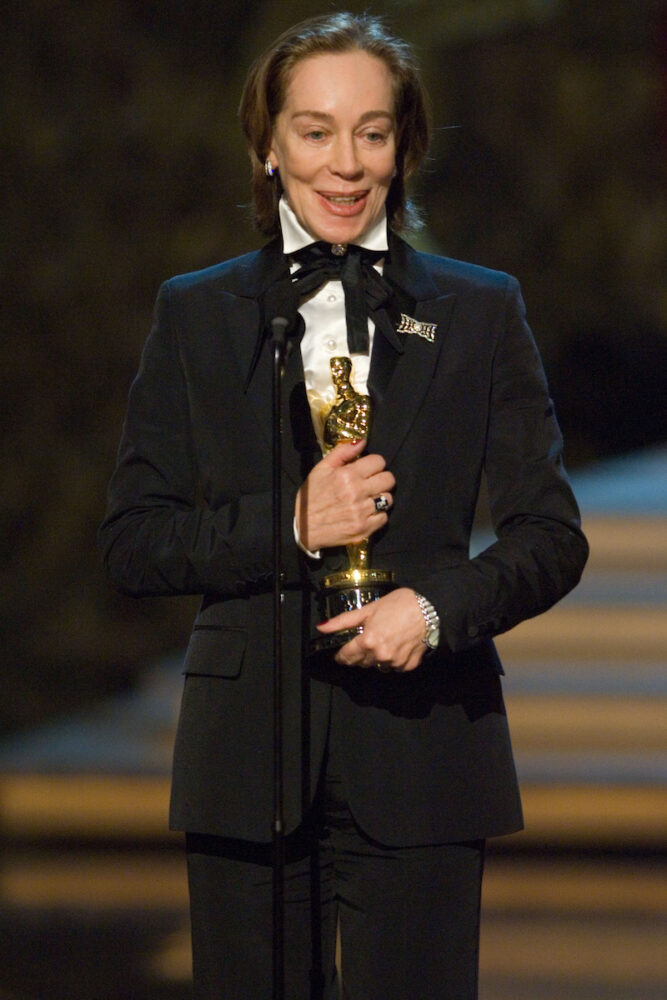
2028: The Book Arrives
The Oscar Industry is the first volume in a two-part project that traces the influence of the Oscars across nearly a century. This first volume follows the Academy and its Awards from their founding through the end of the 1960s. The second volume will continue the story from the 1970s to the present.
Sandler, a film and media historian at Ball State University, received her doctorate in Film and Media Studies from UCLA in 2023. Her research focuses on entertainment prizes and the role they play in shaping Hollywood. She has written about awards culture for academic publications including Media Industries Journal and Cinefile, and she has been interviewed as an awards expert by TIME Magazine, NPR.
In our interview, Sandler explained the origins of the Academy simply.
“The Academy started as a fake union,” she said. “The awards emerged directly from that, celebrating workers in the industry at a time when actors, writers and directors were not unionized.”
That statement changed the way I thought of the Oscars. The ceremony is still glamorous, but the glamour rests on a larger structure. Sandler’s book looks at that structure through three connected forces: the decisions made by the Academy as an institution, the way Hollywood used the Awards internally, and the way the public and media received them.
It is a history of a now iconic event. And The Oscar Industry studies how prizes create value. It asks how an award can shape careers, influence money, reinforce hierarchies, and affect which films remain in cultural memory. It also looks at the damage that can come from a system where recognition is tied to access, campaigning, studio support, and inherited power.
And it speaks to the present. The Oscars still influence careers, visibility, box office returns, and which films stay in the conversation. That makes the system behind them worth serious study.
Los Angeles: The Oscars as a Civic Fact
For those of us who live in Los Angeles, the Academy Awards are a television broadcast and a civic fact. Oscar season moves through the city in practical ways. Streets close, traffic changes, event crews are booked, stylists and tailors disappear into nominee schedules, publicists work at full speed, and temporary labor surges before falling away when the season ends.
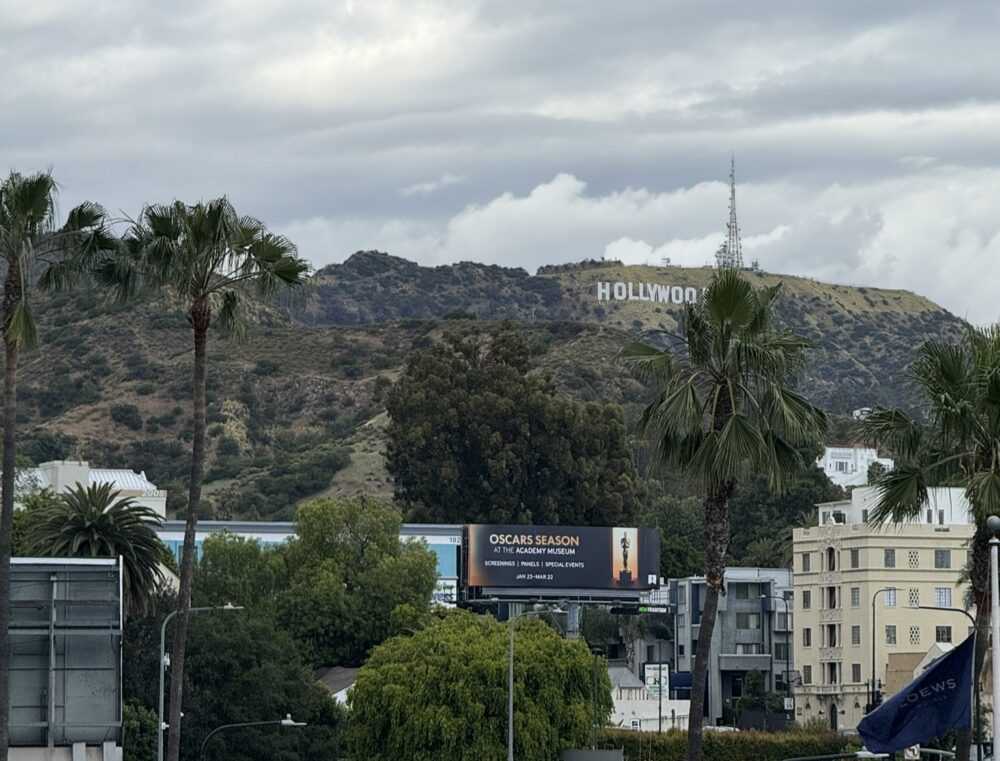
The Oscars bring spectacle and welcome opportunities for our residents. For one month, the machinery behind the image becomes more visible. It’s an exciting season; you can feel it in the city. Restaurants, hotels, stylists and makeup artists are all booked. Valets are happy and servers well tipped. The traffic is even heavier than usual.
1974: A Girl in Glendale Watches
My own connection to the Oscars began as a family tradition built around it. My mother attended Hollywood High, and I grew up in a suburb near Hollywood. Every year, my family gathered in the den to watch the Academy Awards. It was the one night we were allowed to eat dinner in front of the television.
In 1974, during the 46th Academy Awards at the Dorothy Chandler Pavilion in downtown Los Angeles, I came into the den carrying a bowl of macaroni and cheese just as Paul McCartney and Wings took the stage to perform “Live and Let Die,” which was nominated that year for Best Original Song.
The music built slowly, then rose into a series of crescendos timed with bursts of pyrotechnics. I sat on the sofa, completely pulled in. At some point, my fork dropped onto the shag carpet.
What stayed with me was the performance, but also the staging around it. The timing. The sound. The visual surprise. The feeling the whole thing created in the room. I could sense that this moment had been specifically designed for emotional effect. Someone had built it so we would feel it.
Sitting there, I realized I wanted to create that kind of feeling for other people.
I eventually became an event producer specializing in large live productions. Not for television, but for the people gathered in one space. In some ways, I spent my career creating smaller versions of what I had seen that night at the Oscars. Years later, I often produced events at the same venue where that 1974 ceremony took place: the Dorothy Chandler Pavilion.
Because of those personal experiences, I was especially interested in Sandler’s book. When I sat down with her, I wanted to know whether she had a similar moment of recognition. I asked her, “What made you choose the Oscars as your focus, and was there a specific moment that made you realize they were worth studying in depth?”
2026: Sandler Looks Back to the “Why”
Sandler told me she has been interested in the Oscars for as long as she can remember.
“If you asked me in high school, if you were to write a book, what would it be about, I know I would have said the Academy Awards,” she said.
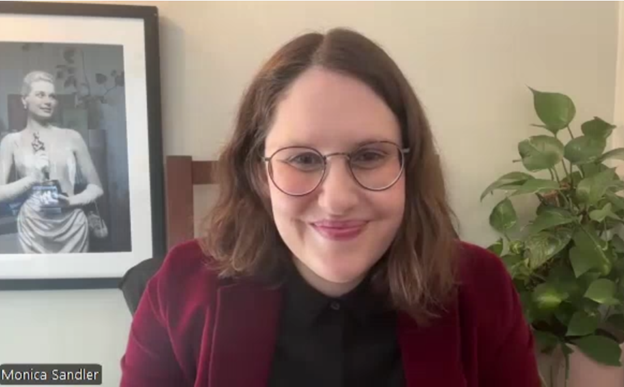
Her fascination was not in the celebrity and glitz. She explains that she did like movies and film history, but she noticed early on that the films she thought were the best were not always the films that won. I think her young mind was already grasping the system behind the red carpet. I saw extravaganza and emotion. She was looking into the workings and gears. It was the larger system that interested her: the campaigns, the advertising, the public appearances, and the long awards season that seemed to shape the outcome before the envelope was opened.
“I was always interested in the ecosystem,” Sandler said, “and began to wonder very simply: how did this emerge as such a defining system? Or more simply, how did things get this way?”
That question is the heart of her book.
Sandler also spoke about the role of campaigning in direct terms. “If you have a film that has absolutely no campaign, you are not going to get nominated for an Oscar,” she said. “You can give a fantastic performance, but if there isn’t a backing behind it… are they really rewarding the best? Are they rewarding the ones based off of the campaign tactics that are used?”
To her, that question makes the Oscars more important to study. If the Awards help decide which films are remembered, then the system behind them deserves serious attention.
2028: Hollywood Looks Ahead
As the 100th Oscars approach, Hollywood will prepare to celebrate its most visible ritual on a historic scale. There will be retrospectives, tributes, performances, anniversary packages, and plenty of red-carpet coverage. Sandler’s book asks us to look deeper than celebration.
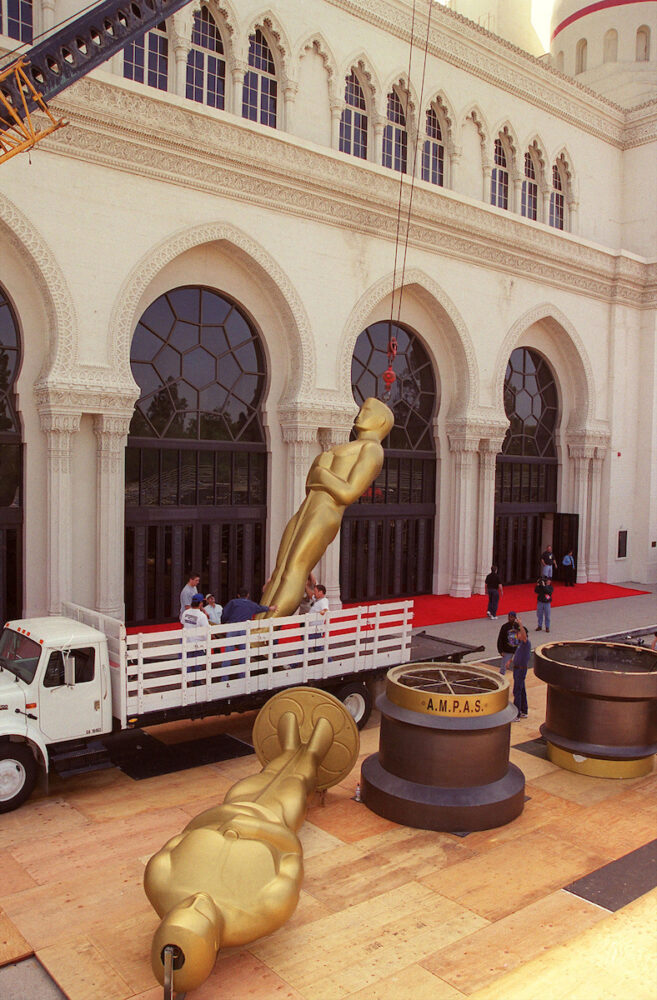
The Oscars have survived changes in politics, technology, taste, moviegoing habits, television audiences, streaming platforms, and the structure of the studios themselves. They have been challenged by movements such as #OscarsSoWhite, pressured by debates over representation and access, and shaped by the growing cost and complexity of awards campaigns. Still, every year, the industry gathers. Audiences watch. People argue over the nominations, fill out ballots, complain about the length of the show, and wait for Best Picture.
That endurance is worth examining.
I now know the Oscars are about movies, power, recognition, and cultural authority. The Awards are how Hollywood tells the world what matters. Sandler has spent years studying that system. Her first volume reaches readers at the moment Hollywood is preparing to measure a century of Oscar influence.
I will be watching the centennial.
But first, I will be looking for the book that helps explain how we got here.
Watch my interview with Dr. Monica R. Sandler.
For more information and updates, visit monicasandlerphd.com.
Follow Dr. Sandler on Instagram: @monica_roxanne.
Dates to note:
Dr. Monica R. Sandler’s The Oscar Industry: Creative Labor, Cultural Production, and the Awards System in Media Industry publishes in 2028.
The 99th Oscars will take place Sunday, March 14, 2027.
The 100th Oscars will take place Sunday, March 5, 2028.
OSCAR® and OSCARS® are registered trademarks and service marks of the Academy of Motion Picture Arts and Sciences.