The heartbeat of an electric soul can be felt far beyond the machinery that gives it life.

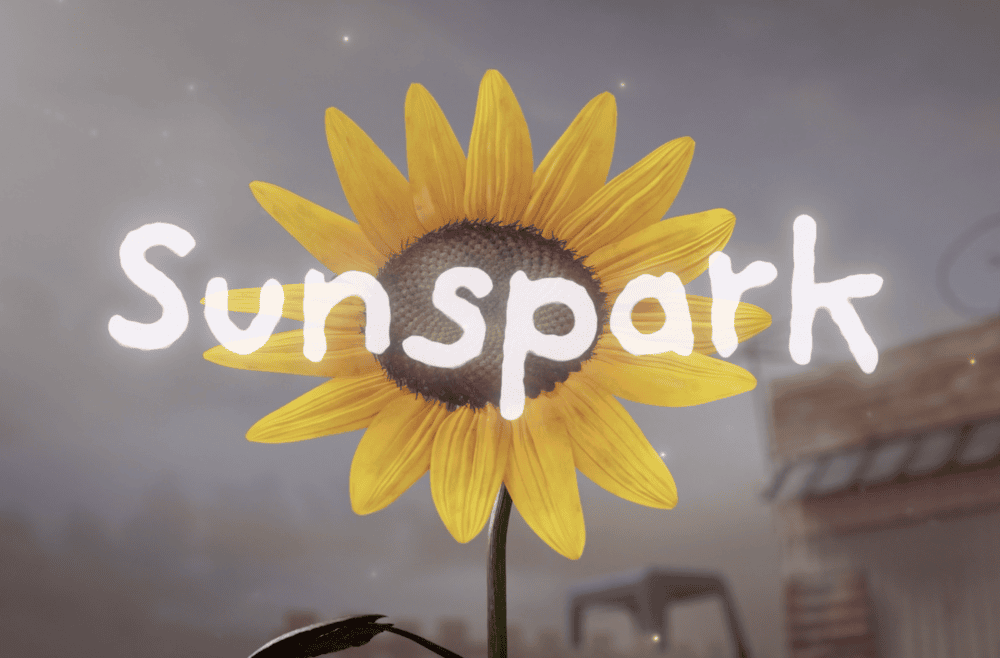
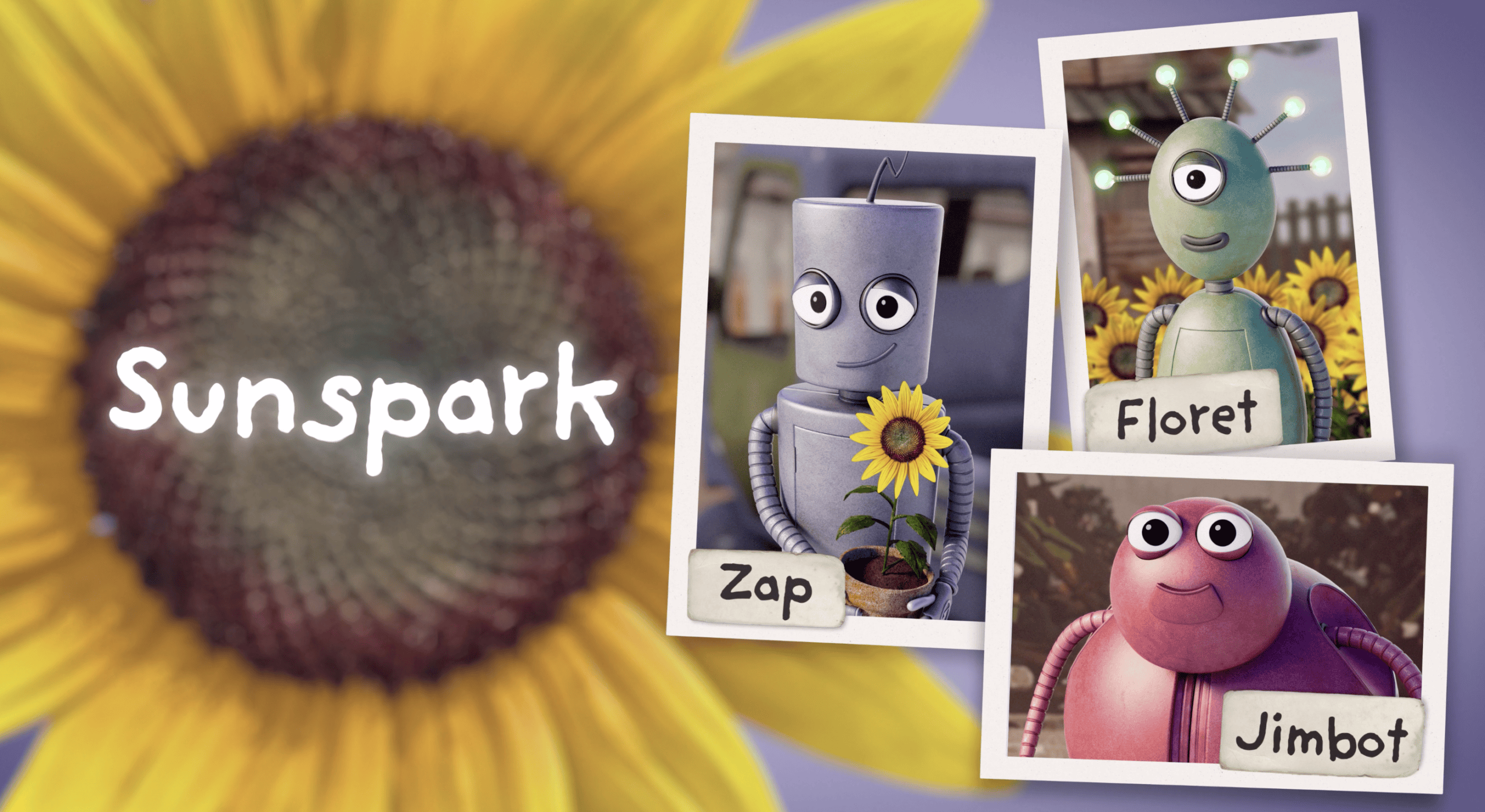
There is something immediately uplifting about the opening moments of Sunspark, an 11-minute animated short that introduces us to a silver robot named Zap, diligently gathering sunflowers from the earth and placing them into individual pots.The digitized electronic music is energetic and playful, and I find myself feeling good almost immediately. There is an innocence to the animation, a sense of curiosity and delight in watching this little mechanical being move through a world where nature and technology seem to coexist quite comfortably. Zap loads his sunflowers into a hovering truck, one without conventional tires, and travels toward a place advertised as having parts for plants, eventually arriving at Jimbot’s Junk.
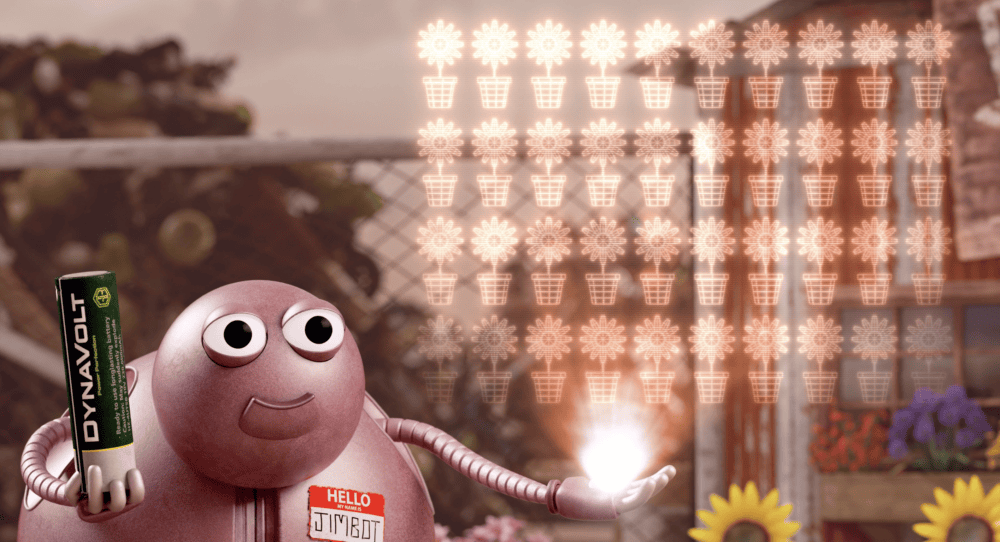
At the junkyard, we meet Jimbot, a round pink robot who emerges after Zap presses a button for service. Their communication is fascinating, relying on electronic sounds, gestures, expressions, and holographic projections rather than spoken dialogue. Images appear illuminated above their hands, allowing them to negotiate visually. There is something charming about the way the robots communicate, particularly the little O-shaped expression on Zap’s face that almost allows me to hear his reaction before the electronic sound accompanies it.
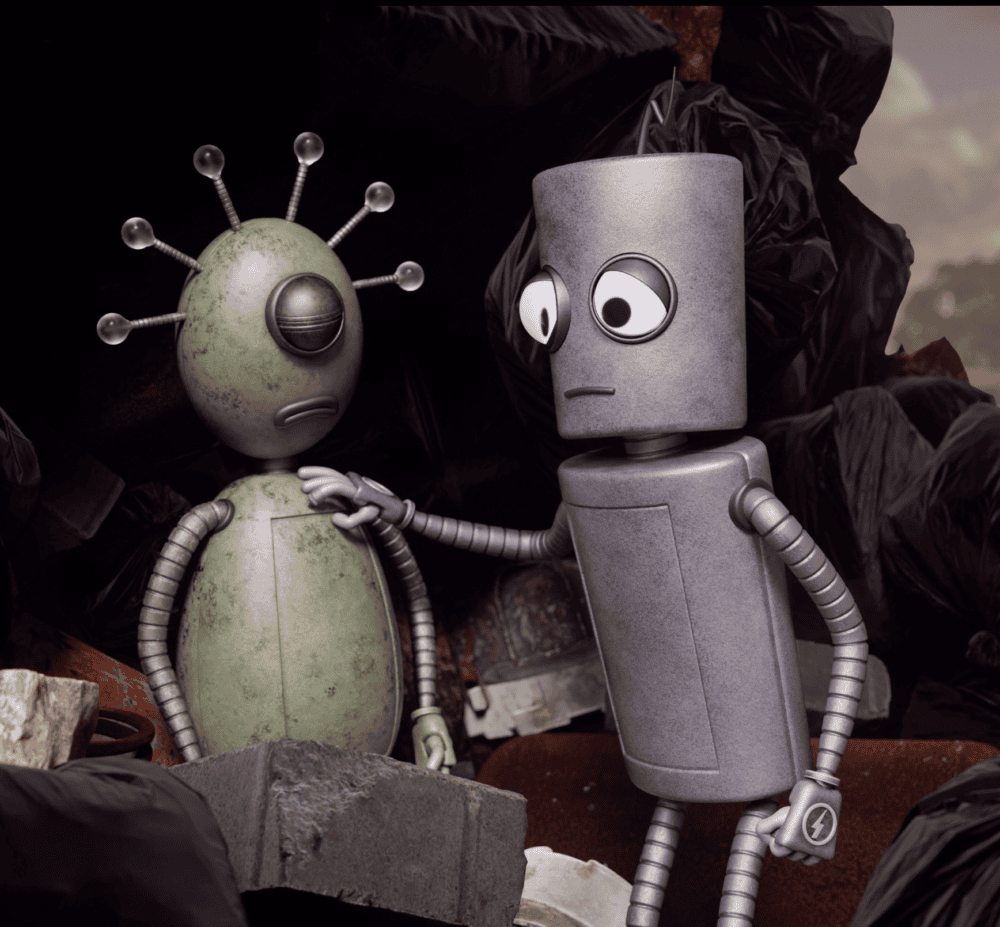
Zap appears to have come looking for a replacement component for his hovering truck, but while exploring the discarded mechanical parts, he discovers something unexpected: a green robot, later identified as Floret. Suddenly, the purpose of his visit changes. The replacement part would cost five sunflowers, exactly what Zap has collected, but Floret is offered for four. Rather than repairing his own vehicle, Zap chooses to bring the discarded robot home, keeping one sunflower for himself. The digitized electronic music takes on a slightly different rhythm as Zap makes his journey home, carrying Floret and the one sunflower he has kept for himself.
Behind the world of Sunspark is filmmaker Danny Bourque, who spent nearly two years bringing this animated short to life, writing, directing, and animating the film himself. Bourque also composed its electronic score and created its sound design, giving the film a distinctive musical identity that accompanies Zap and Floret through their unfolding journey. An electronic musician who performs under the name Glitch Black, Bourque brings together his visual artistry and musical sensibilities in a remarkably personal production.

Once home, Zap gently places Floret in a chair and opens the green robot’s chest, revealing the absence of the energy source needed to bring him to life. As Zap turns toward himself and opens his own chest, exposing the battery that sustains him, I feel an immediate sense of vulnerability settling into my own body. Before he has even acted, I am anticipating the possibility that he might surrender his own life force to revive Floret. There is an almost instinctive tightening in my chest, an internal plea for him to reconsider, as I imagine the consequences of giving away the very energy that allows him to function. Perhaps my own experiences and expectations are already influencing what I believe is about to happen, but the sensation is unmistakable, and I find myself physically drawn into the uncertainty of his decision.
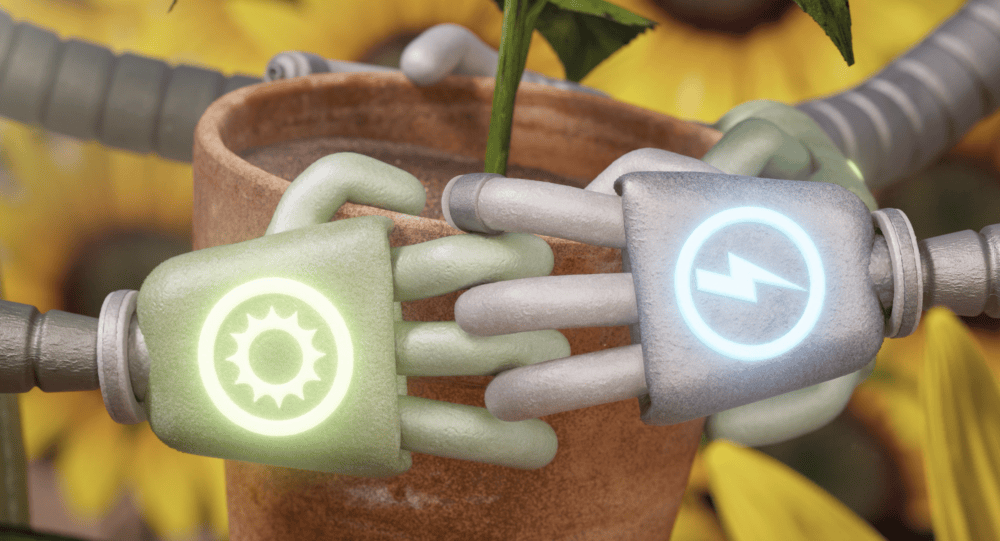
As Zap begins transferring electrical current through his fingers, the lightning-bolt emblems on his hands become an intriguing visual representation of the energy passing between them. I recognize the familiarity about the finite energy we carry into our relationships, our work, and the care we extend toward others. We give of ourselves mentally, emotionally, and physically, sometimes reaching the limits of what we can sustain. When Zap removes one of his own eyes and places it into Floret, that recognition becomes even more visceral. My chest tightens as I watch this little silver robot offer another part of himself, while Floret begins to awaken and reaches toward the place where Zap’s eye once belonged. The gesture holds my attention, inviting me to consider what it means to recognize the source of something we have received.
The possibility of restoring Floret brings Zap back to Jimbot in search of a battery. Through a holographic display, Jimbot demands forty sunflowers, a staggering price compared with the four he accepted for Floret. Zap offers his hovering truck in exchange, and Jimbot refuses, retreating inside as the door closes behind him. The exchange deepens my questions about how we assign value to another being. Floret had been sitting discarded in the junkyard, apparently awaiting someone who could recognize the possibility of life within him. Jimbot’s prices give the interaction a transactional quality, while Zap’s willingness to share his own resources brings a different measure of worth into view. I find myself considering compassion, commerce, and the moment someone recognizes potential in what another has left behind.
Back at home, Zap begins experimenting with a light-bulb, turning it on and off with his electrical energy. The music becomes quick and almost xylophone-like, its digitized rhythm accompanying the urgency of his work. He arranges wires along the walls and constructs an electrical circuit, following an idea with remarkable determination. My anxiety continues beneath my fascination as he removes his chest panel, connects jumper cables to his own energy source, and creates a loop of electrical current through his body by surrounding wires.
As the circuit takes shape, Zap removes his own battery and places it into Floret. The green robot begins to activate, illuminated by the energy he has received, while Zap collapses and the scene falls dark. For those few seconds, my chest remains tight and my thoughts rush toward the possibility that Zap has given away his life to save another. The brief darkness leaves me suspended in uncertainty, waiting to understand what this exchange has cost him.
That anticipation brings other narratives into the room with me. Stories, books, films, and visual portrayals can teach us to expect relationships in which promises are broken, devotion meets indifference, and trust is answered by deception or betrayal. Personal experiences of broken commitments, abandonment, and failed relationships can leave their own impressions, shaping the possibilities we anticipate before we have consciously named them.
The sunflower is a significant hallmark in this story. Floret’s connection to the flower suggests another form of energy, one associated with sunlight and growth rather than Zap’s limited electrical supply. Zap’s lightning bolts and Floret’s sun-like emblems suggest different yet complementary sources of power. As sunflowers flourish around the home and Zap awakens restored, I feel the tightness in my chest release and notice that I can breathe freely again. Relief arrives with an unexpected feeling of friendship, as the exchange between these two robots opens into the possibility of mutual care.
The animation illustrates layers of imagery and relation to self and automated sources. We expend energy, receive energy, and share energy, relying on sources beyond ourselves for renewal. The relationship between electrical current, sunlight, plants, and mechanical life becomes a visual expression of something recognizable in human connection. Our batteries may be invisible, but we understand exhaustion, restoration, and the ways another person’s presence can affect our capacity to keep giving. Zap’s physical sacrifice and Floret’s unexpected contribution give shape to the vulnerability of trust and the possibility that generosity may be met with reciprocity.
The environmental dimension adds another layer to that experience. Nature and technology coexist in a world where sunflowers begin as objects of exchange and gradually acquire a more profound significance. Solar energy, electrical current, and organic growth form a shared language of life force, inviting me to consider the resources that sustain us and the ways we might replenish one another. The flowers carry both the film’s visual warmth and its larger questions about what we value, what we offer, and what becomes possible through connection. In that light, Sunspark restores a sense of hope within me, in humanity’s capacity to trust, love, and connect with one another, and in the beautiful harmony of nature and technology, where sunlight, electrical energy, and life come together in a shared expression of connection and renewal.
With support from a grant through the Render Network, Bourque was able to accelerate the demanding rendering process, reducing work that could have taken months to hours or even minutes for individual shots. This technological support helped make his independently produced 4K animation possible on a scale more commonly associated with larger production teams.