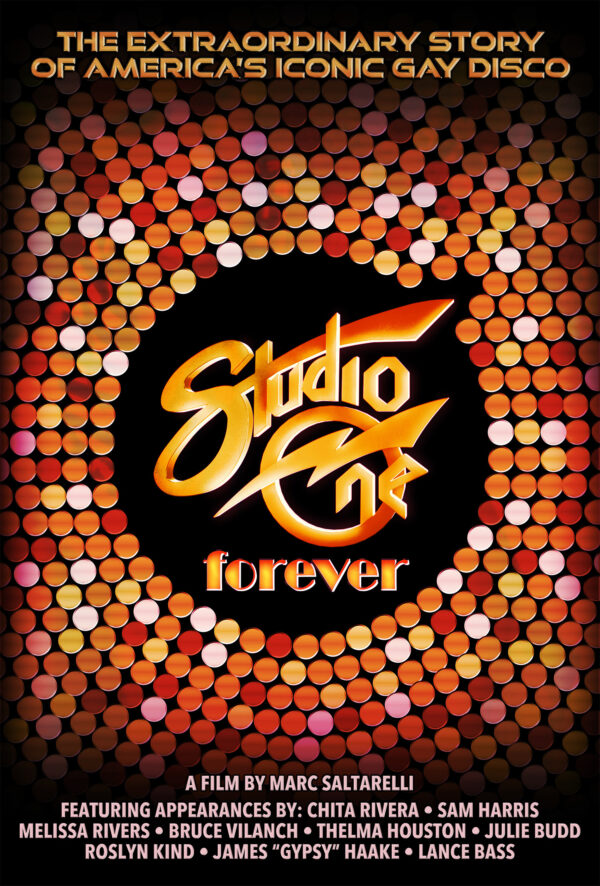
SPECIAL SCREENING OF AMERICA’S ICONIC GAY DISCO DOC “STUDIO ONE FOREVER”
Landmark Theatres Sunset
8000 Sunset Blvd, Los Angeles, CA 90046, USA
By Valerie Milano and Robert St. Martin
Los Angeles, CA (The Hollywood Times) 10/3/24 – Wednesday, October 9th, will be the showing of Marc Saltarelli’s Studio One
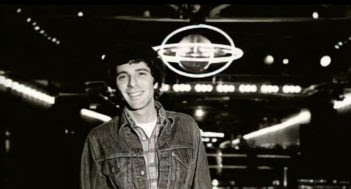 Scott Forbes, main owner of Studio One, a native of Boston came to Southern California in the early 1960s. After graduating from USC, he practiced optometry in Santa Monica and later in West Hollywood. Forbes got the idea of opening a gay disco and eventually gave up his optometry practice to do so and designed the club to fill a void in the community. “Scott thought it right that gays have a place to go to, that was a dynamic spot, a place of prominence in the community,” said Salterelli. Studio One became Forbes’ focus and he talked candidly about the disco’s founding in 1974. “Studio One was planned, designed and conceived for gay people, gay male people,” he said. “Any straight people here are guests of the gay community. This is gay!” The club proved to be an immediate success.
 The building which housed Studio One in West Hollywood is the main character in Saltarelli’s documentary, a huge warehouse structure that looked like a ship floating, had its front entry located at 652 LaPeer Drive. The Studio One building was originally owned by William Fox of Fox Studios and was used as a Norden bomb manufacturing facility during World War 2. In 1968 the building was bought and transformed into The Factory nightclub, named after the furniture manufacturing business, located on the lower floor of the building. The late-60s style disco was a popular nightspot for celebrities. When that club closed in the early 70s, Studio One was born. Though it later became The Axis, and then The Factory again, for LGBT Angelenos of a certain age, it would always be Studio One. As Bruce Vilanch points out during an interview about the film: “Studio One was around for 30 years. By comparison, Studio 54 [which opened in 1977] in New York City lasted only 3 years.”
Check our exclusive interview here before the Outfest screening:
 Gay men dancing inside Studio One
Film historian David Del Valle explains a very important structural aspect leading to the creation of the club. Having been a previous ammunitions depot played a major role in choosing the location. “It was very fortunate that Studio One had these reinforced floors because when you have a thousand sweating men dancing wildly, you want it to be safe.” Legendary disco singer Thelma Houston, who appears in the film, pointed out: “In 1967, the building came to new life as The Factory. The Factory was like a private discothèque for people like Sammy Davis Jr., Rosalyn Russell, and a lot of movie stars.” David Del Valle adds: “The owners of the club included Peter Lawford, Antony Newly, and Paul Newman. The club was short-lived and closed in 1973.”
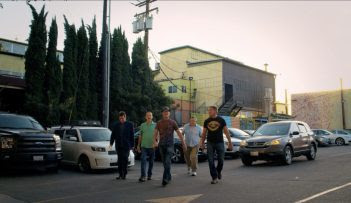 John J. Duran & others in front of the Studio One building.
Studio One has had a long legacy, operating from 1974 to 1994. The club saw the rise of the gay rights movement, the rise and fall of disco and the darkest days of the AIDS crisis. It even became ground zero for AIDS activism – largely due to the efforts of comedian Joan Rivers. For many of the generations of former patrons, Studio One was an important touchstone, and the most profound reasons are their very own memories.
The film opens with former West Hollywood councilman and mayor John J. Duran greeting a number of old timers from the heyday of Studio One in the current iteration of the building as a straight sex club. With him, are Michael Koth (front barman, 1975-1988), Lloyd Coleman (Backlot producer, 1984-1988), Michael Solomon (the only surviving original Studio One co-owner), Gary Mortimer (Studio One’s first bartender) and Mark McBridge (a former patron). They walk through the building, recalling their own experiences in this place. Michael Koth relates his own story during the course of the film.
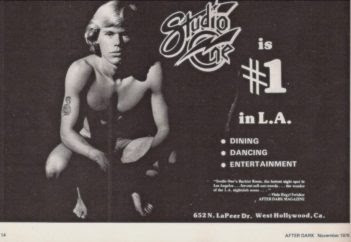 The first 15 minutes of Studio One Forever tell us the history of the building and its significance, but it is difficult to re-light the fire that once burned every night of the week in this former gay temple of a disco. We hear quite a bit about the main owner Scott Forbes, who had a fondness for young blonde “twinks”. The other co-owners of Studio One were Michael Solomon (who was originally in a gay motorcycle club), Ernie Caruthers (a Black businessman), John Adams along with Dino Lopez. Clips of video footage and recently recovered color slides of gay men posing and dancing fill in the spaces between the remembered experiences of these men and others who frequented Studio One. So many of these beautiful young men are long dead today and the film gives us a haunting sense of Studio One as a memorial to their loss.
Much of the film tells the story of the adjacent Backlot Theater attached to the huge building. Originally an unused space, Scott Forbes decided to turn it into a usable space of its own. In our interview, director Marc Saltarelli relates how excited he was to talk with Chita Rivera about her gig at the Backlot, which happened in 1987 – as a result of the death of Bob Fosse and the cancellation of the show Chicago, which she was starring in at the time. Other headliners included some of the finest cabaret performers of the time, including Bernadette Peters, Joan Rivers and Madeline Kahn. We see a special party at Studio One during the launch of the film Tommy, where Paul & Linda McCartney are present, along with Elton John, Ann-Margaret, and Diana Ross. Comedian and writer Bruce Vilanch narrates much of this part of the film and tells us about many of the performers including himself who appeared at the Backlot, them coming up the steel exterior staircase to enter the building from the back. Especially memorable were Wayland Flowers with his puppet Madame, Joan Rivers (as discussed by her daughter Melissa Rivers), Lance Bass, Julie Budd, Brian Lane Green, James “Gypsy” Haake, Roslyn Kind (singer & sister of Barbra Streisand), Felipe Rose from The Village People, and Divine (the star of many John Waters films).
 Lloyd Coleman & Gary Steinberg with John J Duran
At the beginning of the film, Bruce Vilanch states: “Anyone who tells you they were there in the 70s and remembers it, wasn’t there.” The first years of Studio One in the mid-1970s were different from the way the nightclub and gay culture shifted by the end of the decade, as drugs became much more prevalent in the gay scene. As David Del Valle explains it: “When you crossed the threshold into the dance floor, it was a kind of alternative reality.” However, Bruce Vilanch counters: “It was so chemically induced for most people, not so much misty-colored memories, more sludge-colored memories.” Cocaine and MDA were in vogue at the time – even the bartenders were often high on drugs. Poppers were being sniffed all the time, recounts Carol Taylor DiPietro, a close friend of owner Scott Forbes. Early on, it became obvious that the preferred clientele was supposed to be young, White and male.
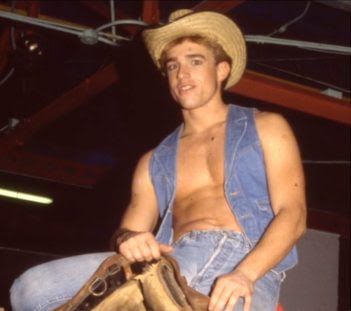 Michael Koth, front barman at Studio One
Not long after Studio One opened, came the rule about no open-toed shoes – clearly designed to keep women out. Black men were asked to have three forms of ID to gain entrance into the club. This became a rather scandalous issue in 1975 as it even drew coverage in the Los Angeles Times, as Don Kilhefner and Morris Kight became involved, trying to intercede. But Scott Forbes responded: “Studio One was planned, designed and conceived for gay people, gay male people.” That meant, “white gay men” fearing that black men would make it a “dangerous” place. That was the 1970s and West Hollywood was quite different then, as an unincorporated part of Los Angeles County, dance licenses were much easier to procure than in the City of Los Angeles proper. Eventually, the strictures on admission to Studio One loosened in the early 1980s – at the time when most of the film’s narrators, including director Marc Saltarelli, frequented there.
 Dancers at Studio One
The film makes the claim the Studio One was the first and largest gay nightclub in the United States. Certainly, size mattered – and, by comparison, the famous Studio 54 in New York City represented something quite different in the disco nightclub scene of the era. Actually, Jewel’s Catch One was opened in 1973 by Jewel Thais-Williams and it was the longest running Black gay dance bar in Los Angeles before it’s near-closing in 2015. She opened the club after she experienced discrimination at different clubs around West Hollywood, because she was Black and female. Similarly, the gay Latino men felt pushed away from Studio One. So, Gene LaPietra and Ermilio “Ed” Lemos founded Circus Disco in 1975 in Hollywood as a dance club and entertainment venue for LGBTQ Latinx in Los Angeles. Circus Disco also represented a response to the discrimination that people of color often experienced at venues with predominantly White patrons, particularly those in West Hollywood.
Other popular nightclubs, like Studio One, often discouraged non-white patrons by requiring multiple forms of identification. Ken’s River Club, on Riverside Drive in Silver Lake, was the gay spot shared by Latinos and Asians during the 1970s. Pervasive racism in West Hollywood is a topic for a documentary of its own. So gay bars emerged in other parts of the city that catered to gay people of color, like The Study located at Western and Hollywood Boulevard and Mugi’s on Hollywood Boulevard. I point this out because the film does not delve much into the negative aspects of what Studio One represented to some in the LGBTQ community.
Marc Saltarelli shot much of this film in 2019, just before the COVID pandemic hit. At the time, the West Hollywood City Council was considering the fate of the building that use to be Studio One. He arranged with the help of many former club goers to stage a farewell celebratory night at Studio One in 2019. This event is captured at the end of Studio One Forever. How fitting to have Thelma Houston once again singing her hit “I Will Survive.” On a personal level, filmmaker Marc Saltarelli shared his own experience: “I remember going to Studio One when I moved here from Illinois in 1983… it took a few circles around the block to get up the courage to walk in. All of my internalized homophobia seemed to be lifted once I got inside. It didn’t feel wrong to be there – it felt like Disneyland. I couldn’t have known, that so many years later I would be documenting the club’s history. The AIDS crisis was just beginning to creep into consciousness. For a moment I had unfettered joy and freedom.” Saltarelli’s documentary helps us to remember what Studio One once meant to so many gay men – a feeling that cannot be captured by images alone.
Marc Saltarelli has directed and produced a number of television videos and movies – best known for his recent I Knew Andy Warhol (2018).
| Director: | Marc Saltarelli |
| Producers: | Stephen Israel, Michael Alden, Marc Saltarelli, Gary Carnow, Alan Eichler, Michael Humenuik, Pauley Perrette, Matt Zarley, Chris Isaacson, John Duran, Steve Masterson, Loree Gold, Lloyd Coleman, Gary Steinberg, Steve Saltarelli, Michael Roth |
| Cinematographers: | Kenneth Yeung, Marc Saltarelli |
| Editor: | Marc Saltarelli |
| Music: | Kerry Muzzey, Jake Simpson, Mitch Kaplan |
| Cast: | Chita Rivera, Bruce Vilanch, Sam Harris, Melissa Rivers, Felipe Rose, Lance Bass, Thelma Houston, Roslyn Kind, Julie Budd, Charlo Crossley, Michael Koth, Gary Mortimer, John Duran, Michael Childers, Lloyd Coleman, Gary Steinberg, Geri Jewell, Jimmy Johnson, Clifford Bell, Ron Hamill, Michael Solomon |
| Country: | USA |
| Language: | English |
| Year: | 2023 |
| Running Time: | 96 minutes |
| Primary Company: | Studio One Productions, LLC |
| Contact Email: | marcsaltarelli@gmail.com |
| Website: | https://marcsaltarelli.com |