At Bucks County Playhouse, a bold new musical adaptation of Cyrano de Bergerac recently concluded its run, breathing fresh urgency into a centuries-old story—this time, through a deeply resonant queer lens.
With music by Emily Saliers of the Indigo Girls and a book by Beth Malone and Mary Ann Stratton, this production, under the direction of Lorin Latarro, trades Cyrano’s famous nose for something far more culturally charged: visibility.
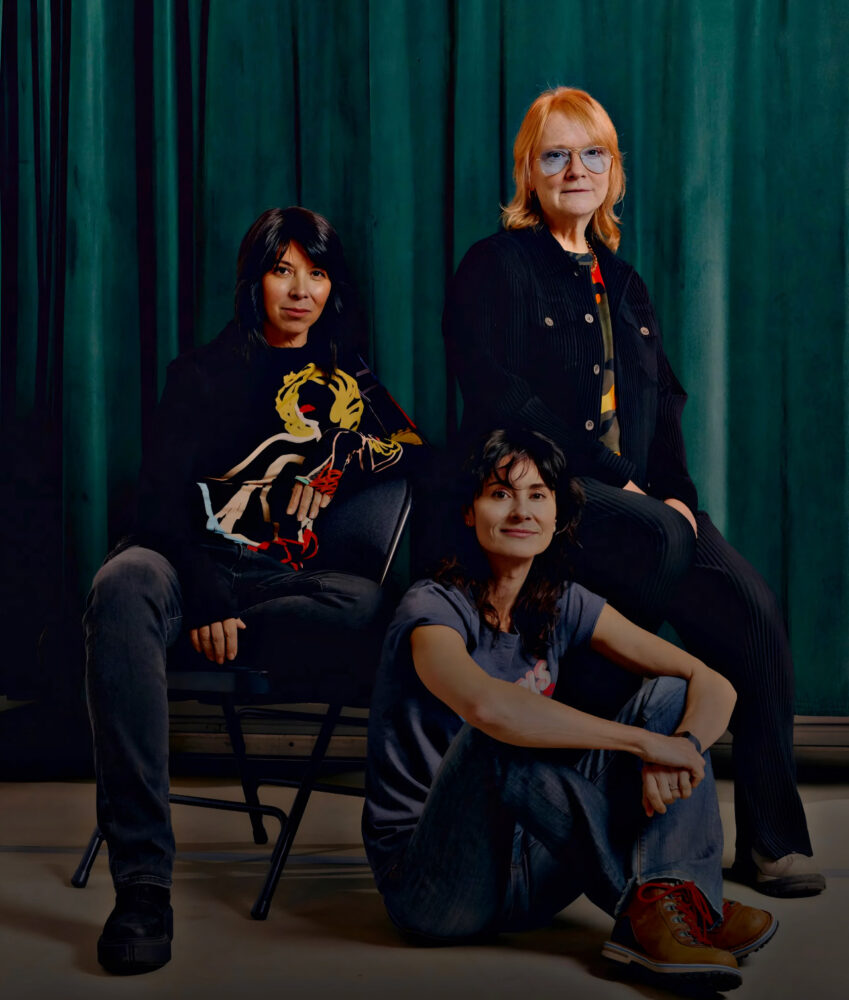
In this iteration, the character of “Cyrano” becomes Cyd—a woman, a poet, and a queer soul navigating a world that does not yet have language for her truth. Where Cyrano once hid behind physical insecurity, Cyd hides behind layers of identity that speak more deeply to invisibility. What makes this adaptation particularly compelling is how fully realized Cyd is beyond her queerness. Here, she isn’t just a stand-in for hidden identity—she’s a scientist. A park ranger. A woman devoted to protecting the integrity of the night sky in a small Idaho town where even her friend’s brightly lit bar becomes symbolic of the very thing she resists: noise, exposure, disruption.
This added layer deepens the narrative in a way Cyrano de Bergerac never quite explores. Cyd doesn’t only hide behind her sexuality—she also shields herself with intellect. Math, data, and observable truths become her armor. In a world where emotional vulnerability feels dangerous, science offers certainty.
And yet, the quiet revelation of the piece is that she is also a poet.
That duality—scientist and artist, logic and longing—creates a far more complex portrait of identity. It challenges the idea that we are one thing. Cyd’s journey isn’t just about being seen as queer; it’s about being seen as whole.
Even Roxanne’s early perception of her as cynical underscores this tension. What reads as guarded or clinical is, in truth, deeply emotional—just expressed through a different language.
And yet—the bones of the story remain beautifully intact.
Like its predecessor, the narrative hinges on a love triangle built on language. Cyd becomes the unseen voice behind another’s romance, crafting the very words that spark connection, intimacy, and longing. But here, the stakes feel even more immediate. This is not just about insecurity—it’s about survival, about the cost of authenticity in a world that hasn’t caught up.
What makes this adaptation so compelling is how seamlessly it draws a parallel between past and present. Cyrano’s fear—“If they truly see me, I will not be loved”—echoes loudly in queer experiences today. The metaphor evolves, but the emotional truth remains unchanged.
Emily Saliers’ score underscores this tension with aching sincerity, grounding the production in both folk intimacy and emotional expansiveness. The music doesn’t just accompany the story—it becomes the heartbeat of longing, restraint, and ultimately, revelation.
Formed in the early 1980s, the Indigo Girls—Saliers alongside Amy Ray—rose from the Atlanta folk scene with a sound defined by luminous harmonies and unflinching emotional honesty. Their breakout 1989 album, featuring the Grammy-winning “Closer to Fine,” cemented them as both musical trailblazers and queer cultural touchstones. That lineage is deeply felt here. At times, the score leans more into emotional atmosphere than narrative propulsion—a reminder that this is Saliers’ first foray into musical theatre—but its sincerity is undeniable, and when it lands, it lands with quiet force.
The book, shaped by Malone and Stratton, carries a similarly ambitious scope. Malone—best known for originating Alison Bechdel in Fun Home—brings a performer’s emotional intelligence to the writing, particularly in how Cyd’s inner world is rendered with nuance and restraint. Stratton’s foundational vision, born from a longtime connection to the Indigo Girls’ music, gives the piece its thematic spine: a story built not just around romance, but around identity, community, and belonging.
If the production occasionally feels overextended—juggling science, poetry, friendship dynamics, queerness, and environmental themes—it is perhaps because it is reaching for something expansive. Not every thread resolves with equal weight, but the ambition itself is part of what makes the piece feel alive, still in evolution, still becoming.
Importantly, the emotional texture of the show is not carried by its leads alone. The supporting ensemble provides a vital sense of community, grounding the story in a lived-in world. Sandra Valls—a seasoned comedian and a trailblazing queer Latina voice who made her Broadway debut in Real Women Have Curves—brings warmth and humor to the role of Crash. What could easily be a character played for levity alone instead becomes a tonal anchor, bridging the space between comedy and tapestry. These supporting performances enrich the ecosystem of the play, reminding us that identity is never formed in isolation, but in relationship to others.
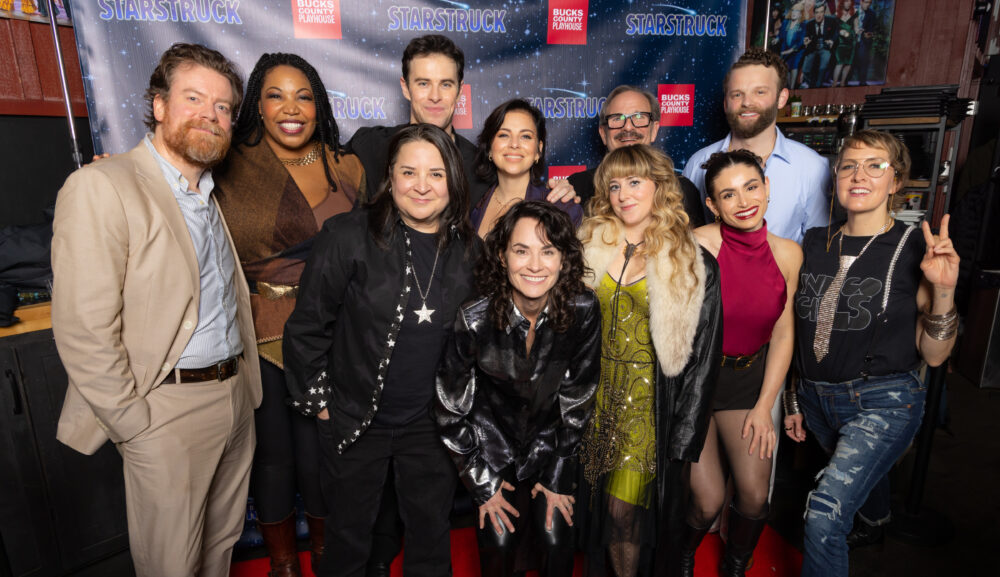
This is where the production finds its greatest strength: it doesn’t modernize Cyrano for the sake of novelty—it reveals that the story has always been about identity, about the risk of being known, and about the quiet devastation of loving from the shadows.
And it makes an even stronger case for what should come next. A piece this emotionally precise and culturally urgent should not end its life quietly after a regional run. It demands a future—on a larger stage, in front of wider audiences, in cities where its questions of visibility, identity, and belonging can resonate at full volume. Whether that future is realized on Broadway or carried west to Los Angeles, this is not a work that should be allowed to fade—it’s one that should be championed, expanded, and seen.
In 2026, this narrative lands differently. It asks us not just to empathize with hidden love, but to interrogate the systems that make hiding necessary in the first place.
The result is a poignant reminder:
The fear of being unlovable has never been about the nose—it has always been about the parts of ourselves we are told are “too much,” “too different,” or “too dangerous” to reveal.
And that truth? Still resonates—written across the night sky itself: we were never too much. We were simply unseen.