5-15-26
Jimmy Steinfeldt: Hi Ben Congratulations on your new album The Greatest Show On Earth.
Ben Daughtrey: Thanks Jimmy
JS: Did you see my photographs from your 1996 tour?
BD: No, please send them over. Where was that show?
JS: It was at the Hollywood American Legion and I’ll send them to you.
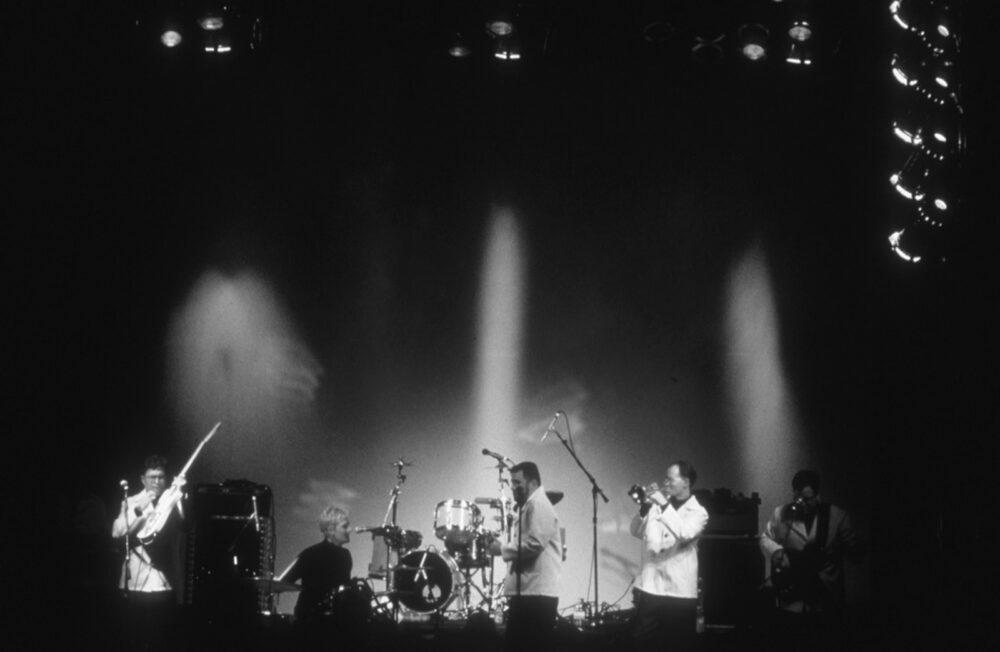
BD: We played everywhere in Los Angeles over the years. Fais Do-Do, Hollywood American Legion, Molly Malone’s, the Mint, Scientology Celebrity Centre, Largo.
JS: Do you keep a scrapbook of your shows?
BD: Barry Thomas is the archivist. Every article and ticket stub.
JS: Tell me the reason for the new album at this time.
BD: We never stopped writing and recording. I was in L.A. for over 20 years and I worked in TV and Film and I just wanted to change the pace. I moved my family back home to Louisville and it turned out to be the year of COVID. Meanwhile Barry had started an antiques business here in a giant warehouse. We started woodshedding music ideas there. I’ve got my guitars and I started writing all this stuff. We are very much into the Jazz scene here. There are many great players. We hunkered down in the warehouse during COVID and wrote.
Around this time, we got on Jimmy Fallon who turned out to be a super fan. In fact, Jimmy’s wife reached out to us and told us Jimmy was a big fan. She asked if we would record Happy Birthday for him? We said we’d do better than that, we’d write an original song. We asked her to send us his Wikipedia page and tell us the names of his best friends from childhood, what he likes to eat, etc. We wrote a silly song and sent it to them and I thought that’s the end of that.
He got the song and loved it and said he was putting us on the show. I thought no way, he’s not going to put us on his show, he can have Justin Timberlake or any super famous band. He booked us on his show! It was insane. He built a set for us that looked like our first album. He told me he went to all our shows back in the day. He came out on stage with us and sang along with us. He then told his audience Love Jones was going to put out a new song every week. Well, of course we weren’t going to do that but we started our plan to put out the new music. Fortunately, we have all these great musician friends here in Louisville who could play on this new record.
JS: Ben, as we are talking someone is calling me from Louisville.
BD: That’s probably Chris Hawpe. Let’s try to add him on this call.
We started recording these songs and Chris engineered them. Another friend of ours John Alagia came on as our producer. He’s worked with Dave Matthews Band, John Mayer, Liz Phair and other great artists. He became very excited about the project and loved our songs. We went into a studio here in Louisville and then he said let’s mix them in L.A.
There we worked at The Village where famous albums like Steely Dan’s Aja and Supertramp’s Breakfast in America were recorded. We couldn’t believe we were there. I saw a microphone on a couch and asked what that was doing there? I was told it was Kendrick Lamar’s microphone and he was coming in to record right after our session. It was great to be in the iconic 1970s/80s recording studio.
We’ve always been on the very fringes of legitimate show business. We’ve been with all the greats and it’s been so fun but this was amazing to cross into the mainstream. Being on Jimmy Fallon’s show and then recording at The Village. We continue doing this because we love it.
JS: My studio was in Laurel Canyon for twenty years and The Village was like a second home. The owner Jeff Greenberg wrote a great story about the Smashing Pumpkins for my book Rock N Roll Lens and I photographed Roy Thomas Baker there for his website.
BD: John Alagia has a room there and Ed Stasium was there when we were there.
JS: I photographed Ed. He’s such a legendary producer including for my old Minneapolis buddies The Replacements.
BD: I’m a fan of all the records he produced. I didn’t realize that all these great people had their rooms there.
JS: Tell me more about working with John Alagia
BD: He’s also a musician. For this record I wanted to switch things up a bit. I’ve been playing guitar, bass, keyboards and I asked our bassist Barry if it would be cool if I played bass on some of the songs. John encouraged us to stretch out our new songs. Try new things. He helped with the fine tuning. We worked on the vocal melodies more. He played keyboards on some songs. We went to John’s house at one point and started playing extra instruments and it became a collaboration. The two new songs, he completely produced. Those were recorded at a another very high-end studio which has a board from Sausalito that Boz Scaggs and Whitney Houston recorded on.
JS: I’m a songwriter and guitar player. What’s your favorite guitar?
BD: My dream guitar is a Gibson Firebird however I always end up playing hollow body guitars. I’m playing a Jay Turser Epiphone like guitar. I big body guitar like Ted Nugent plays.
JS: Like a Gibson Byrdland?
BD: Yeh like a poor man’s Byrdland, It’s tobacco sunburst, beautiful. Barry’s brother is a jazz guitar player and he had an old crappy solid state amp with a tremolo and reverb in it. I put this guitar with this amp and it was magic. I started writing music on it.
JS: I write all my songs on my 1962 Gibson ES 120T. My dream guitar is a Gibson ES 355 like Chuck Berry played.
BD: Chris had one of those. I also love the Gretsch like Chris Isaak plays.
JS: You also play bass. What’s your favorite bass?
BD: I really like the Fender Jazz Master and also the Precision. I like a fat subtle wood sound. I don’t like a clicky sound but rather a bottom end sound.
JS: I have a 1972 Telecaster bass like Dusty of ZZ Top and a 1967 Hofner bass like Tina of the Talking Heads.
BD: Barry has a fiberglass upright Ampeg bass that’s great. Barry went to a guitar shop in L.A. and Elvis Presley’s bass player was there to sell it and Barry bought it from him.
JS: My studio at one time was on Fairfax across the street from Largo.
BD: That was our starting place and also Canter’s Deli.
JS: Yes, You guys, the Wallflowers and earlier Gun N’ Roses.
BD: Speaking of Largo Jon Brion played on our first two albums. We knew Mark Flanagan and he said when you come to L.A. I’ll make you the house band at Largo. And of course, Mark became our manager. Hey Jimmy, Chris is calling on the other line I’ll merge our calls!
JS: Hi again Ben and hi Chris. To update you Chris, in 1996 I photographed your band at the Hollywood American Legion.
Chris Hawpe: I remember not being able to park anywhere close and having to walk to the show.
JS: What are the other studios that this new album was recorded at?
BD: Chris engineered the first sessions at the warehouse. Then we went to a studio called La La Land a top-notch studio in Louisville which had the famous board.
CH: Yes, the big lovely API board from the Record Plant in Sausalito.
BD: Yes, and then to the Village.
CH: I brought all of my stuff into Barry’s warehouse and took the task of trying to record a ten-piece band. While also keeping the vibe we were going for. I had to throw out a lot of the isolation techniques I had in my brain. Getting the balance was a bit of a task since most things were cut live. It was so much fun. Once we dialed in the sounds, we could roll with it. A lot of the sound I got was from Cascade Fat Head II ribbon mics I set up in the middle of the huge room.
BD: One of our goals was always to record this live. With a ten-piece orchestra it was a challenge but Chris did it.
CH: I had to retime some things. The drums were the farthest thing away from the horns. I had to drag some of the tracks around to retime them due to the distance. I never had to do that before so that was cool.
BD: Chris, Jimmy asked me about my favorite instruments, tell him yours.
CH: These days I have a Nash JM, hand made by Bill Nash. It plays like a dream. I can get every sound out of it. With love Jones I mainly played a Gibson ES 175 and also an ES 335. I’ve also been partial to Strats. I have two. I have a Gretsch sparkle jet.
JS: Guys, we have some things in common. You have a great song “Here’s to the Losers”, and my cousin wrote a song for Frank Sinatra called “Here’s to the Losers.”
BD: That song was the inspiration for our song.
JS: You had music in the movie Swingers. I did photos at the Swingers premiere.
BD: Our manager was the manager of Vince Vaughn and Jon Favreau and he said these guys are going to make this movie and they want you to be the band in it. We said great. They gave us the script, I read it and said this is terrible and I threw it out the window.
CH: This was the early version and they eventually did many re-writes.
BD: The irony didn’t come across. A little while later we were playing at the Troubadour and Vince and Jon came up and said “You are going to be in the movie, right?” I said no I don’t want to be in it. Not a good decision.
CH: Barry our bass player ended up being an associate music producer and picked out a couple of the tunes and pointed them towards Big Bad Voodoo Daddy, they would be good for dance scenes.
BD: We were included on the soundtrack album and that was good for us. I’d also like to point my finger at the Scientologists for also having a hand in our not being the band in the movie. We were friends with the band Tool who came to see our band a lot. We had been passed on by every A&R person in L.A. but Tool loved us. Tool told us about a gig they had been booked at the Church of Scientology Celebrity Centre.
Tool said they were going to pull this massive stunt and freak everybody out by having a 300-pound stripper join them onstage. We didn’t have a plan accept to shoot off our mouths. We were part of that gig and we joined in the mayhem. During our performance Jonathan said something like “I know what Science is, but will somebody explain what the fuck Tology is?” I then said something like “L. Ron Hubbard is in my underpants.”
CH: I saw someone on the side of the stage grit their teeth. At first, I thought they were smiling. Then I realized he was gnashing his teeth and yelling “Get over here.” I sauntered over in the middle of the song and I’m playing my bass and I’m smiling and I say “hi there.” And he says “Tell that guy to shut up or the show is over.”
BD: Then they came over, I dropped the mic, they lifted us up and ushered us out of the building. The Scientologists with German accents said “You don’t know who you are working with, you will never work in this town again. We are highly connected” then Lou Maglia who ran Zoo records came up to me and said “That was awesome, we’re going to make a record with you guys.” That’s how we got our record deal.
CH: Barry and I packed up our crap at the Scientology Centre and went right to LAX to take a red eye back to Louisville and I couldn’t sleep a wink. We had just been offered a record deal after every A&R guy had turned us down.
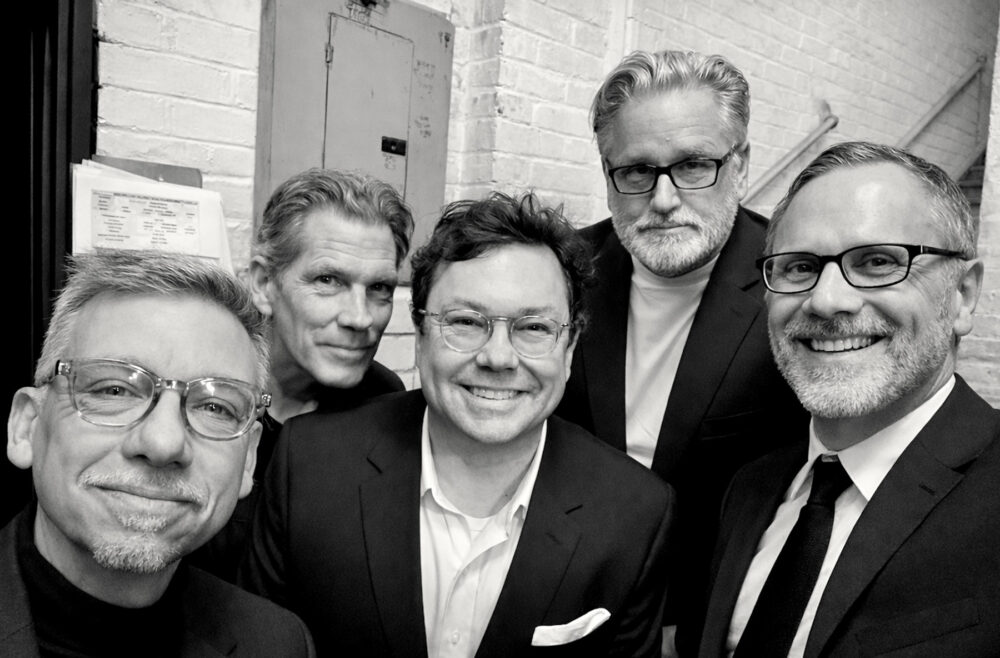
JS: I like the band photo you have out and please congratulate Jonathan for taking it.
BD: That was a lucky shot because I don’t like being photographed.
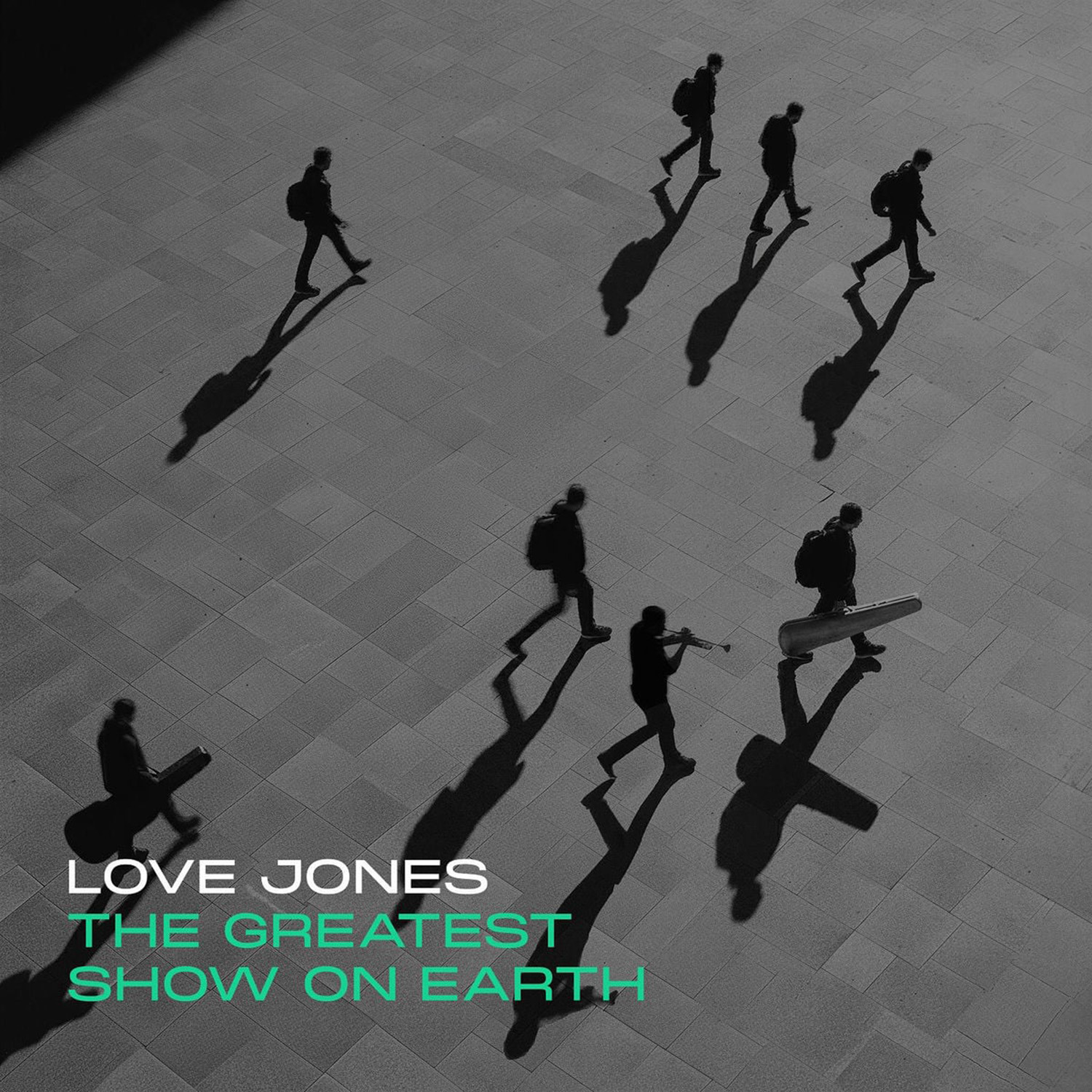
JS: Tell me about the album cover.
BD: We went back and forth on this. I didn’t want the band on the record cover I wanted something symbolic and different. A great guy, Walter Zauch, is a fan of the band and he sponsored the whole record through his bourbon company Whiskey Thief. He hired a photographer and a graphic designer and they came up with some designs. We thought this is really cool. Barry was in charge of pulling it all together with Walter.
CH: Walter is a genius on so many levels. He put together our vinyl re-issues. Did the covers.
BD: He’s our oldest and biggest fan. He has a distillery and tasting room here in Kentucky. He also has a commemorative Love Jones Bourbon bottle.
JS: Tell me about working with your publicist Mike Cubillos.
BD: He’s incredible. Barry made sure we hired a publicist and it’s been super fun.
CH: Back in the day we had a couple people who worked our records and Mike was my favorite. He seemed like one of us.
JS: Let’s talk about each of the songs on your new album. “When We Are Free.” I hear a deep rich sound. Made me think of Steely Dan.
BD: The lyrics were written while we were going through what was going on in America. In an oblique or informal way. To address the crisis in the national consciousness. Unifying brother and sisterhood. Written during the zenith of COVID and Trump’s re-election and everything going on.
CH: It’s a nod to Steely Dan in that our lyrics are always somewhat biting or tongue in check. Thank you Jimmy, for the compliment bringing up Steely Dan.
BD: The length of the songs I think are directly related to Jazz but with a Pop spirit.
JS: The next track is “Looking For Diamonds.” The title, but even more, the music, has a James Bondish undercurrent.
CH: This was interesting. I had this riff that was a sort of chord progression and a vocal melody in my head. I live in North Carolina so I was going back and forth to Louisville doing these recordings. One day Ben said they did something to my song and we hope you like it. They put like a Bo Diddley beat on it. It blew me out of the water. I had started with a Bossa Nova type thing and now it was a really cool up tempo song.
BD: That song lyrically is about a person looking for meaning in their existence. We had started writing the song about an archeologist who was digging for diamonds. It turned into the person is a waitress at TGI Friday’s who dreams of being an archeologist. She’s digging for diamonds in her own life.
CH: It is a bit Donald Fagan like with its wit. It’s not conscious on our part that’s just what’s happens when the five of us get into a room together.
JS: “Greatest Show on Earth.” This is a song where I felt the presence of Boz Scaggs
BD: He’s probably in the DNA of that song. There’s so much subconscious stuff that bubbles up when we do this.
CH: How many times have I listened to the song Lowdown?
JS: “PDK.” I thought of Mike Post the composer of TV music.
BD: There’s a song on our second album that is more Mike Post like, “Vigilante,” a bit cop-show like. I love how people hear different things in our music that we don’t hear or weren’t intended. This song is about Philip K. Dick the author of Blade Runner. He was accused of being insane because he believed he could travel to different locations.
I’ve done a lot of spiritual work on myself. I was compelled by the idea that you could travel to your younger or older self. I think you can do that with music. I could go back to the first Love Jones record and be the 28-year-old version of myself. This song was a tribute to Philip K. Dick and the concept of inter-dimensional travel through your mind. Philip K. Dick did believe he did go to the other dimension. That’s how he was able to write the book The Man in the High Castle.
JS: Speaking of sciene fiction I did have a chance to photograph Ray Bradbury once.
BD: One of the cool things about living in L.A. is you get to meet people you wouldn’t otherwise meet. I lived in Los Feliz and I got to meet Forrest J. Ackerman, the keeper of all things Science Fiction. I went up to his house and got to go through all his memorabilia with my daughter.
JS: Forrest became a friend of mine because in addition to his being the king of science fiction he was, shall I say, the Prince of Horror. He knew Bela Lugosi and Boris Karloff and many others. I would go to his house for his meetings or classes or lectures on the history of Sci-Fi and Horror films. The next song on your new album is “Twilight on Sand Hill.” I feel like I’m hearing Jeff Beck on guitar and I loved the snare sound which reminds me of sand. Very creative.
BD: Our ex-drummer lived in this beautiful house overlooking a field down near the Ohio river, populated by the neighbor’s horses. During our writing sessions we’d be sitting out on his patio looking at the sunset and we started working on this guitar riff. The vibe was so strong, with the crickets and the horses and the sunset. It turned into this multifaceted long piece that had to be played from muscle memory. Each section of the Jeff Beck like section Todd Johnson would say the next section is Graham Greene, the next section is Sergio Leone. It turned into this mini symphony. We thought about putting singing on it but it’s great as an instrumental.
CH: We had some vocal melodies we came up with and ideas for lyrics. It was just so cool we left it alone.
JS: The album concludes with “December 15.” Tell me about the meaning. I liked the great piano and organ and very cool use of the sound of wind at the outro.
BD: December 15 is an utterly meaningless date and so the idea behind the song was really take advantage of every single day. Take advantage of life. Everyday can be the best day of your life. Live it to its fullest. Regarding the wind, we have done sound design since the beginning of our band. Chris and I work in TV and Film and it’s good to create an atmosphere and set the vibe for a song.
CH: I had the song pretty much written out and the beginnings of a vocal melody but then it just took off. That’s the beauty of getting together with Ben, Jonathan and Barry. When we get together it becomes a completely other animal.
BD: I want to pay credit to the collaborators on this album, the horn section, our legendary keyboard player Bob Ramsey. Also, Todd Johnson lead guitar on a lot of the stuff, he’s an epic genius. You try to surround yourself with people who are more talented than you are. It raises the whole game for everybody
JS: Final thoughts?
BD: We want to expose people to our new songs and then hopefully be able to get out on tour.
For more info: https://www.love-jones.com/