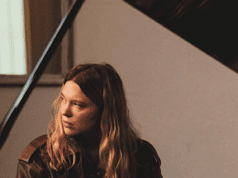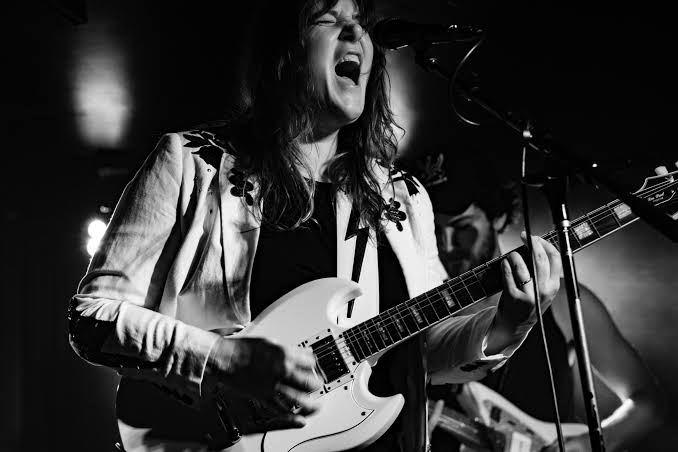
Los Angeles , CA (The Hollywood Times) 11/10/26 – Sometimes the most memorable performances happen when there is no plan, no preparation, and absolutely no expectation of winning. That was certainly the case for Nashville-based singer-songwriter Janelle Faiman, professionally known as Fimone, who unexpectedly walked away with the title of Women’s Week Idol during Provincetown Women’s Week 2026.
What began as a spontaneous decision to sing Etta James’ timeless classic “At Last” turned into a defining moment for an artist whose life and career have been shaped by perseverance, heartbreak, musical discovery, and a determination to tell women’s stories.
I first met Fimone during Women’s Week in Provincetown, Massachusetts, where her remarkable voice and heartfelt performance captured the attention of an enthusiastic audience. After returning from Palm Springs Pride, I had the pleasure of reconnecting with her for an exclusive Zoom interview for The Hollywood Times.
From her beginnings on a Minnesota farm to more than two decades in Nashville, Fimone’s story is about much more than music. It is about finding your voice, embracing your identity, and transforming life’s challenges into art.
 A Spontaneous Victory at Provincetown Women’s Week
 A Spontaneous Victory at Provincetown Women’s Week
For Fimone, that atmosphere provided the perfect setting for an unexpected musical triumph.
She hadn’t traveled to Provincetown with plans to enter a singing competition. In fact, according to our interview, she was encouraged to participate by someone she had met just 30 minutes before the event began.
With little time to prepare, she stepped onto the stage and delivered her interpretation of Etta James’ beloved “At Last.”
The performance earned her the Women’s Week Idol title.
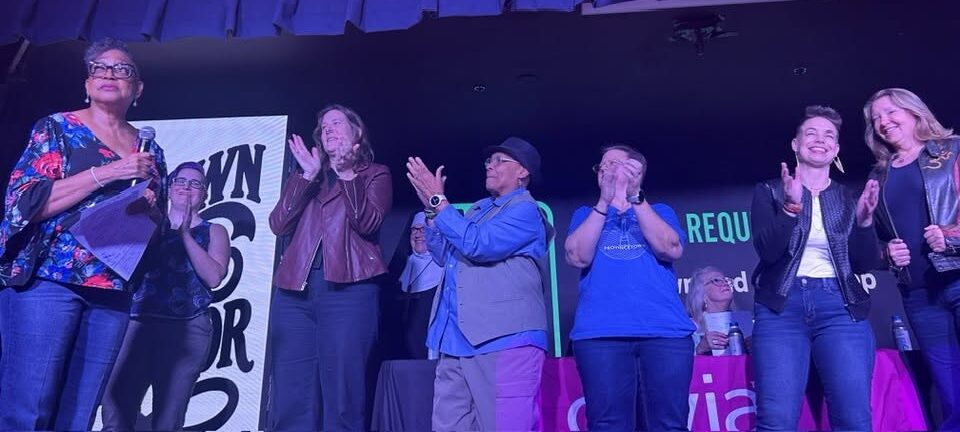
For Fimone, the victory was especially meaningful because she was performing as a queer artist in front of an audience of women who understood and appreciated her music and her journey.
There was a genuine sense of connection between performer and audience, something that cannot be manufactured through rehearsals or elaborate production.
Her victory served as a reminder that extraordinary opportunities sometimes arise when we simply say yes.
Long before her Provincetown triumph, Fimone was a teenager growing up on a farm in rural Minnesota, discovering the power of music.
She picked up a guitar at 15 and began writing songs at 18, using songwriting as a creative outlet and a means of understanding the world around her.
At 22, she made the decision to move to Nashville, Tennessee, where she has now spent approximately 20 years developing her career.
Nashville is a city filled with talented musicians, ambitious songwriters, and performers hoping to find their place in an extraordinarily competitive industry.
For Fimone, those years have been a musical education built around songwriting, performing, collaborating, and developing an artistic identity that reflects who she truly is.



During our conversation, she clarified her professional stage name.
“So, my artist name is Fimone, F-I-M-O-N-E,” she explained, comparing its pronunciation to that of legendary singer Nina Simone.
It’s a distinctive name for an artist who is determined to forge her own path.
Her background in songwriting remains central to her work, allowing her to explore deeply personal experiences through melodies and lyrics that resonate with listeners.
“Takin’ Me Over”: Turning Heartbreak Into Music
One of the most revealing parts of our interview centered on Fimone’s latest single, “Takin’ Me Over,” a deeply personal song inspired by her recent divorce.
Rather than avoiding the emotional complications of ending a marriage, Fimone chose to confront those feelings through her music.
She spoke openly about the challenges of divorce and the importance of creating something authentic from a painful experience.
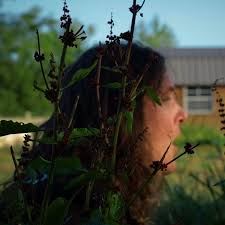 For many artists, heartbreak becomes the catalyst for some of their most meaningful work. In Fimone’s case, the process was not immediate or easy.
She described a period of creative difficulty during which finding the motivation to write and record proved challenging.
That changed when she began collaborating with producer Alex DeVore.
According to Fimone, DeVore helped her move beyond that creative funk and reconnect with the music she wanted to make.
The resulting single represents both vulnerability and renewal.
What makes “Takin’ Me Over” particularly compelling is the intention behind it. Fimone hopes that listeners who have experienced divorce, relationship loss, or difficult personal transitions will recognize something of their own lives in the song.
There is power in acknowledging that relationships can end without diminishing the love, experiences, and personal growth that came before them.
For Fimone, songwriting provides an opportunity to process those emotions while offering others a sense of understanding.
And sometimes, the most personal songs become the most universal.
Perhaps the most fascinating revelation during our interview involved Fimone’s ambitious documentary project, Norma’s House.
The film explores the life of Norma Wallace, a legendary New Orleans madam and businesswoman who operated a brothel from approximately 1920 to 1960.
Wallace’s extraordinary life captured Fimone’s imagination after she discovered the book The Last Madam, attributed in the interview notes to Christine Wilts.
Wallace emerged from a difficult upbringing to become a wealthy and influential figure in New Orleans during an era when women faced enormous barriers to economic independence.
By the 1940s, she had established herself as a successful businesswoman in an industry that operated largely outside conventional society.
Her story raises intriguing questions about power, independence, morality, survival, and the limited opportunities available to women during the first half of the twentieth century.
For Fimone, the documentary represents an opportunity to examine those complexities through a distinctly female, and particularly queer female, perspective.
During our conversation, she emphasized the importance of women telling women’s stories, especially when the historical narratives have traditionally been shaped by men.
Rather than approaching Wallace simply as a notorious figure associated with New Orleans nightlife, Fimone wants to explore the woman behind the reputation.
What circumstances shaped her choices? How did she navigate a male-dominated world? And what can contemporary audiences learn from a woman who built an unconventional life on her own terms?
These are some of the questions driving the documentary.
One of the most intriguing details Fimone shared was that she had actually recorded her previous EP inside the house that once operated as Norma Wallace’s brothel.
For a musician fascinated by history and storytelling, recording in such a location created an extraordinary connection between her artistic work and Wallace’s legacy.
The house itself became more than a historical setting. It provided a tangible link to the woman whose story Fimone now hopes to bring to a wider audience.
There is something wonderfully cinematic about a contemporary female musician creating music in a building once occupied by a woman who challenged the social conventions of her time.
That connection ultimately helped inspire the documentary project.
Fimone hopes to complete Norma’s House by spring 2027, with plans to pursue film festival submissions and explore possible distribution through streaming platforms.
The project promises an interesting intersection of history, feminism, sexuality, entrepreneurship, and the enduring importance of women’s voices in documentary filmmaking.
Throughout our conversation, a recurring theme emerged: the importance of authentic representation.
Whether performing for women in Provincetown, writing about her divorce, or researching Norma Wallace, Fimone approaches storytelling through the lens of her own lived experiences.
She recognizes that women, particularly queer women, have not always had the opportunity to tell their stories on their own terms.
Her documentary seeks to contribute to changing that narrative.
It’s an especially relevant subject at a time when conversations about women’s autonomy, LGBTQ+ visibility, and historical representation continue to shape our cultural landscape.
Fimone’s work demonstrates that artistic expression does not need to be confined to a single medium.
A songwriter can also become a filmmaker. A performer can become a historian. And a deeply personal musical journey can lead to a much broader exploration of women’s experiences across generations.
While Norma’s House represents an exciting new chapter, Fimone is certainly not stepping away from music.
During our interview, she revealed plans to release a full-length record within approximately six months.
The upcoming project will provide an opportunity for listeners to experience another dimension of her songwriting and musical evolution.
She also has an upcoming Nashville performance scheduled at the Lipstick Lounge on Saturday, November 14, 2026, at 6 p.m.
The Lipstick Lounge has long been associated with Nashville’s LGBTQ+ community, making it a fitting venue for an artist whose work celebrates individuality and authenticity.
Fans can also follow her online under the handle The Real Fimone for music, performances, and updates about her creative projects.
What I enjoyed most about my conversation with Fimone was discovering how much more there is to her story than that unforgettable performance in Provincetown.
Winning Women’s Week Idol may have introduced her to a new audience, but her artistic journey began decades earlier with a teenage girl on a Minnesota farm and a guitar.
Today, she is an experienced Nashville songwriter, a recording artist willing to confront emotional truths, and an emerging documentary filmmaker passionate about bringing overlooked women’s stories to the screen.
Her journey reminds us that success in the entertainment industry isn’t always defined by commercial recognition or conventional milestones.
Sometimes it is about taking chances, remaining true to yourself, and having the courage to reinvent your creative life.
And sometimes, it takes just one spontaneous performance of “At Last” to remind an artist, and everyone listening, why music matters so much.
From Provincetown to Nashville and the historic streets of New Orleans, Fimone is finding new ways to tell stories that deserve to be heard.
And judging by everything she shared during our interview, her next chapter may be her most exciting yet.
Watch Our Exclusive Interview:
Valerie Milano of The Hollywood Times sits down with Nashville singer-songwriter Fimone to discuss her Women’s Week Idol victory, her new single “Takin’ Me Over,” and her upcoming documentary, “Norma’s House.”