Palm Springs, CA (The Hollywood Times) 7/26/26 – The Hollywood Times generally focuses on entertainment, arts and culture rather than local politics. However, when an issue directly affects the future of Palm Springs, and when a longtime community leader takes the time to explain the process clearly, it deserves attention.
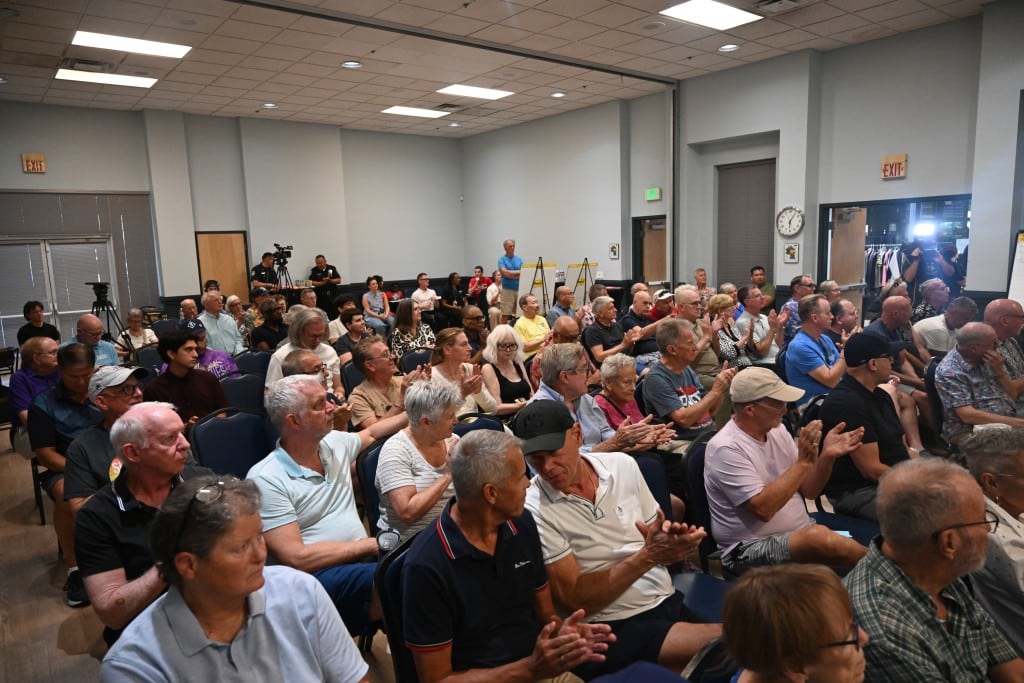
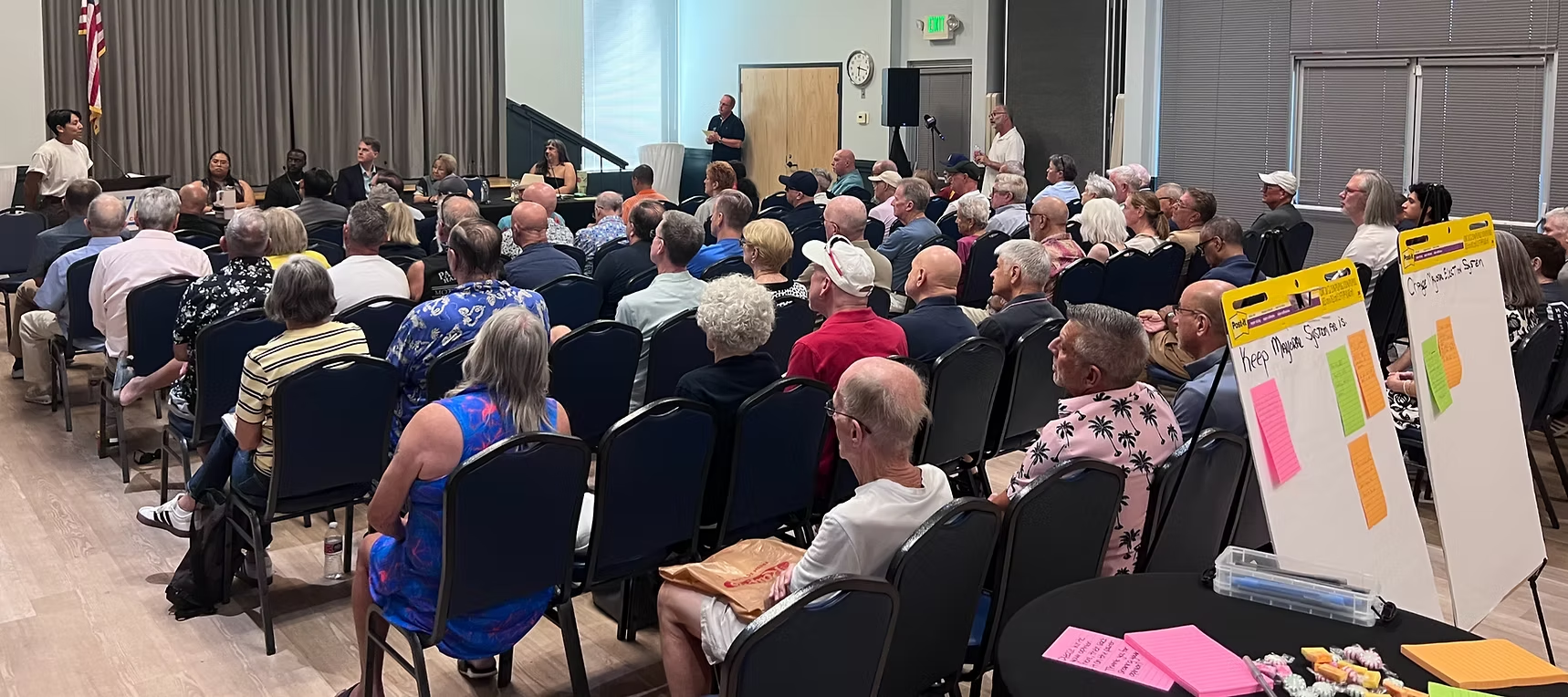
More than 100 residents packed the Mizell Center Wednesday evening for the first of seven public meetings examining whether Palm Springs should continue rotating the mayoral position among its five councilmembers or return to electing a mayor citywide.
About two dozen residents spoke during the meeting, with opinions divided nearly evenly between the two systems. Several speakers said they remained undecided. Accountability and diversity emerged as the dominant themes throughout the evening.

Palm Springs City Councilmember Ron deHarte is also a friend who presented me with the Palm Springs Pride Arts & Culture Award in 2025, during his time as mayor. Before the first public meeting, I spoke with him via Zoom about the process and what residents are being asked to consider.
“The primary goal is to get input from the community on what they want their mayor to be and what they want their mayor to do,” deHarte explained.
Click below to watch our exclusive interview:
Palm Springs previously elected its mayor citywide. That changed when the city adopted district-based City Council elections in 2018. Since then, the mayoral position has rotated among the five councilmembers elected by individual districts.
“It’s only been a few years that we have not been electing our mayor,” deHarte said. “The mayor has been rotated between the City Council members who have been elected by districts.”
The City Council directed staff in February to research possible changes to the mayoral position. The discussion gained urgency in March when the city received notice of a possible ballot initiative proposing a directly elected, at-large mayor.
However, no formal proposal is currently before the city, and the question will not appear on the November ballot. The citizen working group will first complete its seven public meetings, consult with the city attorney and present its findings and recommendations to the City Council.
Wednesday’s meeting opened with presentations from representatives of both sides.
Lex Ortega, who served on the city’s California Voting Rights Act working group in 2017 and 2018, presented the case for retaining the rotating system. Ortega argued that councilmembers elected from individual districts are more directly connected to neighborhood concerns and collectively represent a more diverse city.

Rich Gordon, chair of Citizens for An Elected Mayor, argued that a citywide election would allow all voters to choose the person representing Palm Springs as mayor. He said an elected mayor could provide a clearer point of accountability for delayed infrastructure and development projects while building stronger relationships with state and federal officials.
Supporters also envision an elected mayor serving as a more consistent spokesperson for Palm Springs and helping promote tourism while following major city projects from planning through completion.
DeHarte raised a similar concern during our interview. Under the rotating system, a councilmember may be elected by voters in only one district before later becoming mayor of the entire city.
 “Right now, the mayor is somebody who could be elected by less than a thousand votes in a district,” deHarte said. “That’s leaving out 44,000 people in the city who didn’t pick that mayor to be sitting in a rotational spot.”
Supporters of an elected mayor believe the system would expand voter participation because residents could select both their district councilmember and their citywide mayor.
Accountability arguments were raised on both sides Wednesday.
Opponents questioned whether directly electing a mayor would necessarily produce greater oversight, citing controversies during the administrations of former mayors Steve Pougnet and Rob Moon. Supporters of changing the system pointed to more recent controversies under the district-based council, including the city’s handling of a $700,000 universal basic income grant program that was later examined by a grand jury.
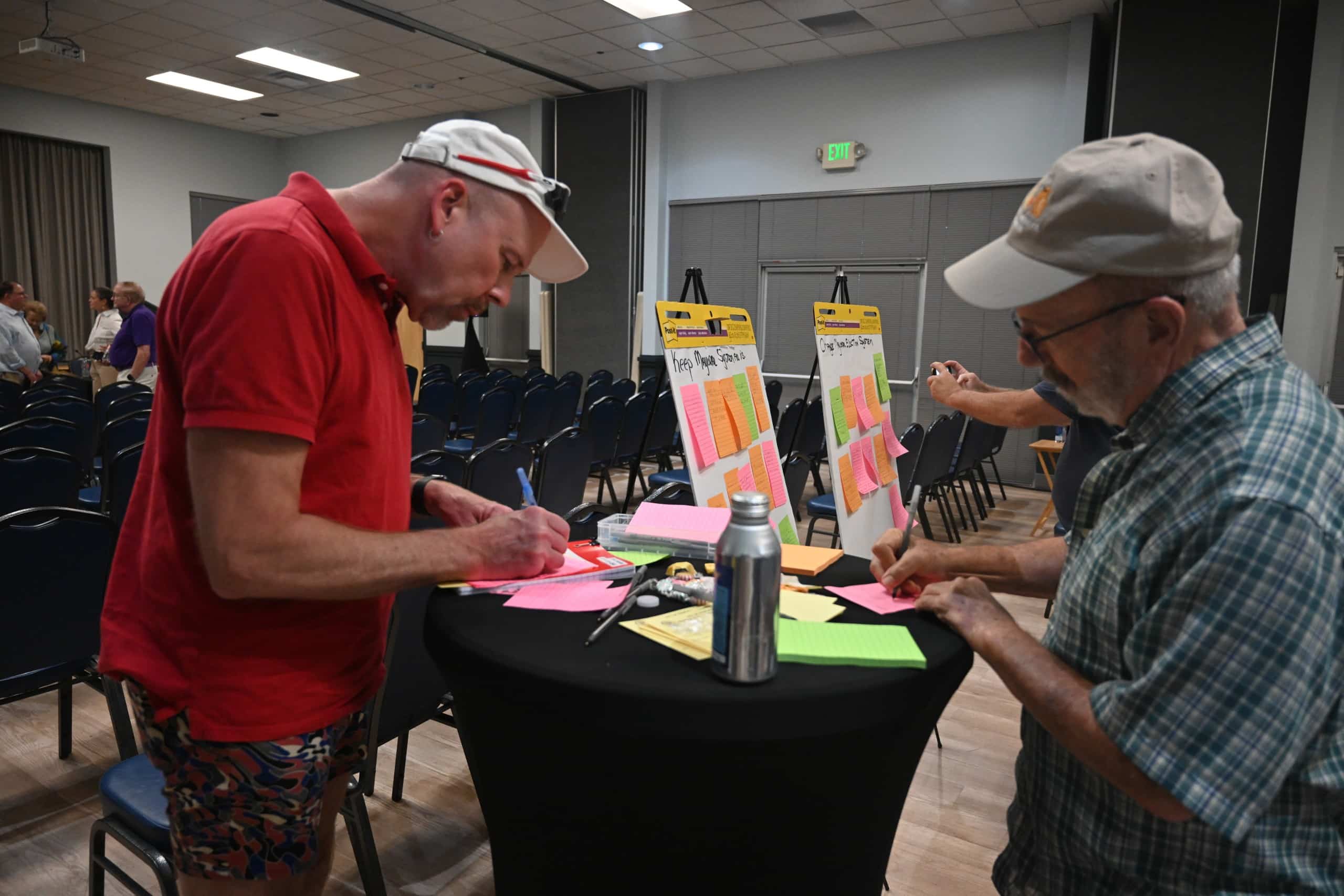
Diversity was another major concern.
Supporters of the rotating system said district elections have allowed a broader range of residents to serve as mayor, including women and people of color. Before district elections, Palm Springs had never elected a woman as mayor and had elected only one person of color to the position during approximately 80 years of city history.
Since the transition, three people of color, including two women, have served as mayor through the rotation system.
That history led some residents to question whether returning to an at-large election could make it more difficult for candidates from underrepresented communities to compete citywide.
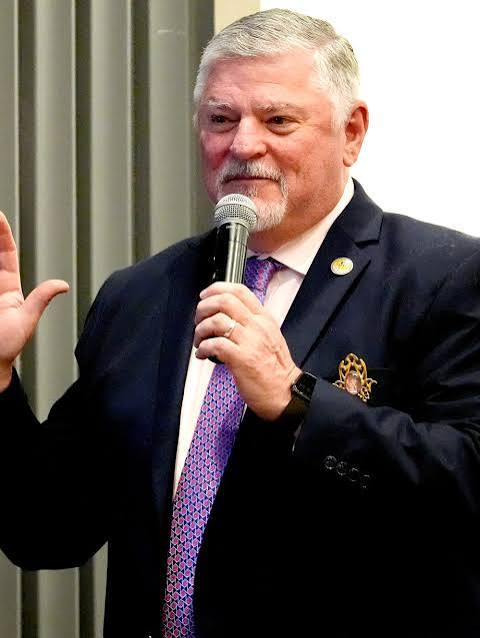
DeHarte said district elections can also create a path toward citywide leadership. Councilmembers have an opportunity to build experience, visibility and a public record that voters across Palm Springs can later evaluate.
“When you get into that leadership role as a councilmember, you get to prove to the community you have the skills, the ability and the vision to lead the city,” he said.
Other residents questioned whether one elected mayor could realistically fulfill every role discussed during the meeting, from government lobbyist and tourism spokesperson to development watchdog and community representative.
The discussion is therefore not limited to how Palm Springs should select its mayor. Residents are also being asked to consider what responsibilities and authority the office should carry.
 “What do you want the mayor’s job description to be?” deHarte asked. “What should the mayor’s role be? What power should the mayor have?”
Possible models could leave the mayor with powers equal to those of the other councilmembers, allow the mayor to break tie votes or give the position additional authority. Directly electing a mayor would not automatically determine whether Palm Springs has a ceremonial leader, a stronger executive figure or something in between.
Under the current system, the mayor remains an equal member of the City Council, with additional ceremonial responsibilities but no greater voting authority.
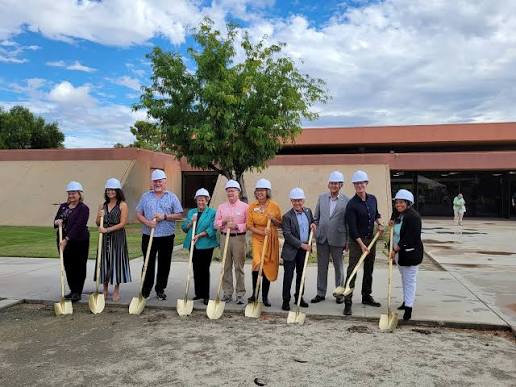
A six-resident working group is conducting the public process. Three members were selected by deHarte and three by Councilmember Grace Garner.
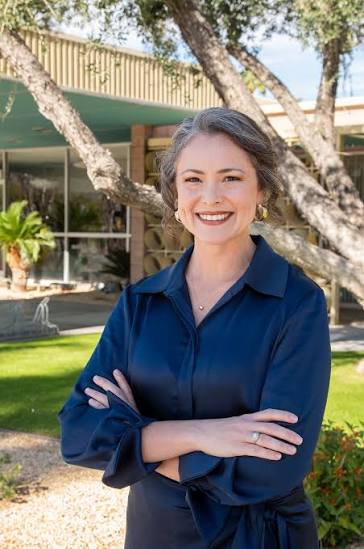
DeHarte emphasized that neither councilmember asked the residents they selected to declare a position in advance. He and Garner serve only as liaisons between the working group and the full City Council.
“We are not sitting on the working group as members,” he said. “We are at arm’s length from the actions that they take.”
The working group is responsible for hosting the meetings, collecting comments, considering possible governance models and eventually presenting its findings to the City Council. Every meeting will be videotaped, and transcripts will be made available so residents can review the discussions.
The seven meetings will be held at different times and locations across all five City Council districts. One complete meeting will be conducted in Spanish.
“We want to be able to make the conversation accessible to everybody,” deHarte said. “Every district will have a meeting in their district. People can feel comfortable going to their own neighborhood meeting.”
Residents are welcome to attend even if they do not wish to speak.
“These are conversations,” deHarte said. “Maybe you’re not going to make a comment. Maybe you just want to go and listen, and that’s perfectly fine too.”
 Any proposed change must comply with the California Voting Rights Act, which helped drive Palm Springs’ transition to district-based council elections. The working group will consult with legal counsel before presenting any proposal to the City Council.
That review will examine whether a citywide mayoral election can legally coexist with district-based council elections while protecting fair representation.
The working group is aiming to present its findings around November, although the timing could depend upon the amount of community feedback received and the necessary legal review.
These meetings do not mean Palm Springs has already decided to change its system. One of the working group’s responsibilities is to determine whether there is enough public support to justify placing the matter before voters.
After reviewing the group’s report, the City Council could seek additional legal guidance, consider a future ballot measure or decide not to proceed. If a measure is pursued, the earliest likely opportunity would be the March 2028 presidential primary election.
“This isn’t a rushed process,” deHarte said. “We’ll get the pulse from the community on what they would like to see, and then council will review.”
Wednesday’s gathering was only the beginning of the public process. The next meeting is scheduled for September 16 in District 5, with additional sessions continuing through the end of October.
“I encourage everybody, if you’re able to, to attend at least one of the meetings,” deHarte said. “Every time we can hear community feedback, it’s valuable.”
Palm Springs residents now have an opportunity to listen to their neighbors, express their own views and help determine what they want the city’s mayoral position to become.
DeHarte Reflects on the First Meeting
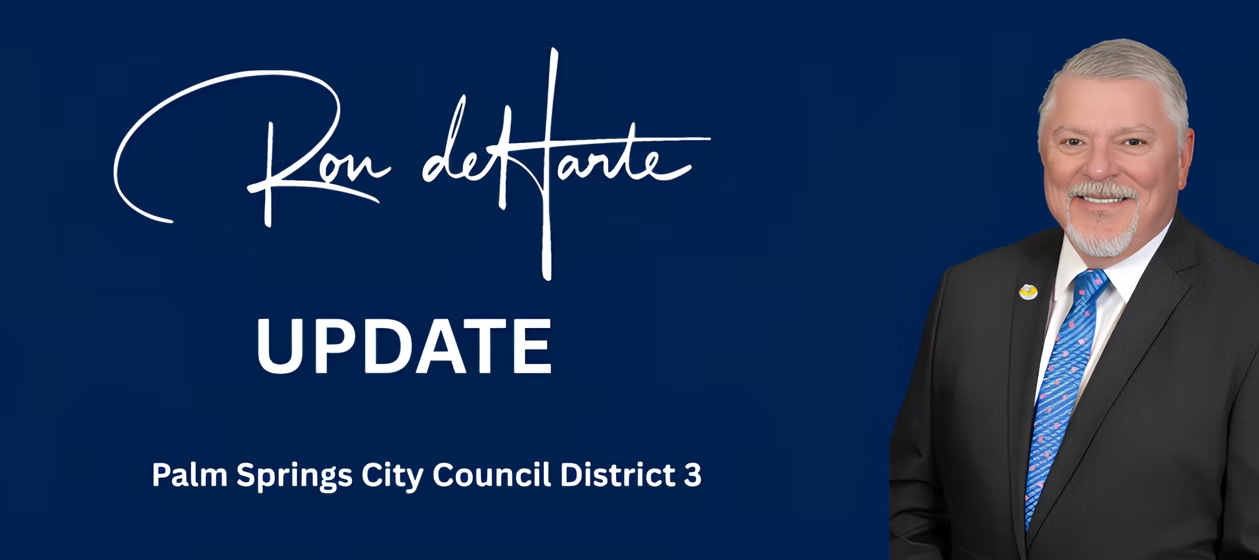 Following the July 22 meeting, deHarte shared additional observations with The Hollywood Times. Although he moderated the discussion and listened to both sides, he said he personally supports allowing voters to decide whether Palm Springs should adopt a directly elected mayor while retaining district-based council representation.
DeHarte noted that voters did not directly approve the current rotation system. It was established by the City Council in 2019 following the transition to district elections.
 He outlined three possible forms of mayoral leadership:
- Under the current rotating system, councilmembers take turns serving as mayor for one year without receiving additional executive authority.
- Under a hybrid system, residents would continue electing their district councilmember while voters citywide would also elect a mayor to a four-year term. The city manager would remain responsible for daily operations.
- Under a strong-mayor system, the mayor would function as the city’s chief executive and assume duties ordinarily handled by the city manager. DeHarte said that model is common in major cities but unusual for a city the size of Palm Springs.
DeHarte believes the hybrid model could preserve the neighborhood representation created through district elections while adding a leader accountable to the entire city.
“Under a hybrid system, you don’t lose anything; you gain,” he said. “You keep your district councilmember for local needs and gain a mayor who answers to all of us equally.”
He argued that changing mayors annually can make it difficult to sustain momentum on complex projects, develop long-term relationships with government agencies and provide residents with a recognizable point of accountability. He said a directly elected mayor could focus on citywide priorities while councilmembers remain closely connected to their individual districts.
DeHarte also responded to several concerns raised during the meeting.
Regarding potential California Voting Rights Act challenges, he pointed to California cities that combine district-based councils with at-large mayors. Any proposal in Palm Springs, however, would still require review by the city attorney to ensure that it complies with voting-rights laws and protects fair representation.
 He also disputed estimates that creating an elected mayor could cost as much as $500,000. According to deHarte, the current mayor receives approximately $50,000 annually. He estimated that a directly elected mayor operating without a large dedicated staff could cost approximately $82,000 annually in salary and standard benefits. Any actual compensation and staffing structure would have to be formally determined by the city.
Addressing references to past political scandals, deHarte argued that individual misconduct can occur under any governmental structure and that financial accountability ultimately depends upon strong oversight, internal controls and enforcement.
For deHarte, the central question is whether residents should have the opportunity to make the final decision.
“Keeping district council seats protects neighborhood-level advocacy,” he said. “Adding an elected mayor gives Palm Springs a single point of citywide accountability.”
His preferred outcome is clear: “Put this choice on the ballot and let the voters decide.”
Upcoming Community Meetings
Residents may attend any meeting, regardless of the district in which they live.
- September 16, 6–8 p.m. — District 5
Cahuilla Elementary School, Multi-Purpose Room
833 E. Mesquite Avenue - September 24, 6–8 p.m. — District 1
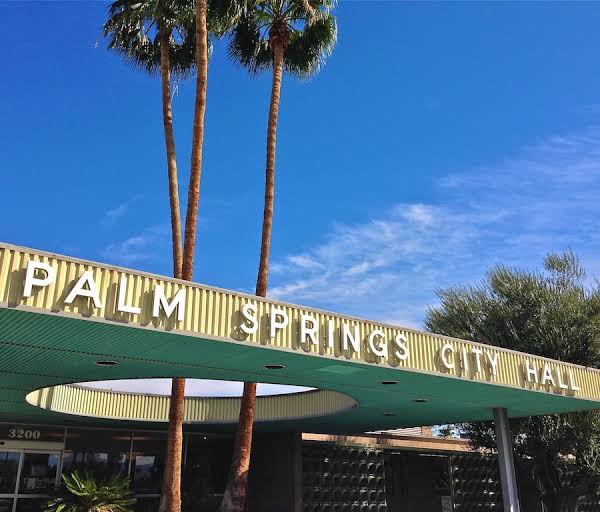
Palm Springs City Hall, Council Chambers
3200 E. Tahquitz Canyon Way - October 1, 6–8 p.m. — Citywide Spanish-language meeting
James O. Jessie Community Center, Meeting Room
480 W. Tramview Road - October 7, 6–8 p.m. — District 2
Vista Del Monte Elementary School, Multi-Purpose Room
2744 N. Vista Del Monte - October 15, 6–8 p.m. — District 3
Agua Caliente Cultural Museum
140 N. Indian Canyon Drive - October 19, 6–8 p.m. — District 4
Palm Springs High School
2401 E. Baristo Road
Anyone needing special assistance or translation services should contact the Palm Springs City Clerk’s Office at (760) 323-8204 at least 48 hours before the meeting.