
On the Road screens at Cinema Diverse on Saturday, September 19 at 7:00 PM in Theatre One at the Palm Springs Cultural Center. It runs 93 minutes
En el camino (On the Road) is a challenging, provocative queer film that sets out to redefine certain perceptions around identity and how it manifests both on screen and in the psychology of its central characters. Consider En el camino to be akin to Brokeback Mountain crossed with a gruesome episode of the television series Narcos and you have writer-director David Pablos’ transgressive new genre flick On the Road. Tough as the film seems, it is somehow tender and ultimately moving.

The setting of its unlikely love story is a long highway to hell where death, or possibly worse, lurks just around the corner. And yet amid all the lust, violence, blood and graphic sex, Pablos has crafted a deeply felt romance about two men who passionately find each other in a very dark place.
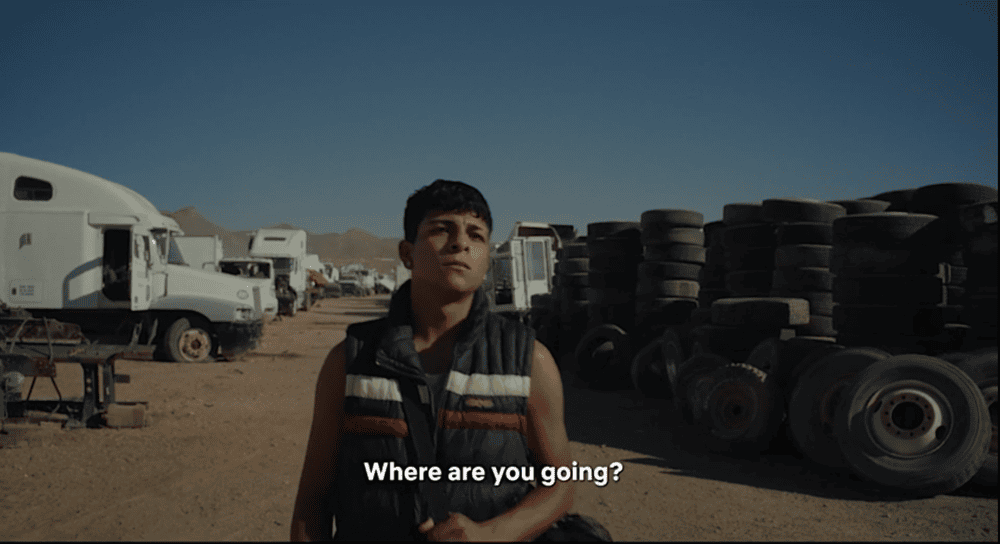
David Pablos finds unconventional beauty in the sweeping landscapes of Mexico, using its long, winding roads as the stage for En el camino, a film whose title evokes Jack Kerouac’s iconic novel On the Road. True, it’s about the exploitation of men both young and old, whether they’re driving trucks or selling themselves to drivers at rest stops. The film is filled with explicit imagery and moments of grisly violence, but they serve a greater purpose, which is to show how human souls can emerge out of broken bodies and somehow find a way to connect.
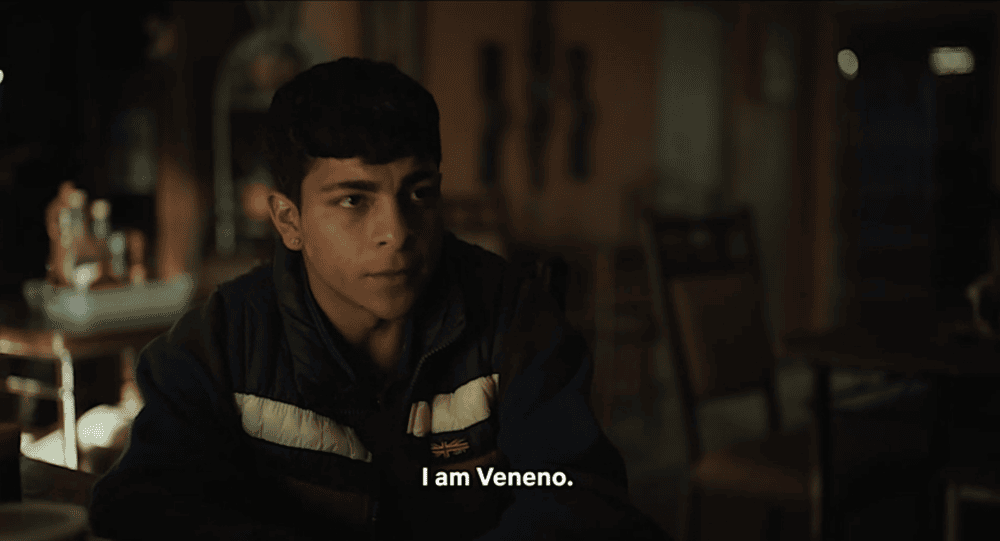
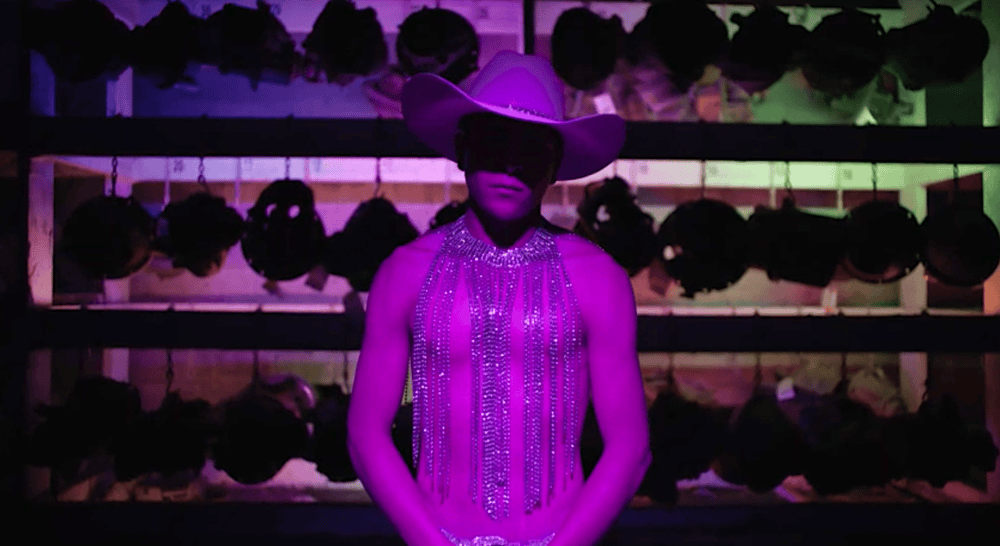
A handsome young drifter Veneno (Victor Prieto) turns tricks in a roadside gay club that looks like it belongs in Gaspar Noé’s Irreversible. Pablos depicts the sex as raw and unromantic: This is banging, not lovemaking, which makes sense when we realize Veneno earns a living sleeping with truck drivers in exchange for cash or coke, the latter of which he sells on the side.
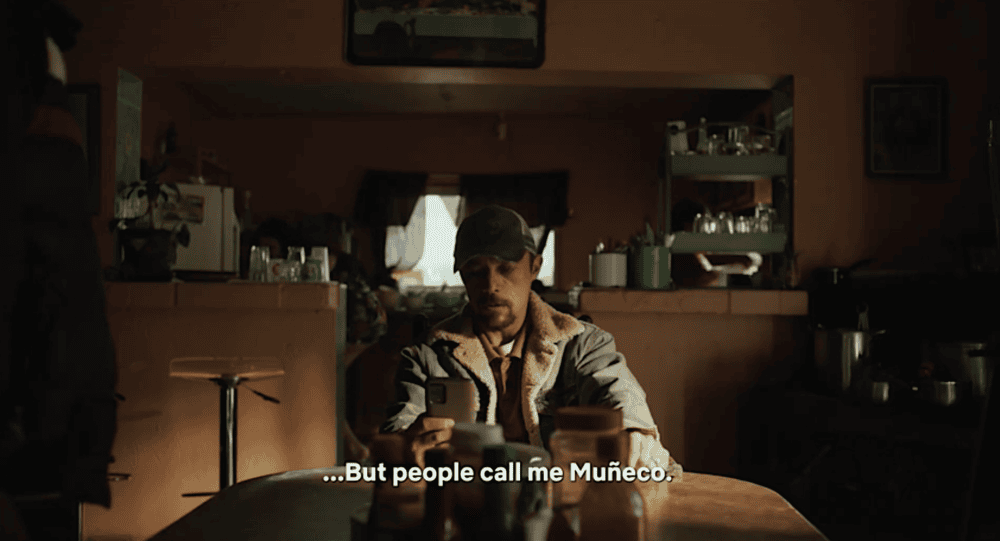
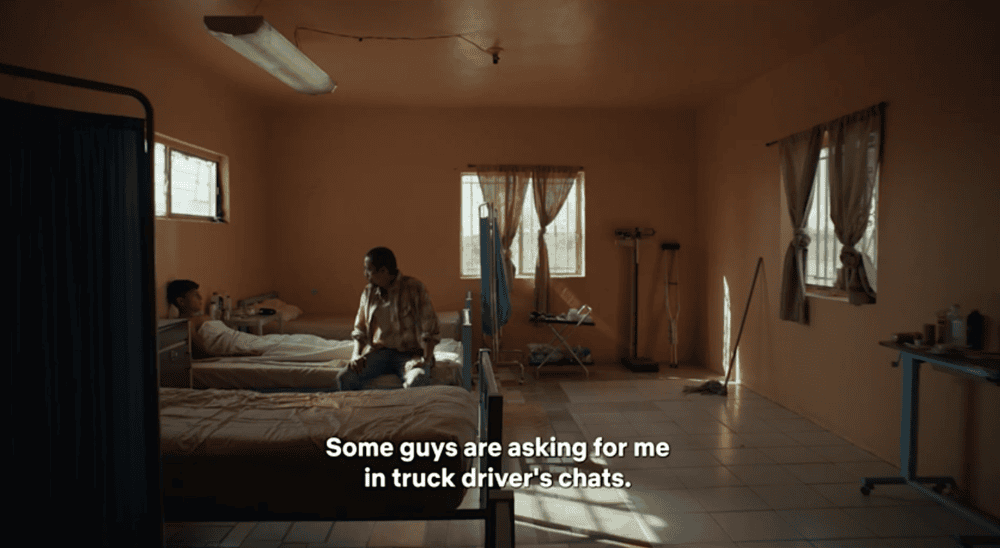
After one of his clients stiffs him, Veneno runs into Muñeco (Osvaldo Sanchez), a trucker in his 40s who spends long weeks away from his estranged family, drinking and doing drugs to stay awake on the job. He’s hardly a role model, but Veneno quickly takes a liking to the older wayfarer, either because he’s hoping to partner with him or possibly steal his money, or — and this is where the film gets interesting — he senses real feeling for the older man.

The two head down the highway, sitting side-by-side in Muñeco’s massive 18-wheeler. Veneno doesn’t hide the fact that he’s attracted to the driver, nor that he’s gay, while Muñeco claims he isn’t homosexual, even if he’s not against it and seems curious about what it could be like. The possibilities seem as endless as the road stretching in front of them.
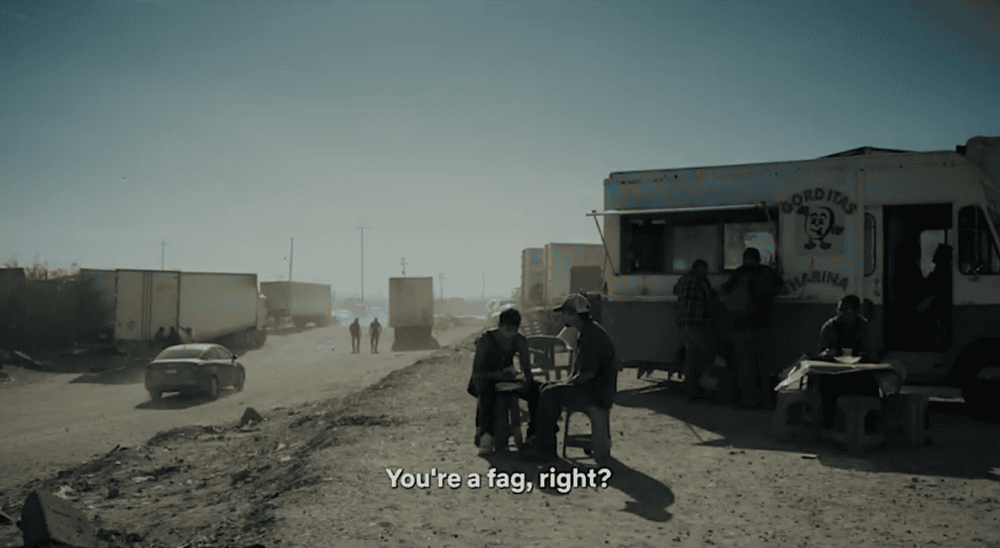
This burgeoning love story means the two travelers soon find themselves in trouble when killers from Veneno’s murky past — seen in stylized violent flashbacks that are explained much later — start chasing after them.
At one sordid rest area that’s a graveyard of broken-down trucks, between which a team of female sex workers service their clients, Veneno crosses paths with the driver who stiffed him and winds up stabbing the guy to death. Now the would-be lovers are on the run from both the killers and the police, leaving them with few viable options.
When things are at their most desperate, the two hide out in an abandoned warehouse and slow-dance to the Colombian ballad “Los Caminos de la Vida” (“The Roads of Life”) in one of the most moving sequences you will find in queer cinema.

If there is one theme that ties everything in En el camino together, it is transience: The story follows characters that are always in a state of motion, to the point where they struggle to feel any sense of belonging. Veneno’s sense of restlessness and unease makes him drift between places where he can satisfy his carnal cravings. But he has no family and no sense of home.

Pablos explores masculinity and the role it plays in defining someone’s identity – the two core characters embody different ideals of what it means to be a man, yet find themselves receding from public view, knowing that they live in a society where their choices have to be concealed behind closed doors. The film blurs sensuality with the looming thread of danger. There is much passion, but it is a far cry from romance. On the long highways of Mexico, queerness comes with an inherent risk. Desire, identity and the dangerous pursuit of satisfaction grow increasingly intense as these two men are on the road.
This is a film to be experienced. On the Road, produced by Diego Luna, won the Orizzonti’s top prize at the 2025 Venice International Film Festival It is in the line-up of the Cinema Diverse Film Festival in Palm Springs on Thursday, September 19 at 7:00 pm in the Palm Springs Community Center. It is also featured in the upcoming Hola Mexico Film Festival at the Regal Cinemas L.A. Live in Downtown Los Angeles on Saturday, September 26, at 7:30 pm.