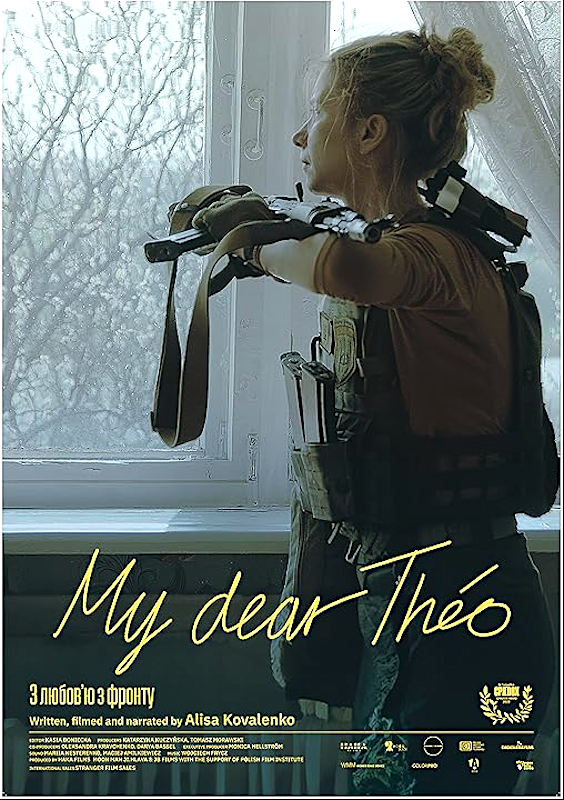
“My Dear Théo” is a fine documentary made by Ukrainian filmmaker Alisa Kovalenko about her frontline service in the Ukrainian Volunteer Army through video diaries to her son Theo in France, capturing soldiers’ experiences and personal moments during the 2022 Russian invasion. After its premiere at the Cannes Film Festival, it was great to be able to see this powerful at the SEEfest Film Festival on Friday, May 1, at the Laemmle NoHo Theatre in North Hollywood. Kovalenko presents an unforgettable, searing, tender chronicle of the months she served on the frontline in Ukraine. We begin with February 2022, when she joins the volunteer army as the Russian occupation tightens its grip. Her five-year son, Théo, goes to France where her husband has family. Kovalenko stays behind, fighting for her beleaguered country. For her, the war erupted much earlier, dating to 2014 when Russia invaded Crimea. Now, she feels particularly beholden that she must do her bit, not retreat and scamper off as the aggressor would want.
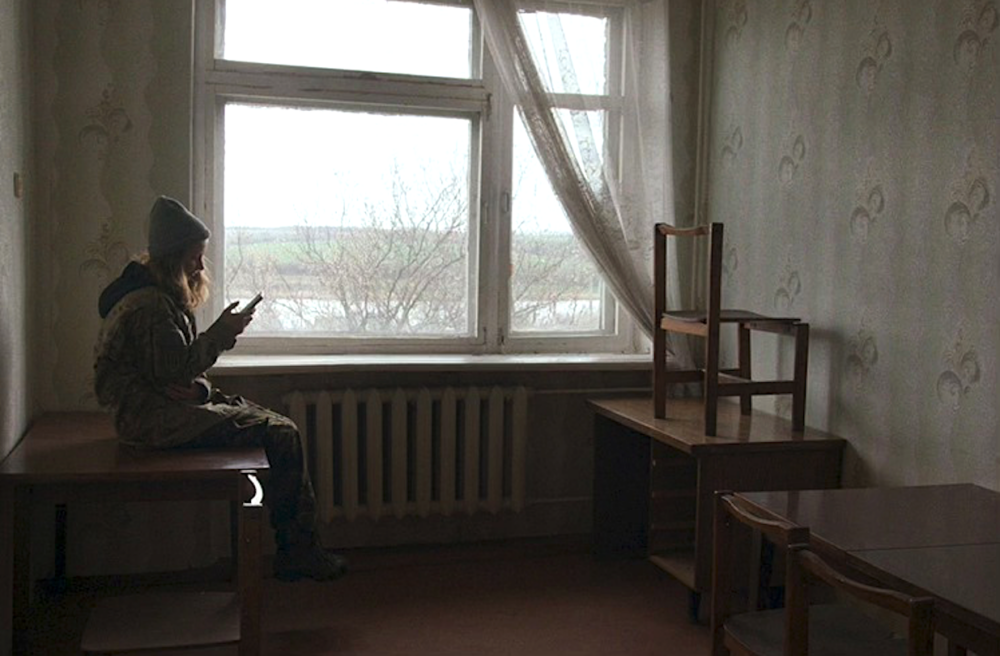
Kovalenko keeps a “memory diary,” recording the events of the day for herself, her son as well as history’s sake. She maintains she can shoot only when circumstances are relatively less tense, seemingly less precarious and there’s some semblance of fleeting stability. It’s a one-way correspondence with her wondering if her son would like it in their “trench city.” “My Dear Théo” is as wrenching, desperately sad in a sort of inevitable helplessness as it sweeps through the mundane act of scanning a particular landscape, constantly keening for the faintest signs of danger, a threat that can blow up the situation.
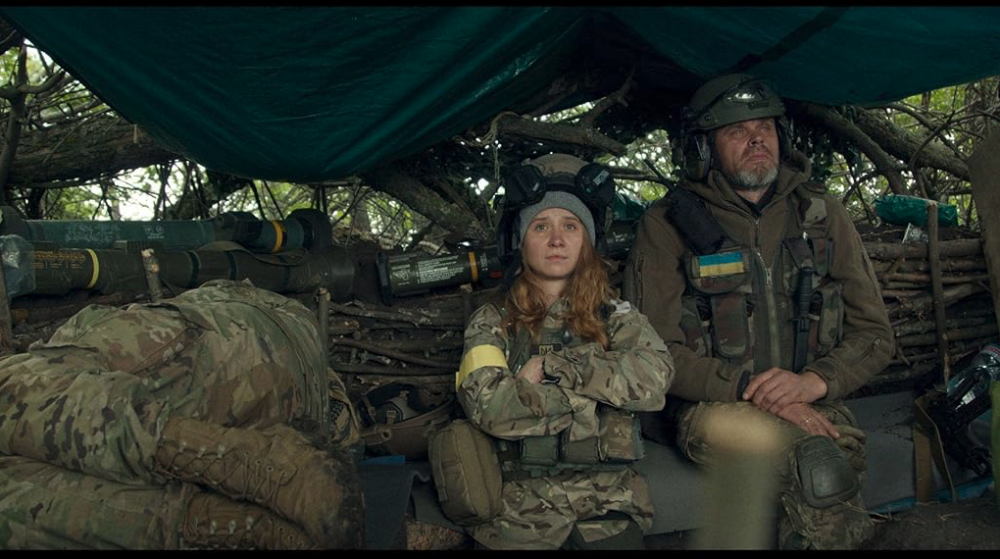
A clear emphasis is placed on the deliberate choice, in all its pained depth, that Kovalenko and fellow special forces have made in signing up for frontline service. She talks of battling the guilt that would have followed her if she didn’t do what she feels she ought to do for her country, hence she accepts the decision to be here amidst acute vulnerability, being away from loved ones. It’s an act of radical parenthood she and her fellows partake in, stepping forth now so that their children wouldn’t have to bear the scars, the burden of a shattered homeland.
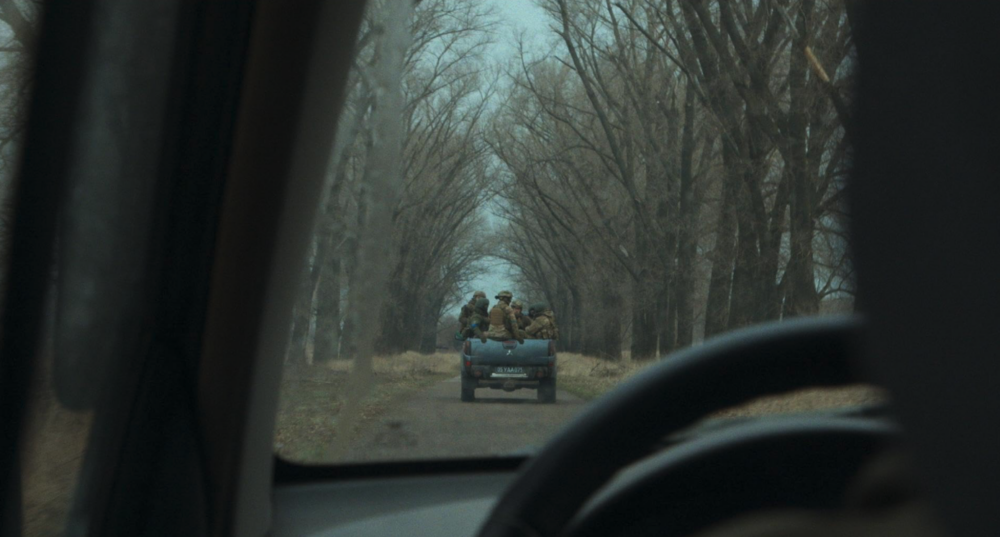
You stare at the same landscape for hours; “time and space merge”, she notes, adding, “you become part of one continuous nerve”. It’s like the body itself gets inextricably embedded within the geography. Your gaze wanders through atmospheric elements, the trees, the leaves, birdsong, and the absolute stillness that occasionally blankets before violence and shelling crash in. Kovalenko expands the texture of these moments, showing the agony they trudge through, a clutch of heart-shaking uncertainties, the ache for home versus that for family/You stare at the same landscape for hours; “time and space merge”, she notes, adding, “you become part of one continuous nerve”. It’s like the body itself gets inextricably embedded within the geography. Your gaze wanders through atmospheric elements, the trees, the leaves, birdsong, and the absolute stillness that occasionally blankets before violence and shelling crash in. Kovalenko expands the texture of these moments, showing the agony they trudge through, a clutch of heart-shaking uncertainties, the ache for home versus that for family.
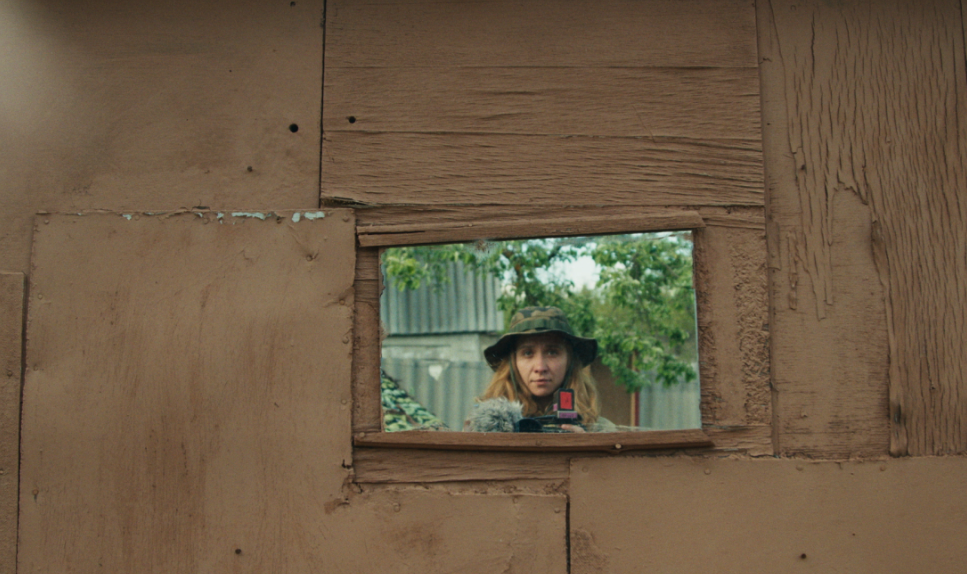
Being locked on the frontlines requires high-wire focus and nerves of steel. You can’t waver, doubt, or buckle under duress. The film strenuously whittles away at any shred of hysterics with representation, situating instead the endless sense of ennui, time stretching out beyond the functional patterns, routines of a day, the crippling bouts of utter terror, the dread and anguish freezing your insides as brutality reveals its full shape. Kovalenko details walking by petal mines. There are confrontations with everyday mortality, death, and loss swoop in as expected and yet leave you numbed with grief over someone you’ve shared several meals with, the very act of passing unbearably tense, life-imperiling situations on a long roll. Irrespective of how long you sense it on the brink when you do encounter devastation, it’s “impossible to comprehend it, reconcile with it”.
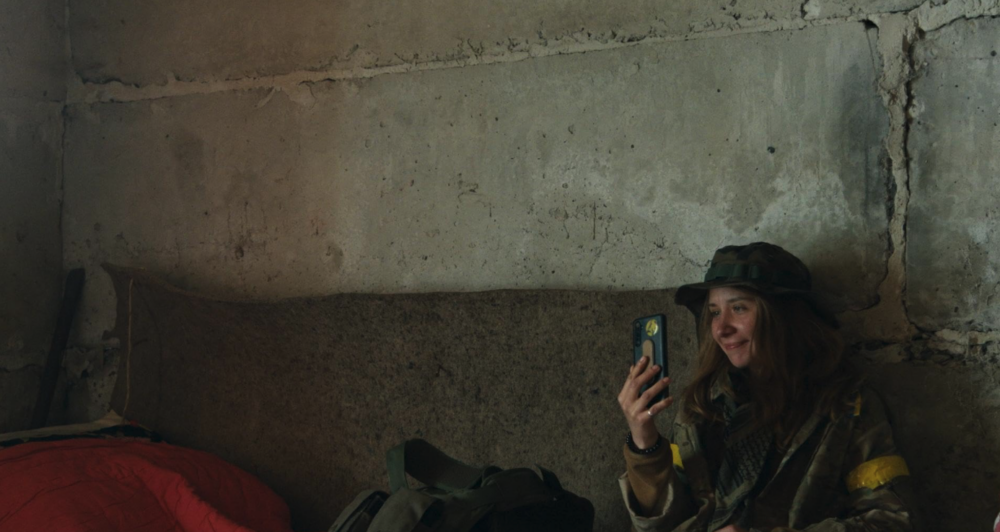
Russia has deliberately targeted Ukrainian artists and filmmakers, like Oleg Sentsov, but maybe that strategy backfired in the case of filmmaker Alisa Kovalenko. After the Russians arrested, interrogated, and detained Kovalenko while she was filming the illegal Donbas invasion in 2014, she resolved to enlist and defend her country if Putin were to invade the rest of Ukraine, which he did. At that point, considered herself a soldier rather than a filmmaker, but she inadvertently made a film anyway, thanks to her video diaries and video letters to her son. Ultimately, she incorporated that footage into her latest documentary. Their separation is difficult for her as a mother, but she fights for his future, as she explains.
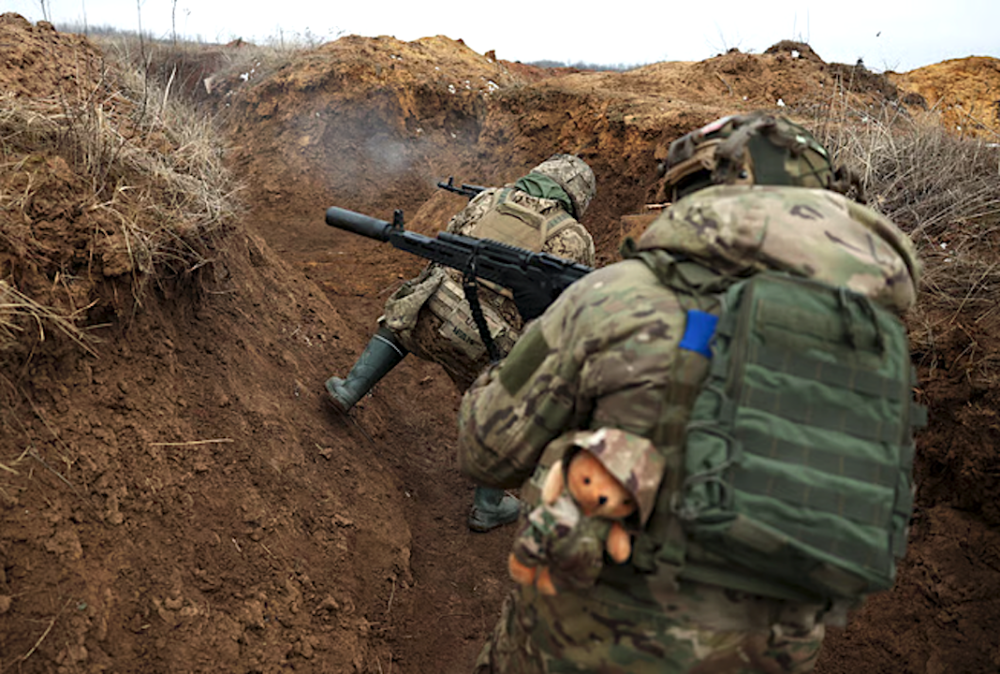
Initially, Kovalenko and her comrades are on the march outside Kharkiv—until they suddenly stop. Clearly, her unit is accustomed to the constant shelling. There certainly seems to be good chemistry between them all, which makes the final rollcall of the fallen soldiers seen in the film such a slap in the face.
Kovalenko incorporates some battle scenes, but it really isn’t an embedded combat documentary like Mstyslav Chernov’s “2,000 Meters to Anriivka.” This is a very personal statement from Kovalenko that often eloquently explains why she took up to defend her country. Sometimes, the extremely personal POV limits its effectiveness as a film to rally global public opinion. Nevertheless, it starkly establishes the stakes for Kovalenko and her fellow soldiers.
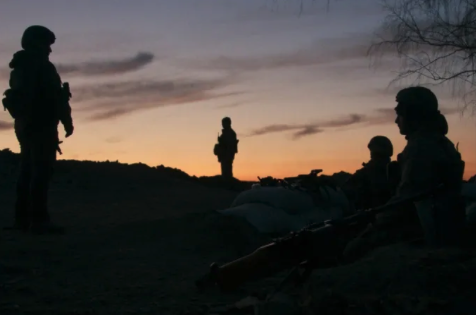
Some of the film’s seemingly incidental moments turn out to be some of its most devastating. A case in point comes when Kovalenko explains why so many cows wander near the front. They too fled the destruction wrought by Russian invaders, but the Ukrainian soldiers do not have the time or expertise to properly milk them, so the animals are suffering. Poor cows.
It is good for history that Putin’s illegal invasion has been so well-documented. Yet, he and his yes men have yet to pay any really meaningful price for their war crimes. Kovalenko documents the repercussions for averages Ukrainians in extremely personal terms, which any reasonable viewer should be able to relate to. Recommended for its honesty and its very individual perspective.
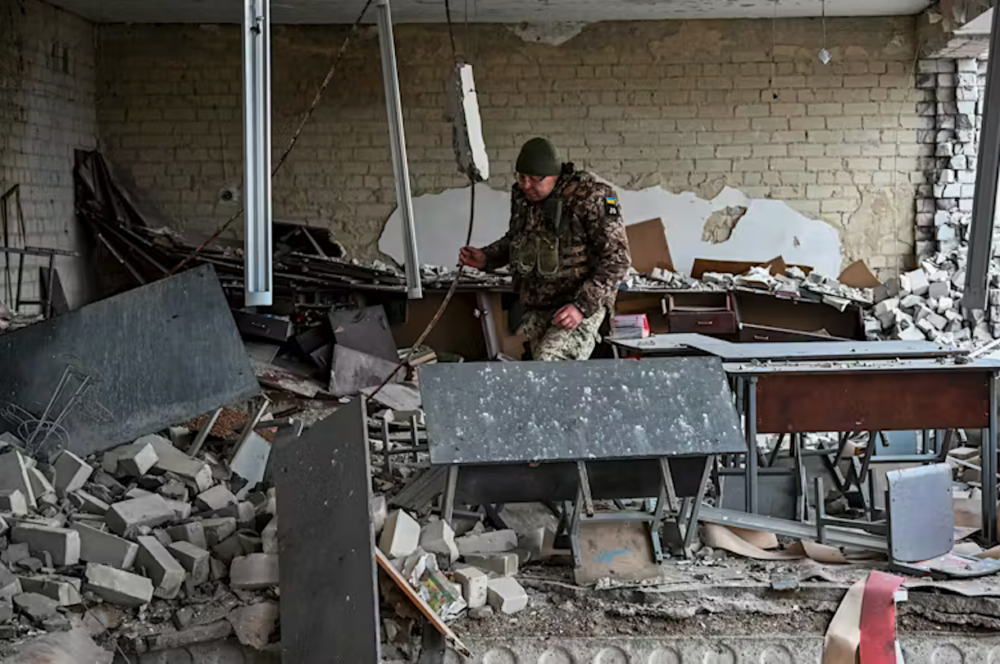
In the final scenes of her documentary, Kovalenko covers the assault that led her group to attempt to recapture the land up to the Russian border. This mission proves to be a disaster, as the Russians bombarded Kharkiv with missiles and five of her fellow combatants were killed in action. The film closes with a truly moving long shot of the miliary trucks carrying the bodies of these fallen heroes back down the road. We see miles of grieving Ukrainians kneeling by the roadside in respect and prayer. Such a powerful tribute to those who gave their lives for the nation they love!
Alisa Kovalenko is an award-winning Ukranian documentary filmmaker, based in Kyiv. Her first two feature-length documentaries, “Alisa in Warland” (IDFA 2015) and “Home Games” (Sheffield Doc/Fest 2018) were both screened over 100 festivals, winning multiple awards. Alisa’s third film, “We Will Not Fade Away”, a teenage adventure documentary set in war-torn Donbas, premiered at the Berlinale 2023. “We Will Not Fade Away” won 20 international awards, was named Best Ukrainian Documentary in 2023 by the Ukrainian Film Academy and was selected for the European Film Awards 2023.