It is very rare for me to step out of my usual realms of expertise. However, I am always drawn to one thing that has become the heartbeat of a great story: the showcasing of the hard work and sacrifice people put in to hone their craft and truly make their mark. That is what leads me to this show.
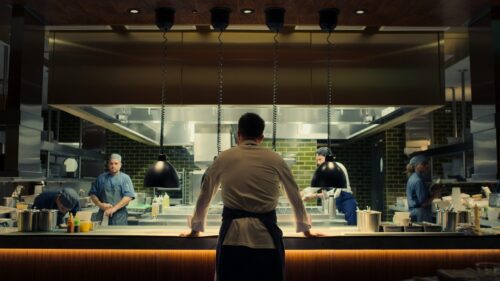
Season 2 of “Knife Edge: Chasing Michelin Stars” sharpens the series’ core idea: Michelin isn’t just a destination for food people—it’s a story about what it costs to chase a dream. With host Jesse Burgess guiding viewers through eight episodes set across seven culinary regions, the show keeps returning to the same truth the host emphasizes in interviews: the real draw is recognizing the sacrifices behind the ambition.
What makes this season feel especially involving is its scale and stakes. Filmed across overlapping Michelin calendars, the restaurants (six regions, with the series following 16 different kitchens) are followed as outcomes remain unknown from day one. That uncertainty translates on screen—there’s no tidy “build to the reveal” structure, only the pressure of real timelines, real standards, and real consequences. The result is less a glossy showcase and more a character-driven look at excellence under strain: staffing problems, financial uncertainty, reputational risk, and the constant grind of service.
Just as important, Season 2 widens the lens beyond the chef. The series highlights the networks of people and communities that make a Star possible—sous chefs, pastry teams, managers, front-of-house, families—while still delivering the emotional punch of the announcement moments. If Season 1 established the Michelin hunt, Season 2 makes it feel human: ambition, identity, leadership, doubt, and resilience—everything riding on something as small as a plate, and as huge as a life.
Enjoy this exclusive clip:
For executive producer and showrunner Lorraine Charker-Phillips, season two offered an opportunity to delve deeper into those stories and the lives behind them.
“The story range in season one was so impressive, and we were really excited as a team to push for more stories that broke new ground and lifted the lid even further on what it means for chefs and their teams to win a Star,” says Charker-Phillips. “Embedding with our chefs and their teams and being there when genuine stories and key moments unfolded in their lives was crucial to elevating the series.”

I had the opportunity to speak to Jesse Burgess, the host of the show. For Jesse, returning to “Knife Edge: Chasing Michelin Stars” offered another chance to explore the world through its restaurants. In season two, he spends more time with chefs and teams, asking the questions viewers might have and drawing audiences deeper into each journey.
“Exploring new locations through food is what I live for,” Burgess says. “I ask the questions viewers would likely want answered, ultimately giving the audience more insight, greater involvement in the story and a stronger vested interest in the restaurants, the chefs and their journeys.”
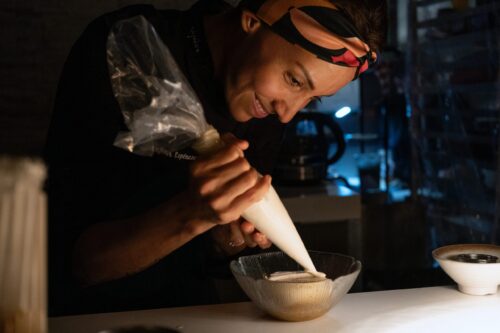
I liked how, in the interview, Jesse said that this series wasn’t just for food lovers, and I believed him. He mentioned that he doesn’t know much about sports, just like I don’t know much about food. But we both agree that whether it is this series following the restaurants or a sports documentary, there is one piece of common ground: the pursuit of a dream.
But I fully agree with Jesse on the premise that you don’t necessarily have to enjoy food to really get into this series. In “Knife Edge: Chasing Michelin Stars”, you can feel the hard work, emotion, and determination for each restaurant. If you like drama and seeing people put in everything to chase there dreams, then I promise you will love this season of “Knife Edge: Chasing Michelin Stars.”
Here is my full interview with Jesse Burgess: