Opener and tourmate Dazegxd remained behind Jane throughout the performance, handling live mixing, ambient passages, and transitions between songs. That role proved essential. Rather than treating the set as a sequence of isolated tracks, the two artists shaped it into a continuous environment that moved between distortion, silence, haze, and sudden release.
The audience skewed heavily Gen Z, reacting to song openings with immediate bursts of energy and joy. Deeply fluent in the music, fans recognized tracks almost instantly, shouting lyrics and surging forward as though they had been waiting for the songs to escape their headphones. The response suggested a genuine attachment to Jane Remover’s restless, emotionally volatile world.
Visually, the evening was equally immersive. Strobe lighting, heavy fog, and multi-angle live camera feeds defined the visual field, at times producing incidental compositions that felt as important as the intended staging. The images on screen seemed almost accidental: a blurred face, a silhouette swallowed by smoke, a flash of movement caught from an unexpected angle. Nothing felt overly polished, but everything felt intentional.
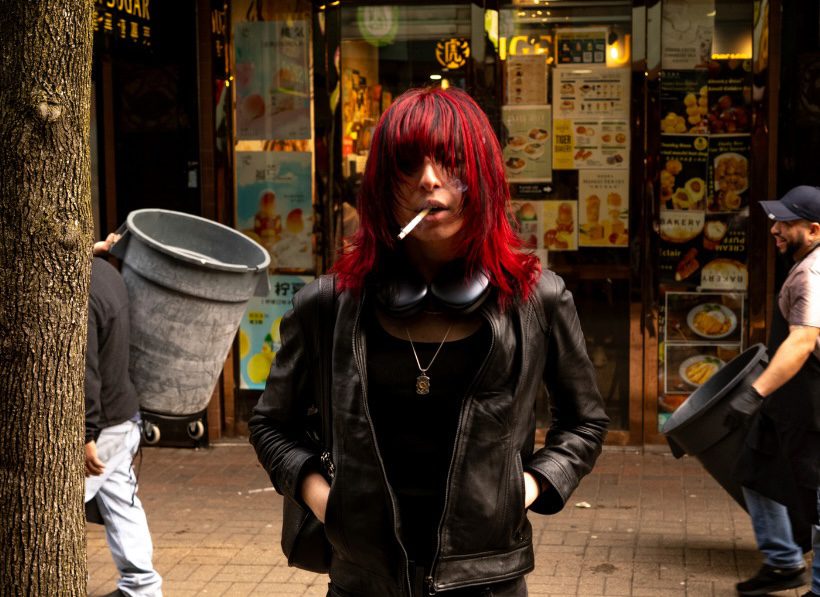
Musically, the set leaned heavily on 2025’s Revengeseekerz. Autotuned vocals were central throughout, with Jane largely performing without backing tracks. In this context, their voice expanded in range and intensity compared to the recordings, reframing the material as more flexible and volatile in a live setting. The performance retained the music’s instability while adding urgency.
The closing stretch delivered the night’s strongest sequence. “JRJRJR” moved directly into “Homeswitcher” through a live transition, making the connection between the two songs especially potent. Because “JRJRJR” samples “Homeswitcher,” the moment felt like Jane Remover folding their own catalog back onto itself, turning an earlier song into both memory and raw material.
By the end, the performance suggested that Jane Remover’s music is not only translatable to a live setting but already partially built for one. The fragmentation of the studio recordings did not disappear onstage; it reorganized into a shared experience shaped by sound, light, and audience response.