By Valerie Milano
Los Angeles, CA (The Hollywood Times) 2/16/24 – For those of us old enough to remember, there was a time in our great country when women had very few rights.
 It wasn’t until just more than 100 years ago that women got the right to vote with the passage of the 19th Amendment to the Constitution in 1919, and its ratification in 1920. That was no simple task.
Several generations of women’s suffrage supporters lectured, wrote, marched, lobbied, and practiced civil disobedience to achieve what many Americans at that time considered a major change in the Constitution.
Even after gaining the widespread ability to vote, women have spent decades struggling to gain power in American society. It has taken every day of more that 200 years for us to elect a woman to the vice-presidency and we’ve yet to put a woman in the top seat of the White House.
 While women are making strides in many arenas, the financial world remains a stronghold of male dominance and influence. Even in 2024, women in business are treated like second-class citizens, banging up against a “glass ceiling” that keeps them out of executive positions in corporations across the World.
While women have made major gains in this area the last few decades, the deck remains stacked against them, particularly when it comes to venture capital – money invested in a project in which there is a substantial element of risk, such as a new or expanding business. On average, Women receive a scant two percent of venture capital while men rake in the other 98 percent annually.

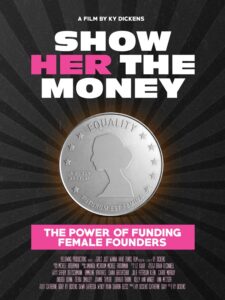
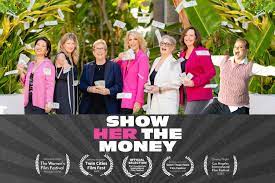
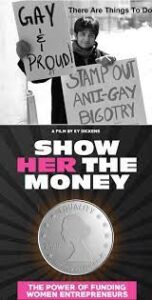
It is a staggering imbalance, one that the makers of a new feature-length documentary film are trying to correct. “Show Her the Money” tells a story that’s never been told and convincingly addresses the tremendous inequity of venture capital made available to women.
The film, from producer/director Ky Dickens, showcases the personal stories of exceptional women with vision and demystifies the world of venture capital. Featured are some successful female business owners who, in turn, invest in other diverse women entrepreneurs with innovations that could possibly change the world. The film reminds us that money is power and women need it too in hopes of achieving true equality.
“One thing that we touch on in the film is that the infrastructure around money has purposely barred women until not very recently,” Dickens said in an exclusive interview with The Hollywood Times. “Women could not even get a credit card or open a checking account without a man’s signature, not even until the 70’s.”
Click below to see our exclusive interview:
 Men controlled the purse strings in business and at home, largely because women were not encouraged to find work outside the home. This gave men the ability to hoard power and control for themselves.
“Men were able to start venture capital funds and make beau coop bucks, and they were kind of inside the insider’s club, Dickens said. “And of course, because men were in the driver’s seat making the decisions on who got money, often – and not in nefarious ways, but in a way, you support things and people who look like you and your interests – men were giving money to other men when it comes to investment money.”
The point of “Show Her the Money” is educational, to be sure. But it is also entrepreneurial. The film’s makers have set out to get women to “do it for themselves!”
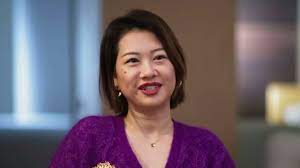
“Women need to be sitting at the decision-making table in order to ensure that other women get funding,” Dickens said. “And until women are making the decisions about who gets funding, we won’t be equal, and that is what our film is hoping to achieve – getting women involved in every level of the system.”
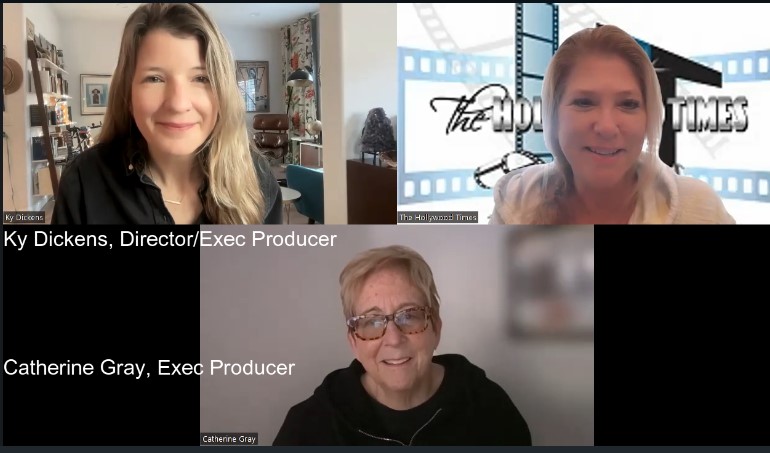
The film’s executive producer Catherine Gray, who joined Dickens in her interview with The Hollywood Times, said she believes the best way to get the ball rolling is for women to see this film.
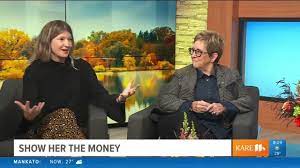
“That’s why we’re taking this film on a 50-city tour,” Gray said, “We believe it’s a grass-roots mission to enlighten women to the fact that they are getting the short end of the stick in venture capital. …And you know, if you let women know they’re getting the raw end of the deal, they’re going to rise up and do something about it.”
“We’re out there lighting a match, trying to get women involved in solving this issue of our only getting two percent of venture capital and men getting 98 percent. It’s so imbalanced, it’s ridiculous really.”
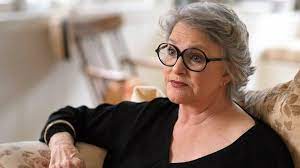
The course of making this documentary took the filmmakers to an array of cities, including Los Angeles, Boston, Dallas, San Diego, Washington, DC, as well as to Canada and India, underscoring the pervasive and universal nature of the imbalance.
Emmy Award-winning actor and author Sharon Gless (“Cagney & Lacey,” “Queer as Folk,” “Burn Notice”), who is no stranger to breaking glass ceilings for women in the entertainment industry, lends her star power as a figure featured in the film and as an executive producer.
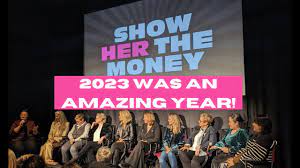 The 50-city grassroots global tour for change includes universities and high-profile women’s empowerment events and follows the film’s multiple award-winning film festival run. The tour is co-sponsored by Wells Fargo.