Featured at this year’s AFI FEST, Radu Jude’s Diary of a Chambermaid is an interesting “variation on” Octave Mirbeau’s famous 1900 novel by the same novel. The film follows Gianina (Ana Dumitrascu), a Romanian migrant worker employed as a housekeeper and nanny by a French bourgeois couple with left-of-center views and bohemian tastes. Gianina is a live-in housekeeper for Pierre Donnadieus (Vincent Macaigne) and his wife Marguerite (Mélanie Thierry), in their fine home in Bordeaux. As she cooks, cleans, and cares for young Louen (Louen Bouteiller), Gianina looks forward to visiting Romania over the Christmas holidays to see her mother (Liliana Ghita) and nine-year-old daughter, Maria (Sofia Dragoman). The film’s diaristic structure doubles as a countdown to her departure.
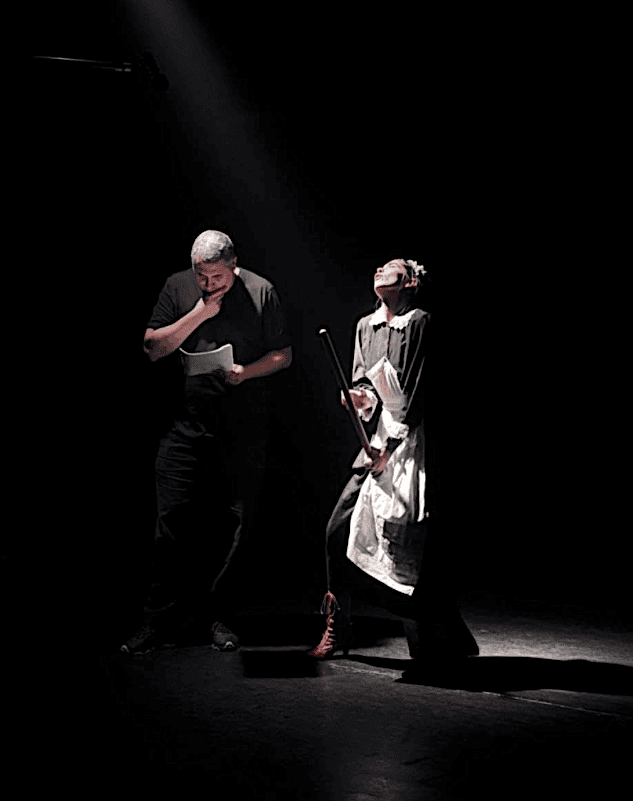
Marguerite is a literature professor at the University in Bordeaux and she recommends Gianina to participate in a local theatrical production of Mirbeau’s Diary of a Chambermaid, being cast with non-professional actors who are migrants to France. The film is interspersed with scenes of Gianna rehearsing the play in the local community theatre project that casts migrants as actors. What they’re rehearsing is, naturally, a rather ribald adaptation of Mirbeau’s novel. Besides commenting on the source material, this adaptation within the adaptation allows Radu Jude to take up his ongoing interrogation of history through reenactment, in this case by exploring how a provocation may be retold in order to scandalize anew, beyond its own historical moment.
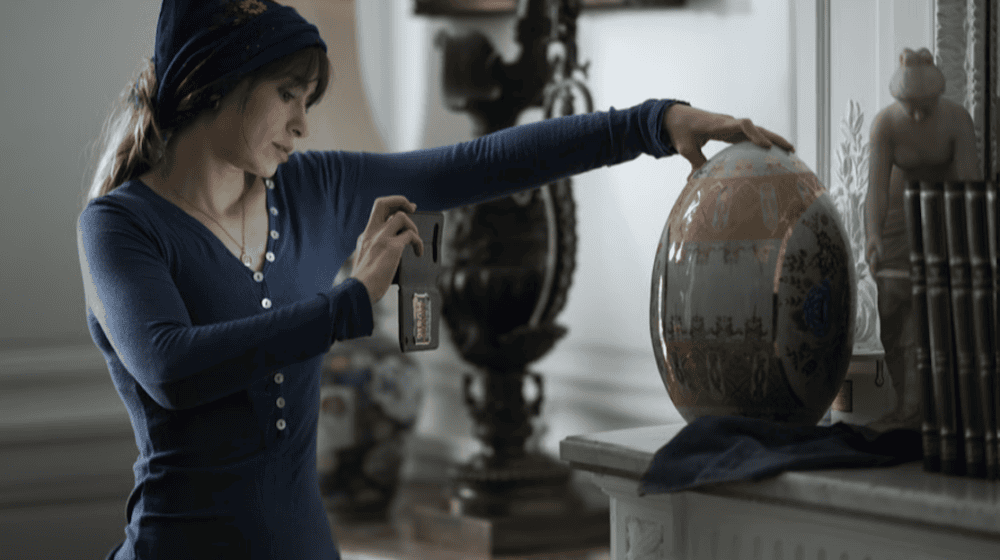
Diary of a Chambermaid provides us with two different adaptations of Mirbeau’s novel in one film. Though Jude does display his usual love of profanity, the director plays the filmic version surprisingly straightforward. That subtly belies the keen observations he makes about our connection with technology as a mode for digital communication and entertainment. Gianina, for instance, routinely video chats with her daughter in Romania, allowing her to stay in touch despite the vast distance between them. Conversely, she’ll use the same technology for stupid videos, like filming the Donnadieus’ child taking a soccer ball to the face.
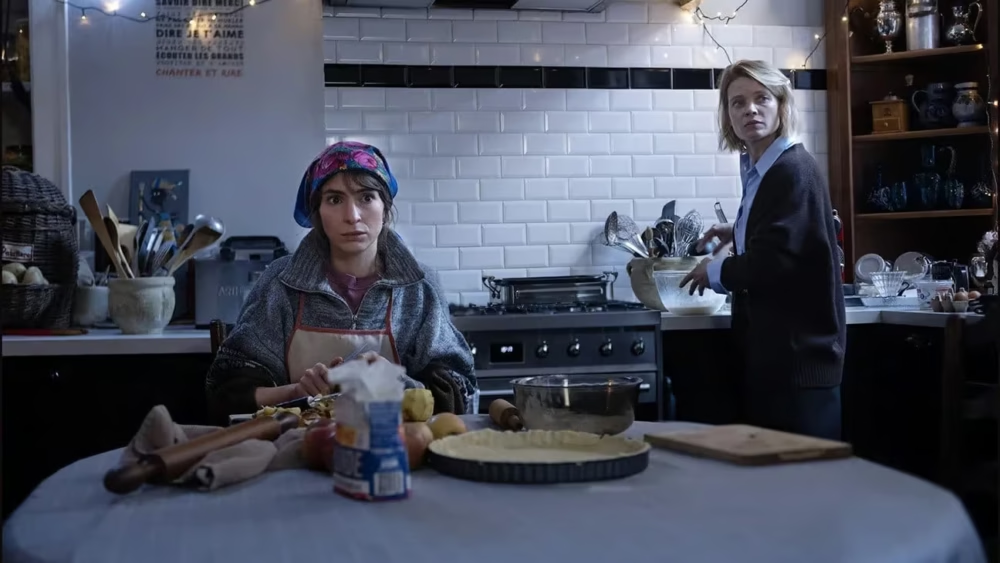
As to be expected from a director whose films have always openly grappled with Marxist tradition, history for Jude is never set in stone but continually reframed in light of the present. The antics on stage are overly-sexualized but not as bizarre at the homemade porno that is featured in his Bad Luck Banging or Loony Porn. Much of the film is focuses on Gianina cooking and cleaning a residence full of antiques and odd knickknacks. She is the nanny for young Louen, who can be a handful, and she often tells him old Romanian folktales that are far darker than the standard French fair of Astrix and Obelix.

The film is packed with metaphors related to mirrors and windows – which Giana is often seen cleaning. These are used to emphasize the themes of the film. When she visits Bordeaux’s reflecting mirror pool, Gianina talks about the architecture she sees in Bordeaux on a video call to her mother and her daughter Maria back in rural Moldava, Romania. Gianina says there’s “a lot of beautiful buildings . . . and a lot of poverty especially among migrants from all over the world.” So. the divide between the comfortable life of well-to-do bourgeois French and poor Romanians becomes one of the central themes of the film.
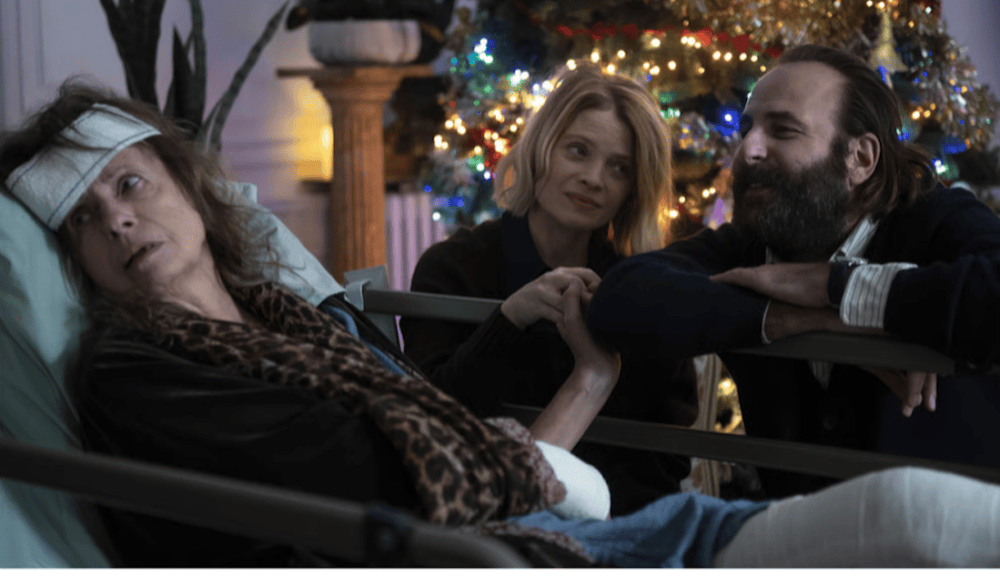
Radu Jude has a fun time satirizing French bourgeoise pretentiousness. It all comes to head at a dinner party where the guests demand Gianina’s opinion as an Eastern European on the war in Ukraine. As she has learned to do with her own personal concerns, she says she knows little about it. There is no question that Radu Jude cannot stand the hollow radicalism of rich “well-meaning” leftists. They talk and talk, but do very little to change the status quo. This becomes most apparent in the conversation that Gianina has been asked to stay with the elderly mother of Pierre, who slipped on ice on the outside sidewalk, broken a leg and an arm, and is confined to a hospital-style bed in their home – while Gianina is left to care for her while Pierre and Mélanie together with their son Louen take a ski vacation in the Pyrenées at Christmas time.
For those familiar with the novel or film adaptations by Jean Renoir or Luis Buñuel, Radu Jude take the emphasis off the sexual power dynamics and marital disputes. He moves the focus to Gianina’s imagination storytelling. Her recounting of morbid Romanian fairy tales speaks of the darker part of life in Romania in the past, as we see on screen images of dilapidated buildings and the Romanian mountain landscape. Marguerite praises Gianina’s storytelling ability but asks her to tack a happy ending on another of the fairy tales that the nanny tells Louen.

Gianina is the emotional heart of the film. She is forced to balance the demands of her own family with those of her employers. Shen out of range, she curses them in Romanian under her breath, even as she shows a care for them that isn’t strictly mercenary. While Rude’s adaptation flirts with didacticism, its real theme – how motherhood, the vicissitudes of life, and even nostalgia for adversity are as much historical forces as architecture and class conflict – is concealed behind the bombast.
Radu Jude is the master of ambiguous endings and he leads us to see why authentic storytelling collides with the bourgeoise belief in “happy endings.” Jude manages to satirize the supposed generosity of Christmas itself so we cannot take the ending of Diary of a Chambermaid at face value.