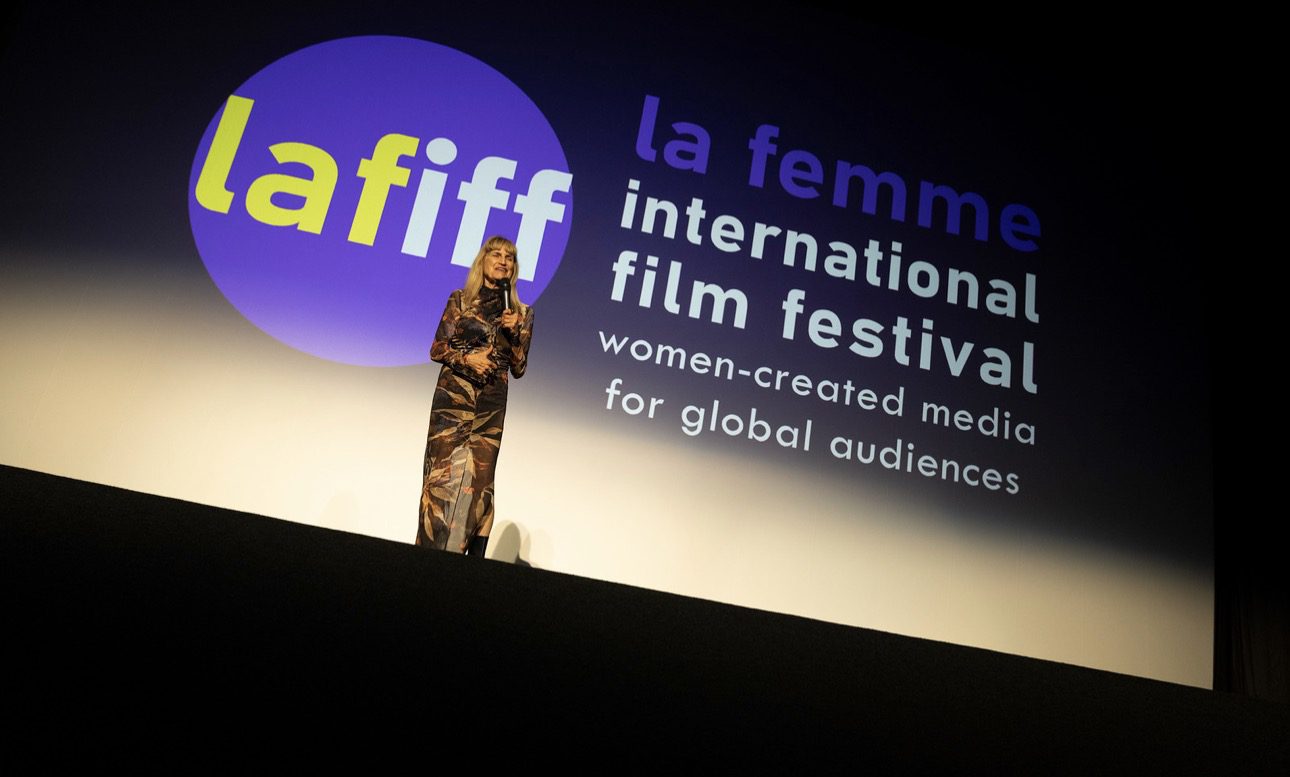
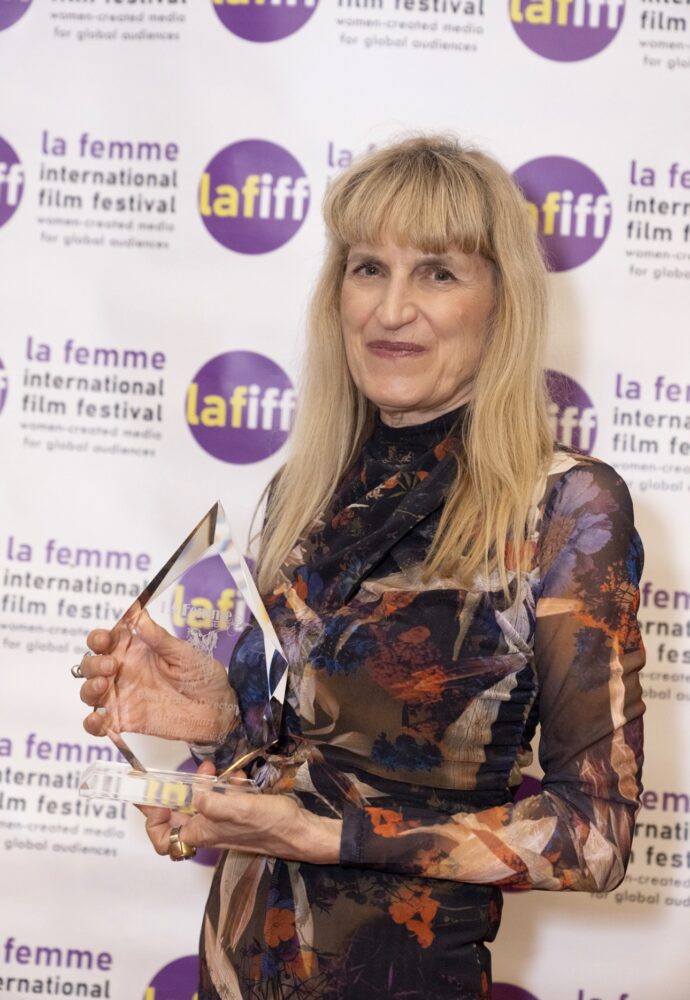
There are films that entertain us, films that challenge us, and occasionally, films that make us feel profoundly seen. Catherine Hardwicke’s Street Smart, which earned her the Best Director Award at the 2026 LA Femme International Film Festival, accomplishes something particularly meaningful: it invites audiences into the lives of young people who have spent far too much of their lives being overlooked.
Known for her raw and unapologetic portrayals of adolescence in Thirteen and Lords of Dogtown, Hardwicke has long demonstrated an instinct for finding humanity in unconventional places. With Street Smart, she returns to that territory, exploring the lives of unhoused young adults navigating survival, friendship, ambition, and the complicated meaning of family against the backdrop of Venice Beach.
Co-written with Nic Sheff, the film follows a group of young musicians, skateboarders, artists, and dreamers who have formed an unconventional family on the streets. Their circumstances are difficult, their choices aren’t always perfect, and their futures remain uncertain. Yet their humanity is never in question.
And that, to me, is where Hardwicke’s extraordinary sensitivity as a director becomes most apparent.
Rather than reducing these young people to statistics or cautionary tales, she allows them to be complicated, funny, creative, vulnerable, and occasionally frustrating. They are not defined exclusively by what has happened to them. They are defined equally by what they hope might still be possible.
One of the film’s most compelling elements is Hardwicke’s commitment to authenticity. Professional skateboarder and first-time actor Isiah Hilt, whose own experiences include homelessness and aging out of foster care, brings a deeply personal connection to the material. His involvement speaks to something essential about the filmmaking process: the importance of making room for people who have actually lived the stories being told.
As someone who entered the foster care system at fourteen and spent four formative teenage years moving between eight different homes, I found myself unexpectedly moved by the sensitivity of Hardwicke’s storytelling.
I don’t often bring my own history into a film review, but occasionally a story intersects with lived experience in a way that makes remaining entirely detached feel almost dishonest.
My own journey through foster care eventually became the foundation for CROSSROADS, an autobiographical solo theatrical production exploring foster care, addiction, recovery, and the complicated road toward belonging. Through that work, I’ve come to understand just how important it is that stories about foster youth are told with nuance, dignity, and, perhaps most importantly, humanity.
Watching Street Smart, I was struck not simply by the subject matter but by the unmistakable care behind it.
There is a difference between telling a story about vulnerable young people and genuinely seeing them. Hardwicke appears to understand that distinction.
For those unfamiliar with the realities of foster care, aging out of the system can mean entering adulthood without the emotional, financial, or familial safety nets many young people take for granted. The transition can be profoundly isolating, particularly for those who have spent years navigating instability.
What resonated so deeply with me was the film’s exploration of chosen family.
When traditional family structures fail, young people often create their own. Those relationships may be unconventional, messy, and imperfect, but the need beneath them is universal: to belong somewhere, to matter to someone, and to know that your existence has value.
Hardwicke doesn’t romanticize these circumstances. Instead, she allows the characters’ relationships to reveal both the comfort and fragility of the communities they build.
Venice Beach provides a particularly poignant setting. Its celebrated culture of artistic expression, individuality, and freedom exists alongside the harsh realities of housing insecurity and economic disparity. The contrast is impossible to ignore, yet the film’s focus remains firmly on the people rather than the spectacle of their circumstances.
The ensemble cast includes Isabelle Fuhrman, Yara Shahidi, Michael Cimino, Miles McKenna, Paris Jackson, Virginia Madsen, Marcia Gay Harden, Skeet Ulrich, and Sally Struthers, bringing together established performers and emerging talent in a story centered on young people whose voices deserve greater attention.
I had the opportunity to meet Catherine Hardwicke on the red carpet at LA Femme’s closing night celebration. We shared a genuinely lovely connection and conversation, and after experiencing her film, that encounter carried an additional layer of meaning for me.
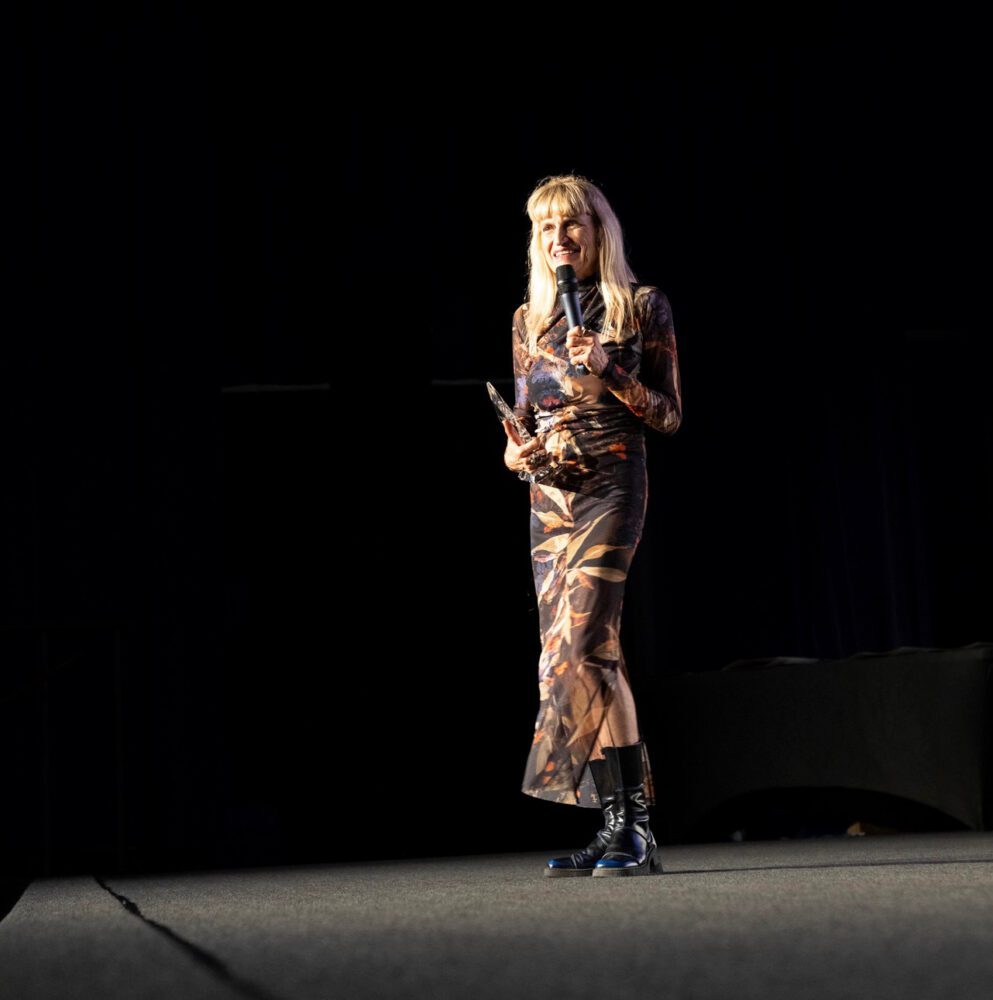
As both a performer and a former foster youth, I have spent years advocating for greater visibility and understanding of young people navigating the foster care system. Seeing a filmmaker of Hardwicke’s caliber approach these experiences with such care was not something I took lightly.
What stayed with me was the recognition that these stories are not simply dramatic material. They are someone’s childhood. Someone’s survival. Someone’s reality.
And when a filmmaker approaches that reality with empathy rather than exploitation, the result can be extraordinarily powerful.
Hardwicke’s recognition at LA Femme is particularly fitting for a festival dedicated to amplifying the voices and achievements of women in filmmaking. Throughout her career, she has consistently demonstrated a willingness to explore uncomfortable truths and challenge conventional narratives about youth, identity, and belonging.
With Street Smart, she continues that commitment while offering audiences something increasingly rare: an invitation to see people beyond their circumstances.
The film raises important questions. What happens when young people are expected to navigate adulthood without the support systems they deserve? How do we define family when the one we were born into cannot provide safety? And how many talented, extraordinary young people remain unseen because society has learned to look past them?
As a reviewer, I can appreciate the filmmaking, the performances, and the artistic vision. But as someone who has lived a version of the instability portrayed on screen, I found something else in Street Smart: recognition.
Not every story about foster youth or homelessness gets the details right. Not every filmmaker approaches these subjects with the sensitivity they require.
What impressed me most about Catherine Hardwicke was her willingness to look closer.
And sometimes, for a young person who has spent much of their life feeling invisible, being seen is where everything begins.
Congratulations to Catherine Hardwicke on her Best Director recognition at the 2026 LA Femme International Film Festival. It is an honor that celebrates not only her creative vision but the humanity she brings to the stories she chooses to tell.