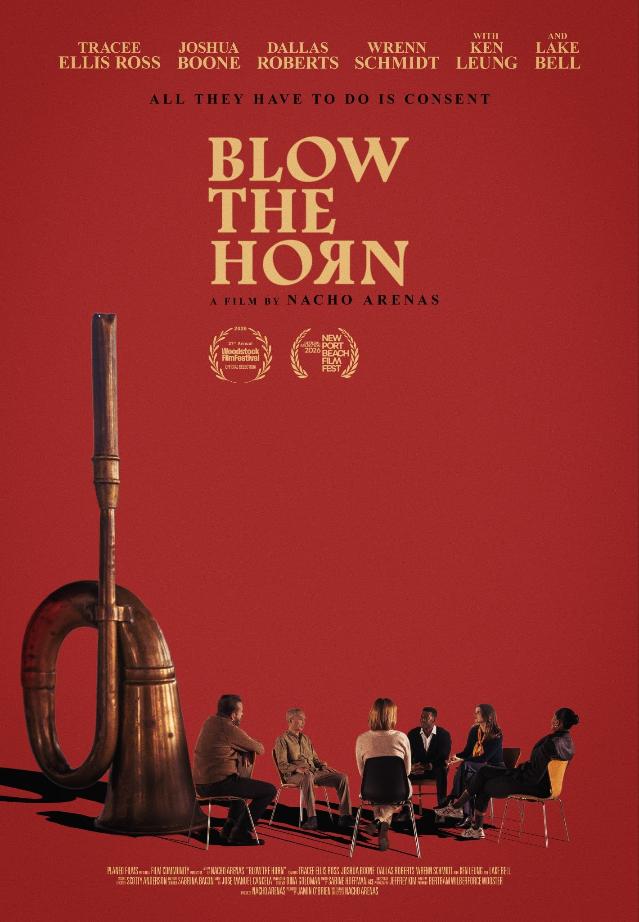
Join me for a conversation with director Nacho Arenas and actor Joshua Boone about bringing Blow the Horn from stage to screen, the psychological dynamics of its characters, and the importance of what is communicated beyond words. Listen to the interview by clicking here: Blow the horn Interview
What does it really mean to know someone, particularly the person with whom we share our most intimate life?
That question continued to surface as I watched Blow the Horn, a psychological drama written and directed by Nacho Arenas. Set in New York City, the film brings three couples into an unfamiliar studio flat as it unfolded into a group therapy session. Their therapist, Molina, is noticeably absent, leaving instructions to guide them through a series of envelopes. The participants are free to leave but agree pretty quickly to engage consensually in an unconventional therapeutic experience.
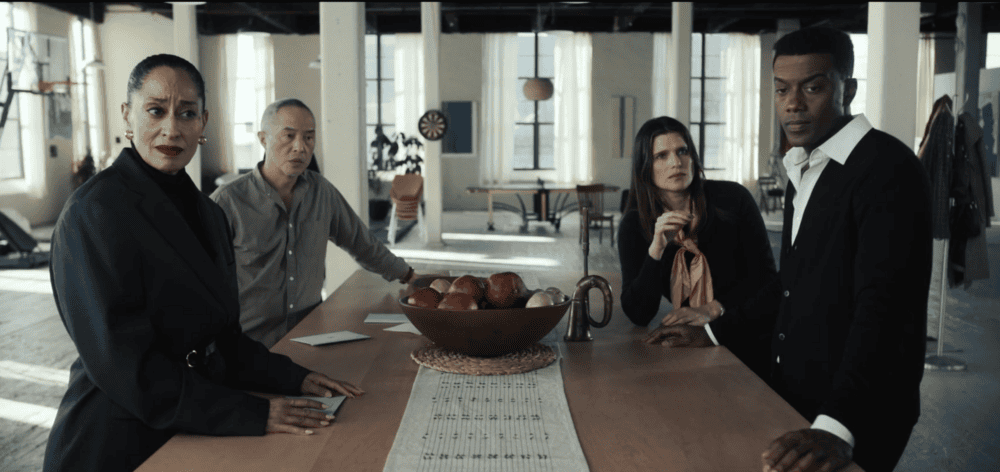
Adapted from the Argentine stage play Bajo Terapia by Matías del Federico, Blow the Horn retains an intimate theatrical quality reminiscent of black-box theater. Within the confines of a New York apartment, dialogue, body language, and shifting interpersonal dynamics become the primary instruments of storytelling. The transition to film introduces another dimension through cinematography, allowing the audience to move between intimate participation and detached observation, The ensemble includes Tracee Ellis Ross as Paula, Ken Leung as Chris, Lake Bell as Emily, Joshua Boone as Richard, Dallas Roberts as Robert, and Wrenn Schmidt as Beth.
With my background in mental health counseling and art therapy, I found myself observing the unfolding interactions through a psychological lens. The couples begin as strangers, uncertain of one another and visibly uncomfortable with the arrangement. Their exchanges reminded me of the familiar stages of group development: forming, storming, norming, and performing. Yet these processes rarely unfold in a predictable sequence, particularly when people bring their intimate relationships into an unfamiliar group setting. Through resistance and disclosures, we begin to identify the individuals’ deficits along with the couples patterns of toxicity. While the participants began revealing themselves, through a disagreement over word choice, an awkward joke, or an unexpected response to another couple’s experience changed the emotional atmosphere in seconds and had me enthralled in identifications of the dynamics. Wondering, In a room filled with competing narratives, the question is not simply who is telling the truth, but how strongly each person has come to believe their own version of it.
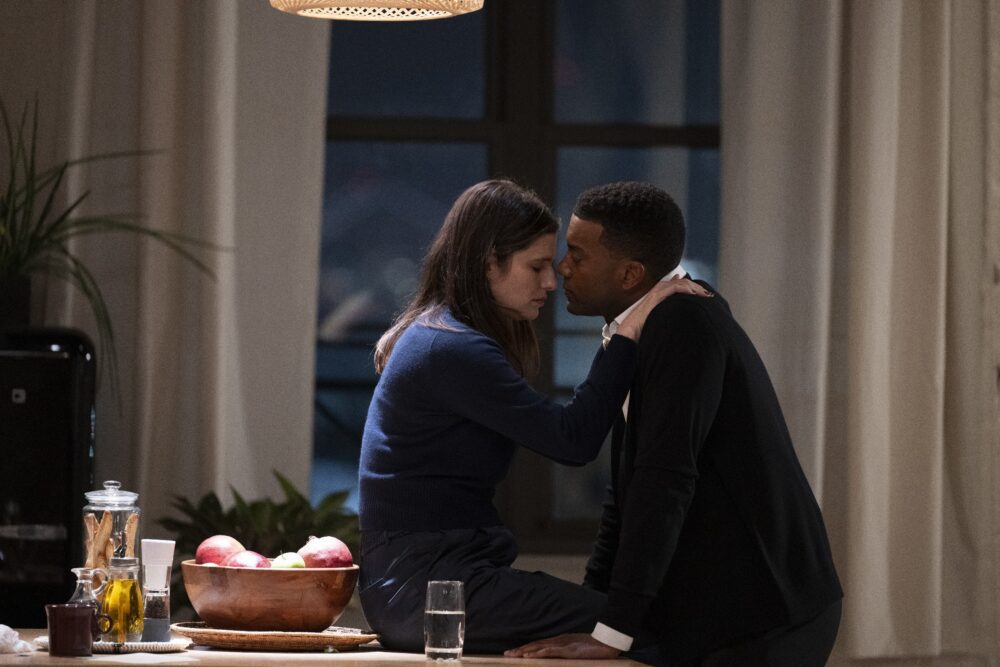
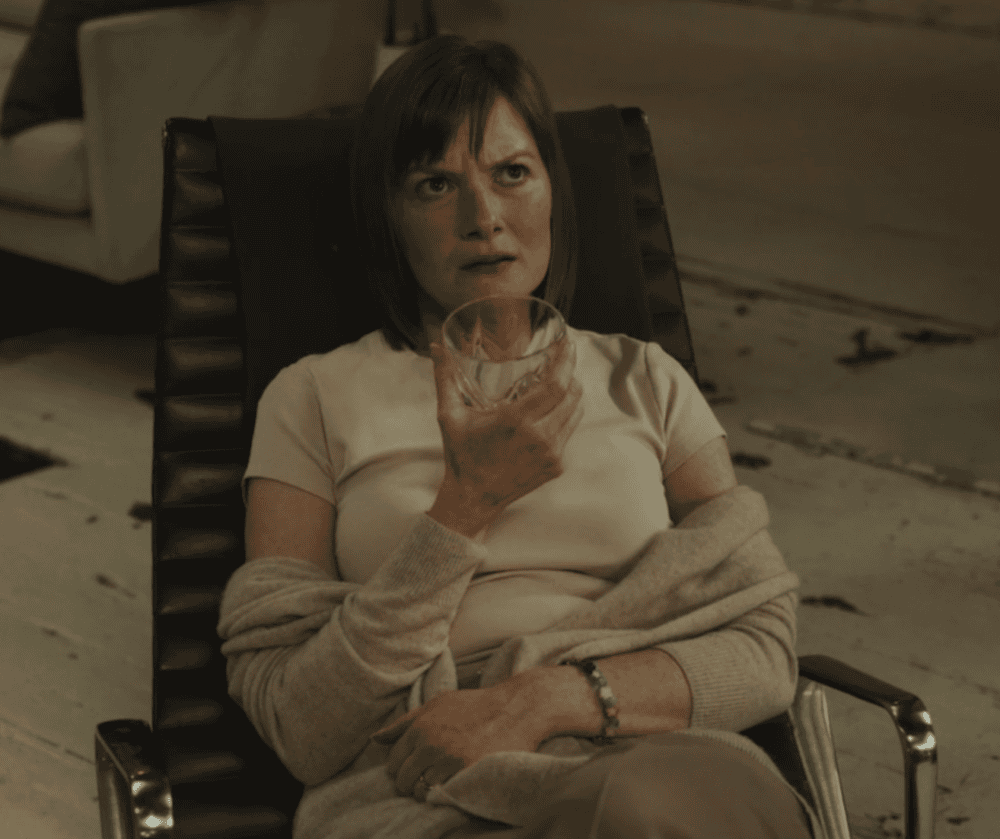
What entrapped me into the development of the characters was how much could be communicated without elaborate dialogue. Schmidt’s portrayal of Beth particularly caught my attention. I found myself watching the way she held her clothing, the hesitations in her expressions, and her physical movements around her husband. There were moments when the smallest gesture seemed more revealing than the words being exchanged.
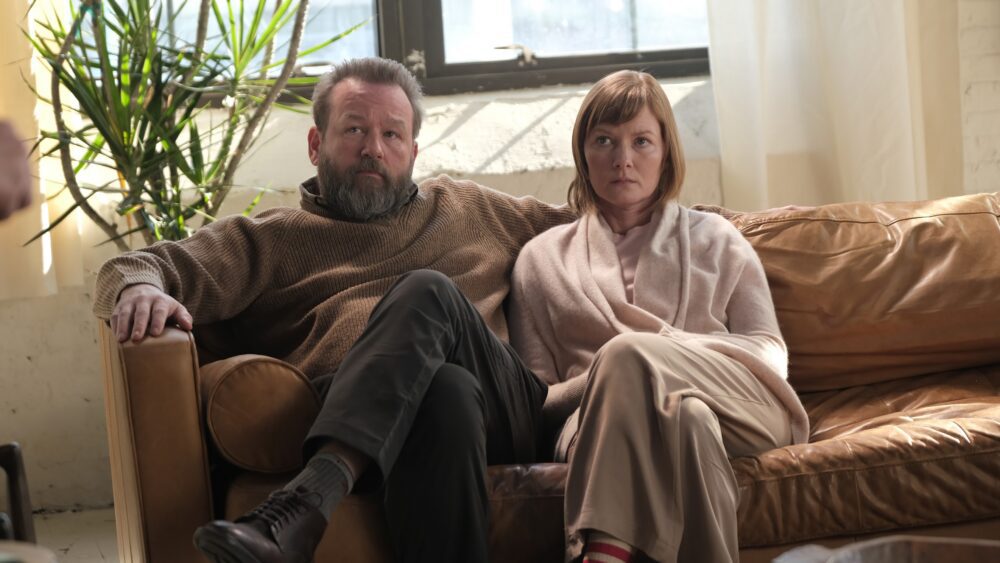
Roberts, opposite Schmidt, creates an equally interesting interpersonal tension. I became increasingly attentive to the contrast between what characters said about their relationships and what their interactions suggested. A seemingly ordinary comment could introduce discomfort, while a gesture of affection might raise questions rather than resolve them.
The ensemble also brings humor into the experience. At times, a remark intended to lighten the atmosphere produces an entirely different reaction. I particularly appreciated the awkward silences that followed certain exchanges, when the audience was left to recognize the emotional implications without having them explained.
The film’s visual presentation contributes to that experience. Shifts in perspective, including moments of black-and-white imagery, introduce a sense of observation that made me increasingly conscious of how we watch and interpret other people’s behavior. The camera becomes an important part of the storytelling, directing attention toward details that might otherwise be overlooked.
Music and movement also provide moments of contrast. As the atmosphere moves between confrontation, vulnerability, humor, and spontaneous connection, I found myself appreciating how much relationships communicate beyond spoken language.

As the emotional intensity builds and the characters find themselves needing to step away from the room, I found myself doing much the same. I would pause, grab a snack, and return after taking a moment to process what had just unfolded. There was something intriguing about realizing that, as a viewer, I was beginning to mirror the very behavior of the people on screen. Perhaps that is part of the film’s psychological impact: it doesn’t simply invite us to observe discomfort, but to experience it ourselves.
The therapeutic environment also reminded me of experiential approaches, including elements associated with Gestalt therapy. Participants are not simply discussing events from the past. Their interpersonal patterns become visible through what unfolds between them in the present moment. For me, the fascination came from observing how easily we recognize difficulties in another person’s relationship while struggling to identify similar patterns in our own.
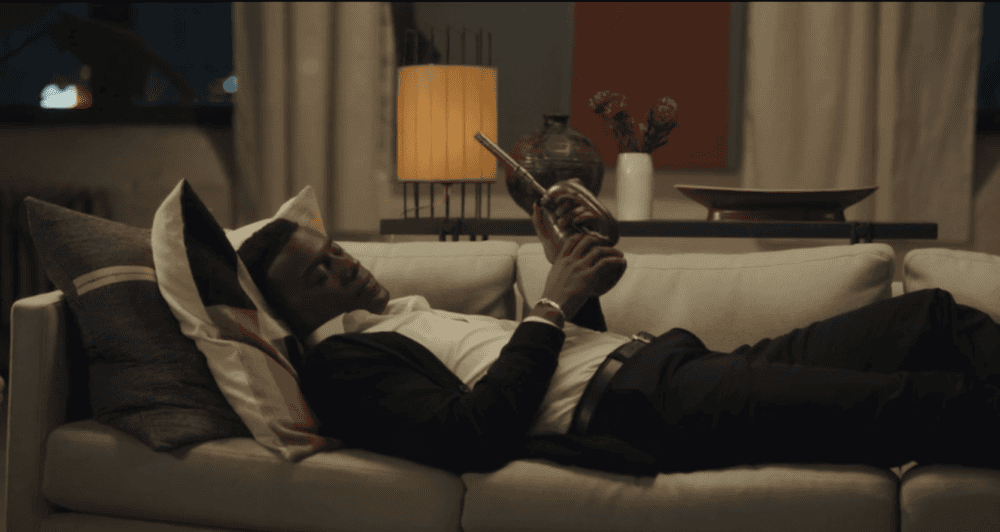
What I can share is that, as the film approached its conclusion, my experience moved beyond intellectual curiosity. I was deeply affected by the emotional weight of the story and the recognition that some experiences continue to shape people’s lives long after the original events have passed. For me, this is where film becomes more than entertainment. It can invite us to reflect upon relationships, emotional vulnerability, and the parts of ourselves that we may not always have words to express.
Blow the Horn offers an unusual combination of theatrical intimacy, psychological inquiry, uncomfortable humor, and performances that reward close attention. I entered the screening prepared to observe three couples navigating an unconventional therapeutic experience. I left thinking about how much can remain unspoken within the relationships we believe we understand.
And perhaps that is the most compelling reason to experience this film for yourself.