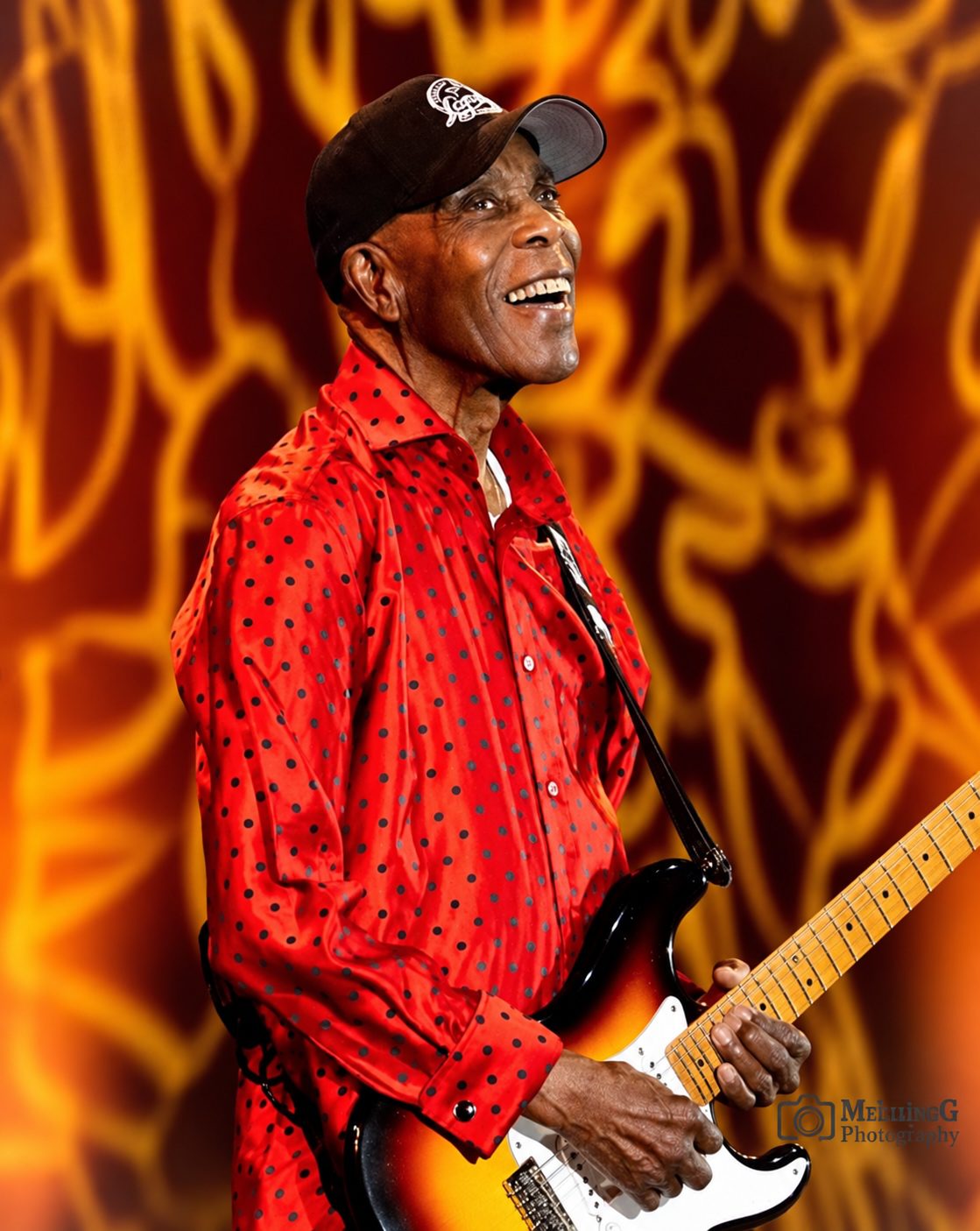
With the nimble fingers of a younger man and a wizened elder’s sharp wit, Buddy Guy explored the wonderland of the blues, reflecting the best of American music.
Hollywood, CA (The Hollywood Times) 09-15-2026
By John Lavitt
Why did it take me nearly a week to write about Buddy Guy at the Hollywood Bowl? The answer is not procrastination. It is astonishment. At 90, the blues legend delivered a performance of such power, precision, humor, and sheer musical command that it took time to process what we had witnessed. It was hard to believe such a performance was even possible.
From the moment Guy took the stage, age was irrelevant. His fingers danced across the guitar with astonishing dexterity, bending notes until they cried, laughed, and seemed to speak directly to the audience. Nothing felt tentative or diminished.
His voice remained remarkably consistent and sonorous, never losing a note or falling behind the beat. He could still shift from a growl to a whisper and back again as he became a Hoochie Coochie Man once more, making every phrase feel immediate.
Just as impressive was Guy’s command of his band. He led with the instincts of a master who knew exactly when to push, when to pull back, and when silence could say more than another flurry of notes. Yet there was nothing solemn about him.
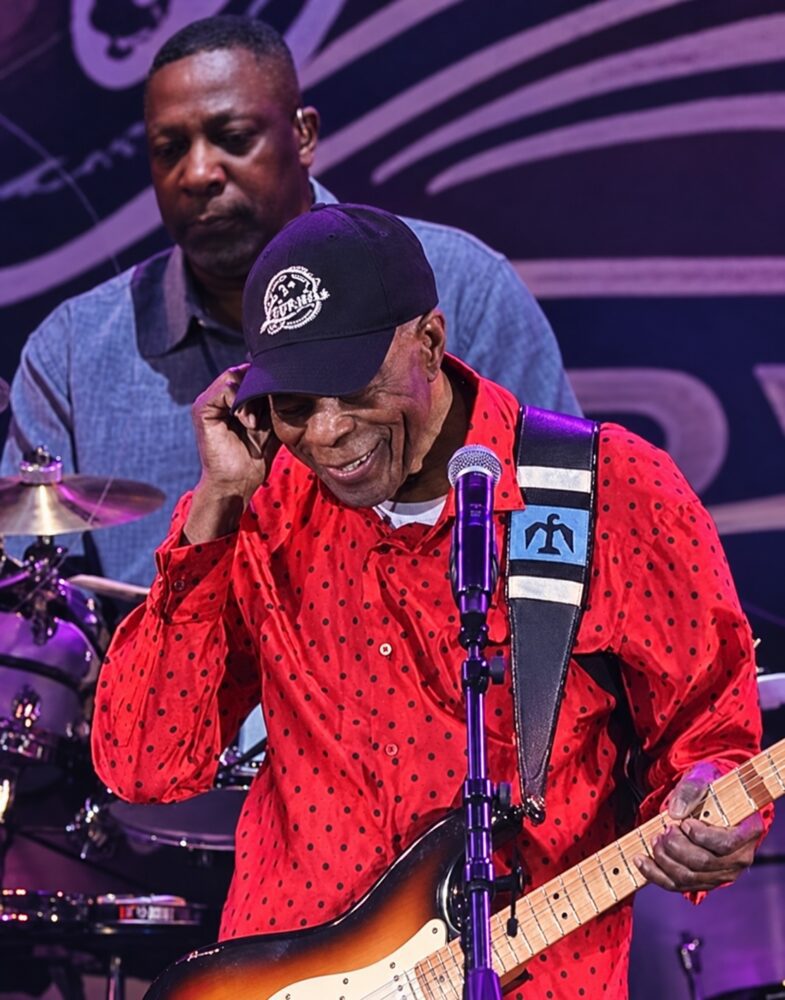
Between songs, he was funny, mischievous, and lightning-quick. His timing as a storyteller was nearly as precise as his timing as a guitarist. This was not an audience politely honoring a survivor. Guy earned every cheer in real time.
Opening artist Christone “Kingfish” Ingram had already shown why he is regarded as one of the most exciting blues guitarists of his generation. His playing carried weight, imagination, and emotional depth.
The evening also gained another jolt of electricity when Joe Bonamassa joined the celebration. However, the most moving moments came near the end, when Buddy Guy shared the stage with Kingfish and his son, guitarist Greg Guy.
The sight of three generations playing together transformed an extraordinary concert into something more. Buddy Guy did not hoard the spotlight or use the younger musicians merely as supporting players.
He celebrated their power, made room for them, and opened the door wider. It was an act of generosity from a musician who understands that keeping the blues alive means allowing it to travel forward through new hands.
At the Hollywood Bowl, Buddy Guy was more than a living link to Chicago blues history. He was fully, thrillingly present: a commanding bandleader, a dazzling guitarist, a powerful singer, and an irrepressible entertainer. Even the vast Bowl felt intimate whenever he leaned into a single note.
The result was not nostalgia but a revelation unfolding before us.
Ninety years old? The number remains almost impossible to reconcile with his performance. Buddy Guy did not ask us to admire what he could still do at his age. He simply showed us what greatness looks like when time has failed to diminish it.