Burbank, CA (The Hollywood Times) 8/1/26 – Again Again, the inventive new science-fiction romance executive produced by Lilly Wachowski, begins where most time-loop movies would ordinarily end.
Agatha, known as Aggie, has spent ten years waking up inside the same repeating day. She has learned its rhythms, exhausted its possibilities and endured the psychological consequences of living in a world where nothing she does carries into tomorrow. Then, without explanation, tomorrow finally arrives.
Freedom should feel exhilarating. Instead, it is terrifying.
 Written by star and co-director Mia Moore, who shares directing duties with Heather Ballish, Again Again uses its clever science-fiction premise to examine trauma, emotional paralysis and the fear that comes with realizing our choices may finally have permanent consequences.
Aggie has grown accustomed to a life without lasting accountability. Inside the loop, every argument, mistake and impulsive decision could disappear overnight. Once time begins moving again, however, she must confront the person she has become, as well as the damage she may have caused while believing nothing truly mattered.
 At the center of the film is Aggie’s complicated relationship with Tess, her childhood best friend and the love of her life. Tess has unknowingly repeated the same day alongside Aggie thousands of times, resetting each morning without remembering what came before. For Aggie, their relationship contains a decade of memories, disappointments and attempted reconciliations. For Tess, only one version of that shared history exists.
That imbalance gives the romance an unusual emotional weight. Aggie believes she knows Tess completely, but much of what she knows comes from encounters Tess cannot remember. The film raises a painful question: Can a relationship survive when one person carries an entire history that the other never experienced?
 Moore gives Aggie a prickly, wounded energy. She is funny, defensive, angry and often her own worst enemy. The film does not demand that its trans protagonist be inspirational, morally flawless or easily understood. Aggie is allowed to be contradictory, a woman capable of loving Tess deeply while repeatedly making it difficult for that love to reach her.
Aria Taylor brings tenderness and emotional steadiness to Tess, grounding the film whenever its metaphysical ideas threaten to overtake its human story. The chemistry between Moore and Taylor makes their relationship feel lived-in rather than constructed merely to serve the science-fiction plot.
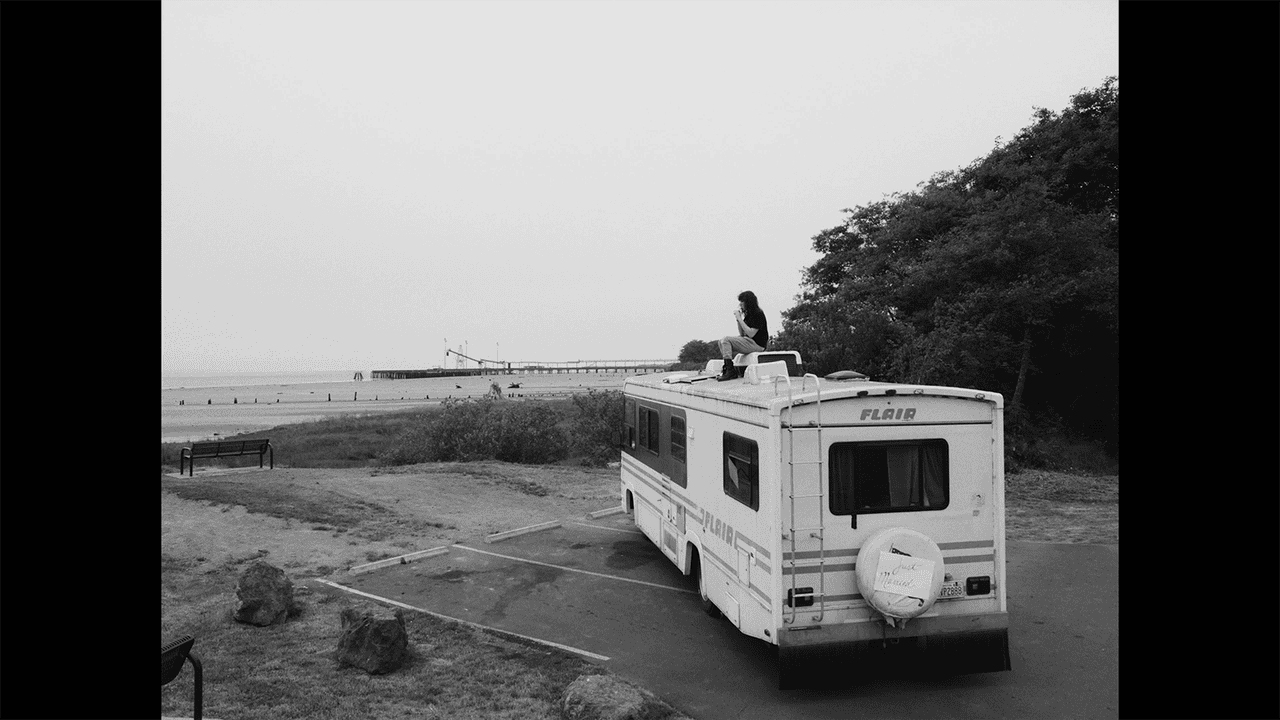 Aberdeen, Washington, is more than a backdrop. Its gray skies, industrial spaces, demolition derby and small-town familiarity create a world that seems caught between past and present. The setting mirrors Aggie herself: restless, weathered and uncertain whether moving forward means abandoning everything that once made her feel safe.
There is also something quietly radical in watching queer and trans characters occupy this landscape without the story reducing their existence to victimization. They go to church, wander through town, argue, flirt, make mistakes and attempt to repair their relationships. Their identities inform their experiences, but they are not treated as the film’s only subject.
 Moore has described the project as part of her goal to place queer and trans characters inside cinematic traditions from which they have historically been excluded. Again Again accomplishes that not by asking permission to join the science-fiction canon, but by reshaping one of its most familiar devices around a distinctly trans and queer emotional experience.
The film’s modest independent scale is sometimes visible, and its ambitious mixture of romance, metaphysics and psychological drama can become messy. Yet that roughness also complements the story. This is not a polished fantasy about mastering time. It is an intimate and frequently melancholy film about learning to live with uncertainty.
 Lilly Wachowski’s involvement feels especially appropriate. Like Wachowski’s own most memorable work, Again Again treats transformation not as a simple destination but as an ongoing, frightening and liberating process. Escaping the loop does not automatically save Aggie. It only restores her ability to choose.
That distinction is what makes the film resonate.
Most time-loop stories ask what a person must learn before being permitted to move forward. Again Again asks the more difficult question: Once the universe finally gives you another day, will you have the courage to live it differently?
Tender, unruly and unapologetically queer, Again Again is less interested in solving the mechanics of time travel than in understanding why people repeat their own emotional patterns. Its greatest insight is that tomorrow is not necessarily a reward. Sometimes it is a responsibility and facing it may be the bravest act of all.