Some images remain with us long after we have forgotten where we first encountered them. They settle somewhere within our childhood memories, waiting for an unexpected moment to awaken.
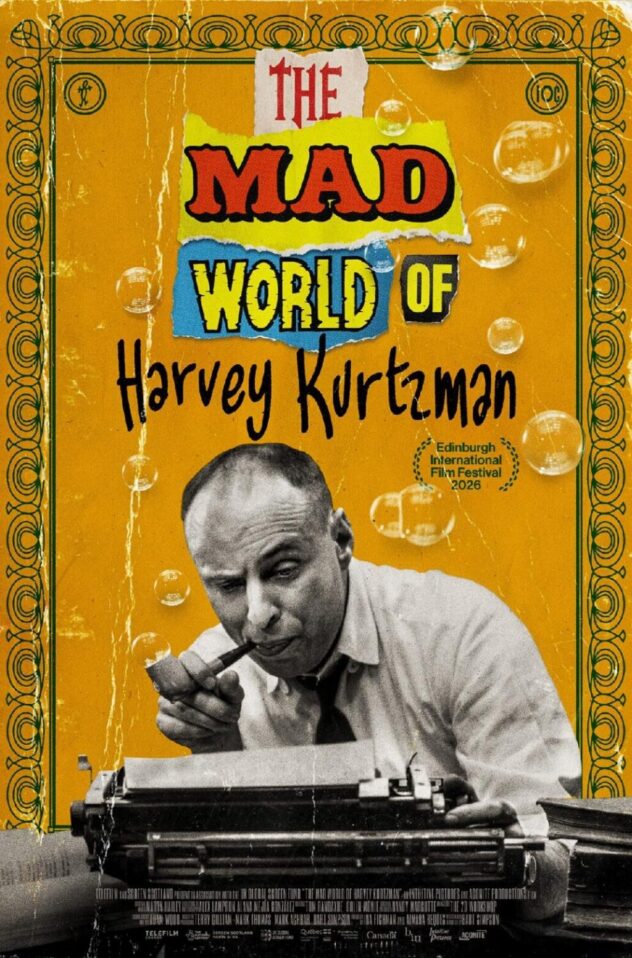
When I encountered the title The Mad World of Harvey Kurtzman, something stirred within me. There was an immediate affinity, a curiosity rooted in my childhood, my Jewish heritage, and the community that helped shape my earliest understanding of the world.
Growing up in Brooklyn during the 1970s, I remember encountering cartoons whose imagery was so peculiar, exaggerated, and sometimes obscure that I could scarcely understand their intended humor or social commentary. Yet certain illustrations remained vividly imprinted in my memory. I remembered fragments of faces, expressions, and visual absurdities, even when their meaning had long escaped me.
The title intrigued me because I wanted to discover the man behind those images. What experiences had shaped his imagination? What was he communicating through illustrations that a young girl could remember so vividly without understanding their intent? And how might his personal history illuminate the cultural world in which those cartoons were created?
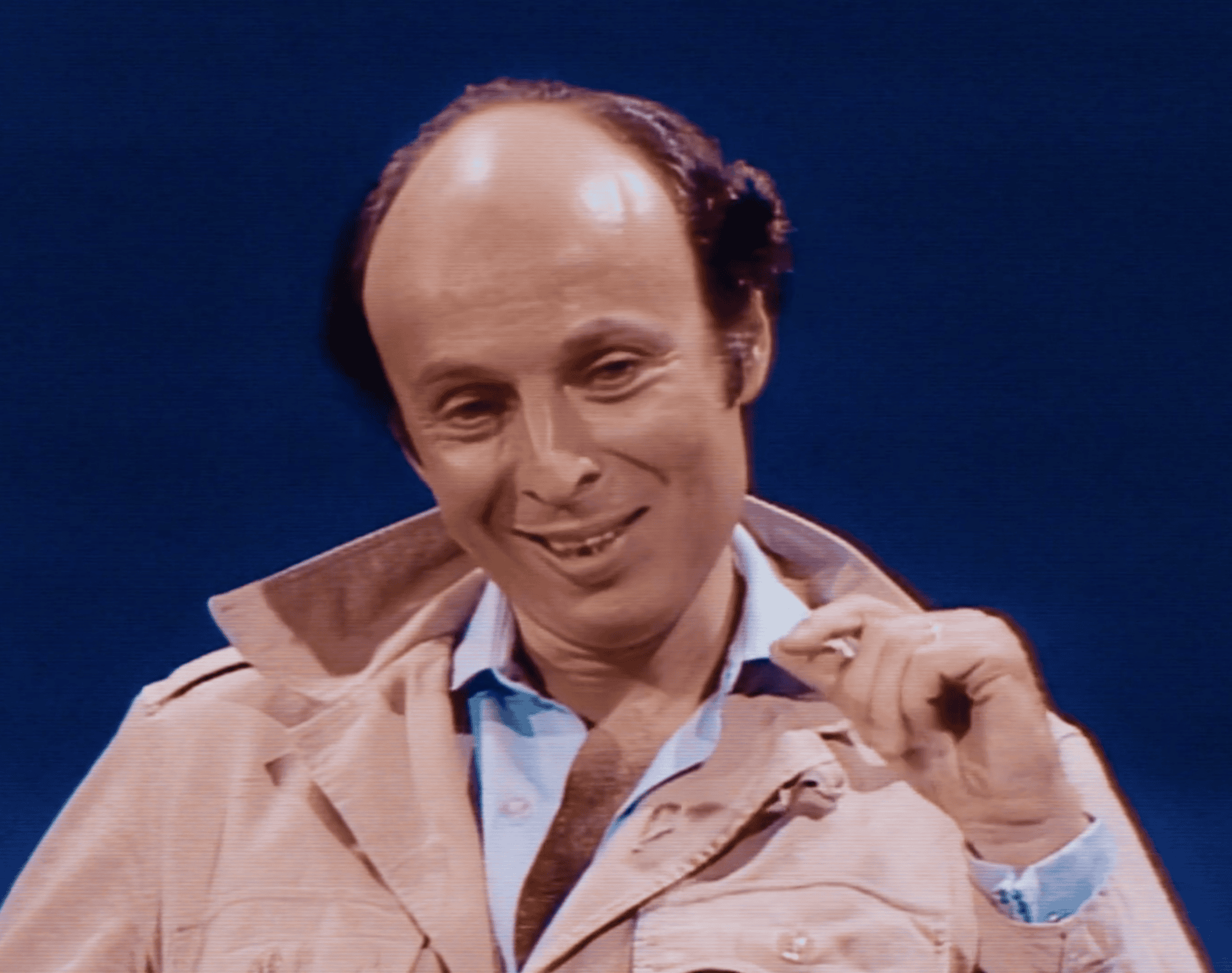
Written and directed by Bart Simpson, The Mad World of Harvey Kurtzman introduces an extraordinary American cartoonist whose imagination helped transform illustration, humor, and visual storytelling. Produced by Ina Fichman and Aimara Reques, with Terry Gilliam among its executive producers, the documentary brings together archival footage, original illustrations, animation, and intimate recollections from family members and fellow artists.
What unfolded became an unexpectedly personal journey through American history, Jewish cultural identity, military service, artistic innovation, and the profound influence of one man’s imagination upon generations of storytellers.
When Art Awakens Memory
As vintage New York streetscapes unfolded across the screen, something struck my childhood core. Growing up in Brooklyn, I recognized an atmosphere, a timeframe, a feeling of place that I could scarcely articulate, yet somehow knew.
The architecture, the streets, the children playing, all stirred a familiarity that transcended the decades separating my childhood from the footage. It was as though my memories recognized the imagery before my mind could explain why.
The documentary explores the Jewish immigrant culture that helped shape American cartooning. Art Spiegelman’s reflections on the unassimilated trauma carried by immigrant families particularly resonated with me. Their experiences traveled across generations through relationships, language, humor, and cultural traditions.
I found myself contemplating how displacement, inherited memory, and the cadence of Yiddish could influence artistic expression, particularly among children of immigrant families discovering their identities within American society. For me, these connections gave the documentary a depth extending far beyond the history of comic books.
A Veteran’s Perspective on War and Storytelling
Another unexpected connection emerged through Kurtzman’s military service and his extraordinary dedication to portraying the realities of war.
Through Two-Fisted Tales and Frontline Combat, Kurtzman approached illustrated storytelling with the curiosity of a journalist. He researched military history, interviewed servicemen, and developed narratives that explored the human experiences surrounding combat.
As a retired United States Navy officer with more than three decades of service, I found myself contemplating the culture of silence often ingrained within military life.
“Loose lips sink ships” was a familiar lesson, reinforced through operational security, military discipline, and an understanding that certain experiences were never intended for public discussion.
Yet Kurtzman sought the stories of servicemen and transformed their experiences into illustrations that confronted the human consequences of war.
One particularly poignant Korean War image remains with me: an infant crying amid the ruins while soldiers march past. The familiar comic-book language of visual sound effects becomes an expression of human suffering. I found myself considering how illustrated narratives might provide recognition for veterans whose experiences have remained unspoken.
Kurtzman’s work awakened in me a desire to explore these stories further, discovering how another veteran used his artistic voice to preserve experiences deserving of remembrance.
MAD, Satire, and the Freedom to Question
Kurtzman’s partnership with publisher William Gaines led to the creation of MAD in 1952, establishing a new language of satire that would influence American popular culture for generations. Advertising, television, politics, entertainment, and familiar social conventions became subjects of artistic scrutiny.
The documentary also examines the moral controversy surrounding comic books during the 1950s, when public concern about their influence on children contributed to congressional scrutiny and the industry’s adoption of restrictive content standards.
I was struck by the contradiction of a society celebrating American freedom while simultaneously attempting to regulate the imagination of its young readers.
Kurtzman’s creative world encouraged curiosity, skepticism, and an appreciation for the absurdities embedded within everyday life.His influence extended into the visual language of generations who would eventually challenge established cultural and political assumptions.
A Symphony of Sight and Sound
Perhaps the documentary’s most exhilarating achievement is its ability to bring Kurtzman’s illustrations into motion.
The documentary becomes a multisensory spectacle, almost overwhelming in its exuberance. As “NEIGH” appears across the screen, the braying of a donkey joins the jazzy soundtrack, while my eyes race to absorb the illustrations and read the accompanying dialogue. Each written word creates its own imagined sound within my mind, competing with the auditory layers already unfolding. The result is a dramatically chaotic orchestration of sight, sound, and storytelling.
I found myself wanting to pause, to read, to listen, and to appreciate each artistic element individually, while the film enthusiastically carried me forward.
Original music by Marty Hailey and sound design by Adam Wood contribute to this exuberant experience. At moments, the playful jazz atmosphere reminded me of Vince Guaraldi’s familiar compositions for the Peanuts television specials.
As a graduate student of art therapy, I was equally captivated by Kurtzman’s artistic process. His meticulous hand-lettering, diluted ink washes, exaggerated expressions, and carefully orchestrated compositions revealed a craftsman whose technical precision matched his extraordinary imagination.
Watching him develop illustrations through successive layers reminded me of early animation techniques, when artists constructed movement through sequences of carefully rendered drawings.
His work on Harvey Kurtzman’s Jungle Book, considered an important early contribution to the American graphic novel, further demonstrates his command of sequential storytelling. Each illustrated page offers an invitation to explore the relationship between visual imagery, emotional expression, and the cultural world surrounding its creation.
The Artist Behind the Imagination
The documentary follows Kurtzman’s professional journey through MAD, Trump, Humbug, Help!, and his long collaboration with Will Elder on Little Annie Fanny for Playboy. His career reveals the challenges of sustaining artistic independence within the commercial publishing industry.
I was particularly intrigued by the documentary’s exploration of his reception in France, where cartoonists were celebrated as artists, while American publishing often required them to function as businessmen.
That contrast invited me to consider how we measure artistic achievement and how the cultural value of creative work can extend far beyond its original financial success. Yet some of the documentary’s most touching moments emerge through the recollections of his wife, Adele, and their family.
Adele’s memories of inexpensive dates, listening to records, and Harvey’s remarkably quiet personality reveal a tender contrast between the soft-spoken man and the explosive energy of his illustrations.
Their courtship, preserved through handwritten correspondence, offers a glimpse into the private life of an artist whose imagination became part of the public’s cultural inheritance.I was moved by the affection with which his family remembers him and the enduring connections he cultivated throughout his life.
The Little Girl Who Never Stopped Playing
Watching Kurtzman’s creative world unfold also brought me back to my own childhood. Living with my great-grandmother, I had very few toys. My mother had left behind a single 45 rpm record, and I would play it repeatedly, choreographing dances and inventing performances in the living room.
My friend Marisol and I created games with leaves, played hide-and-seek, and discovered imaginative possibilities within our surroundings. My great-grandmother often complained that all I ever did was play. Decades later, I find myself watching a documentary about a cartoonist and discovering connections to history, psychology, journalism, art, and my own childhood.The girl who was criticized for playing grew into a woman who is learning through the very act of creative exploration. The little girl with one record never stopped dancing. She simply found more ways to tell her stories.
Perhaps that is one of the most meaningful discoveries this documentary offered me: an opportunity to recognize how creative exploration continues shaping our understanding of ourselves and the world around us.
An Imagination That Outlived Its Creator
In the documentary’s final chapters, Kurtzman’s experience with Parkinson’s disease reveals the physical challenges confronting an artist whose imagination had once filled pages with explosive movement and expression. Watching his struggle awakened memories of my grandfather, who also lived with Parkinson’s.
I was particularly touched by Kurtzman’s continuing engagement with his students at New York’s School of Visual Arts and his delight in the artistic exchanges that remained part of his life. His influence extended across generations of cartoonists, illustrators, filmmakers, and animators, including artists whose creative contributions became defining elements of contemporary popular culture. More than three decades after his death, his family continues to remember him with affection, while the artistic vocabulary he helped establish remains woven into our everyday visual experiences.
I began this documentary curious about illustrations that had lingered in my childhood memory. I finished with a deeper appreciation for the man whose imagination helped shape a cultural language that continues to influence how we see, question, and interpret the world.
For readers interested in exploring Harvey Kurtzman’s life and artistic legacy in greater depth, I invite you to read my full-length retrospective, The Mad World of Harvey Kurtzman: The Man Who Changed How We See the World, featuring additional reflections on his military storytelling, Jewish cultural heritage, artistic techniques, personal relationships, and enduring influence.
Harvey Kurtzman spent his life bringing stories to life through illustrations, all while dreaming of becoming a filmmaker. Decades after his passing, the very art form he helped shape has returned to tell his story, bringing his drawings, imagination, and extraordinary legacy to the screen.
Posthumously, Harvey Kurtzman’s lifelong dream of filmmaking finds its fulfillment through the artists he inspired. And perhaps, from heaven, he finally gets to watch his own imagination come alive on screen.