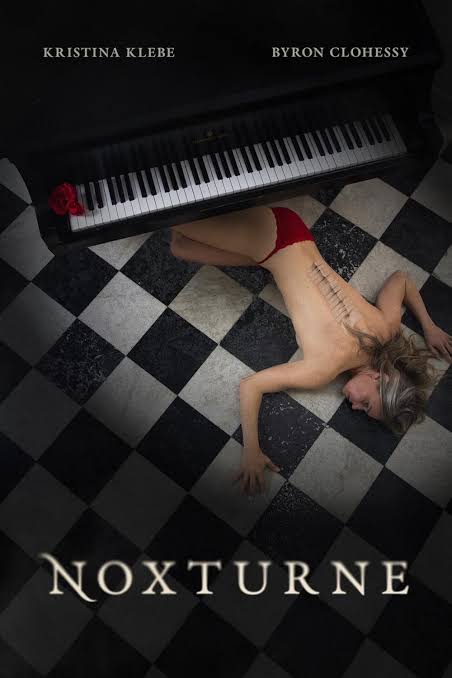
Kristina Klebe draws from her own life-altering spinal injury to create a disturbing, deeply personal exploration of vulnerability, lost independence, and the unsettling question of whom we can trust when we need them most.
Los Angeles, CA (The Hollywood Times) 10/23/26 – What happens when the person you depend on for your recovery may be the very person you need to escape?
That chilling question lies at the heart of NOXTURNE, the award-winning psychological thriller from writer, director, producer, and star Kristina Klebe. Having watched the film myself, I found it intriguing, psychologically unsettling, and far more layered than the conventional thriller its premise might initially suggest.
There is something particularly disturbing about a story in which the greatest danger may not come from a stranger lurking in the shadows, but from someone sleeping beside you.
Following its Best Feature Narrative win at the 2026 Festival of Cinema NYC, NOXTURNE continues its festival journey with a screening at the LA Femme International Film Festival in Sherman Oaks on Friday, October 23.
I recently had the pleasure of speaking via Zoom with Klebe and her real-life partner, actor and producer Byron Clohessy, about the intensely personal inspiration behind the film, the psychological consequences of physical trauma, and the formidable undertaking of making an independent feature together.
CLICK BELOW FOR OUR EXCLUSIVE INTERVIEW:
(coming soon)
In NOXTURNE, Klebe portrays Mia Nox, an accomplished concert pianist celebrated for her interpretations of Chopin’s haunting nocturnes. With a prestigious Carnegie Hall performance approaching, Mia appears to have everything an artist could desire: extraordinary talent, professional recognition, and a passionate younger lover named Roman, portrayed by Clohessy.
Then a devastating accident changes everything.
With her thoracic spine shattered and her ability to perform compromised, Mia finds herself confronting a terrifying new reality. No longer able to command her body or pursue her career as before, she becomes increasingly dependent on Roman.
But while Mia struggles through the uncertainty of recovery, Roman’s professional ambitions begin to flourish. He secures a coveted audition at Lincoln Center, signs with Mia’s manager, and appears increasingly drawn toward another woman.
Is Mia witnessing a calculated betrayal? Is trauma distorting her understanding of reality? Or is the truth somewhere even more disturbing?
As the story unfolds, the distinction between emotional manipulation, psychological instability, and genuine danger becomes increasingly difficult to untangle.
 One of the most fascinating revelations during our interview was how closely Mia’s experiences reflect Klebe’s own difficult recovery from a serious accident.
Klebe explained that she spent approximately three months wearing a back brace while dealing with significant pain, muscular changes, and the emotional consequences of suddenly having limitations she had never anticipated.
Although she did not experience the same degree of paralysis as Mia, the frightening loss of independence became central to her storytelling.
For someone accustomed to managing her own life, being forced to rely on another person created an unexpected psychological vulnerability.
That experience also shaped her decision to tell this story as a psychological thriller rather than a conventional drama.
During our conversation, Klebe discussed how post-traumatic stress can blur the distinction between genuine threats and emotional reactions heightened by trauma. An injured person’s fears can feel entirely real, even when the surrounding circumstances remain uncertain.
It is this ambiguity that makes NOXTURNE especially compelling.
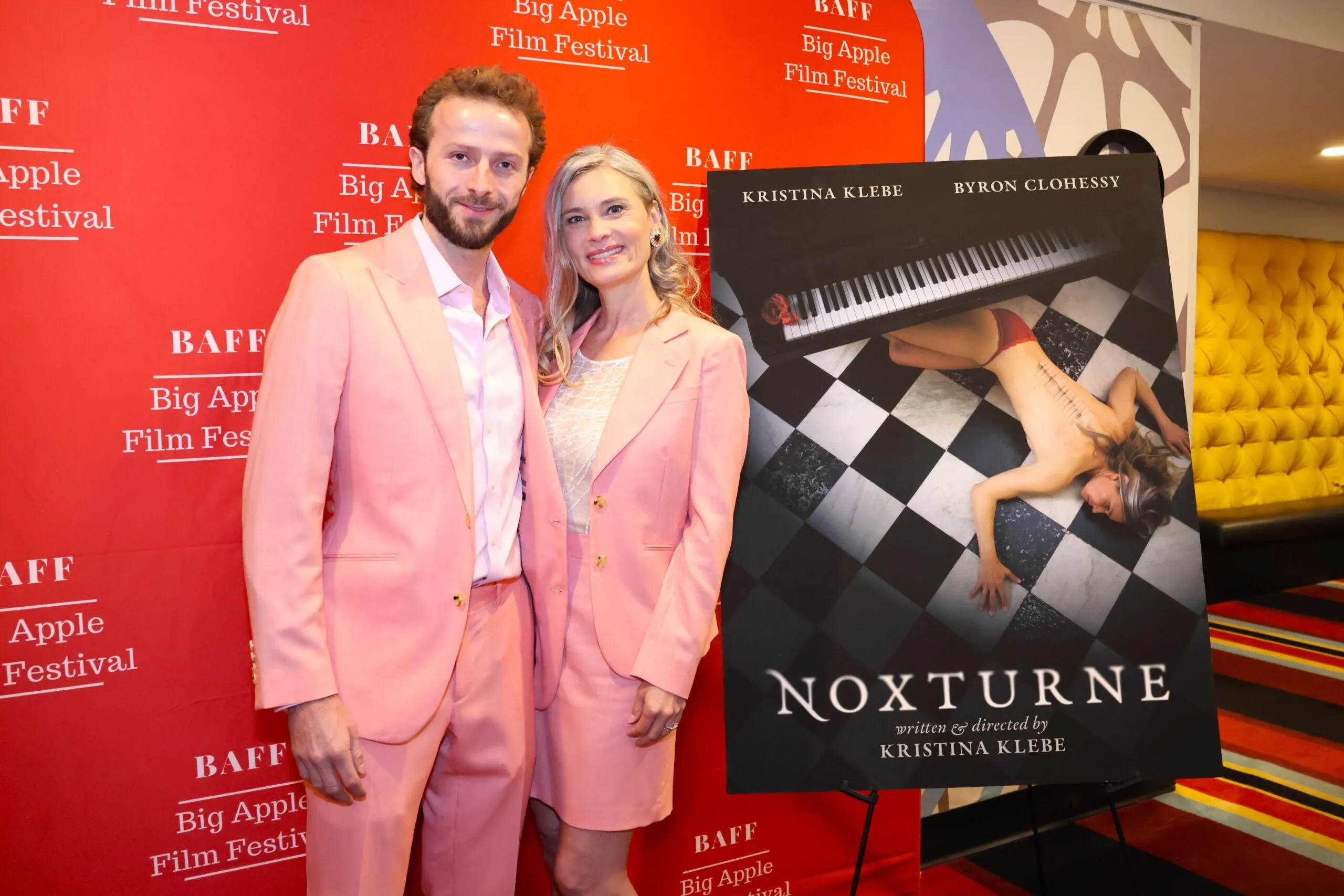
As Klebe explains in her director’s statement:
“Noxturne is about how the journey of healing can be absolutely terrifying. To truly heal from anything in life, we must face our shadow.”
She continued:
“I have always been inspired by the deep connection between the mind and our physical bodies and this is my first foray into bringing that to the screen.”
These themes give the film an emotional foundation that extends well beyond the mechanics of suspense.
What particularly intrigued me about NOXTURNE was its examination of how easily love, dependence, ambition, and control can become entangled.
Mia is not simply a woman recovering from an accident. She is an artist whose identity has been built around excellence, discipline, and the ability to express herself through music.
When her physical capabilities are suddenly compromised, she faces not only the loss of her independence but also the possible loss of the person she believed herself to be.
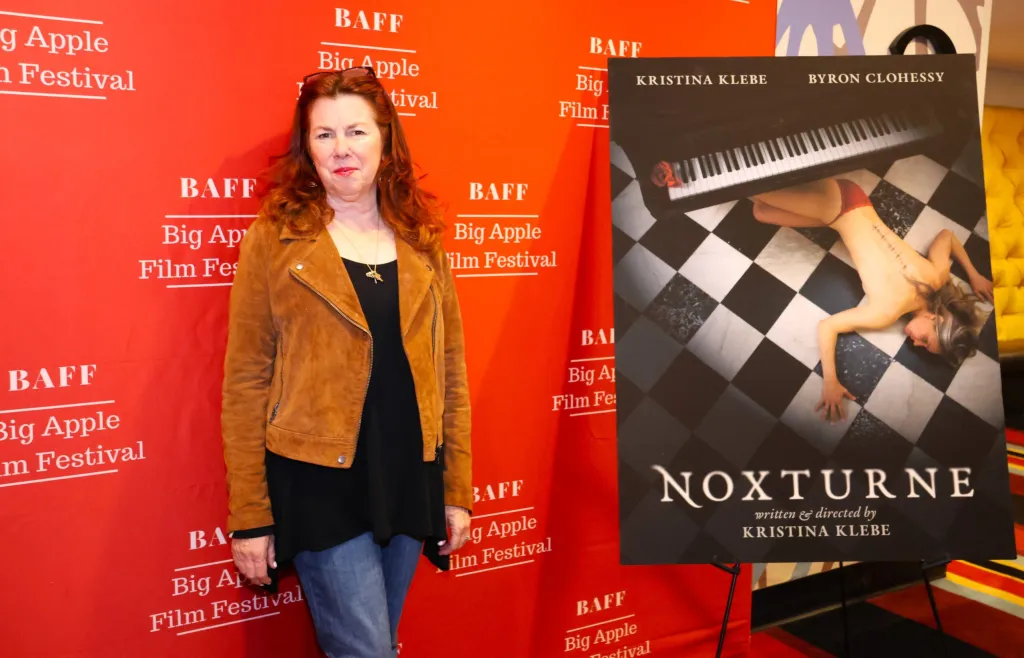
Klebe shared that her experiences with narcissistic relationships influenced the creation of Roman, a character whose outward charm and ambition conceal troubling questions about his intentions.
The film examines how emotional manipulation can become especially destructive when one partner is physically vulnerable and the other controls access to support, reassurance, and everyday necessities.
During our conversation, Klebe described the story as a metaphor for recognizing and ultimately removing toxic influences from one’s life.
For Mia, recovery is therefore about more than regaining physical strength. It becomes an emotional confrontation with the relationships and patterns that may be preventing her from reclaiming herself.
That deeper meaning stayed with me after watching the film.
There is a universal fear here: losing control of your own life precisely when you most need to feel secure.
Another intriguing aspect of our discussion involved the film’s deliberately layered storytelling.
Clohessy and Klebe spoke about the importance of seemingly minor details that invite viewers to reconsider what they have witnessed.
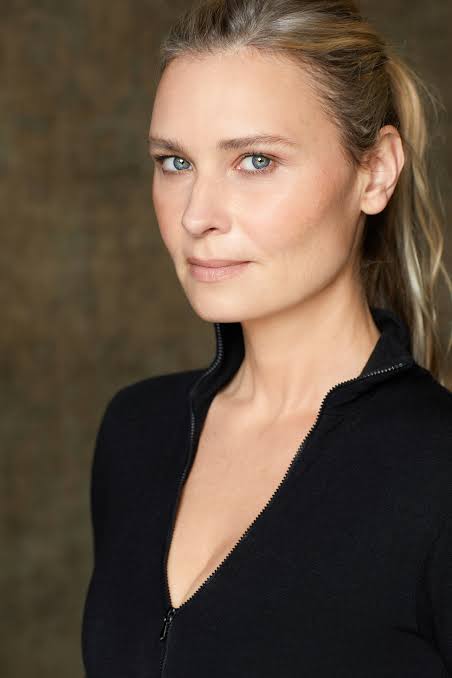
Among them are VHS recordings that provide glimpses of Mia’s family history, particularly her absent father.
The filmmakers suggested that this absence may offer an important clue to Mia’s emotional development and the types of relationships she forms as an adult.
It is an understated but meaningful dimension of the film, encouraging audiences to consider how childhood experiences and unresolved emotional wounds can influence adult attachments.
Klebe also discussed the film’s more surreal elements, noting that some viewers have drawn comparisons to Inception because of its shifting psychological realities.
For me, this dreamlike uncertainty is one of the more intriguing elements of NOXTURNE.
Rather than providing straightforward answers, the film asks its audience to participate in Mia’s confusion.
We are left to question what is genuinely happening, what may be filtered through trauma, and whether the greatest threat is external or buried somewhere within Mia’s own history.
At the beginning of our Zoom conversation, Klebe warmly introduced Clohessy, explaining:
“This is Byron Clohessy, who is my real life partner and also my acting partner and producer.”
Their real-life relationship adds an interesting dimension to a film centered on the complexities of romantic attachment and trust.
But as our conversation revealed, working together on an independent feature also required considerable patience, flexibility, and an extraordinary amount of multitasking.
Klebe carried the responsibilities of writing, directing, producing, and portraying Mia.
When I asked about balancing these demanding roles, she revealed that producing was actually the most difficult part of the experience.
Directing, while creatively demanding, was something for which she had prepared extensively. Shot lists, storyboards, and visual references helped her organize the film’s complicated psychological atmosphere.
Producing, however, required decisions that were far less enjoyable.
Managing personnel, resolving problems, and occasionally having to dismiss people from the production created emotional stress that Klebe would rather avoid in the future.
Clohessy agreed that simultaneously acting in and producing an independent feature is an exceptionally difficult undertaking.
He praised Klebe’s ability to move between her many responsibilities while acknowledging that the experience left him convinced of the need for a dedicated producing partner on future projects.
Their candid reflections provided a refreshing reminder of the enormous amount of work taking place behind the scenes on modestly budgeted independent films.
The challenges are not simply financial or logistical. They can also be deeply personal.
Film Review: A Psychological Puzzle That Lingers
What makes NOXTURNE worth discussing is its willingness to explore uncomfortable emotional territory without reducing its central character to a helpless victim.
Klebe’s Mia occupies a complicated space between strength and vulnerability, determination and fear, love and suspicion.
The psychological tension is rooted in something painfully recognizable: the terror of discovering that the person you trusted may not have your best interests at heart.
I found the film particularly intriguing because it challenges viewers to consider how trauma can alter not only our bodies but also our relationships, judgment, and sense of identity.
The use of classical music adds another meaningful dimension. Chopin’s nocturnes, often associated with intimacy, melancholy, and emotional complexity, provide a fitting artistic framework for Mia’s unraveling world.
Music is not merely her profession; it represents the freedom, discipline, and self-expression she fears losing.
As the threat of losing her artistic identity collides with growing questions about Roman, the film becomes a study of the fragile balance between needing someone and surrendering too much of oneself.
The surreal storytelling may challenge viewers who prefer psychological thrillers with clearly defined answers. Certain narrative layers invite interpretation rather than offering immediate resolution.
Yet that ambiguity feels appropriate for a story so concerned with the disorienting nature of trauma.
The film’s greatest strength is not simply its ability to generate suspicion. It is its insistence that healing can be frightening, nonlinear, and emotionally exhausting.
Mia must confront uncomfortable truths about herself and her relationships before she can begin to imagine a life on her own terms.
It is a provocative premise, and one that gives NOXTURNE considerable emotional weight.
Toward the end of our interview, I asked Klebe what might come next after completing such an emotionally and physically demanding project.
Her answer was refreshingly human.
After years of bringing NOXTURNE to life, she hopes to take a substantial vacation and devote more attention to her own well-being, physical health, and self-care.
It seems a particularly fitting aspiration for an artist whose film is so deeply concerned with the importance of healing.
There is something meaningful about creating a story inspired by one’s own pain and then recognizing the need to step away, rest, and reconnect with life beyond the work.
Perhaps that is the most hopeful message beneath the darkness of NOXTURNE.
Trauma may change us, and sometimes the people we depend upon are not the people we need. But there can still be a path toward independence, personal understanding, and a new beginning.
Final Thoughts
NOXTURNE is an unsettling and thought-provoking psychological thriller that uses the conventions of suspense to explore far more intimate concerns: physical vulnerability, emotional manipulation, ambition, identity, and the courage required to reclaim one’s life.
Klebe brings a distinctly personal perspective to the material, informed by experiences that clearly continue to shape her understanding of recovery and human relationships.
After watching the film and speaking with Klebe and Clohessy, I came away appreciating not only its psychological complexity but also the emotional vulnerability required to transform such personal experiences into a feature film.
For audiences who appreciate intelligent, female-driven psychological thrillers that invite discussion long after the credits roll, NOXTURNE is an intriguing addition to the independent film landscape.
And perhaps its most haunting question is also its most universal:
When everything that once defined you is taken away, how do you find your way back to yourself?
Festival Information
NOXTURNE received the 2026 Festival of Cinema NYC award for Best Narrative Film.
Following its October 18 Twin Cities Film Festival screening, the film screens at the LA Femme International Film Festival on Friday, October 23, at 8:00 p.m., at Regal Cinemas Sherman Oaks Galleria.
The 22nd annual LA Femme International Film Festival takes place October 22–25, 2026.
For festival information, visit https://lafemme.org/.
Film Credits: Written and directed by Kristina Klebe. Produced by Kristina Klebe, Byron Clohessy, and Assal Ghawami. Starring Kristina Klebe, Byron Clohessy, Laila Robins, Siobhan Fallon Hogan, Robert Clohessy, and Kim Director. Cinematography by Jendra Jarnagin, editing by Lisa Hendricks, and original score by Holly Amber Church.
Running Time: 92 minutes.
By Valerie Milano | The Hollywood Times | October 23, 2026