
Goodbye Cruel World, Félix de Givry’s feature directorial debut, co-written with Marie-Stéphane Imbert, stages adolescent despair as a morbid act of authorship. Goodbye Cruel World screened at the AFI FEST on Thursday, October 22. This French film takes place in the provincial town of Lisieux, Normandy where Otto, a fourteen-year-old played by Milo Machado-Graner, suffers severe bullying at his Catholic middle school. Next, we see emails requesting farewell letters to his classmates, naming his tormentors as murderers with the bluntness of a legal document drafted by a wounded child. He leaps from a high bridge into a local river. He survives the plunge, and then makes a stranger choice: he allows the world to treat him as dead.
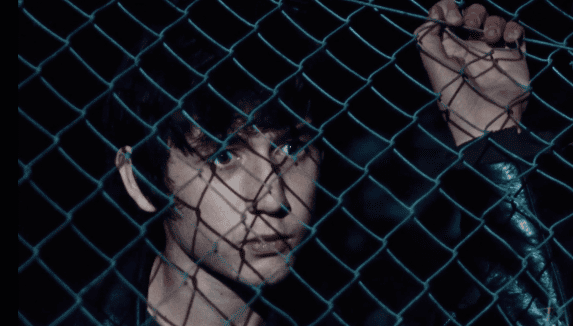
Hiding out in places near his small hometown, Otto observes the police investigation and the local media circus that follow his supposed death. De Givry avoids the machinery of a standard missing-person procedural. His film moves with the logic of a grim fable, a somber adolescent fairytale shaped by dark romanticism and a clear distrust of forensic tidiness. Otto’s decision to preserve the fiction of his death gives the film its philosophical charge. The story shifts from isolation into radical self-reconfiguration. Otto becomes a living ghost. This spectral vantage produces the film’s most acidic commentary on public performance. Otto watches television broadcasts in which the classmates who made his daily life unbearable now offer polished regret. Their remorse arrives neatly packaged, camera-ready, emotionally laminated.
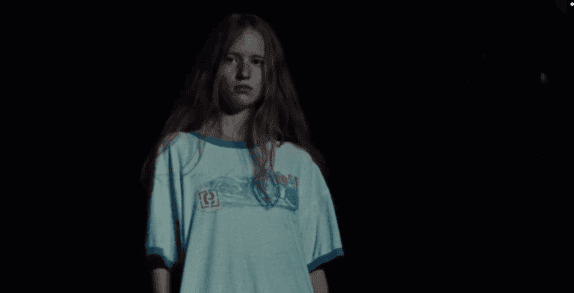
Things changes after Otto meets Léna, played by Jane Beever. She is a younger student who catches him scavenging for food, then hides him in a dusty, vacant annex of the hotel run by her mother. Her perspective enters the film gradually, and her role shifts from caretaker to accomplice in a planned cross-country flight. She steadies Otto without softening the danger around him. Their connection gives the film a shared, quietly defiant romanticism, one built from secrecy, hunger, and the desperate hope that elsewhere might exist.
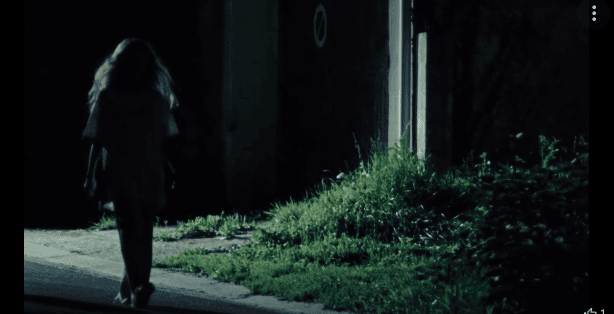
Milo Machado-Graner, who starred in the award-winning Anatomy of a Fall and newcomer Jane Beever shine in Goodbye Cruel World. Félix de Givry is known as the producer of Arco and a collaborator with Mia Hansen-Løve. Excluding a small supporting part in Olivier Assayas’ Something in the Air (2012), Félix de Givry was first introduced to many filmgoers as the lead of Mia Hansen-Løve’s Eden (2014), her decades-spanning story of French house and garage music.li In that film, he plays a young DJ who experiences minor success for a few years before his career and personal life stagnate, triggering a nervous breakdown. Fresh off the awards success of Arco, de Givry’s own (live-action) feature directing debut marks a considerable shift away from that sci-fi film’s tone, though it is still peppered with a few light touches of the fantastic.

A twist on a coming-of-age romance, Goodbye Cruel World recalls certain works by François Truffaut and Maurice Pialat via some apparent visual and scripting nods, though the film’s particular examination of teen malaise and connection, plus the ways in which we can and can’t control narratives about ourselves, feels very much rooted in the modern era. Goodbye Cruel World — co-written with Marie-Stéphane Imbert — in its vague approach to just how much time actually passes between scenes depicting progression for its protagonists. Here, a story of a teenage runaway and the girl he befriends could well last a couple of weeks, several months, or only a few days. All are plausible within the dreamy approach to the timeline, reflecting adolescent perception where time can feel blurred. But additionally, time is distorted for the central boy because the current circumstances of his life are fully unexpected — they are happening after he wanted to die.
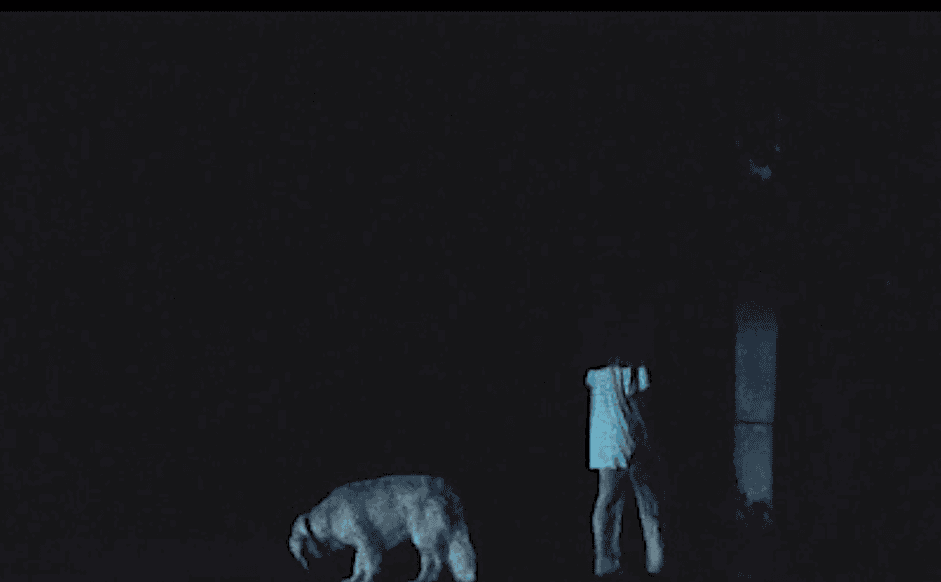
Following an opening sequence in which 14-year-old Otto (Anatomy of a Fall) breakout Milo Machado-Graner) is pursued across town at night by bullies, we learn through an omniscient narrator (French screen legend Françoise Lebrun, giving proceedings a fairytale air that avoids being cloying) that the teenager plans to end his life. Before doing so, he writes and photocopies a letter to be posted to all of his Catholic-school classmates, explaining his decision and implicating the vast majority of them. “Because death is just once,” the letter says. “Whereas life is every day. If there’s an investigation, this was murder, not suicide. The police can arrest every member of my class.” He makes an exception for two specific students, who presumably never bothered him.
After skipping school and setting his pet rodent free in the woods outside his town of Lisieux, Normandy, Otto jumps from a high bridge into the river below. The backpack that was presumably meant to help him drown is quickly separated from him, and instead of continuing with his death wish, the poor, drenched lad gets back up at the rocky shore, contemplating his next move. What does a brutally lonely boy do now that he’s already ensured super-fast confirmation of his suicide has been communicated to a significant portion of the local population?
Taking refuge in an abandoned religious home on the outskirts of town, Otto uses the radio to keep track of the police search triggered by his mother (his estranged father lives far away), and of the school populace’s response to his letter. Throughout the film, Otto is exposed to further TV broadcasts and newspaper reports that present a very different picture of his life as he knew it, and of those he views as his tormentors.
In one of many effective moments where Machado-Graner is given room to convey so much about Otto through silent movements and the slightest facial changes, we see him watch a TV reporter interview three boys about how they’d see Otto alone at recess and now wish they had tried speaking to him. Lebrun’s narration has established before this point that a specific trio of boys helped make Otto’s life a living hell. It’s not made explicitly clear if these seemingly sympathetic kids are actually his worst bullies, but Machado-Graner’s eyes, lip twitch, and throat gulp in this short sequence tell a whole story in themselves.

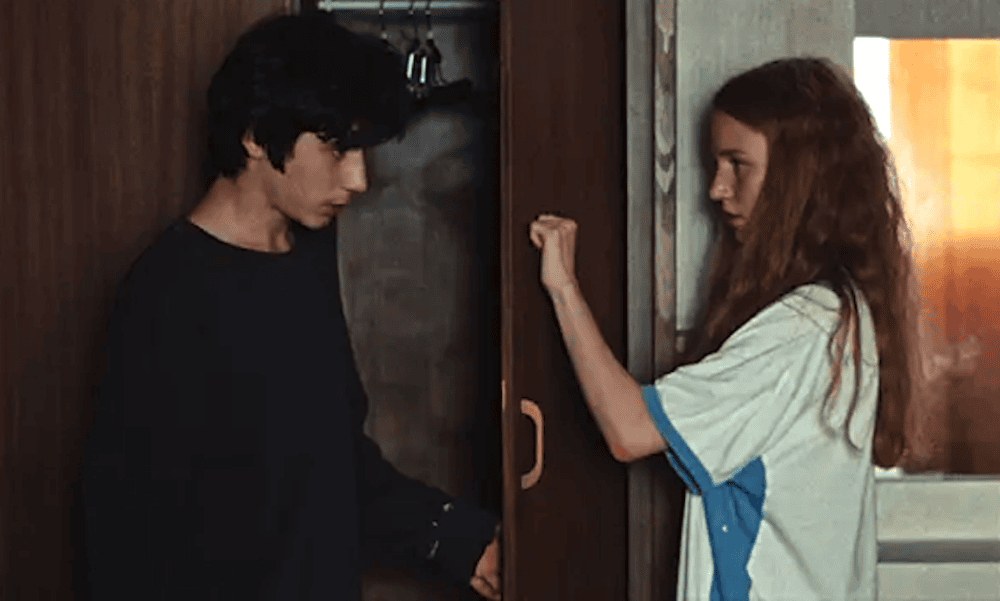
A teenager who does actually talk to Otto is Léna (Jane Beever, excellent in her first onscreen film role), who’s from the same school but wasn’t one of his classmates. While walking her dog, she spots Otto on one of his nightly bin raids for food, tracking him to the abandoned house with barely working facilities. She offers him a night’s stay in a long-unused room at the hotel where she lives and works with her mother, which turns into an extended stay, with food and drink brought to him in secret. Léna’s bedroom is directly above where Otto now resides; calling his hotel room’s phone, she sweetly describes moving around her bedroom, making the floorboards lightly creak, as though she’s walking on his head.
This friendship between two lonely youngsters gradually blossoms into a romance; their plan to hide out inevitably turns into one in which they both escape across the country, never revealing the truth behind Otto’s disappearance. As hopeful prospects emerge for the characters, the somewhat bleached colors of the film’s early stretches give way to more popping, almost blinding shades. Cinematographer Tara-Jay Bangalter’s frequently gorgeous 16mm photography is particularly effective with Beever’s ginger hair in sunlit sequences, and when pale-skinned Otto attempts a blonde makeover, as vacating the hotel for new pastures becomes a nearing target.