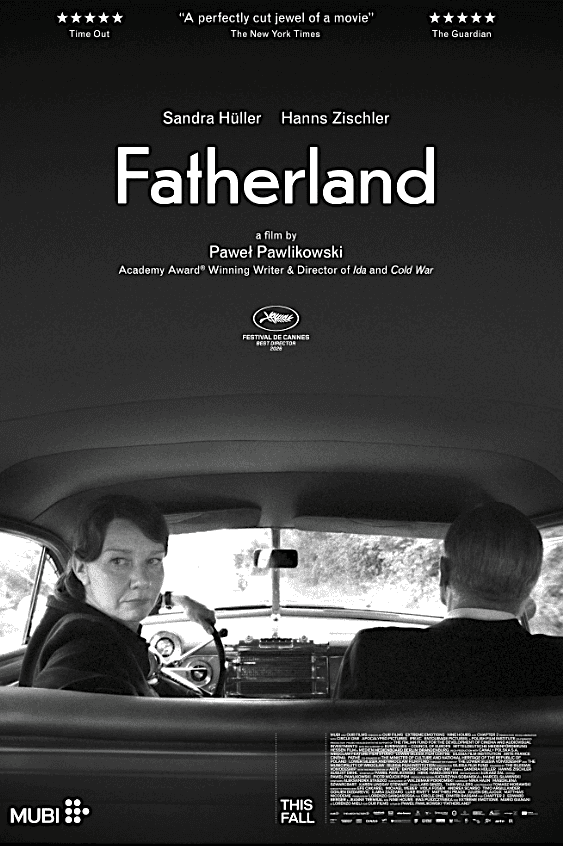
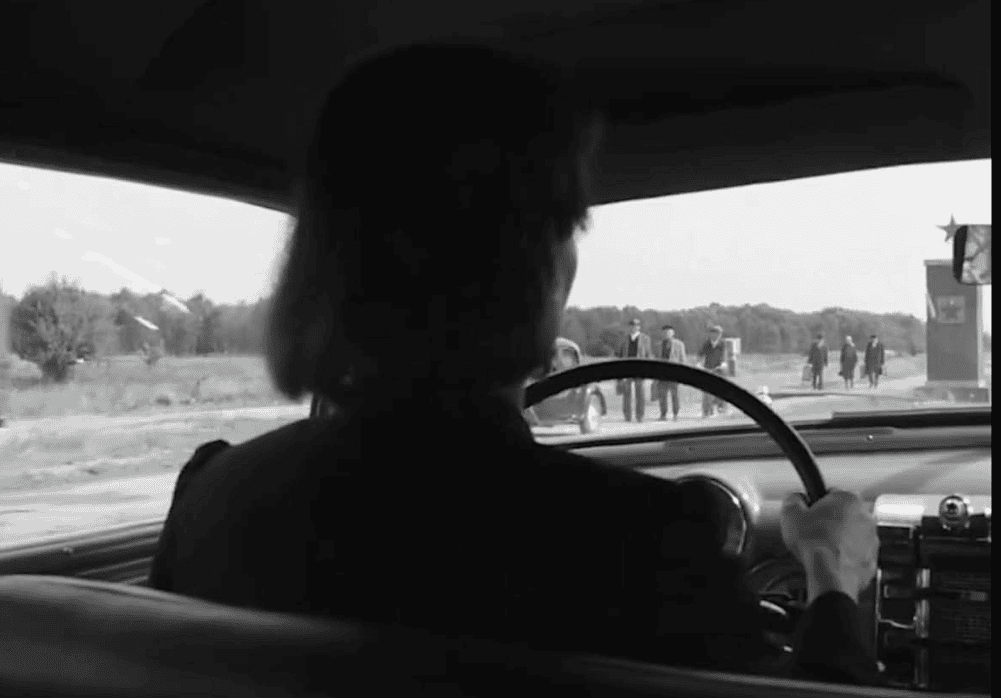
One of the most anticipated films at this year’s Newport Beach International Film Festival is Pawel Pawlilkowski’s Fatherland – a historically inspired story about the self-exiled Nobel Prize-winning writer Thomas Mann returning to Germany in 1949 to accept the Goethe Prize. Selected as Poland’s bid for the Oscar for Best International Feature Film in 2027, Fatherland continues the director’s recent interest in the damage present in post-World War II Europe, in a vein similar to his Ida and Cold War. Shot in luminous gray scale, the film centers on the relationship between writer Thomas Mann and his daughter Erika, an actress, writer and rally driver – as they embark on a road trip in a black Buick cruiser across post-war Germany.
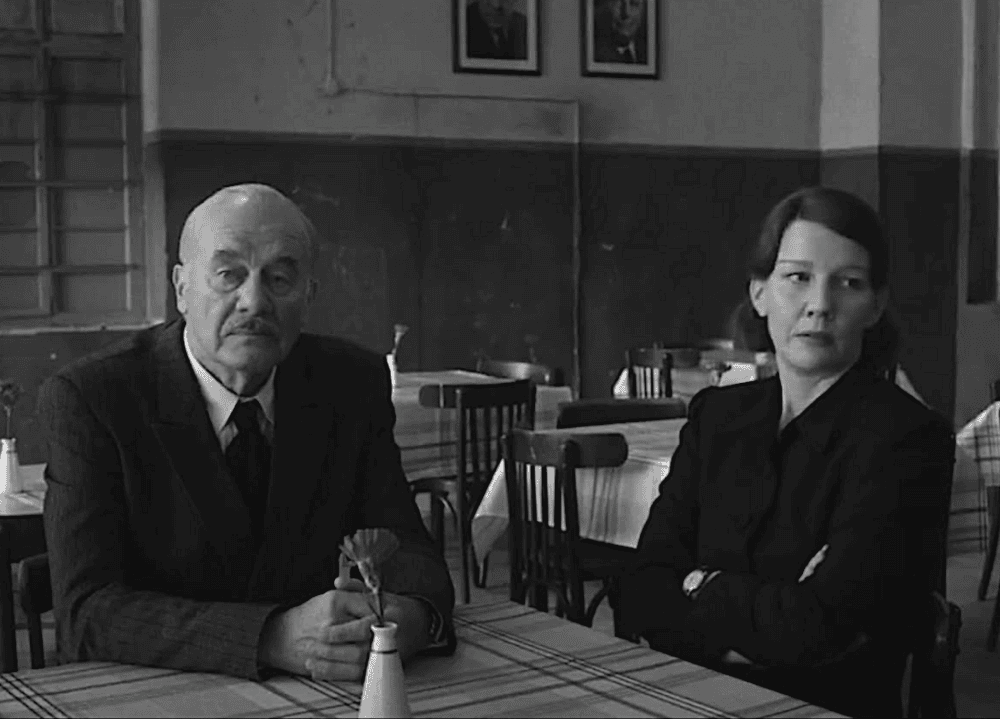
Taking place in 1949, the historically inspired story sees Thomas Mann (Hanns Zischler) accompanied by his daughter Erika (Sandra Hüller). Mann and his family left Germany in 1933 for America to escape the rising tide of Nazism. After Germany was defeated in World War II, it was divided into two, a communist-socialist East Germany (DDR) and a capitalist West Germany (BDR) and both sharing a divided Berlin. This bisection is the divide on what Mann and his work seemed to land – with Mann and his own children. This is reflected in the film’s metaphoric title Fatherland – because Thomas Mann personally experienced the divide between his new adopted country and where he felt he truly belonged.
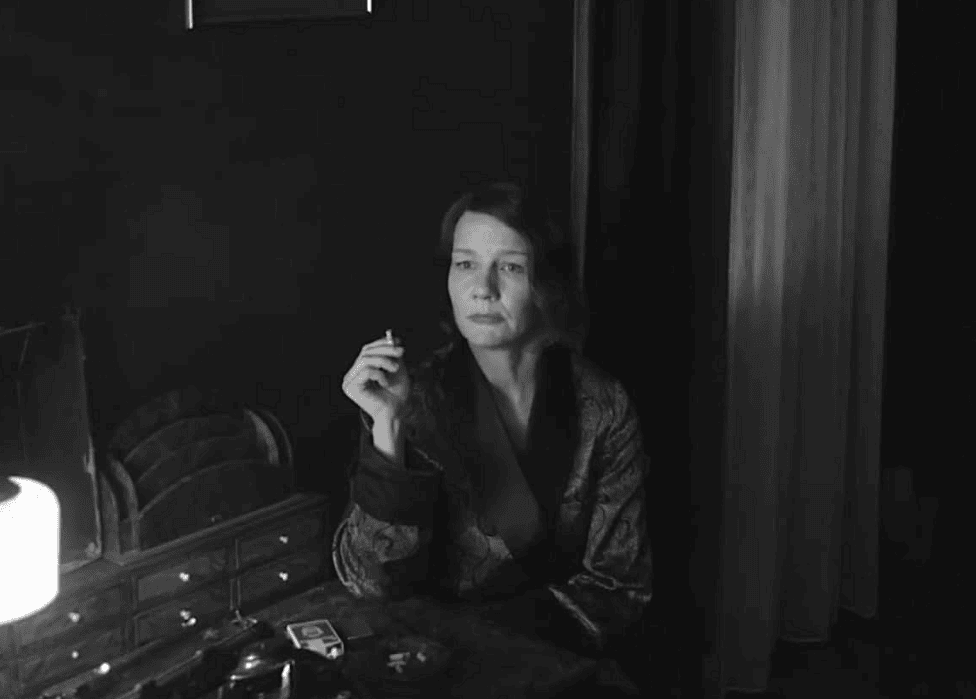
While Thomas Mann is the symbol that frames the film’s philosophical questions, the story’s heart actually resides in his dutiful daughter Erika (Sandra Hüller) and her wayward brother Klaus (August Diehl). Pawlikowski and Hendrik Handloegten’s subtle script quietly gives both siblings their backstories. Erika is a former war correspondent whose current anti-capitalist politics make her persona non grata in the US (she’s been denied citizenship three times, despite living there). Klaus is based in Cannes, having seen his writing, he penned Mephisto – a novel about an actor who gives himself to Nazism—banned in Germany. Both are miserable in their own way, but Klaus, who’s openly gay and a drug addict, appears to feel especially hopeless.
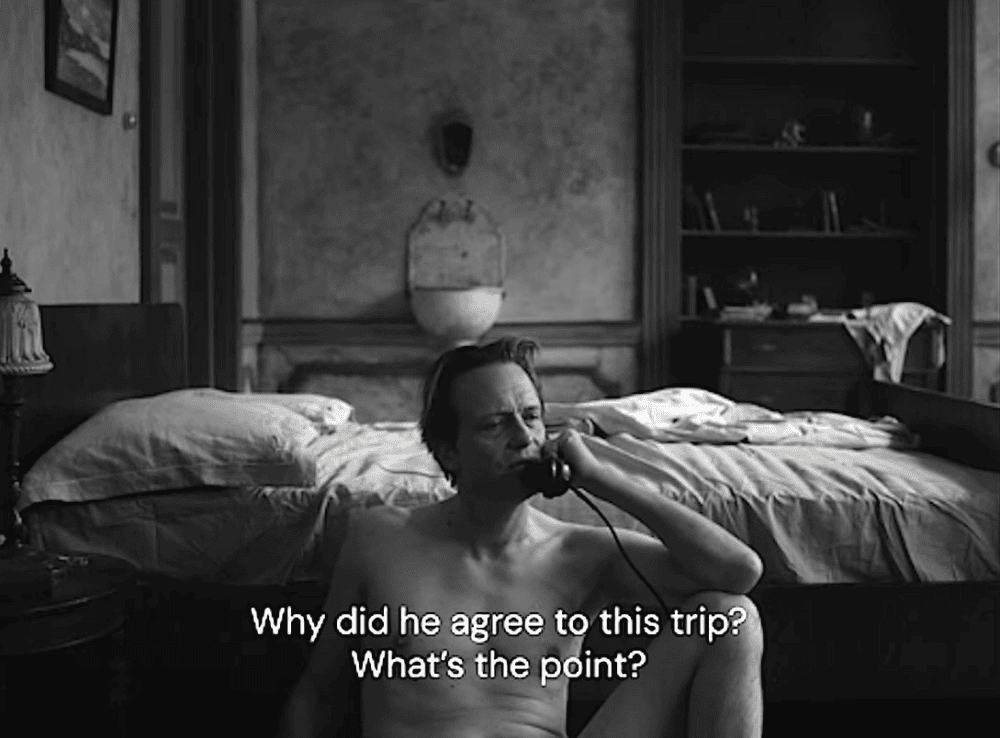
In a powerful opening scene, we see Klaus naked in Cannes sitting beside the phone, talking with Erika in America. She wants him to return to Germany to celebrate their father, but Klaus is resistant. He doesn’t respect his father, and he certainly doesn’t abide with his now-divided country. The camera remains fixed on Klaus in a wide: we see his male lover lying and waking from sleep in the background and Klaus’ naked, contorted body trapped in the foreground as the rain beats down outside. Meanwhile Erika, setting alone in the dark in her family sleek, modernist Los Angeles apartment goes to her father’s room to talk to Thomas Mann. Both son and daughter seem trapped in spaces both physical and psychological where they cannot move.
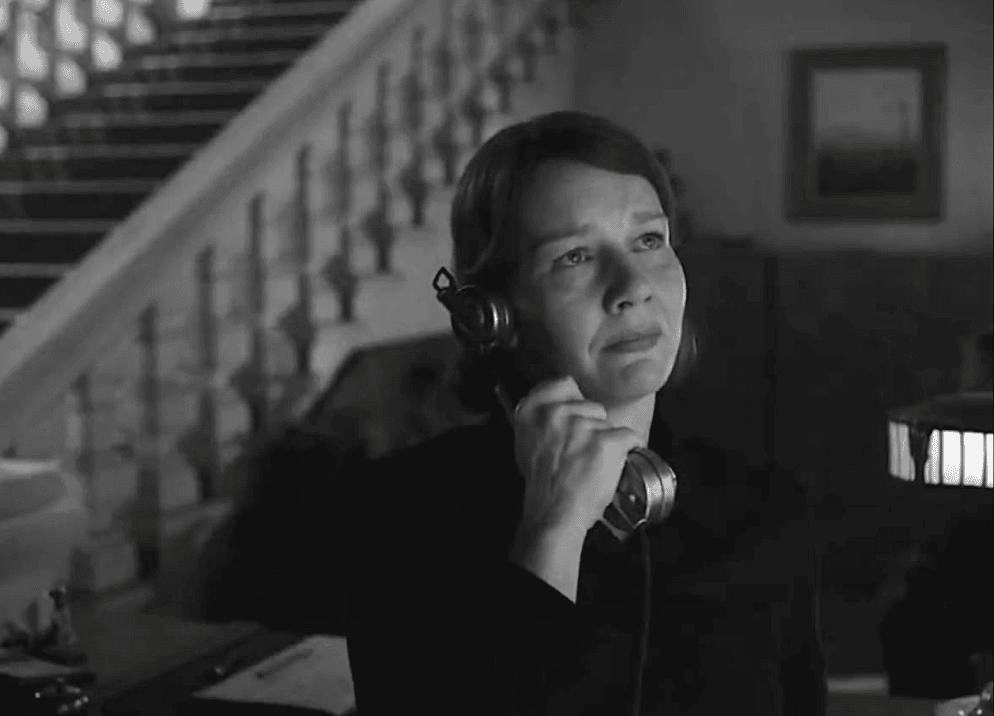
In the West, an uneasy status quo is presided over by Americans in the throes of the Red Scare, with a C.I.A. agent (David Menkin) shadowing the father and daughter for their “safety” and journalists bombarding them with insinuations of communist sympathies.
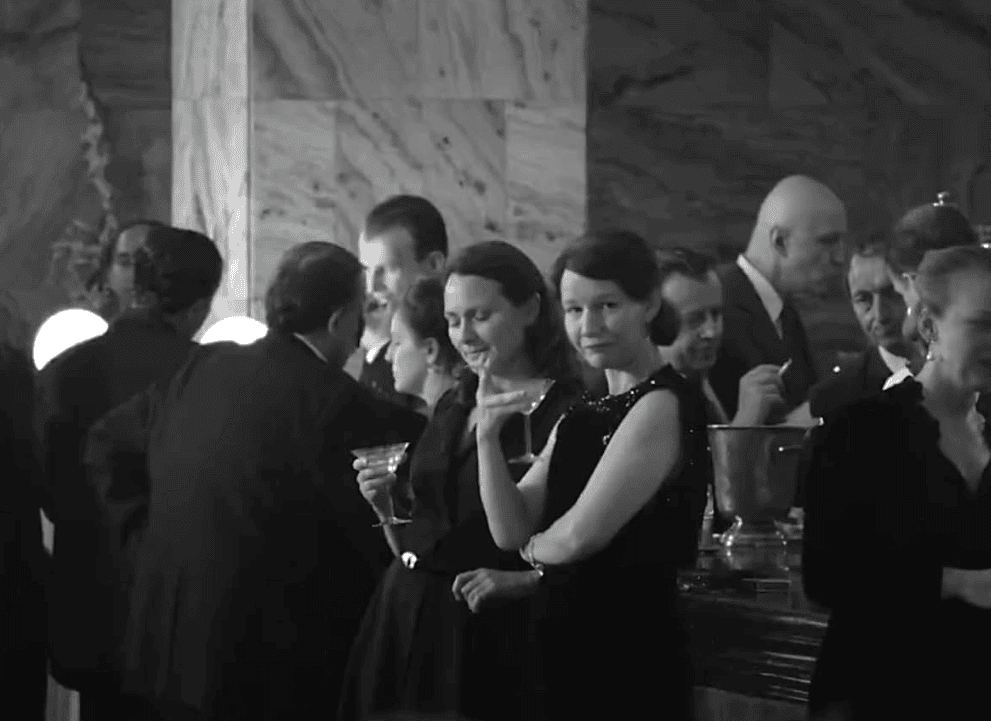
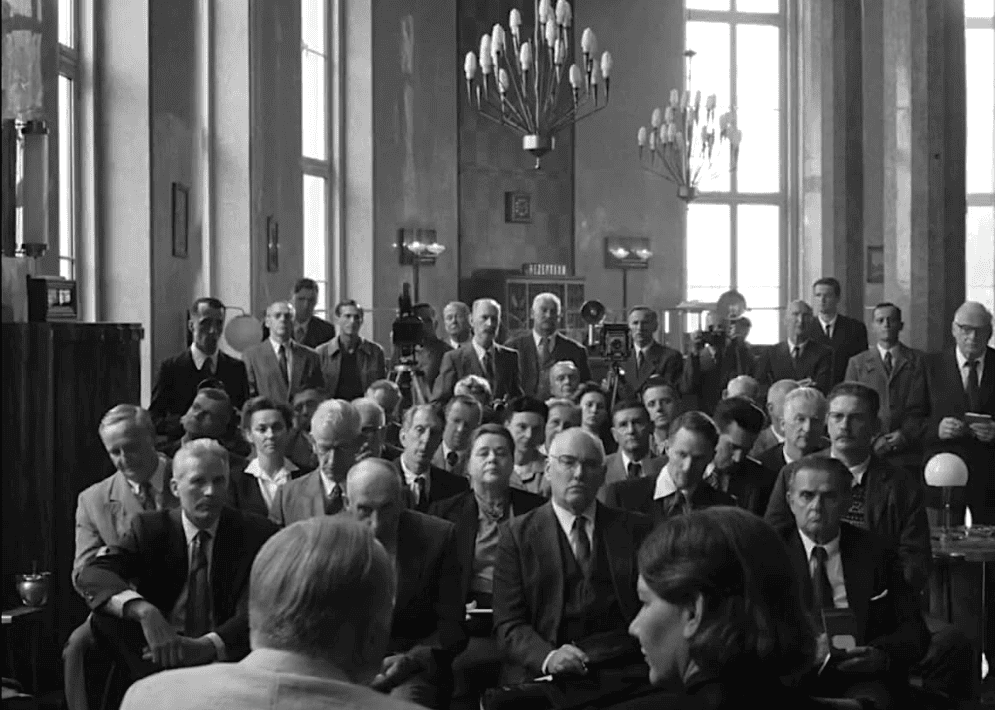
Prewar acquaintances who sold their souls to the Nazis, meanwhile, flaunt their reintegration into postwar high society: A memorably awkward dinner party sees Erika reunited with her collaborationist ex-husband, actor Gustaf Gründgens (Joachim Meyerhoff), while Thomas is entreated for an endorsement by the slick-haired grandsons (Enno Trebs and Theo Trebs) of Richard Wagner. “You are the most famous living Wagnerian,” one of the sons flatteringly says, to which the Buddenbrooks author retorts, “After the demise of one Adolf Hitler.”
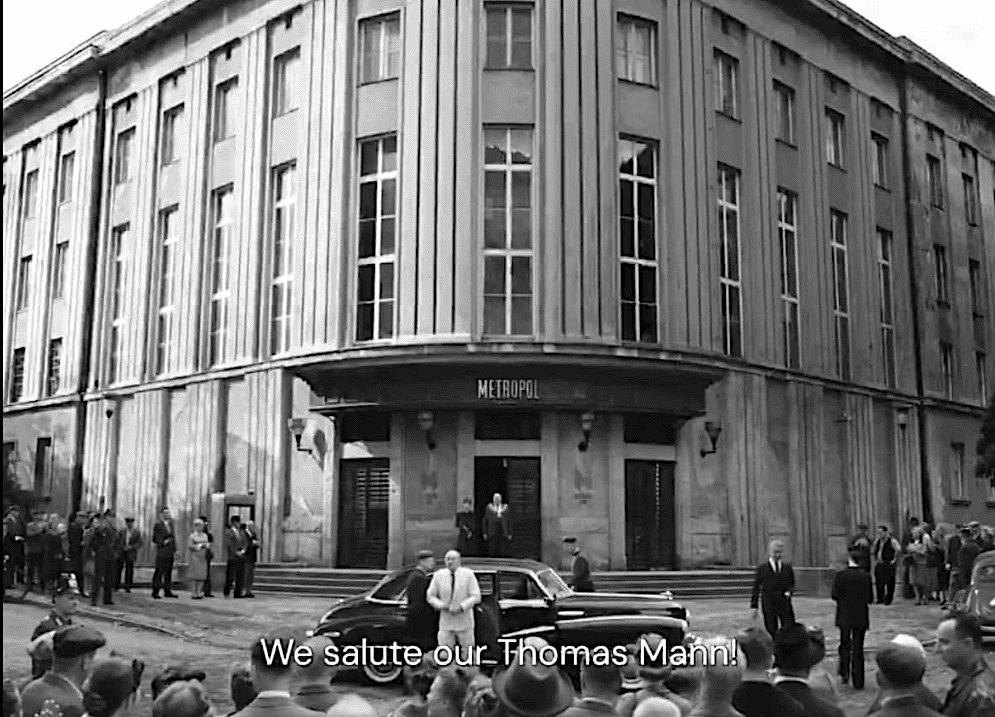
East Germany, in the grips of Soviet imperialism, isn’t exactly an improvement. Here, Thomas and Erika are greeted with stilted communist anthems belted out by children in the freezing streets. Elsewhere, they endure the bloviating propaganda administrator Sergei Ivanovich Tulpianov’s (Daniel Wagner) lectures about the Marxist-Leninist qualities of Goethe, and learn that Stalin’s lackeys have put Buchenwald back in action to hold accused enemies of the regime.
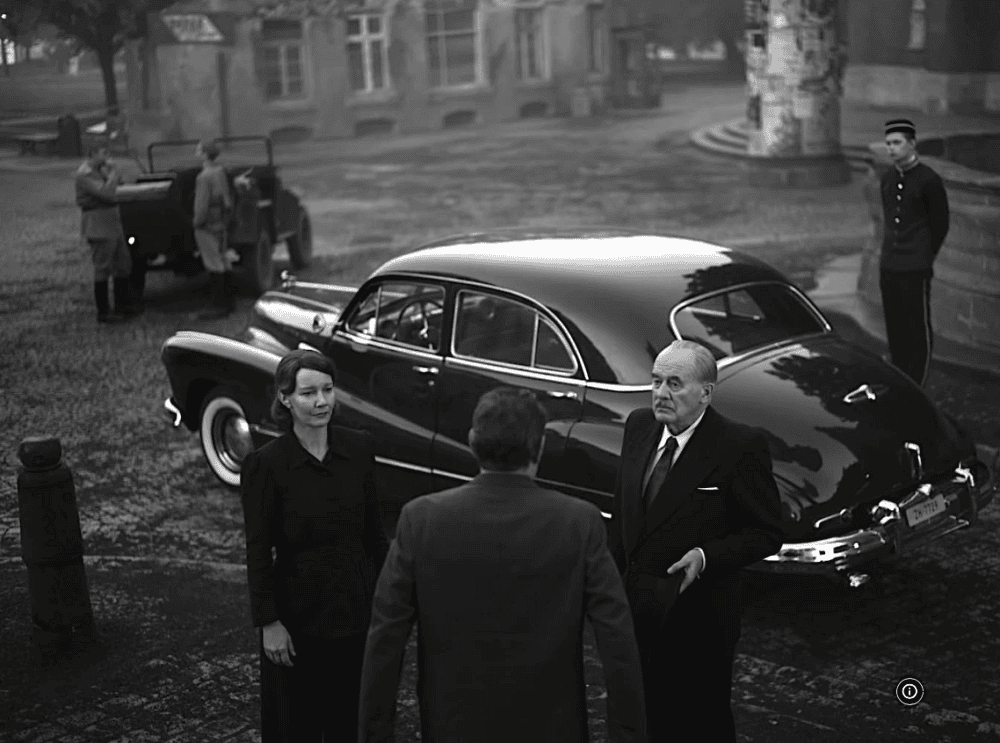
The father-daughter road trip, with all its dry political absurdities, is overshadowed early on by the sudden death of Klaus, revealing the deep fractures in his relationship with his father and calling into question whether the self-styled moral leader’s own house is clean. In practice, this creates opportunities for Hüller to act ever more anguished opposite the fussily stoic Zischler, as they argue about the true value of his trip, awards, and speeches in the wake of his son’s imminent funeral. Thomas’s apparently stonehearted dismissal of his lost son (“He shouldn’t have done this to your mother,” are words delivered in an icy indoor voice) leaves Erika increasingly distressed and doubtful of both her father in the flesh and the values he claims to stand for.
It is Klaus who takes center stage unexpectedly. His novel Mephisto is about a vain actor who sells out to the Nazis – and so was arguably bolder in his real-life political engagement than Thomas ever cared to be – and was based on Erika’s ex-husband, the actor and Göring courtier Gustaf Gründgens (Joachim Meyerhoff), who brazenly shows up to the Frankfurt party to celebrate Thomas with a self-pitying tale about his brief stay in a Soviet prison. Gründgens also presumes to attempt banter with Erika, who slaps his face, just as Thomas Mann in another part of the room is telling Wagner’s fawning grandchildren that he has no intention of supporting the return of the Bayreuth festival and says its theatre should be burned to the ground.
This rare flash of political temper cannot erase what is to become the growing “Mephisto crisis” in Thomas’s own life. It isn’t simply that he might now feel that he neglected Klaus, or that his own colossal prestige inevitably eroded Klaus’s own writerly self-belief; it is that Klaus’s great creation reproaches him. Able to move freely across the iron curtain, he can feel he is above any Mephisto-type sellout to the Americans or the Soviets, but then where is his commitment? To Germany, of course, but the Germany that was the root of his greatness (and that of Goethe) is gone. Germany is dead and perhaps Mann himself, with his American passport, is now a ghost.

Perhaps Mann senses that Germany’s national spirit has not survived – compromised by geopolitical division, partisan politics, cold war acrimony and the terrible memory of the Holocaust – and that its language and culture have been therefore contaminated. What remains of Germany are ruins, ashes, and collective guilt. The homeland Mann remembers has vanished entirely; in its place stands a spectral nation attempting to rebuild itself atop trauma it still cannot fully confront.

“I don’t start with wanting to say something,” the Polish director Paweł Pawlikowski told a gathering of young scriptwriters this summer as a way of explaining his films. “I just look for stories. If you start with people and relationships, and their situation, suddenly history comes alive in a much more interesting way.” That is certainly true of the films he makes, but it isn’t all they do. This is exactly what he did with Fatherland, taking poetic license to make the plot more intense. In actuality, Thomas Mann made the trip to Germany in 1949 with his wife Katia, not his daughter Erika. However, he did make a second trip to Augsburg, Germany, with Erika. Klaus Mann did not commit suicide while Thomas Mann was in Germany in 1949, but actually his death occurred three months earlier. The actual film was shot in Poland in various locations, except for the scenes with Mann’s visit to Goethe’s house in Weimar – which was actually shot in Weimar. It is true that Klaus Mann was elevated to special literary status in East Germany (DDR) due to his Communist sympathies and fierce indictment of Naziism. His novel Mephisto was banned in West Germany, but honored in East Germany.