Why We Pride screens at the Hollywood Queer Short Film Festival (HQSFF) on Saturday, October 3, 2026 in the 2:00 PM block, “Dive Into The Current”, along side “Twilight Ladies”.
It’s in the “Dive Into the Current” program at the Hudson Theater, 6539 Santa Monica Blvd., Los Angeles.
Hollywood, CA (The Hollywood Times) 10/02/26 – In just eight and a half minutes, Why We Pride manages to do something considerably larger than its running time suggests: trace decades of LGBTQ+ history, celebrate hard-won progress and remind audiences why Pride can never be reduced to simply a party, parade or rainbow-colored weekend.
Directed by British filmmaker Natalie Scarsbrook, the short documentary will screen at the Hollywood Queer Shorts Film Festival, where it brings a distinctly British LGBTQ+ history to Los Angeles while raising questions that resonate far beyond the United Kingdom.
Scarsbrook, who runs Blatella Films with her husband, spoke with The Hollywood Times ahead of the festival and described the documentary as an extension of the couple’s longstanding support for LGBTQ+ organizations.
Rather than simply donating financially when their filmmaking company was getting started, they realized they had something else valuable to contribute: their professional skills.
“We found the best way to give back, especially to grassroots Prides in our area, was to donate our skills and our time,” Scarsbrook explained.
Click below for our exclusive interview:
For roughly eight years, Blatella Films has supported Southend-on-Sea Pride, producing films connected with its events. Eventually, the collaboration evolved into something more ambitious.
The filmmakers wanted to explain not only what Pride looks like today, but why it exists in the first place.
Working with the Southend Pride Committee, they developed Why We Pride, a compact history of LGBTQ+ rights in the UK stretching from the mid-1960s through the present. The script was written by Sam Adams, chair of Southend Pride, whose lived experience and knowledge of queer history became essential to the project.
One of the film’s strengths is apparent from its very construction.
Rather than asking a single narrator to represent an enormously varied community, Why We Pride uses multiple voices. Scarsbrook said the filmmakers deliberately sought representation from across the LGBTQ+ spectrum, including a lesbian woman, gay man, non-binary queer person and trans man.
The approach gives the documentary a communal quality. History is not being delivered from a distant podium. It feels shared.
That distinction matters because Scarsbrook readily acknowledges that she and her husband are allies rather than members of the LGBTQ+ community themselves.
“We really took lead with their knowledge of the subject,” she said of the Southend Pride team.
Adams, in particular, brought the perspective of someone who grew up queer during an era in which LGBTQ+ lives were far less visible and significantly more stigmatized.
By allowing members of the community to guide the words and voices of the film, Scarsbrook avoids positioning herself as the authority on someone else’s history. Her contribution instead becomes cinematic: shaping those words into images powerful enough to make an eight-minute history lesson feel immediate.
 One section particularly affected Scarsbrook: Section 28, the controversial Thatcher-era legislation that severely restricted how homosexuality and same-sex relationships could be addressed by local authorities and in schools.
For Scarsbrook, learning more about that period forced her to think differently about her own education.
She reflected on how LGBTQ+ students questioning their sexuality or growing up in nontraditional families could not necessarily turn to their schools for the language, representation or support they needed.
Scarsbrook herself is straight, but thinking about friends who later came out made the implications deeply personal.
How different might their teenage years have been if LGBTQ+ identities and families had simply been allowed to exist openly within their education?
That is where Why We Pride becomes particularly effective. History is not presented merely as a collection of laws and dates. The film asks viewers to consider what those policies actually meant to the people living underneath them.
Perhaps the documentary’s most important message is contained in its title.
Why do we still need Pride?
 For Scarsbrook, part of the problem is Pride’s very success.
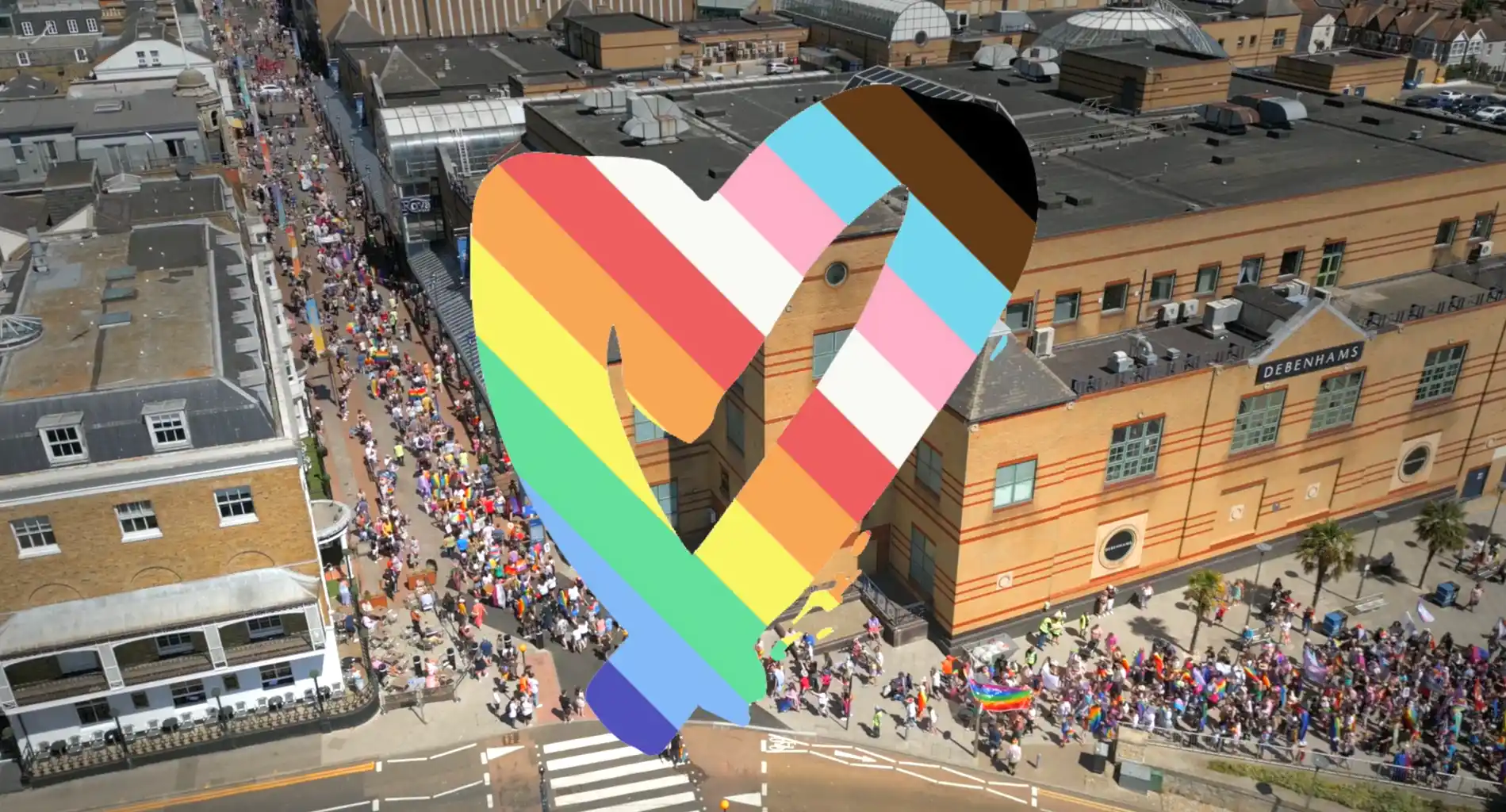
Major celebrations such as London Pride and Brighton Pride are enormous, colorful and highly visible. That visibility represents tremendous progress, but Scarsbrook believes it can also lead people outside the LGBTQ+ community to assume the work has already been completed.
“It’s just a celebration every year” can become the public perception, she explained, when there is actually something deeper beneath the festivities.
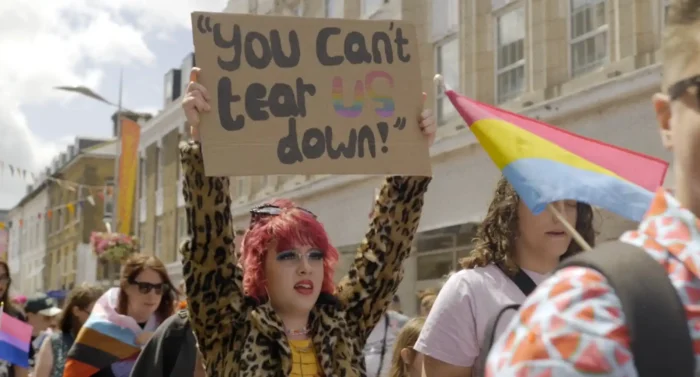
“Pride is still a protest.”
The documentary particularly points toward challenges facing transgender people. Scarsbrook emphasized that trans people have long been part of the movement and should not be separated from the broader LGBTQ+ struggle for equality.
There is joy in Pride, and Why We Pride embraces that joy. But celebration and activism are not opposites.
The celebration exists precisely because generations before us fought for the ability to celebrate openly.
“There is still work to be done,” Scarsbrook said. “Yes, of course, have the celebration… we’ve come so far as a society. But we have to keep in mind that we still need to keep moving forward.”
 Condensing generations of struggle, legislation, resistance and progress into an 8½-minute documentary sounds nearly impossible.
 Condensing generations of struggle, legislation, resistance and progress into an 8½-minute documentary
Scarsbrook credits Adams with masterfully distilling that enormous history into the screenplay.
Her own challenge as director and editor was different: finding images capable of carrying the emotional weight of Adams’ words.
“I wanted to make sure that I was visually telling her words in the most impactful way that I could,” Scarsbrook told The Hollywood Times.
That discipline benefits the finished film.
Why We Pride does not attempt to become an encyclopedia. It functions more like an invitation, particularly for younger viewers who may have grown up seeing Pride flags and same-sex marriage without knowing how recently many LGBTQ+ rights were contested or denied.
Its brevity makes it accessible, but its subject matter encourages viewers to continue the conversation after the credits.
Although Why We Pride tells a British story, its upcoming presentation at the Hollywood Queer Shorts Film Festival gives American audiences an opportunity to recognize familiar echoes.
Scarsbrook hopes viewers will notice parallels between LGBTQ+ progress in the United States and United Kingdom, even when the specific laws and timelines differ.
Same-sex marriage, increased visibility and changing social acceptance represent significant advances in both countries. At the same time, debates over LGBTQ+ rights continue.
For Scarsbrook, that tension is precisely where the film’s hopeful message lives.
“We both have made great strides in equality for the community and wider society,” she said.
The film never asks audiences to pretend the struggle is finished. Instead, it suggests that history itself offers evidence that change is possible.
“The community is much more visible,” Scarsbrook said. “I think it’s stronger than perhaps it’s ever been.”
Her message: keep pushing forward.
Perhaps Scarsbrook’s most affecting words during our conversation were not about legislation at all.
Asked what she would tell a young LGBTQ+ person who sees rights being challenged and fears that progress could move backward, she acknowledged how easy it can be to become discouraged.
Then she offered something wonderfully simple:
Find your people.
“Go find your community, because they’re just waiting for you.”
Through Blatella Films’ work with Southend-on-Sea Pride, Thurrock Pride and other organizations, Scarsbrook said she has repeatedly encountered communities determined to make both LGBTQ+ people and their allies feel welcome and safe.
“If you are a young queer person and you haven’t found that yet, don’t worry,” she said. “They’re out there.”
That sentiment may ultimately be the heart of Why We Pride.
Pride is history.
Pride is protest.
Pride is celebration.
But above all, Pride is community, a declaration that people who were once told to hide can find one another, stand together and be seen.
For a documentary lasting barely longer than eight minutes, Why We Pride leaves audiences with a surprisingly expansive message: appreciate how far the LGBTQ+ community has come, understand what it took to get here, protect that progress — and never assume the work is over.
Natalie Scarsbrook will attend the Hollywood Queer Shorts Film Festival in Los Angeles, where Why We Pride will screen in Block 2 on October 3 at 2 p.m.

For more information about Natalie Scarsbrook and Blatella Films, visit BlatellaFilms.co.uk or find Blatella Films on Instagram.
By Valerie Milano | The Hollywood Times