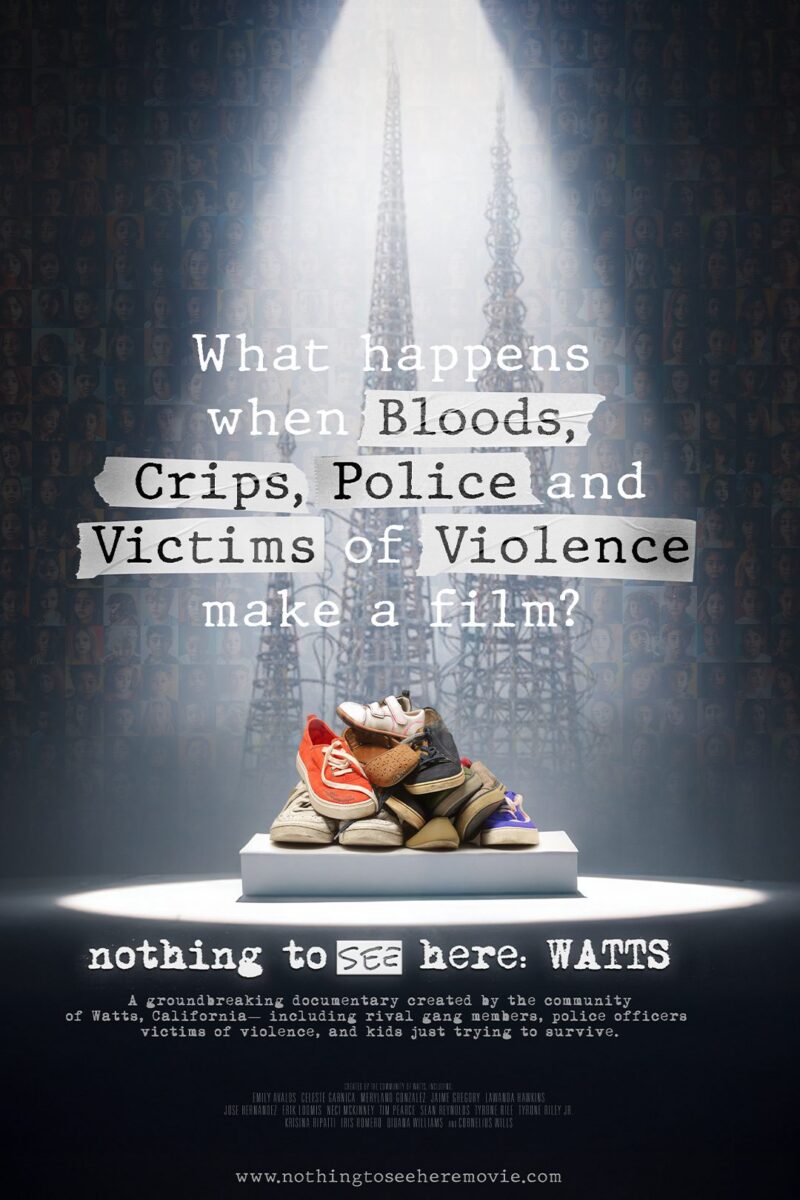
Santa Monica, CA (The Hollywood Times) 7/20/26 Michael Soenen was a venture capitalist volunteering for The Healthy Room Project, a non-profit focused on improving housing for youth. In December 2021, he joined a late-night ride-along in Watts with LAPD Gang Officer John Coughlin when he saw three people get shot. One died. None of it made the news.
Later that night he found himself talking to a gang member, who told him something that stopped him cold: his mother had put him in the gang at 8 years old, because the gang offered free day care and protection while she worked.
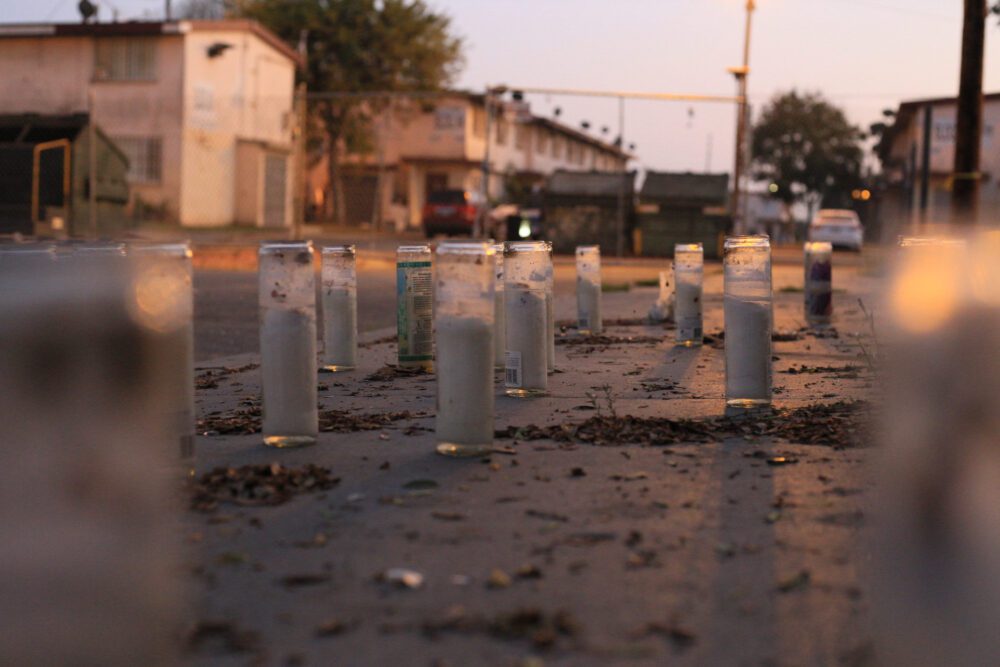
“Realizing that I had no understanding of a situation I thought I understood,” Soenen recalls, he went out and bought twenty iPhones. He approached more than 200 residents of Watts and asked if they would film their own lives, on their own terms, with no direction from him. Twenty said yes. Of those twenty, eighteen completed the project, the other two moved out of state.
The decision to hand cameras to rival gang members, LAPD officers, grieving mothers, and teenagers who’d been shot became Nothing to See Here: WATTS, a documentary with no director, no script, no narrator and no single storyteller.
It opens a one-week theatrical run at Laemmle’s Monica Film Center in Santa Monica, July 24-30, sixty-plus years after the Watts uprising of 1965. It has already won more than 150 awards at 50 festivals in 15 countries.
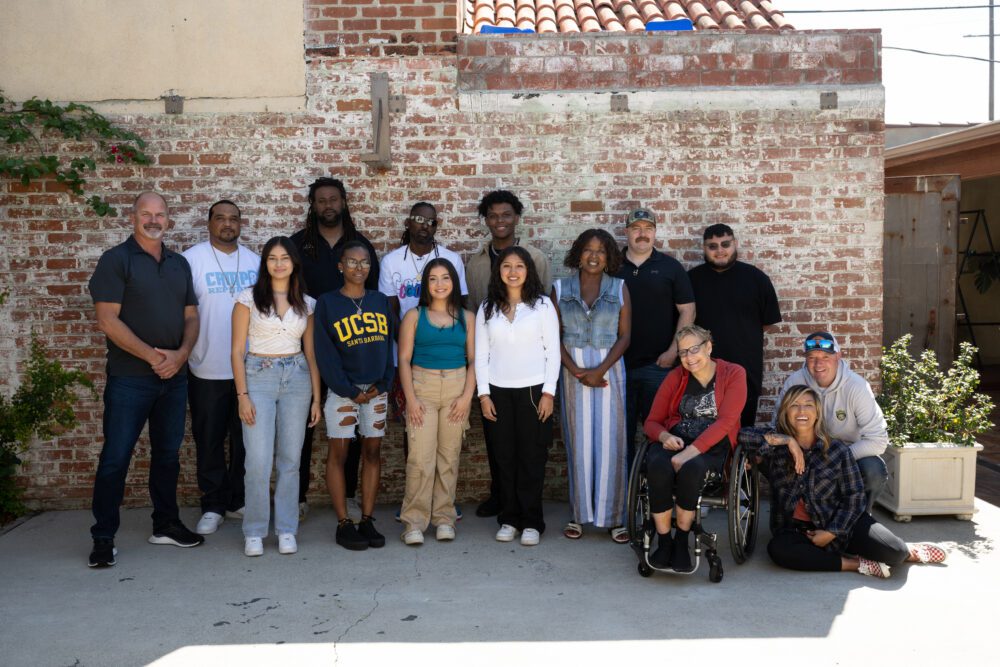
And in the twelve months after the film’s subjects gathered their community to watch it, gang homicides fell to zero. Homicides overall dropped more than 90 percent. Now instead of revenge, gang members speak of a better future for the community’s youth and how they can help guide it.
“It was less of a selection process,” Soenen says of the twenty who agreed to participate, “and more that these were the only ones who agreed.” He paid for everything — the phones, the production, the distribution — and then stepped back. The one rule he imposed was structural, not creative: nothing would make the final cut without consensus from everyone in the room. Every filmmaker owned their own footage and had the power to veto what got shown.
“I thought there was zero chance this would happen,” Soenen says. It took a year of the filmmakers watching each other’s raw lives on a loop, meeting, arguing, and recutting before they arrived at a version they could all live with. “There was no forgiveness going on,” he says, “just a sense of empathy.” That empathy would have to survive contact between people who historically, had every reason to withhold it.
Cornelius Wills, a member of the Bounty Hunter Bloods, one of the film’s community filmmakers, now calls himself a gang interventionist. His is one of the film’s central stories of reckoning. Neci McKinney, a Watts resident and another of the filmmakers, survived an assault and robbery during the three years of shooting. Her story of living as a single mother in Watts sits alongside Will’s account of his gang life. Sometime during the editing meetings, Wills apologized to her on behalf of his gang. Now, Soenen says, “she accepted his apology, and they are great friends today. When we go to screenings, they often travel together.”
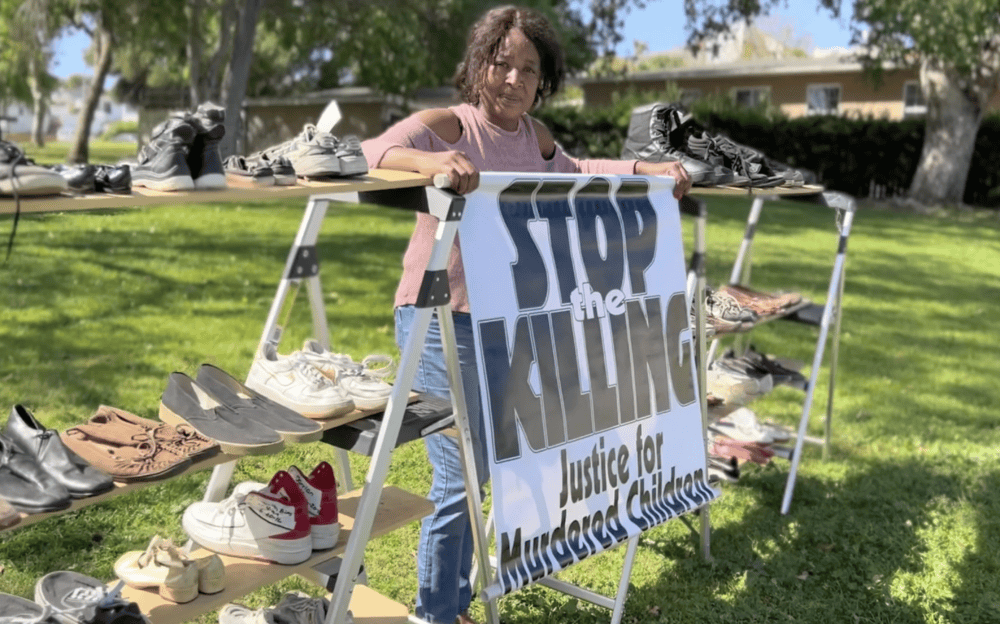
Lawanda Hawkins filmed her own story, too: after her son Reginald was murdered, she founded Justice for Murdered Children and started a “silent march,” laying out the shoes of children killed by violence to represent the lives lost. She didn’t want to film herself walking through Watts alone, so she asked Tim Pearce, a retired LAPD Gang Officer whose wife, Kristina Ripatti, was shot and permanently paralyzed responding to a robbery, to hold the camera. Then she filmed some of his footage in return. “It was great to see them start to work together as the relationships developed.”
The relationships arose spontaneously, with no guiding hand, no director, no one pushing a preconceived direction.
The filming ran three years, beginning in January 2022, and produced more than 200 hours of footage, far more than Soenen expected from a group he says doubted that anyone would ever watch what they shot. For safety, not every subject filmed themselves: family members often held the camera, and footage taken inside active gang sets were shot by professionals, since no security or pat-downs were permitted.
The finished film runs on three levels at once: the personal stories, the arguments inside the editing room over what the story should be, and the impact that followed once it left the room.
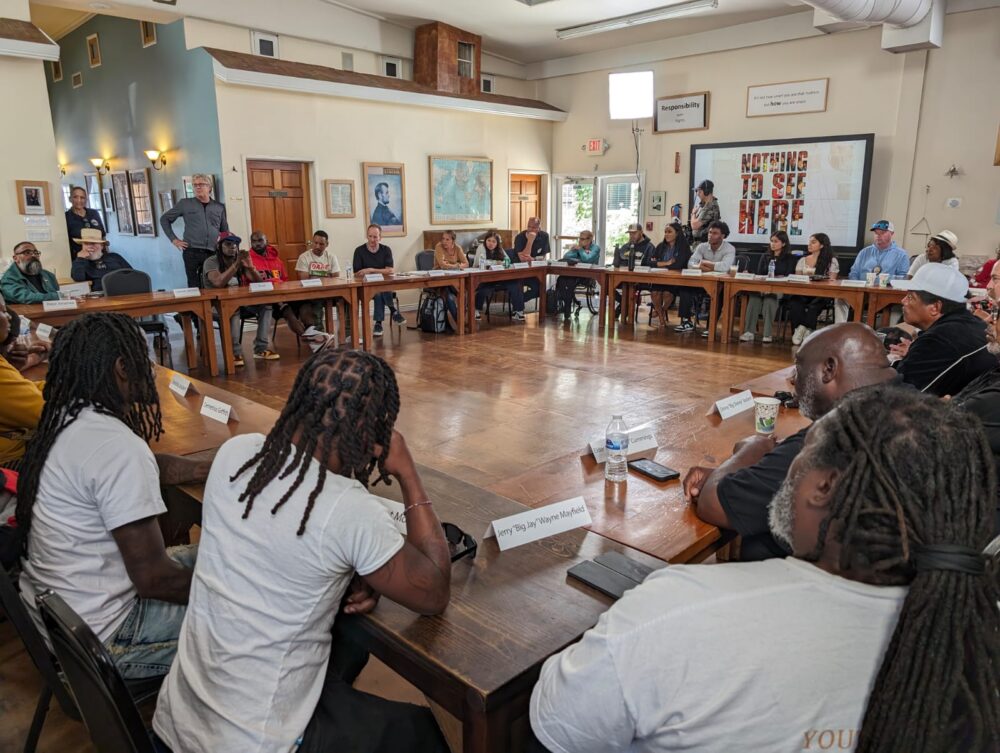
The impact began with a decision nobody could have foreseen. Once the film was cut, “we had no one to show it to” — until one of the gang members who’d filmed his own story, suggested screening it for the gangs themselves. Active leaders, with a combined total of 200 years of prison time between them, watched a film in which their rivals and the officers who policed them told their own version of the same neighborhood. “I didn’t think that was possible,” Soenen says, “and they pulled it off.”
The gathering that followed is the hinge the whole project turns on: clergy, gang members, police and community residents in the same room, watching people they had reason to hate narrate their own humanity. Homicides in Watts began falling almost immediately. By the time the film reached its wider community premiere at the Peacock Theatre in October 2025, more than 4000 people showed up. “No way,” Soenen says. “I was blown away.”

The peace has held. Iris Romero, a Watts homicide detective and one of the filmmakers, who lost both a brother and sister to violence, initially chose not to participate in the gang screening. But she has stayed involved, well past the cameras. She joined the group’s trip to Harvard, which is producing a report studying the film’s process and impact. John Coughlin, one of Watt’s most feared LAPD Gang Officers, has rebuilt his career around relationship-based policing and founded Operation Progress, which sends Watts kids to school on scholarship.

Two of the film’s teenage subjects, Celeste Garnica and Emily Avalos, are now in college on scholarships. Studying to be a nurse, Garnica was accepted by USC but chose to attend Northeastern with an internship at Mass General. Avalos, whose brother was badly beaten during a weekly gang ritual called “Mexican Day,” now attends Texas Christian University.
Dr. Bernice King, CEO of the King Center and daughter of Martin Luther King, Jr., has since joined the project as an executive producer. In her Forward to the film’s Project Overview, she invokes her father’s warning against “negative peace, the quiet, comfortable peace where people simply stop speaking to each other but injustice remains.” Nothing to See Here: WATTS is the “best expression of what my father believed this country could be.”
The filmmakers themselves have become the film’s touring cast, traveling together to screenings at Harvard, the Aspen Ideas Festival, and the King Center in Atlanta on MLK weekend. This summer alone the film plays at the Beyond Hollywood Film Festival in Los Angeles, the Watts Centennial Celebration at the Watts Public Library, festivals in Brooklyn, Pasadena, and Glendale, with a fall run stretching to Miami, Detroit, Chicago and a national gang summit in Toronto.
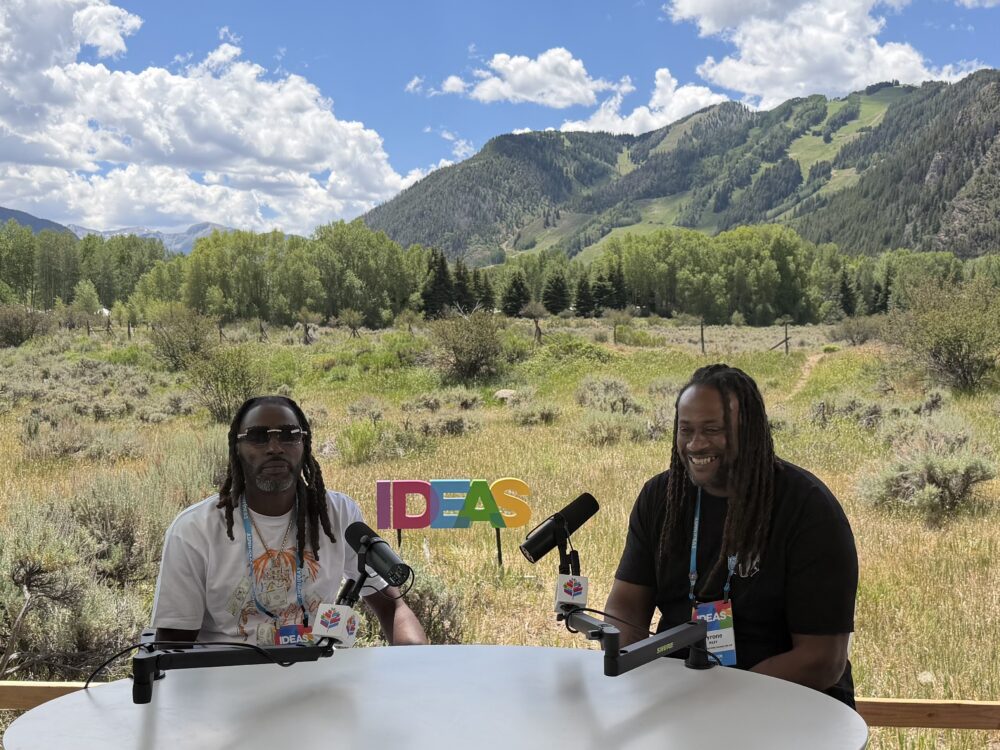
Back home, Tyrone Riley, Sr., a former Grape Street Crip turned basketball coach, and Cornelius Wills, are hosting a youth ideas summit modeled on Aspen’s, alongside Officer Coughlin. A Blood, a Crip and an LAPD officer are, together, building something for Watts kids to walk into instead of a gang.
Cities including Detroit, Boston, Chicago, Baltimore and Edmonton are now studying whether the process can be replicated on their own streets. A related effort, The Recidivism Project, has handed phones to twenty people recently released from prison, asking them to film their own reintegration the same way — no script, no director, just the camera and their truth.
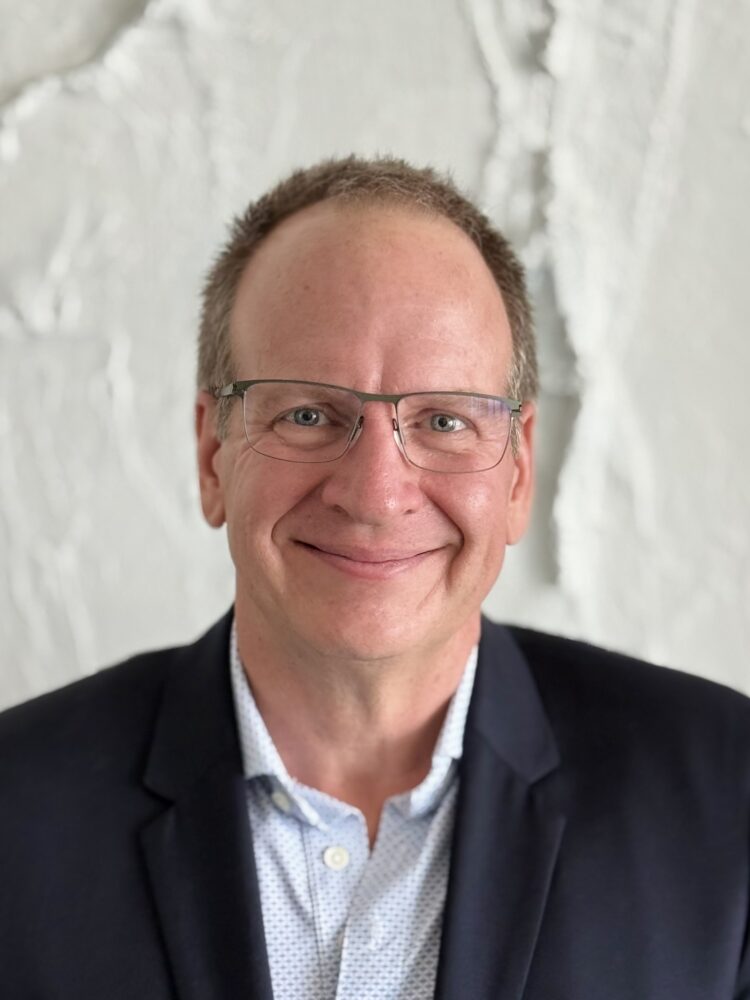
Asked what an experiment born from a ride-along in a two-square-mile neighborhood with more than 60 active gangs might teach a country that increasingly can’t talk to itself, Soenen doesn’t overreach. “If gangs, police and victims — all of whom are incredibly under-resourced and have every reason to hate one another — can find a way to put the past behind them,” he says, “perhaps the rest of us, who have so much more, can find a way to do the same.”
In Watts, empathy turned out to be enough.
Nothing to See Here: WATTS screens at Laemmle’s Monica Film Center in Santa Monica, July 24 – 30. More information here: https://nothingtoseeheremovie.com