By Valerie Milano
Los Angeles, CA (The Hollywood Times) 7/15/26 – Outfest has long held a vital place in LGBTQ+ cinema, serving not only as a festival, but as a gathering space, launchpad and cultural home for queer filmmakers and audiences. After a challenging period that forced the organization to pause programming, Outfest is now returning with a renewed focus, a smaller footprint and a clear message: the next chapter has begun.
In a recent interview with The Hollywood Times, Christopher Racster, Executive Director of Outfest, discussed the organization’s recovery, the lessons learned from its 2023 difficulties and the upcoming OutfestNEXT screening event, taking place July 23–26 at the Los Angeles LGBTQ Center.
Racster, whose own filmmaking career was deeply shaped by Outfest, said returning to the organization was personal.
“I started making small queer films back in the early 2000s,” Racster shared, recalling how Outfest supported his first film, April Shower, and helped it find an audience and distribution. “I never would have had a start as a queer filmmaker. I never would have been able to make a second film if it hadn’t been for Outfest.”
Click below for exclusive interview:
That history, he explained, made stepping back into leadership an act of both gratitude and responsibility.
“I couldn’t miss the opportunity to make sure that Outfest continues to be here for the next me, and the next you, and all the others that need the support that Outfest brings.”
Outfest’s recent challenges were not caused by one single factor, Racster said, but by a convergence of pressures that hit the nonprofit arts world particularly hard in 2023.
“There was really a perfect storm,” he explained.
According to Racster, the organization faced the beginning of a corporate retreat from LGBTQ+ causes following the public backlash around Bud Light and Dylan Mulvaney, which made some companies more hesitant to visibly support LGBTQ+ organizations. At the same time, the SAG-AFTRA and WGA strikes affected donors, filmmakers and community members financially, while also limiting the organization’s ability to present certain programming without crossing labor lines.
“And at the same time, internally, costs continued to grow,” Racster said. “There were management issues, but it just was incredibly unfortunate that that whole storm of issues happened all at once.”
Still, Outfest had something many organizations cannot easily rebuild: decades of goodwill.

“At that point, 42 years of service to the community,” Racster said, “and people like you who’ve been a part of us for decades, and such goodwill, that there were people willing to step up and help us get back up on our feet.”
For Racster, rebuilding Outfest has required more than balancing finances. It has required listening.
“We started with transparency,” he said.
Outfest held large town halls with filmmakers, donors, audience members and other members of the community. Racster and then-new board president Lucas Bailey stood before stakeholders and answered difficult questions directly.
 “It was our opportunity to really hear and listen to them, their issues, what was going on, their questions, what needed to be fulfilled,” Racster said.
The rebuilding process also involved staff conversations. Racster acknowledged that employees had endured a difficult period. The organization recognized the staff union, but soon after faced the reality that there was not enough money to keep everyone employed.
“Everyone had to be laid off,” he said. “So there was a lot of rebuilding and trust-building with the staff.”
 Today, Racster said, a majority of those former staff members have returned in some capacity, many on a part-time basis, as the organization rebuilds.
“I’m really excited because a majority of those staff members are back working with us,” he said.
Financially, Racster described Outfest as stabilized but still rebuilding.
“We’re not rolling in millions. I wish we were,” he said. “But we’re doing okay in terms of money. There’s money in the bank to put on our programming. There’s money in reserves. And we’re working to rebuild our financial resources so we can continue to expand our programming from the rest of the year into 2027.”
 Rather than relaunch immediately under the familiar Outfest Los Angeles or Outfest Fusion banners, the organization chose a new name: OutfestNEXT.
Racster said the decision was intentional.
Because Outfest did not yet have the resources to mount the full-scale festival audiences remembered, leadership did not want to create unrealistic expectations.
“We didn’t want to confuse people by using names that they had an expectation around,” he said.
 OutfestNEXT signals both a manageable event and a future-facing chapter. It also nods to the organization’s roots. Racster pointed to Outfest’s origins in 1982 on the campus of UCLA, where students and academics organized a weekend-long media summit that helped give birth to Outfest Los Angeles.
Coming back as a concentrated, weekend-style gathering felt appropriate.
“OutfestNEXT really was to signal a new event that was manageable and we could put on,” he said, “but also to really say this is a part of what’s coming next — our next steps as an organization rebuilding, our next steps in terms of programming.”
This year’s OutfestNEXT will take place July 23–26 at the Los Angeles LGBTQ Center and will feature a four-day screening series, receptions and parties.
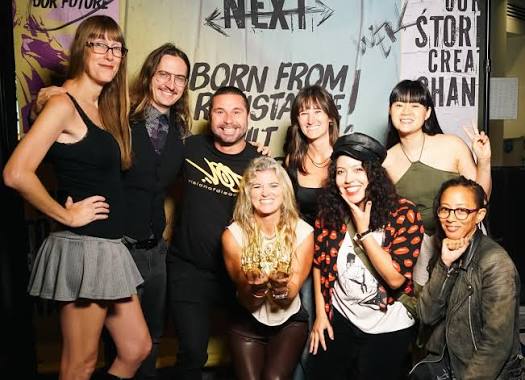 At its height, Outfest Los Angeles screened more than 250 films over 11 days, including shorts. OutfestNEXT is intentionally smaller, with approximately 18 feature films and 32 shorts.
For Racster, that smaller scale is not only a practical necessity; it is also an opportunity.
“By doing things smaller at first, we’re much more able to give a lot of attention to those filmmakers who have been selected,” he said.
The goal is to ensure that filmmakers do not get lost in the shuffle.
“We as an organization are better able to provide service and awareness and support to those people we choose,” Racster said.
 Outfest has always been about more than screenings, and Racster emphasized that the renewed organization is placing greater emphasis on education, mentoring and industry access for emerging LGBTQ+ filmmakers.
In September, Outfest plans to launch its first Producer’s Lab, focused on the business side of filmmaking. The program will help filmmakers better understand distribution, career sustainability and how to navigate a rapidly changing entertainment landscape.
“I don’t think you have to be in entertainment to understand just how much things have changed over the past few years,” Racster said. “How harder it is to make content, period, and get it seen.”
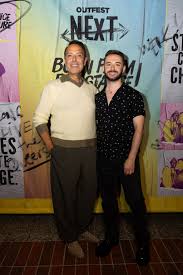 The Producer’s Lab will aim to help filmmakers understand “the business of the business,” make use of new distribution opportunities and build toward professional stability.
“I think that’s the other important part of what we do,” Racster said, “really continuing to be as hands-on as we can be in terms of education and mentoring.”
For longtime supporters who may no longer be able to contribute at major donor levels, Racster emphasized that support can take many meaningful forms.
“One of the biggest things you can do is come when you can,” he said.
 Attendance, volunteering and social media sharing all matter, he said, especially as Outfest works to remind the community that it is back.
“The whole point is we are here for the community,” Racster said. “We are here to provide that safe third space that is so hard to find these days.”
He also highlighted the importance of volunteers, noting that Outfest would not exist without them.
“Giving of your time is somehow often a bigger give than even writing a check,” he said.
Sharing Outfest posts, telling friends about the films and showing up for events can all help the organization regain momentum.
 “This is about our community helping our community,” Racster said, “and all those ways make a really big, big difference.”
OutfestNEXT is not yet the full return of Outfest Los Angeles or Outfest Fusion, but it is an important step toward that future. The timeline for restoring the organization’s full festival capacity remains dependent on continued financial rebuilding, community engagement and sustainable programming growth.
For now, Racster sees this moment as both a challenge and an opportunity.
“Our community needs different things. Our filmmakers need different things,” he said. “While it is unfortunate that Outfest had a troubled time, it’s a great opportunity because in these conversations we’re having with everyone, we can ask: what do you need Outfest to be now?”
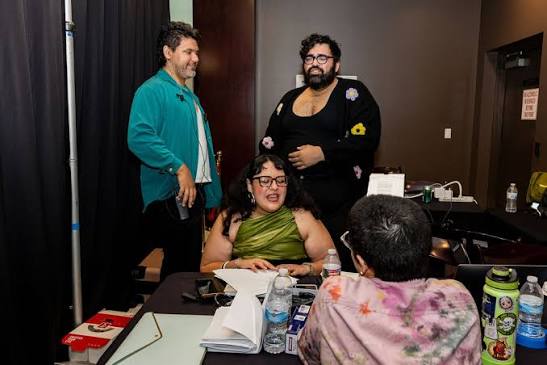 That question may define Outfest’s next era.
As Racster put it, Outfest should be “a living, breathing organization” working to serve the community as it evolves.
For those who feared Outfest might be gone forever, OutfestNEXT offers a hopeful answer: the organization is still here, still listening and still committed to LGBTQ+ storytellers.