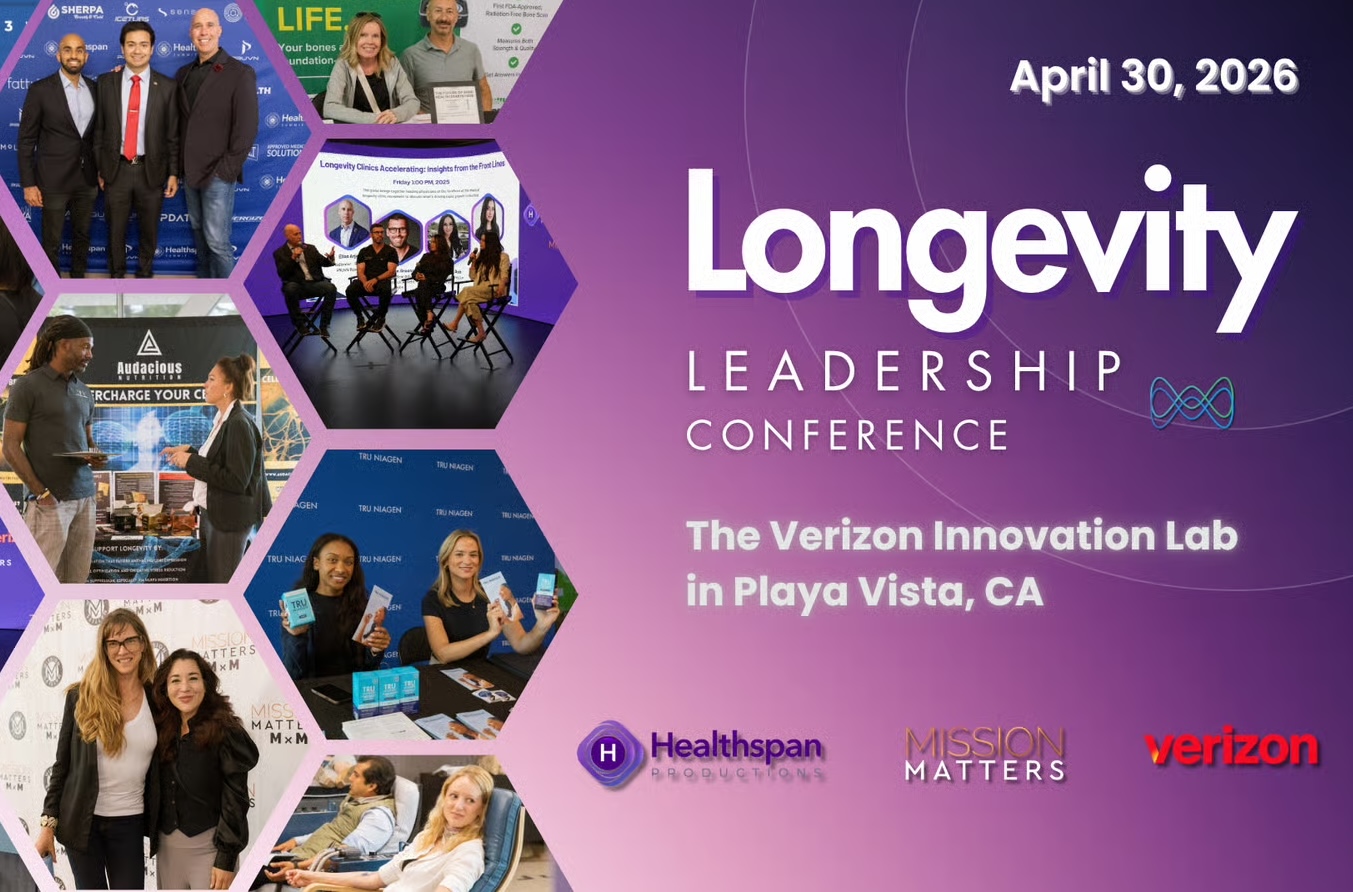
At the Verizon Innovation Lab, Elias Arjan and the Healthspan Collective convened a gathering of clinicians, founders, and investors shaping the future of longevity.
The third annual Longevity Leadership Conference did more than bring together clinicians, founders, and investors at the Verizon Innovation Lab in Playa Vista. It confronted a defining tension at the heart of the modern longevity movement: how to expand access to meaningful, evidence-based care while filtering out hype, half-truths, and opportunism from an industry still crowded with them.
Founded by Elias Arjan and the Healthspan Collective, the gathering brought together more than 300 participants across preventive medicine, biotechnology, and human performance. The premise is clear. As innovation accelerates — from regenerative therapies to biomarker-driven diagnostics — much of it still fails to reach the broader public in ways that are accessible and clinically grounded.
That gap creates opportunity. It also creates risk.
“At Healthspan Collective, we’re focused on moving the conversation forward by grounding it in evidence — supporting products and treatments that don’t just sound promising but actually work in practice and can be delivered in the real world,” said Arjan.
Longevity has quickly become one of the most aggressively marketed sectors in health and wellness. But growth without standards invites distortion. For every clinically validated intervention, there are products and protocols built on selective data, overstated claims, or early-stage science presented as settled fact. The result is a marketplace where consumers are asked to make high-stakes decisions without a reliable framework for trust.
What distinguished this conference was not just its emphasis on innovation, but its insistence on translation. The goal is to move ideas from controlled environments into real-world applications.
That principle was not confined to the stage. It also showed up on the floor.
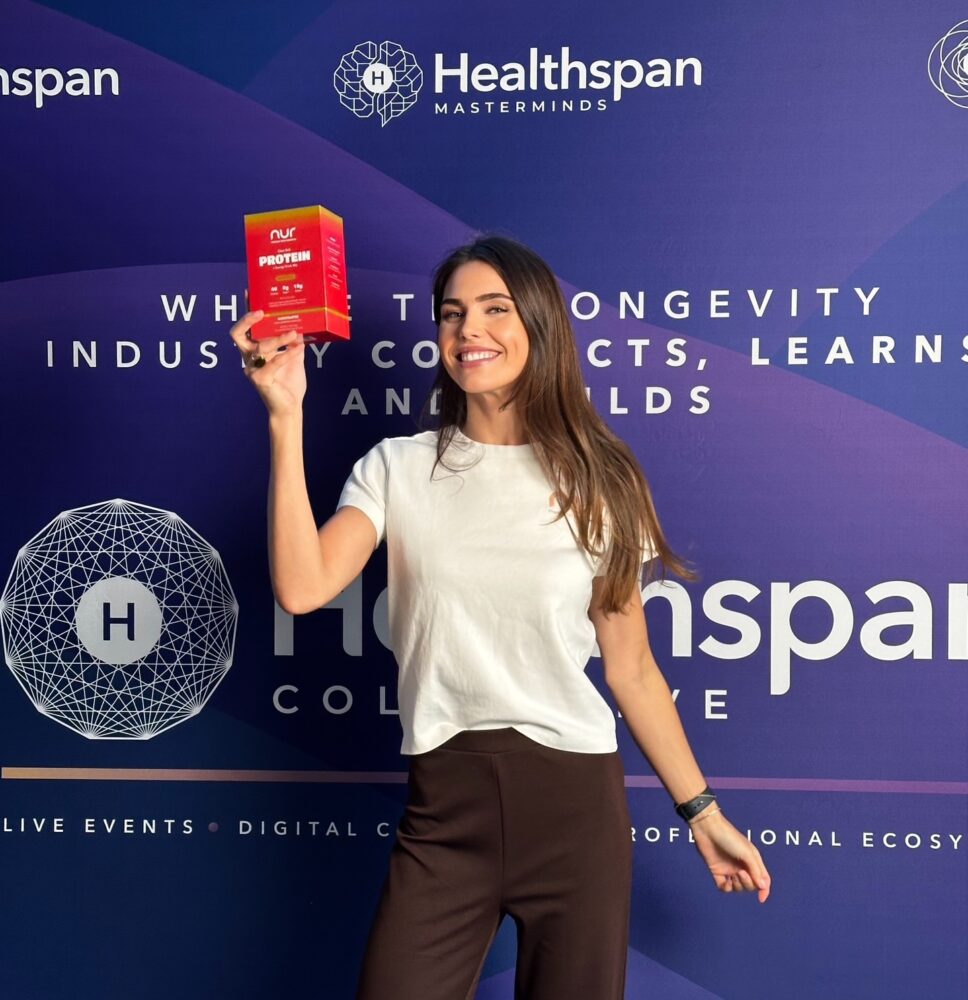
Carolin Springborn, co-founder of NUR, offered a grounded example of what evidence-based longevity can look like when designed for scale. With free samples in hand and an easygoing presence, she embodied a different kind of founder—one focused less on abstraction and more on usability. Her company’s protein product is built on a simple premise: clean formulation, digestibility, and long-term health benefits that fit into everyday life.
“Together with my co-founder, Lucy Geppert, we set out to build the kind of protein we always wished existed,” Springborn said. “Clean, easy to digest, and designed for long-term health.”
It’s not a radical idea. That’s the point.
In a space often dominated by complexity and exclusivity, products like NUR suggest a more practical path forward—one in which evidence-based interventions are not reserved for early adopters or elite clinics but are integrated into daily routines at scale. If longevity is to move beyond niche markets, it will depend on this kind of translation from concept to an accessible product.
Across panels and conversations, the broader message held. Whether the subject was brain aging, regenerative therapies, or peptide-driven interventions, the through line remained consistent: evidence must extend beyond theory and into practice.
Equally important is the recognition that access is not just about availability—it is about clarity. Scientific progress has limited impact if it remains locked behind technical language, exclusive networks, or cost barriers that prevent broader adoption. Bridging that divide requires not only better treatments but also better communication—clearer ways to explain what works, for whom, and under what conditions.
In that sense, the Longevity Leadership Conference is attempting something more difficult than innovation alone. It is working to establish credibility in a space where credibility is often uneven and sometimes questionable.
The science of longevity will continue to evolve, and investment will continue to grow. But the long-term success of the longevity movement will depend on its willingness to hold the line — elevating evidence, rejecting exaggeration, and prioritizing outcomes over optics.
Ultimately, the question is not whether people want to live longer. It’s whether they can do so with confidence in the systems, products, and practitioners guiding the way.