

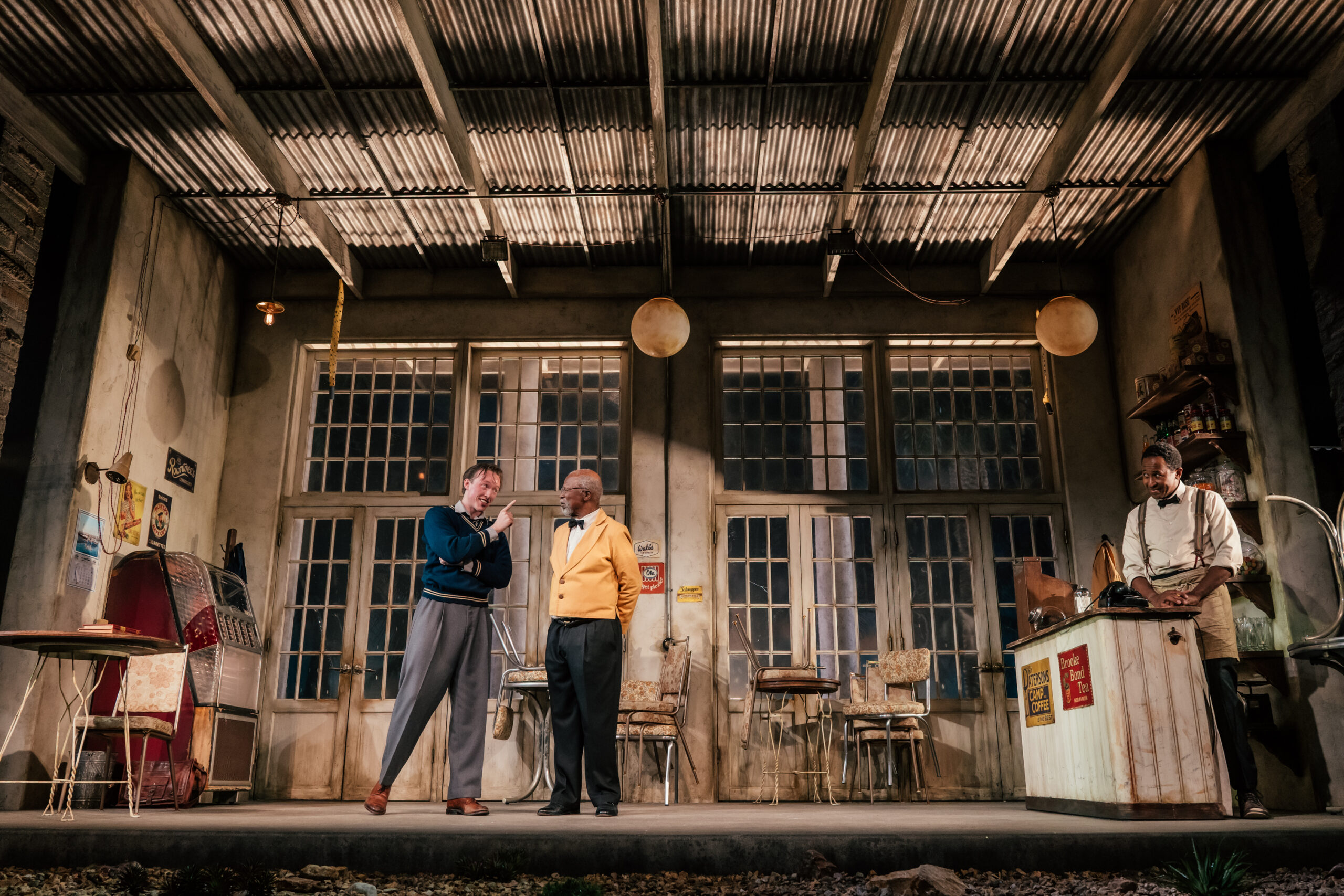
In 21st-century Los Angeles, Athol Fugard’s “Master Harold”…and the Boys remains a probing and unsettling examination of how systemic injustice shapes and fractures individual lives.
By John Lavitt
Los Angeles, CA (The Hollywood Times) 04-19-2026
At the Geffen Playhouse, Athol Fugard’s “Master Harold”…and the Boys arrives not as a period piece but as a living confrontation with apartheid’s enduring wounds. Set in a modest 1950s tearoom in Port Elizabeth, the play traces the fragile bond between a white teenager and the two Black men who have helped raise him — until the brutal architecture of racism asserts itself with devastating force.
Indeed, “Master Harold”…and the Boys at the Geffen Playhouse stands as one of the most emotionally incisive productions of 2026’s theatrical season, leaving its central question — how can we live with the past — uncomfortably unresolved.
Beyond Beowulf Boritt’s incredibly authentic scenic design — including a striking three-dimensional rain that traps the three men inside the tearoom — this production succeeds by fully committing to performance. There is no excess, no conceptual distraction — only actors working at the highest level, trusting Athol Fugard’s language and each other. Co-Directors Emily Mann and Geffen Playhouse Artistic Director Tarell Alvin McCraney allow the story to naturally unfold.
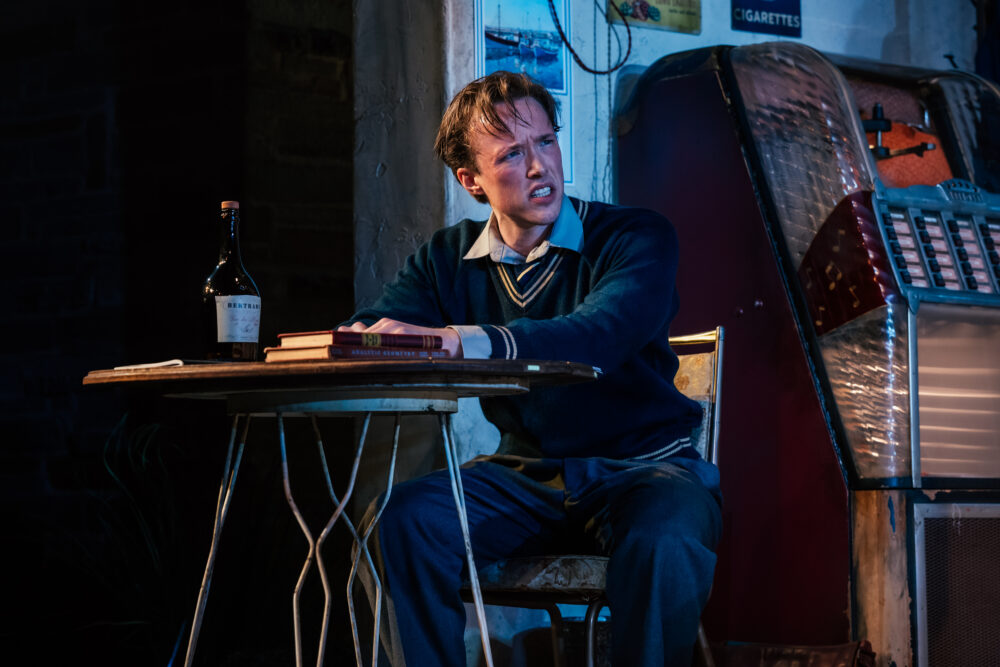
As Hally, Ben Beatty delivers a performance that cuts deep. He refuses to soften the character’s cruelty, instead exposing its roots. Beatty shows us the price of trauma—not as an excuse, but as an inheritance. His Hally is restless, humiliated, and desperate for control, and what makes the portrayal so unsettling is how recognizable it feels. This is not villainy from a distance; it is damage unfolding in real time.
Opposite him, John Kani delivers a performance that feels almost monumental in its restraint. At 82, Kani does not reach outward—he draws everything inward. His Sam is defined by stillness, dignity, and profound moral intelligence. Every pause carries weight. Every word feels earned. What emerges is not just a character, but a lifetime of endurance shaped into presence. Kani uses each of his eighty-two years as raw material, and the result is extraordinary.
There is nothing showy about Kani’s work, and that is precisely why it lands with such force. He allows emotion to gather rather than release it, creating a quiet intensity that becomes almost unbearable by the final moments. It is a masterclass in control — and in trust. Moreover, it is a masterclass in empathy as he desperately tries to manage Hally’s pain and prevent the fractures from ultimately tearing them all to shreds.
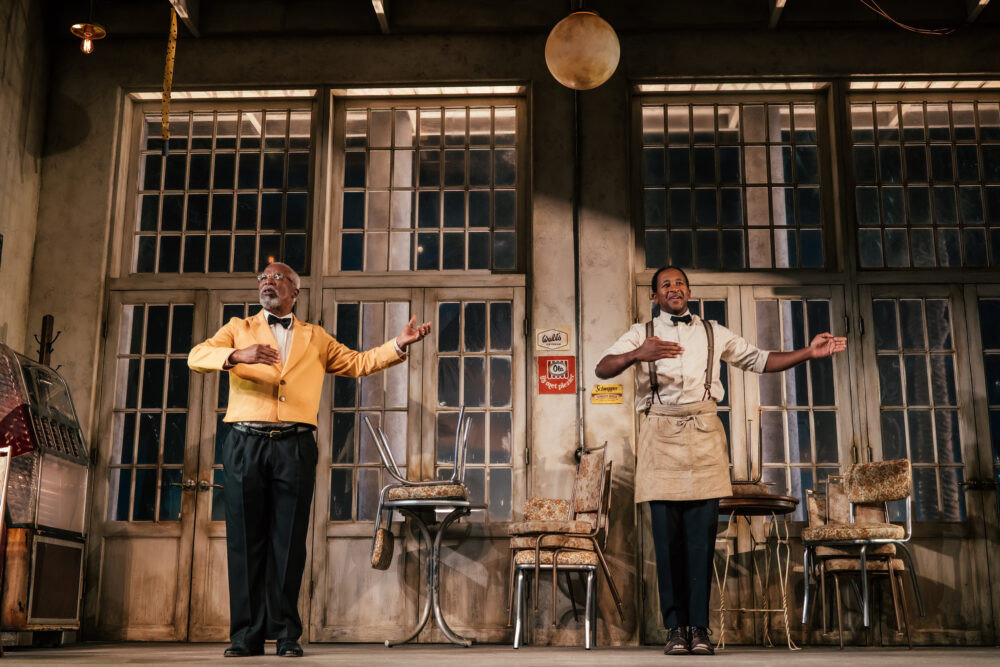
Nyasha Hatendi rounds out the cast as Willie, bringing warmth and subtlety that ground the play in moments of humor and humanity, making its unraveling even more painful. His desire to move forward and leave the past behind is what most people feel. It perfectly reflects a broader societal impulse to forget rather than confront.
What lingers is not only the rupture between these men but also the larger question beneath it: how do we recover from a societal trauma that continues to rage through individual lives? It is a question the United States of America will face in the future. Fugard offers no easy resolution. Yet in the space between Beatty’s unraveling and Kani’s hard-won grace, the play forces us to confront the cost of that question — and the urgency of answering it.


