Perhaps it was just coincidence but after watching a film entitled Panopticon from the Republic of Georgia, my second film of Thursday evening at the Asian World Film Festival in Culver City was a different kind of surveillance tale – this time Yeo Siew Hua’s Stranger Eyes from Singapore. In the long tradition of surveillance tales like Michael Powell’s Peeping Tom, Stranger Eyes lets us contemplate the overwhelming extent that technology allows us to be Peeping Toms. Web streams, security feeds, social media are all glimpses into the private lives of others, each with subtly distinct social functions, facilitating both exhibitionism and voyeurism as a matter of daily routine.
Singaporean director Yeo Siew Hua’s noir film A Land Imagined won the Golden Leopard at the Locarno Film Festival in 2018. Premiering at the 2024 Venice Film Festival, Stranger Eyes is a coproduction between Singapore, Taiwan, the United States, France, and Italy. It has been submitted at Singapore’s official film for the Best International Feature Film at the 2026 Academy Awards. Its central theme is the constant social control we endure every day, constantly observed, filmed by countless cameras that record our every move. As the director explained, social control is especially prevalent in densely populated places, as is the case on the small island of Singapore. This undoubtedly profoundly influences the behavior of its inhabitants, forced daily to mentally alternate between watching and being watched. Often Yeo takes times to simply photograph all the security cameras omnipresent in Singapore.
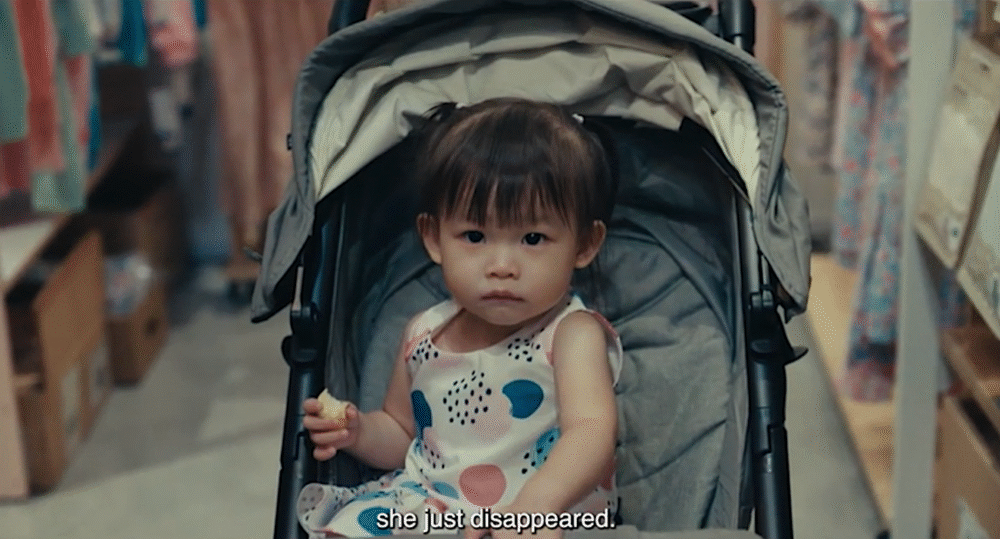
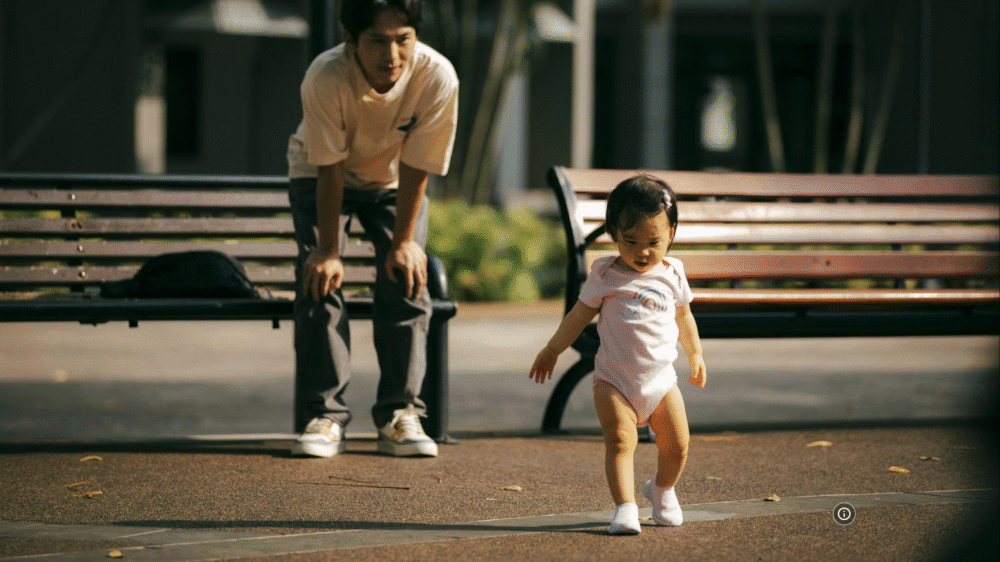
Stranger Eyes opens with its own version of a home movie film, a handheld video of a woman playing cheerfully in the park with her daughter (and, conspicuously, wearing a shirt displaying an anime girl’s narrowed eyes with the text “I’m Watching You” underneath – a bit of a groaner that nevertheless ironically cool). We soon find out that the daughter, Little Bo, has disappeared, with this video seemingly being the most recent footage her young parents Junyang (Wu Chien-ho) and Peiying (Anicca Panna) have of her.
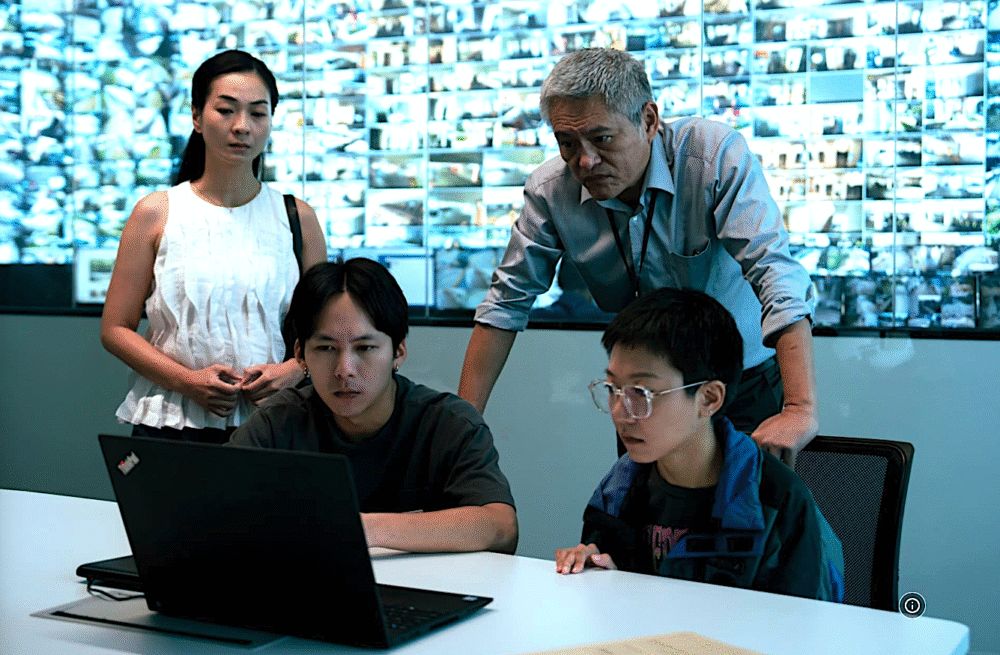
When the young couple go to the police, they are upset at the calm reaction of the police officer (Pete Teo) investigating the disappearance. There’s no way to avoid surveillance. This constant recording, this “non-stop camera surveillance” that has invaded public spaces, has simplified the police’s investigation: all it takes is careful observation and patience, a lot of patience. As he explains: Almost as if every crime these days, thanks to video surveillance, solves itself.
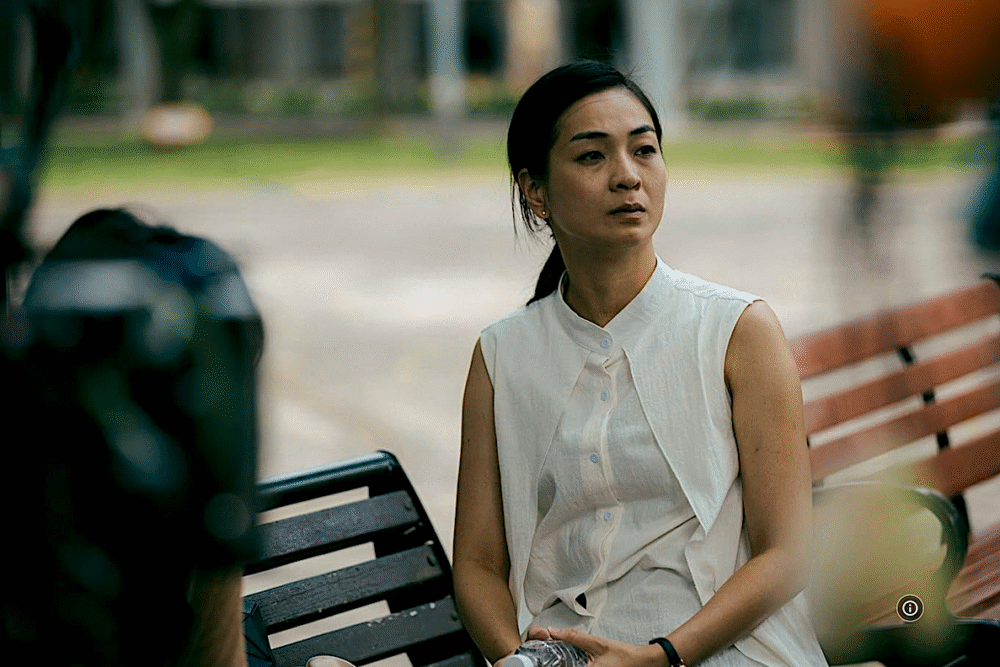
A mysterious voyeur leaves the two parents with DVDs containing footage of their private lives. Among them, some particularly intimate footage shot from the building next door, others filmed behind Junyang’s back at the supermarket, and still others filmed in the park itself, where the little girl disappeared.
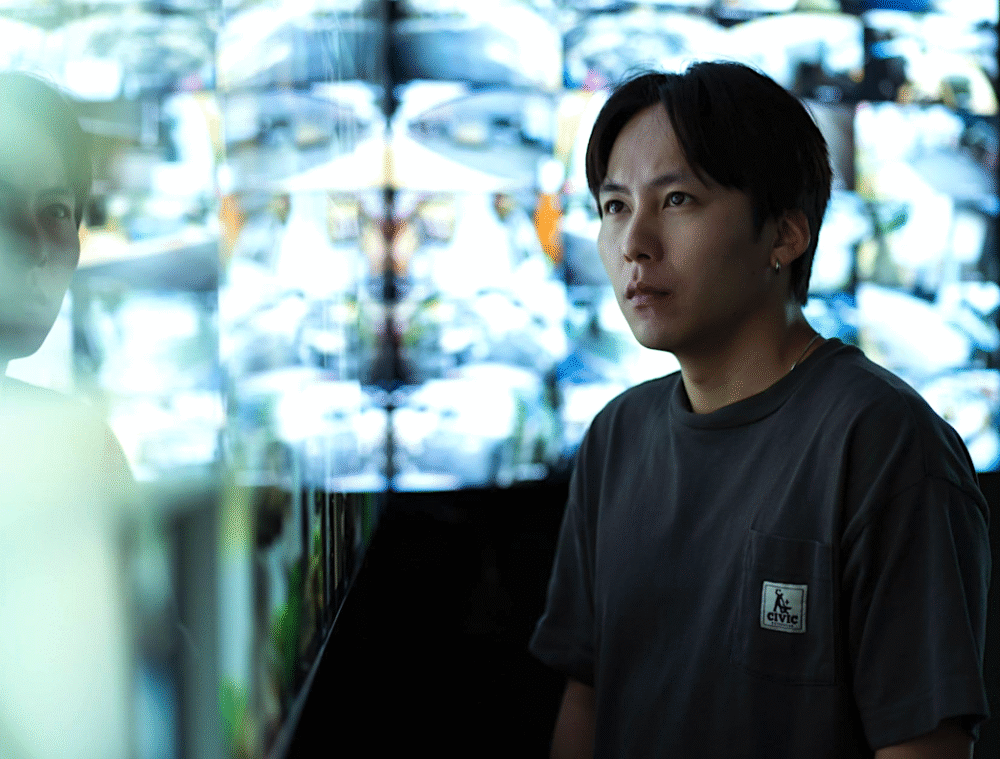
The video of a sexual escapade with two co-workers inevitably gets the young father into trouble in the eyes of his wife, Peiying (Anicca Panna). The police add more cameras to the existing surveillance cameras and quickly identify the stalker: Lao Wu (played by Lee Kang-sheng, director Tsai Ming-liang’s favorite actor), an aging supermarket supervisor who lives with his visually impaired mother in the building next door.
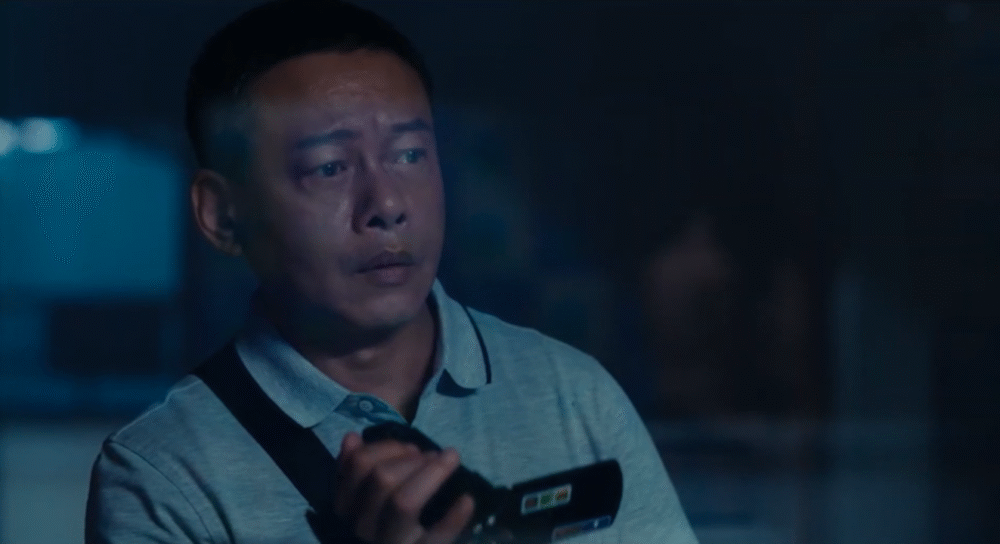
When DVDs containing footage of Junyang, Peiying, and the missing Bo begin showing up, in the style of Hitchcock’s Caché, on the family’s doorstep, some quick-and-dirty policing (involving surveillance, naturally) leads them to the taciturn, almost nondescript Wu (Lee Kang-sheng). This development, shockingly matter of fact, occurs within the first half hour of Stranger Eyes, leaving plenty of time for the rest of the film to knot itself into something less familiar. Its characters eventually become ensnared in a circuitous daisy chain of amateur espionage, prompting questions and revelations about who should really be watching who.
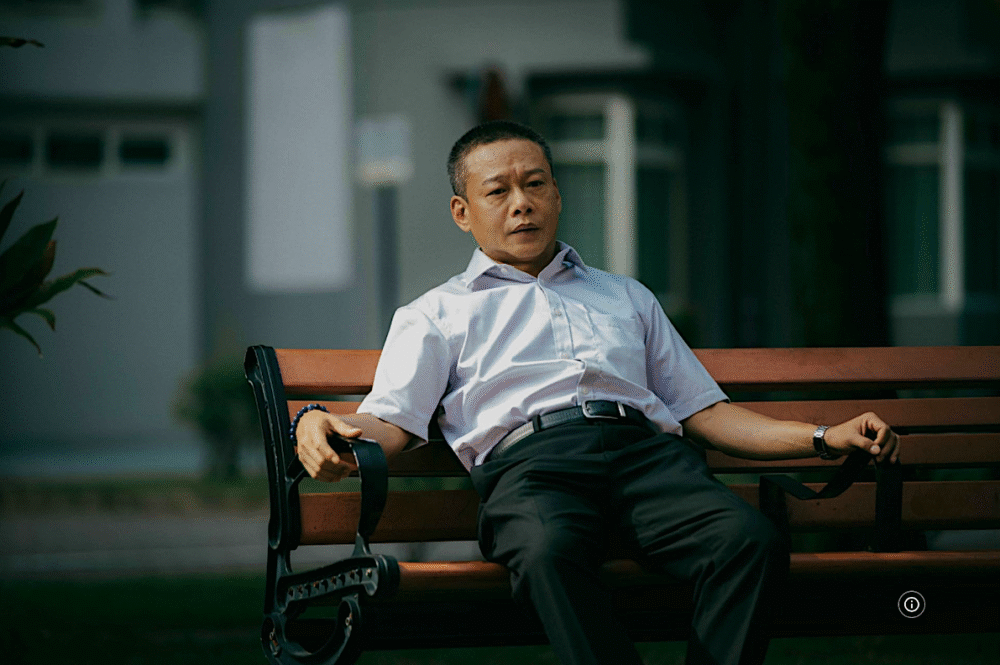
The slick coolness of the Singaporean cityscape borders on sterility and that sterility is reflected in the sterility of its screens: text messages cascading like dominoes, CCTV monitors rendering their surroundings in fuzzy silver-white. The most fascinating character we eventually encounter is Wu. In his years collaborating with Tsai Ming-liang – in part due to what Tsai’s work requires, in part due to Lee’s natural presence as a performer– Lee Kang-sheng has attained mastery over a very specific type of cryptic longing, placid on the surface but faintly troubled and never fully anchored to his surroundings. He’s nearly as mute in Stranger Eyes as he is in Tsai’s Days. As always, he speaks with his eyes, his glances suggesting (and occasionally confirming) an awareness of something nobody else can see.
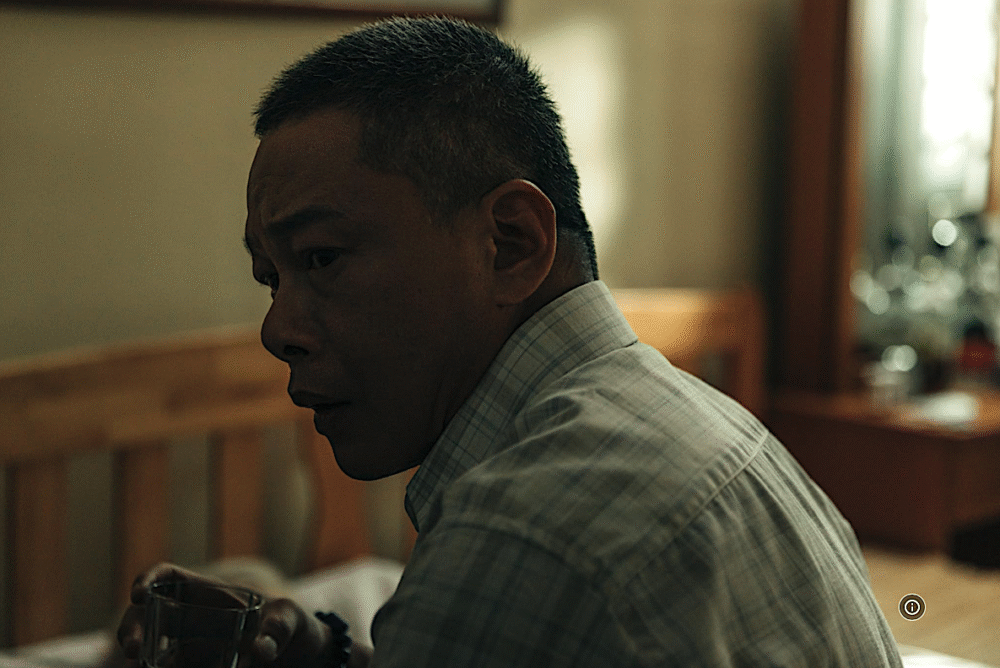
Lee Kang-sheng’s performance is the emotional and physical focal point of a film about the fraught ambiguities of seeing through a one-way mirror. Even as its details come into sharper focus, Lee remains enigmatic, deftly navigating the narrow crawlspace between obsession and curiosity, lust and sympathy –sometimes without moving a muscle. In his own way, he functions as a perfect microcosm of contemporary digital voyeurism: a plainly unsettling, maladjusted person for whom you still develop a profound fondness. You couldn’t look away from him if you tried.
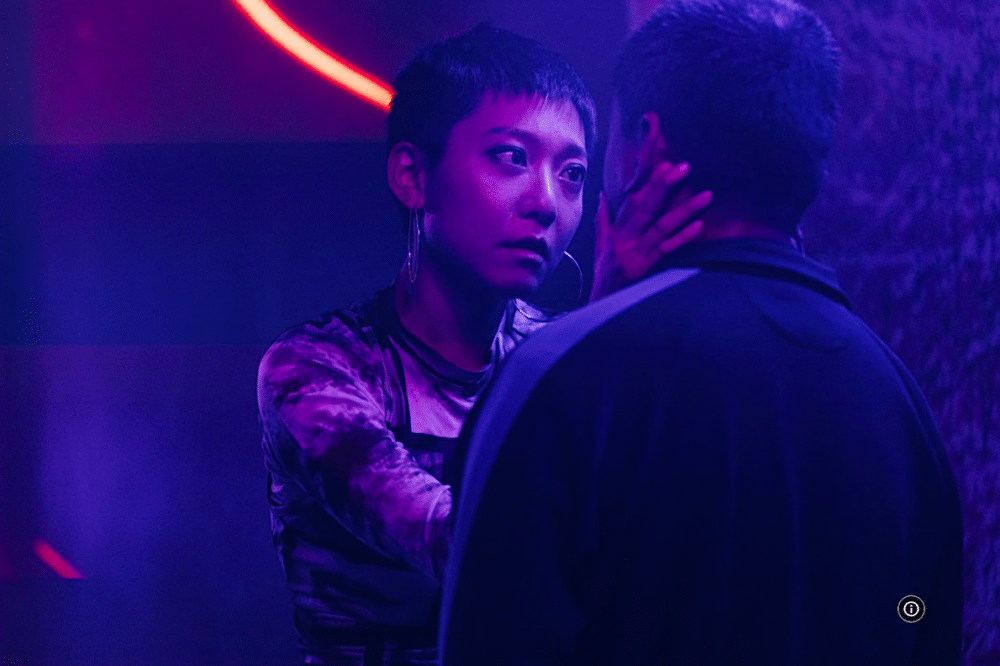
This was a most ambiguous film for writer-director Yeo Siew Hua. A. fairly long film, “Stranger Eyes” almost drowns in its own ingenuity although its main focus is love and connection in the digital age. The film is really more about the character Wu that the young husband and wife or Junyang’s controlling mother (Vera Chen). Without revealing too much of the plot, a new character Xenia Tan (Ling Po) is introduced in the final section, seemingly going in a completely different direction from its starting point. Peiying, having found her little girl and discovered her husband’s infidelities, decides to leave, leaving Junyang alone with his mother. The latter, intrigued by the strange, solitary individual that Wu is, begins to stalk him when he leaves the house and discovers his melancholy past. The passive phase of being observed and watched is replaced by the active role of watching and watching in turn. And just as Wu had revealed Junyang’s secret passions by spreading the videos, so Junyang reveals Wu’s secret.
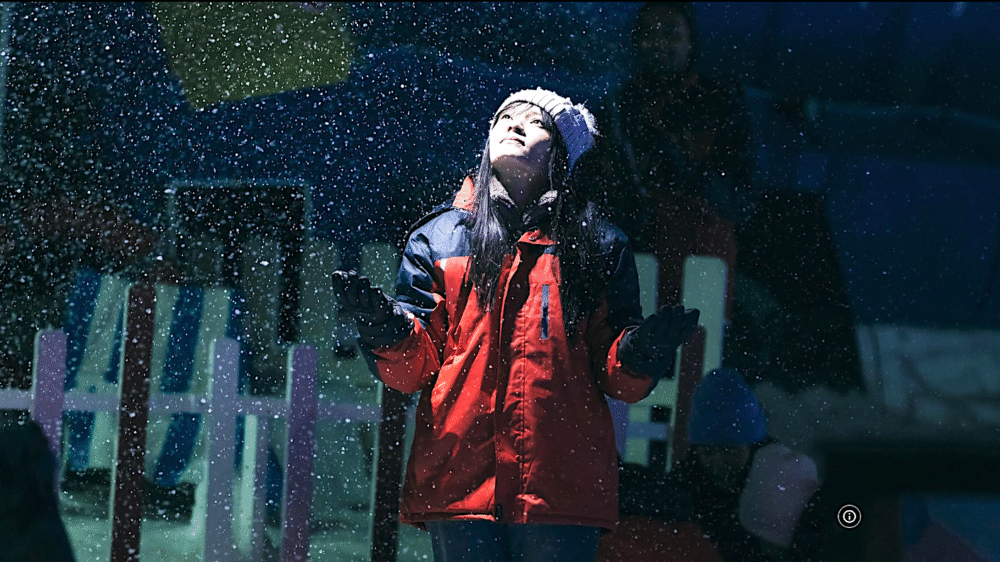
The discovery of little Bo is barely hinted at and not particularly explored in the film’s narrative. In that sense, the film is not much of a thriller and we might wonder what the last 30 minutes are supposed to add to the story. The director’s interest was simply to depict an everyday life on the brink of total control and a society where countless images are produced, recorded, copied, duplicated, and shared without much thought for the consequences. The fact remains that the thriller’s plot lacks any real suspense, and many deliberately emphasized plot elements (a scene comes to mind when Junyang appears to kidnap a baby girl from a stroller) are forgotten and unexplained. The continuity and coherence seem compromised.