
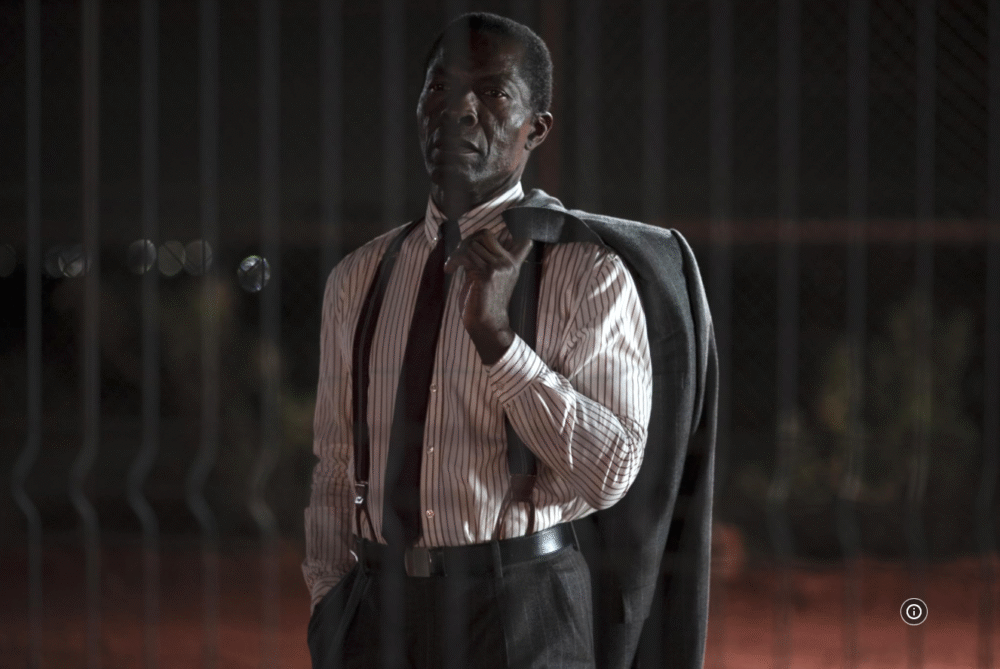
One of the more interesting films at the American French Film Festival this past week has been Clair Denis’ The Fence (Le Cri des Gardes). An endless fence separates a sprawling West African construction site from the native landscape and population. Inside, Horn, the white boss, stands wielding his power. Outside, a Black man named Alboury appears, demanding the body of his brother, who died in an on-site accident and refusing to budge until it is returned to him. The stand-off threatens to last all night long. Claire Denis once again brings her astute eye to both the mechanics of neocolonialism and latent human desire. Her frequent collaborator, actor Isaach de Bankolé, as Alboury, turns in yet another mesmerizing, truly transcendent performance.
A Frenchwoman who spent most of her childhood in West Africa, Claire Denis is no stranger to the social and racial tensions colonialism left behind on the continent. From her breakout feature, Chocolat, to work like White Material and her masterpiece, Beau Travail, she has explored those tensions through enigmatic stories about white characters living in a land that doesn’t necessarily want them anymore.
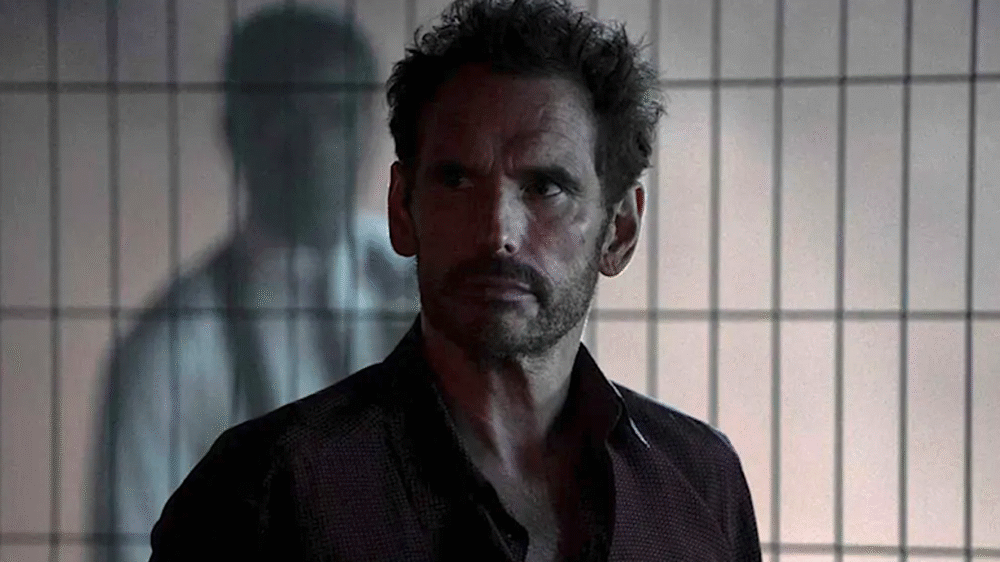
That sentiment is front and center in The Fence, a sequestered and highly theatrical drama set on an African construction site that feels much more like a colonial outpost. The remote, dust-filled locale is overseen by Horn (Matt Dillon), a world-weary American foreman who, in the course of one very long night, has to deal with both a possible murder cover-up and the arrival of his British girlfriend, Leonie (Mia McKenna-Bruce), in hostile territory.
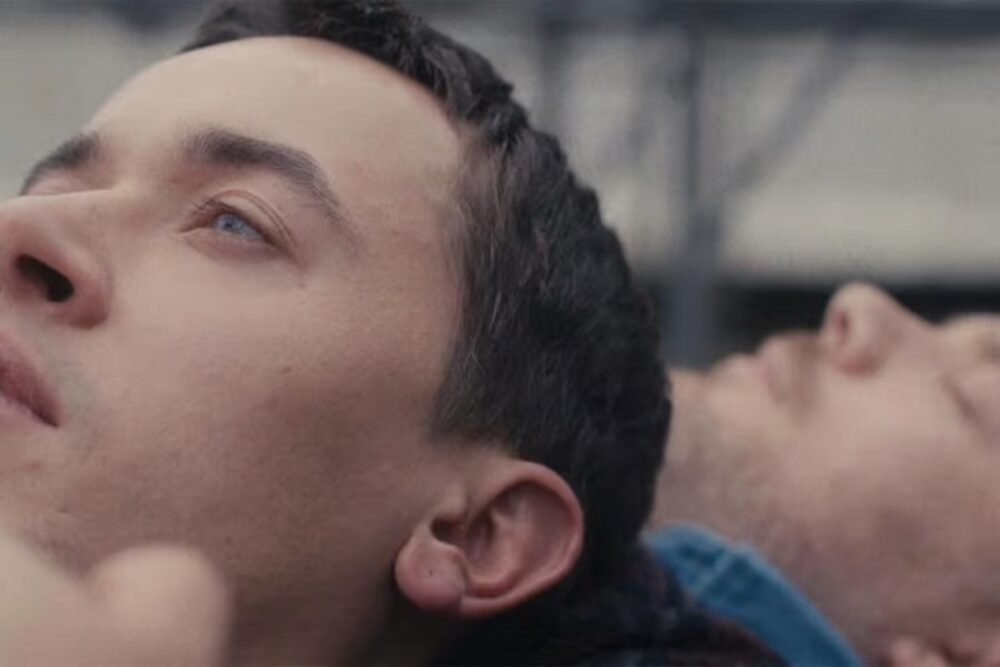
Adapted from the 1979 play by Bernard-Marie Koltès (a celebrated French playwright who died from AIDS at age 41), this is one of the director’s stagier movies, eschewing her trademark visual lyricism to concentrate more on dialogue and performance. But she also coaxes terrific turns out of younger cast members McKenna-Bruce (star of How to Have Sex) and the magnetic Tom Blyth, whose onscreen chemistry conveys the kind of sensual longing Denis is known. Blyth plays Cal, a jumpy and cocksure construction manager who is very much the third wheel – or more like the monkey wrench – in the recent couple formed by Leonie and the considerably older Horn. Even worse, Cal could be behind the death of an African worker (Brian Begnan), whose brother, Alboury, has shown up at the site to claim the man’s body.
That brother is portrayed by Ivorian actor Isaach de Bankolé, a regular of Denis’ since Chocolat, who appears here as a looming menace, standing on the other side of the fence that separates the white characters from the countryside. Soft-spoken and unrelenting, Alboury emerges as the only moral voice in a land of postcolonial abandon, refusing to let Cal get away with what may be homicide, while disrupting Horn’s romantic first night with Leonie.

The French auteur’s distinctive stamp is all over the initial two sequences. In the first, an unnamed African woman walks slowly along a dirt landscape pockmarked by bulldozer tracks, eventually stopping to lay a large green leaf over a puddle-filled hole. In the second, Cal drives heedlessly to work while “Beds Are Burning,” Midnight Oil’s Aboriginal land rights rock anthem from 1987, blares on the radio. Scene one’s evocativeness collides with scene two’s obviousness, which may very well provide a key to what Denis is up to in The Fence.

Of course, romanticism has never been Denis’ thing, and from the moment Leonie touches down at a tiny airstrip, the reality of where she’s landed becomes apparent. Cal picks her up in a muddy old 4×4, then takes her on a bumpy ride through the bush during which the tension quickly heightens between them. When a crow flies into the pickup’s fender, Cal gets out and uses a rock to put the bird out of its misery. So much for the illusions of an African safari.
The late Koltès’s 1979 play isn’t opened up so much as clinically dissected by the film, with every character an enfeebled pawn in situations they’re at a loss to resolve. McKenna-Bruce continues in the vein of many an opaque Denis female, wandering this dust-strewn setting in high heels and a skimpy red dress, her mind breaking down alongside her wardrobe. She and de Bankolé (unsurprisingly) are keyed in to Denis’s moody formalism, though de Bankolé’s standout scene comes early – an emotional monologue delivered in a dream sequence featuring a slobberingly rabid dog that looks like it was birthed via A.I. prompt. The uncanniness of the animal coupled with de Bankolé’s all-too-human sorrow makes for a strangely sublime pairing.
That long driving sequence, and a few other scenes between Blyth and McKenna-Bruce, reveal Denis’ talent for fostering a taut and highly sexualized atmosphere on the verge of either explosion or desolation. Working with DP Eric Gautier (who also shot the director’s last feature, Cannes prizewinner “Stars at Noon”), she makes the most out of the limited setting, especially when the camera ventures beyond the construction headquarters – basically a bunch of shipping containers stuck together – to explore the dark vastness outside.
The long scenes with Dillon’s Horn at the fence talking with Alboury seem forced at times – as if reciting his dialogue from the source play by Koltès rather than fully embodying it. Claire Denis is a great director of actors, but we remember her films less for the lines her characters say – if they even speak – than for how she avidly captures their bodies in motion. As the night wanes and the truth behind Cal’s act and Horn’s past comes to light, the conflict spills out into the sunshine, leaving none of the characters unscathed. The film’s downbeat ending shouldn’t surprise anyone familiar with Denis’ movies, which have always leaned toward tragedy, especially when the action has been set in Africa. The difference here is how explicitly that tragedy appears on the viewer experiencing events rather than fully grasping them.