By Robert St. Martin and Valerie Milano
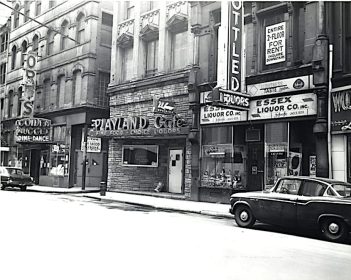 Los Angeles, CA (The Hollywood Times) 7/13/23 – Outfest 2023 is Los Angeles’ premiere LGBTQ+ annual film festival and it usually includes a number of edgy, experimental art house pieces that push the boundaries on LGBTQ+ subject matter and the nature of filmmaking. One of these in the lineup for Friday, July 14, at the REDCAT in downtown Los Angeles is Geordon West’s Playland (2023) – a non-narrative recollection of the 60-year history of The Playland Café in the once seedy district of South Boston – as if on a single night it engaged from its ghostly shuttered past. The Playland Café (1937-1998) was once Boston’s oldest gay bar. Located in the notorious Combat Zone – an area filled with strip clubs, X-rated movie theatres (as seen in The Departed (Martin Scorsese, 2006) and prostitution – the bar acted as a vital place for queer expression even as it was constantly under threat from the powers of the city. Finally closed down by undercover cops in 1998, it is lovingly re-imagined as a melancholy, lightly haunted house by debut director Georden West.
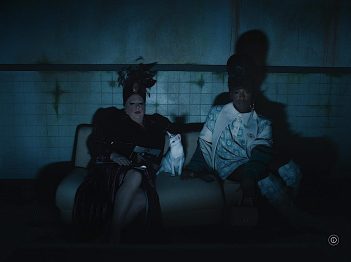
Rather than a traditional narrative tribute, the film brings to life the bar’s glory with a series of decadently shot vignettes blended with archival audio and footage, resulting in a film of uncompromised audacity and vision. Bending form, celebrating queerness, and probably alienating the average viewer through its complete lack of any semblance of story – rendering it a truly art house film for an art house audience. Writer/director Geordon West stumbled upon the story of the Playland Café at the Boston Public Library while researching former gay bars in the city. There were not a lot of photographs of the interior of Playland Café, so this led set designer Sarah Karl free to imagine what it might have looked like. The entire film was shot on a sound stage. The costume design in this film – all the work of Edwin Mohney – is equally imaginative.
West had been developing an idea about LGBTQ nightclub workers for years, while they was working as a waiter in a local restaurant. The pandemic shutting everything down made the task of writing the film even more urgent, as they spent the time preparing for production and reflecting on the loss of life and much needed community space. “We’ve lost so many spaces. And it’s not just Boston, it’s across the United States,” says West. “Playland represents the sort of lost gem of queer life within the 1900s. It’s a warning sign for what can happen to queer nightlife in Boston, should we not be advocating and supporting it and also resisting the sort of government intervention into these spaces.” West was drawn to Playland in particular because it was known to be diverse and welcoming, in contrast to many of the area’s bars that were more segregated and gender restrictive.
The Combat Zone was Boston’s adult entertainment district. For a stretch of the 20th century, the neighborhood now called Downtown Crossing was lined with porn theaters, strip clubs, and other establishments that the Boston Redevelopment Authority wanted to keep from spreading. One of these was the gay bars that famous drag queen Sylvia Sidney headlined her act until her death in 1998. Her favorite of those bars was Playland Café. Prior to the 1960s, the least savory part of Boston had been Scollay Square, where there were theaters and arcades and bars, but during urban renewal Scollay Square was demolished to make way for City Hall Plaza. The Boston Redevelopment Authority wanted to rid the city’s downtown of adult nightlife. Restrictive zoning laws and raids forced many to close and kept others from reopening as the AIDs crisis devastated the community.

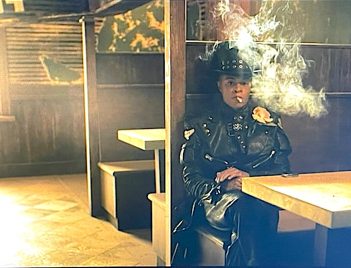
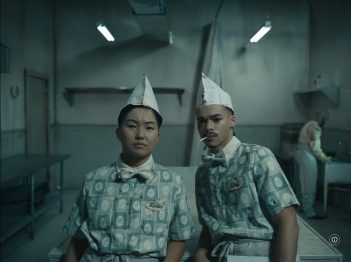
West’s depiction of Playland takes a lot of liberties and isn’t a historic representation but rather a memorial to these lost spaces and the people who occupied them. With limited dialogue and dreamlike attention to visuals, it bounces in time between two servers who share the same locker decades apart. Said the director in an interview: “I wanted to make it more of a dream or a memory of someone who loved the space.” The cast that includes drag icon Lady Bunny, Danielle Cooper from FX’s Pose, and Aidan Dick (When Men Were Men). Danielle Cooper says she was immediately drawn to the film because of the way it pays homage to a lost cultural institution. West pointed out: “I get to rebuild the space for this one night only kind of vibe. But Playland, like countless bars across the United States right now, will never have another Friday night.” Just since 2020 alone and partly due to COVID, Machine and Ramrod, The Boston Eagle, and inclusive venues like Bella Luna have all announced their permanent closing.
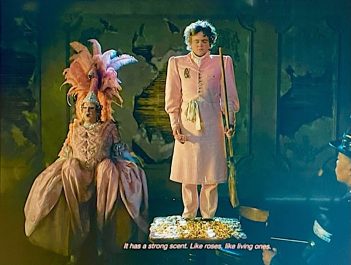
Mixing music, dance, archival footage, opera (lip-synched from Wagner’s Lonengrin Act III in German) and more, Playland is a sensorial experience. Planometric frames, curling smoke, pageantry and dance sequences co-mingle in moments of both vibrant fantasy and more somber contemplation, providing a gorgeous, if occasionally plodding, elegy to the types of places that are sadly, slowly dying out. One disembodied voice whispers at the end that “maintaining artifice is both exhausting and necessary.” Acting at times like a queer Sergei Parajanov film, the endless frames of characters standing straight on, smoking, sighing, slowly working or singing, accompanied by light, ambient synth music, or more difficult recollections of racial and queer oppression, certainly overwhelms the viewer.
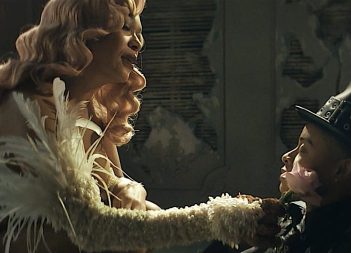 Geordon West chose to include a lot of queer talent in the film, including talented Jose Miranda, a product of the ballroom scene, and the prominent ironic drag queen Lady Bunny, who grew up in the theatre performing, as well astrans body-builder Mason Caminitini. Playland greatly benefits from its inventive costume and production design. Edwin Mahney, a costume designer for Beyoncé and Mary J. Blige, was part of the project. Geordon West believes that costume is very much a part of queer culture and in that belief credits Derek Jarman, Sally Potter and Peter Greenaway. Even though there is no genuine narrative to hold onto, Playland speaks with an urgency in each staged vignette, as if West is trying in vain to keep the bar alive, all the while knowing that it is lost to the dustbin of history.
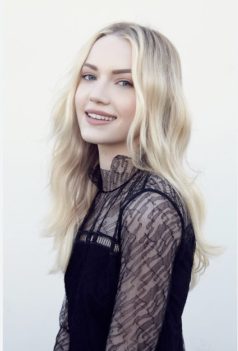
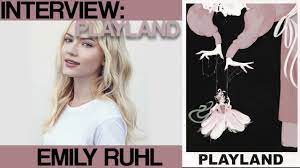 Many talented persons contributed to Playland, including actress and model Emily Ruhl, who is one of the executive producers of the film along with director Geordon West, who produced Playland along with Russell Sheaffer. The Hollywood Times interviewed Emily Ruhl about the making of Playland and her interest in writing and directing independent films. She has been recognized for her award-winning short Blue Moon (2021), which she wrote and directed. In the interview, Emily talked about how important it has been to take charge of making an independent film and not just wait for a phone call from an agent for an acting role in someone else’s film. She just wrote the screenplay for a short film Pretty Sad and stars in it as well, under the direction of Jim Cummings, who has made the feature films Thunder Road (2018) and The Beta Test (2021). Her production company, Public School Pictures, is behind a number of LBGTQIA+ films. Emily encourages young filmmakers to get out there and try to make your own film, even just using an iPhone.

Featured before the screening at REDCAT will be the short Out of the Corner of Our Eye (11 min.), directed by John Ira Palmer. It is a short, poetic reflection on seven iconic, formerly queer spaces in Los Angeles that are no longer what they once were and features River Gallo. We all know that queer spaces which were once the heart of the bar scene keep disappearing. At the REDCAT screening on Friday will be in attendance: Geordon West, Jeffrey Sheaffer, and Emily Ruhl, to talk about their film and such important queer spaces.
Playland screens Friday, July 14th, 7:00 PM at REDCAT: Roy and Edna Disney CalArts Theatre. It can also be seen online with Outfest Streaming July 17, 12:00 PM – July 23, 11:59 PM. For tickets, go to: www.outfest.org.