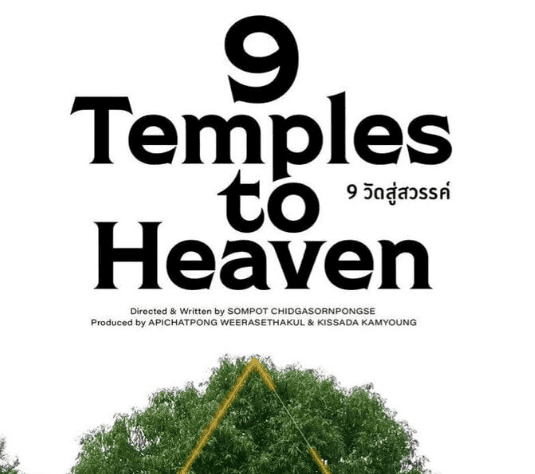
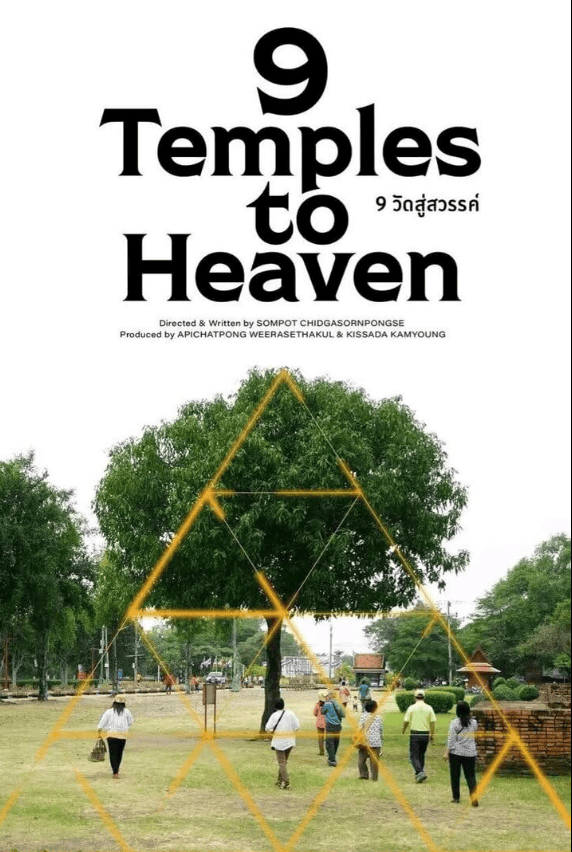
A funny, meditative fictional film from Thailand that screened at the AFI FEST last Sunday is 9 Temples to Heaven, directed by Sompot Chidgasornpongse. His second feature film is a contemplative piece of “slow cinema,” with a story that explores themes of generational difference, superstition, and Buddhist faith in Thailand. Chidgasornpongse has been the assistant director of the films of Apichatpong Weerasethakul, whose influence in this genre shares some similarities to Syndromes and a Century. 9 Temples to Heaven is Thailand’s submission for Best International Feature Film at the 2027 Academy Awards.
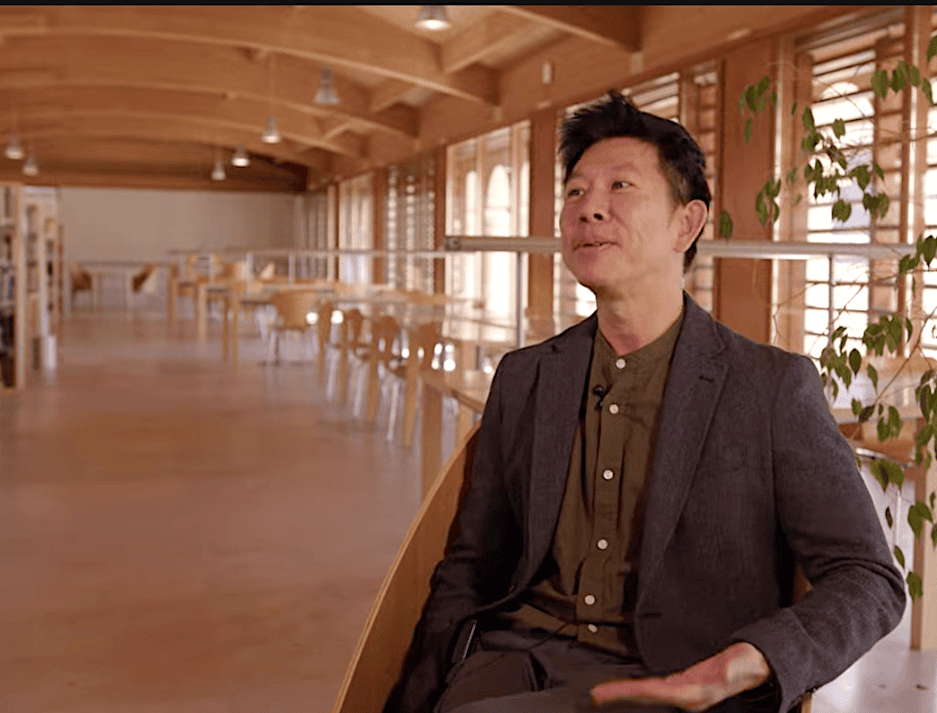
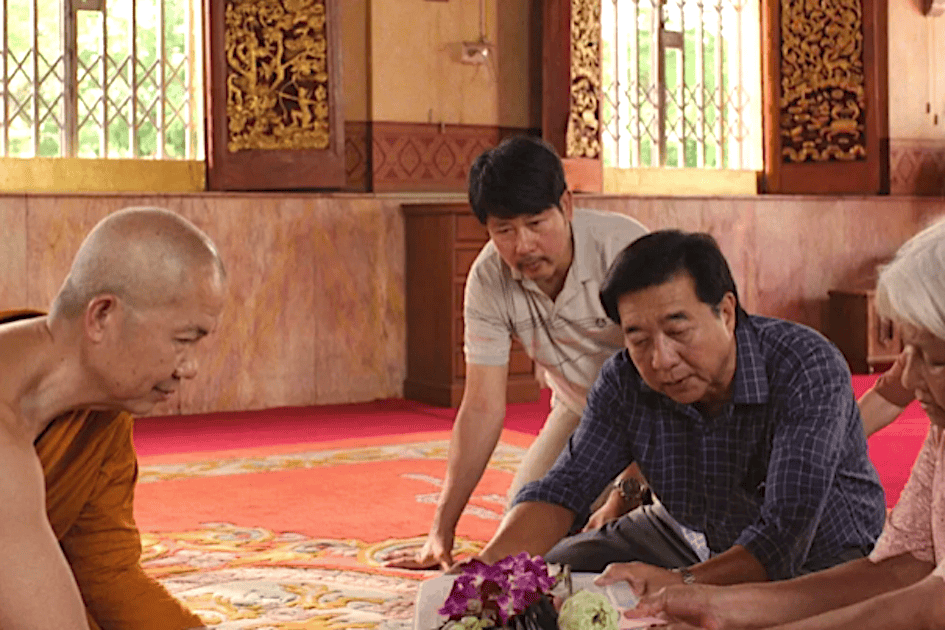
The importance of piety is evident from the opening montage depicting the preparation of funeral rites is evident from the start of the film. At its center of the film is the making of an offering to a monk at several ornate Buddhist temples. Through fragmented exchanges, we learn that a middle-aged Thai man named Sakol (Surachai Ningsanond) had a premonition that his elderly mother (Amara Ramnarong) isn’t long for this world. Sakol drags his entire family on a single-day nine-temple merit-making pilgrimage after his boss has a vision that his mother may die soon.
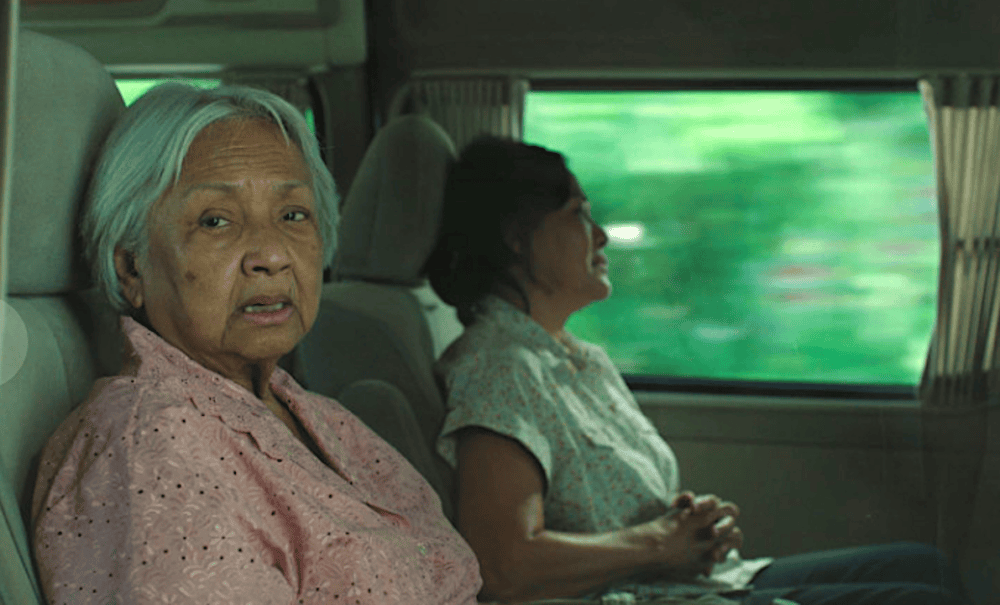
So Sokal rents two mini-vans and plans to visiting nine Buddhist temples with his nine family members will ensure that their matriarch enters the afterlife blessed with good karma. In Thai culture, the number nine represents good luck. The story moves along with lighthearted conversations by the family members in the two mini-vans, as they progress from temple to temple. Om the first mini-van is Sakol, his elderly mother, his sister and his wife. In the other mini-van are the younger members of the family, with Koon and Thor, their sisters, The family members share aspects of their current lives and memories of earlier times. We are taken from one mini-van to the other, as we see the changing landscape outside.
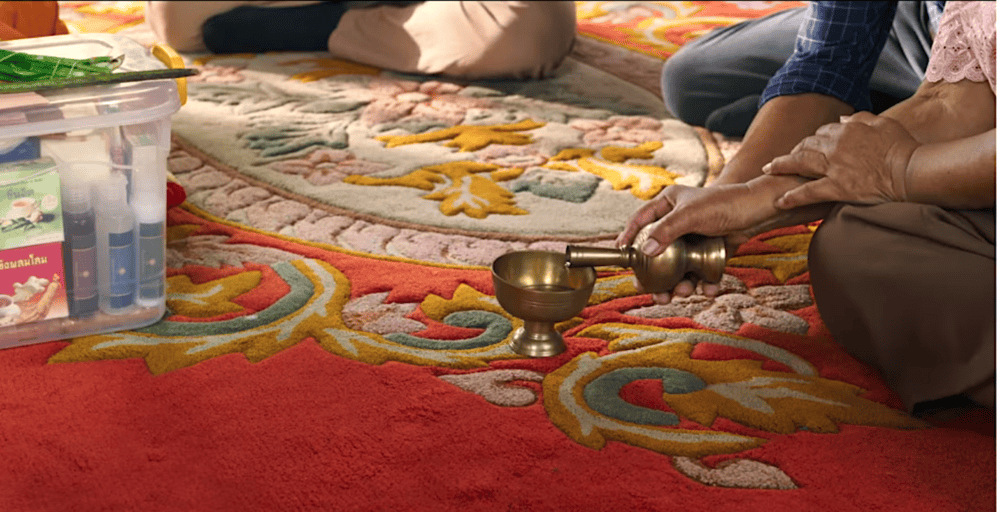
The internal conflict of the family members emerge as they move from temple to temple. Sakol’s elderly mother ironically assesses the reason for the hastily-organized temple tour: “They don’t want me dying in their house.” Sakol has purchased pre-packaged temple offerings for the monks of each temple: As Sakol’s niece looks through the items in a gift box, she wondered why tampoons and perfumed soap were in a box for monks to use. Chidgasornpongse packs in plenty of contradictions about the piety of the family members and also the materialism of the monks themselves.
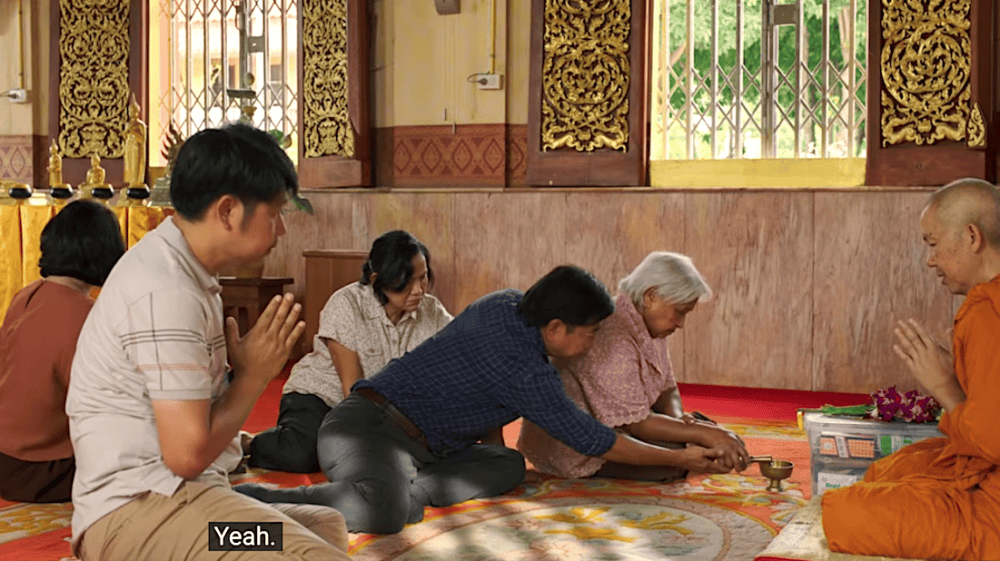
At times, the whole planned visit of nine temples seems like a sham. One temple has a large room where temple offerings are stored and we see young monks sorting out the items that a packed deep in shelves. Sakol attemtps to follow the required offering ceremony with the monks, but we soon find out that all monks are not equally religious in their roles. One younger monk is only planning to remain a Buddhist monk for a while and then return to a normal life and possibly marry a woman. We learn that it is a common practice for many young Thai men to shave their heads and serve briefly as a monk-in-training before returning to the secular world.
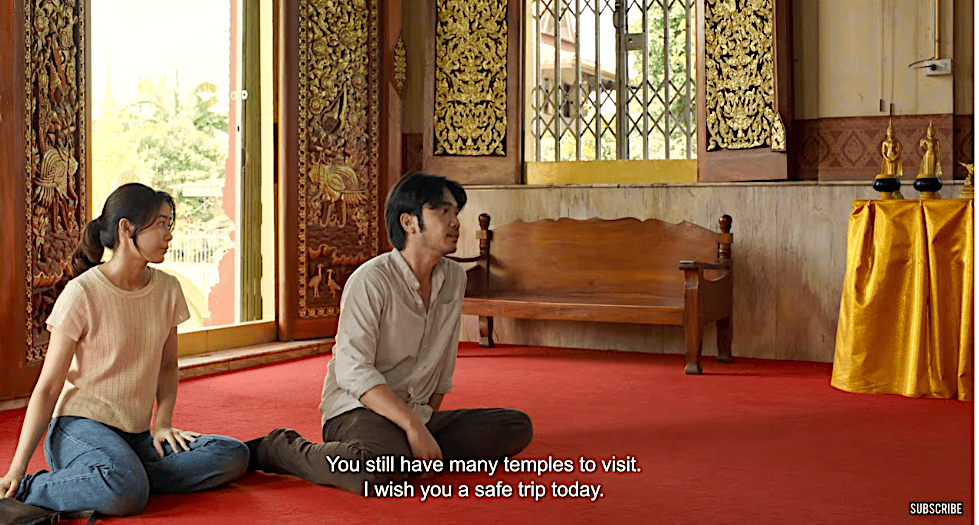
Sakol’s nephew, Koon (Poon Sirapob) is more interested in dream life and ponders the lack of sound in dreams. His personality seems to be in direct contrast to that of his more practical cousin Tor (Sompot Songkampol). Koon (Poon Sirapob) is encouraged by one monk to consider becoming a Buddhist monk.
Despite the worldliness of some monks and the varying levels of belief in Thai Buddhist traditions, the film recognizes that traditional beliefs are important to most of the family. A monk asks the family members if they meditate and the majority waver on that topic – saying they used to do meditation or they don’t have time for it. When a monk at one temple hands Koon a special stone and says that it will protect him from danger, his words are uttered with complete seriousness.
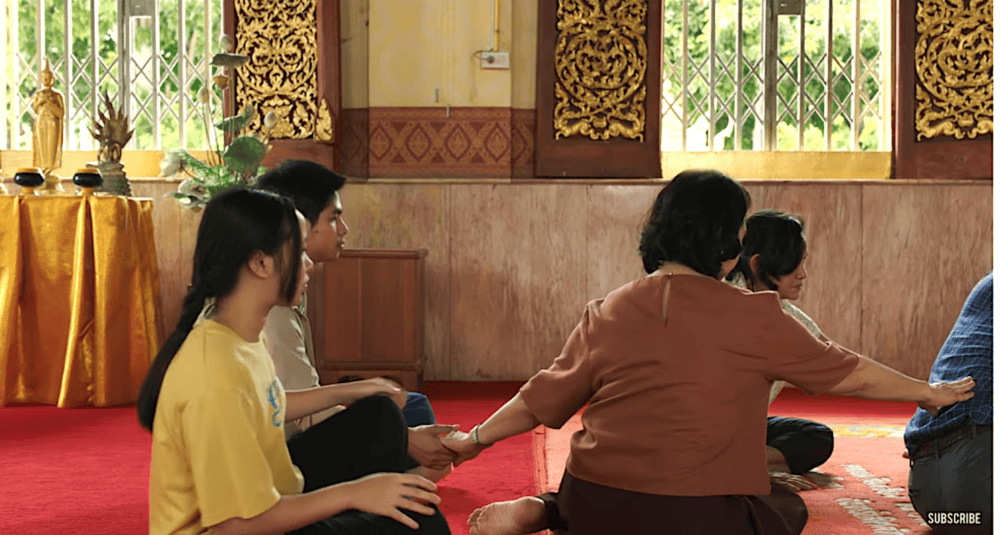
On the subject of meditation being for everyone, Koon shares that the practice made him “feel gloomy,” and that a monk’s answer was for him to eat cheese to improve his mood, while his doctor diagnosed him with depression and prescribed medication. This humorous moment is emblematic of the ways in which Chidgasornpongse wrestles with the inevitable tensions between faith and modern life across the film, finding people in a sort of limbo, in Koon’s case as a result of his problems being ones that neither faith nor medicine can cure.
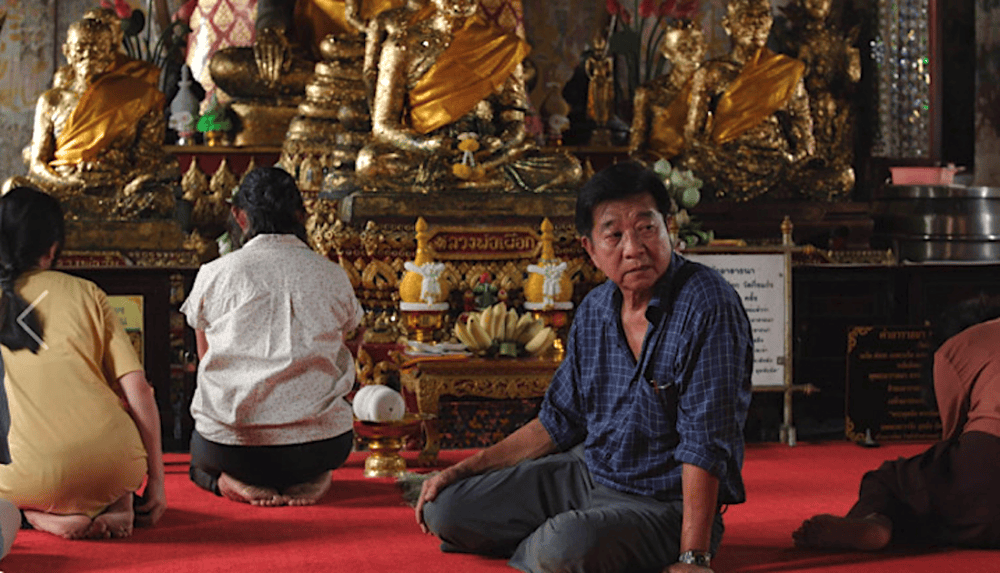
The family’s sceptics are as interesting as its believers. Tor (Sompop Songkampol) refuses to accept that any of this means anything, and voices the film’s most awkward observation when he points out that the Buddha will always have one up on them because he was born a prince. Perhaps the path to enlightenment is a trap designed to distract us from class struggles.
Elsewhere, a grandson confesses that meditation once caused him to want to die, and that when he raised this with a monk, he was informed, firmly but without drama, that no, a desire for personal death is not enlightenment. He gave up meditation. Another of the grandsons is drawn into what initially seems like a warm conversation with a young monk about vocation, before a faint discomfort creeps in about whether the attention is entirely benign.
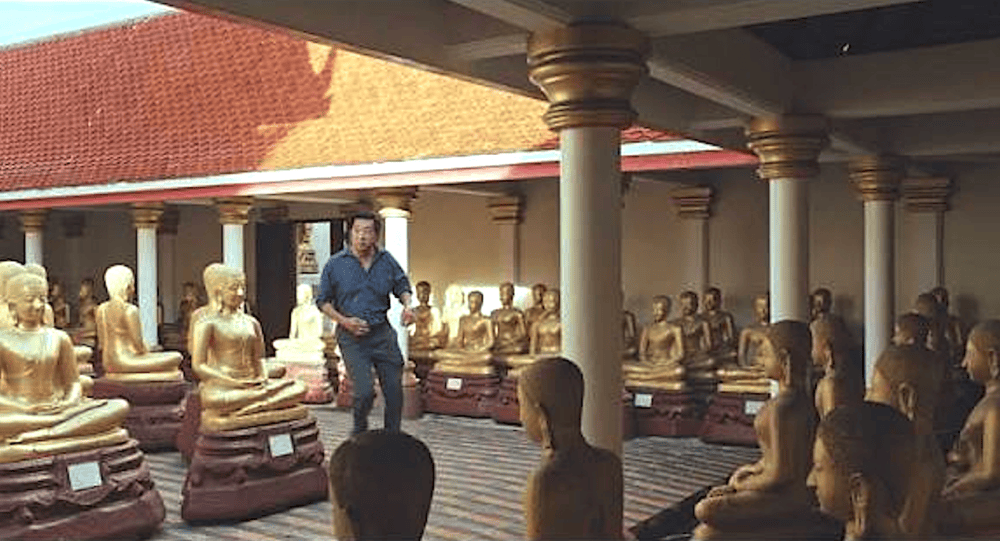
The stress of taking an elderly woman to nine temple builds up, as her physical stamina is limited. Eventually the family members leave her inside the mini-van and try to complete the rituals with the monks either inside a temple or outside in the parking lot. Chidgasornpongse finds canny ways of exposing the cracks in the family foundation. Tor arrives to the first temple late, sitting half-heartedly in the back. By the time the family arrives at the fourth temple, Tor is speeding down a separate route than his father, Sakol, with his grandmother, and their dissatisfaction with one another comes to a slow boil, as Tor believes this pilgrimage is a selfish attempt at assuaging his father’s superstition. The central psychological thread, that Sakol is projecting his own childhood feelings of abandonment onto this elaborate display of filial devotion, is intriguing. His family’s barely concealed suspicion that the pilgrimage is more about him than his mother,
Chidgasornpongse employs slow, panning shots that key us to the gentle rhythms of spiritual life, while also unearthing disruptions along the way, revealing the film’s fascination with Buddhist modernism. At one point, the family listens to a monk divulge that a previous monk at the temple abandoned his position to have a child with a woman. Elsewhere, one monk mulls over quitting his temple to go take care of his sickly father, while another boasts about the panoramic view that his temple offers to tourists, pointing to tensions around Buddhism’s continued existence hinging on the relationship between culture and money.
Sompot Chidgasornpongse’s fiction debut will appeal to lovers of “slow cinema” with its long stillnesses, quiet willingness to hold a scene until something unexpected happens. But underneath that patience runs a second, livelier current. This is also a dysfunctional family road movie, with a bickering multigenerational ensemble split between a van, where Sakol and his mother ride, and another car of family members trailing behind. The two modes sit in productive but not always comfortable tension with each other.
And so, three generations pile into the two vehicles: Sakol, his wife, his brother, his sister, assorted children, and the grandmother herself, around whom the entire enterprise supposedly revolves and who is, from the outset, completely nonplussed by it. She drifts in and out of apparent sleep, stares out of the window at a city she barely recognizes, and feigns exhaustion whenever anyone expects her participation. Whether her weariness is because she is dying or merely tired of her family is a question the film leaves open.
Chidgasornpongse sets the action in Samut Prakan, his hometown, a port city where Western ships first made contact with Siam and where Bangkok’s main airport now stands. A place, as he describes it, where traditional and modern ways of thinking diverge – as the two vehicles will themselves diverge on the road between temples. The result is a journey into what it means to be a family. We see the large river harbor along the way and hear the sound of jet airliners taking off from the airport throughout the film.
Cinematographer Jonathan Ricquebourg lets the camera drift from the family to take in temple murals, their painted figures representing a philosophy increasingly at odds with the world moving past the van window. When the highway carries them past a colossal industrial plant, the film barely pauses. Look, mum, our house turned into a glass recycling factory, they say. Then the view is swallowed up by row upon row of cargo containers. The material world accumulates and consumes.
There is real humanity in 9 Temples to Heaven, and for all its unevenness it is worth seeing. It works in the gap between spiritual aspiration and material life, between what families do for each other and what they actually want from each other, between the Pali language of ancient scripture and the glass recycling factories built over the landscape of old. The number nine recurs throughout, and Chidgasornpongse is clearly alive to its meaning. In Thai, gao sounds like the word for progress, for moving forward. It carries the Nine Qualities of the Buddha, the nine realms of existence, and the deep royal resonance of King Rama IX’s seven-decade reign.
In Chidgasornpongse’s view, Thai society repeats the same rituals again and again, without necessarily moving toward prosperity. The family must give an offering of 9,999 baht. There are nine family members. There are nine temples. At one of them, a gleaming nine-story building contains a relic of the Buddha and, the monk helpfully notes, a good view. It also has a spiral staircase for ascending to heaven. But there is an elevator, he adds, for the elderly or infirm. Or perhaps for those in more of a hurry.