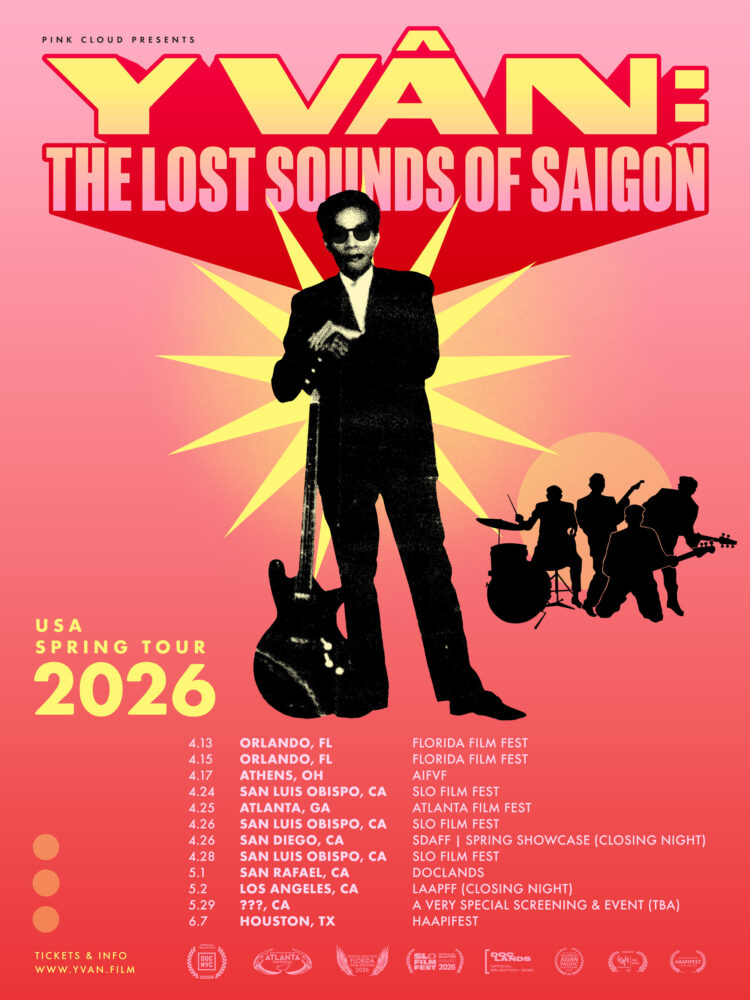
Where head and heart lines intertwine, lineage connects us in ways divine.
As we are introduced to the main character, Khou Ho, we are connected in life through the acknowledgement of life through the remembrance of art.

I was taken back by the creativity of story expression and development. Our grounding is in the birth and life through an artistic autobiography in ways only digital media and ingenuity could depict.
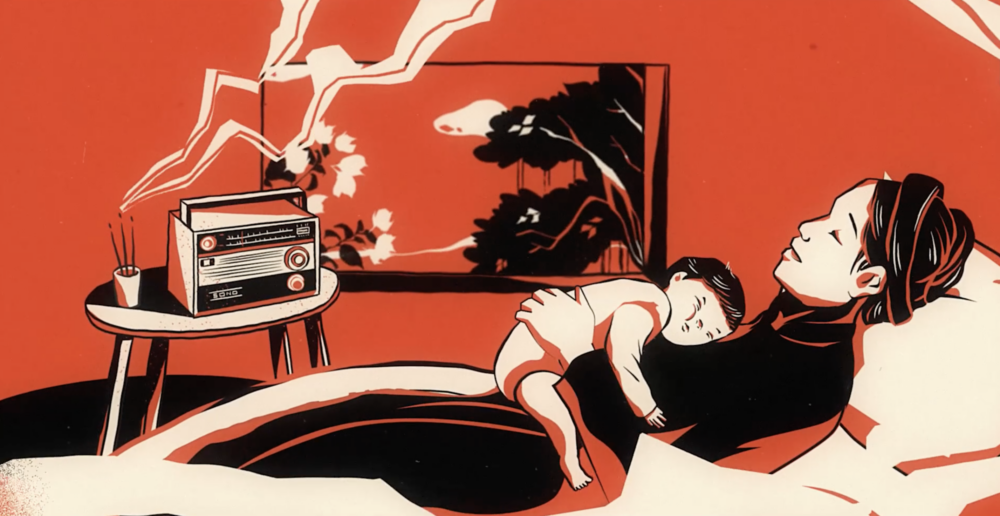
As we transition from animated memories and media design to the reality of the present, we are joined with a group of women who discuss an understanding that love is not always spoken directly. It lives in gestures, in care, in the ways people ask, “Are you hungry?” instead of “I love you.” From the very beginning, this becomes the language of the film: what is felt, what is carried, what is expressed as the director dictates in a sort of Pavlovian way.
 Khoa desires to connect with her grandfather through the legacy of his historical and famous music of pre-war culture. After years of research, her passion leads her to go back to her native homeland, Vietnam. In an effort to dig up archives at the local outdoor markets filled with fragments—objects, records, textures of a past feels both near and unreachable, but her determination is unprecedented. Her movement is initiated in Saigon where the music lived in infamy. They say in order to find someone, go back to where you last knew they were or the last place you saw them. And so begins her search – boots on ground.
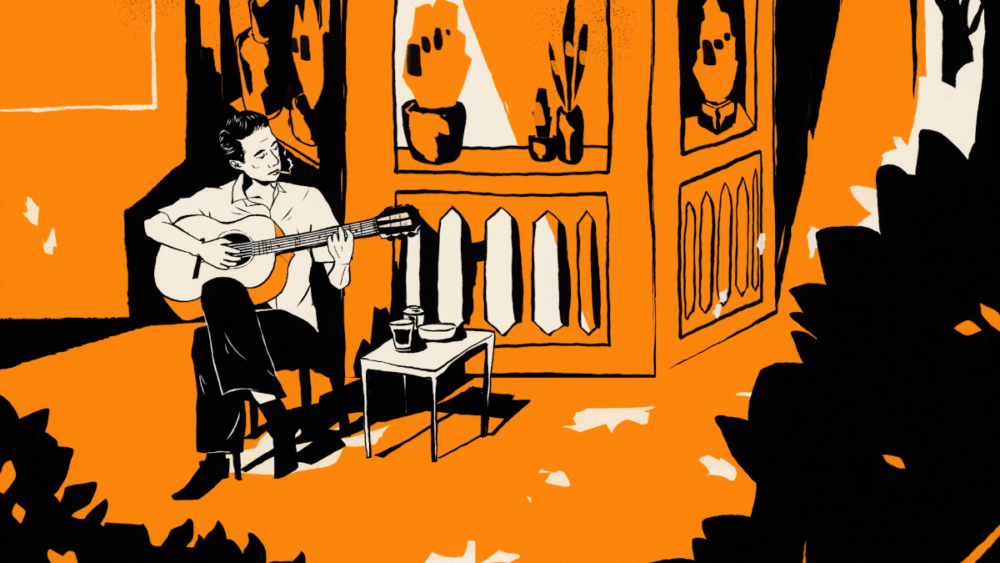 As she boards a train toward Saigon, the film creates one of its most striking parallels. Her journey forward is mirrored by her grandfather’s journey decades earlier—she in the present, grounded in the humanness that we are present with everyday; he in the past, rendered in animation, softened by memory. The visual language becomes clear: the past is blurred in the present.
That search, which begins in fragments, suddenly takes form when she encounters collector Huỳnh Minh Hiệp. Inside his café, what was once imagined as lost reveals itself in abundance: an entire wall of vinyl records, a portfolio binder of original sheet music, including one of his earliest compositions from 1956. This becomes revelation after years of searching.
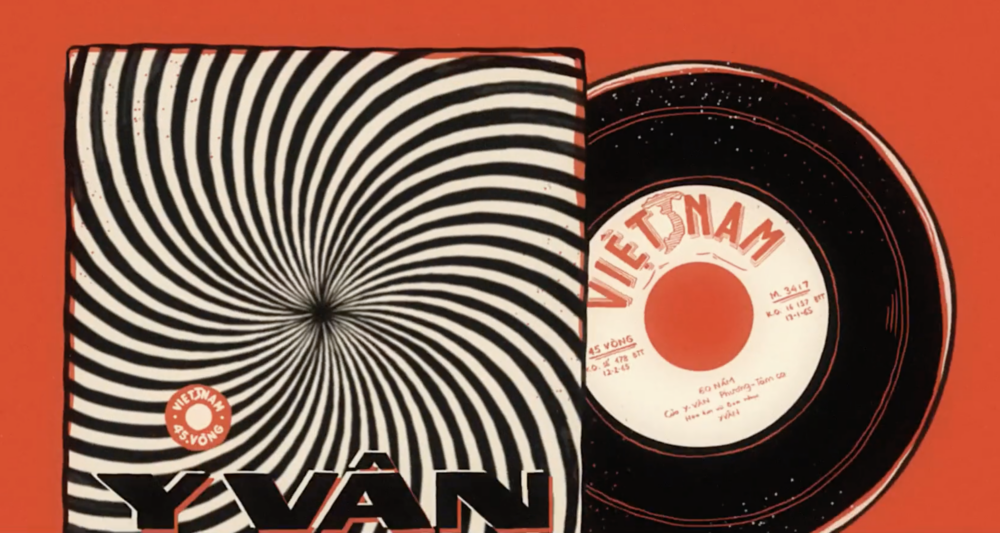 As the unfolding of parallel depicted lives occur we learn, her grandfather arrived in Saigon in 1954 at the age of 21. He would spend the rest of his life there, becoming one of the defining composers of his time. After years of playing in local nightclubs and writing songs, his greatest breakthrough begins with Lòng Mẹ (Mother’s Heart)—a song written in deep devotion to his mother. Family members say she shaped him more than anyone, that his success grew from that love that was ever enduring and profound.
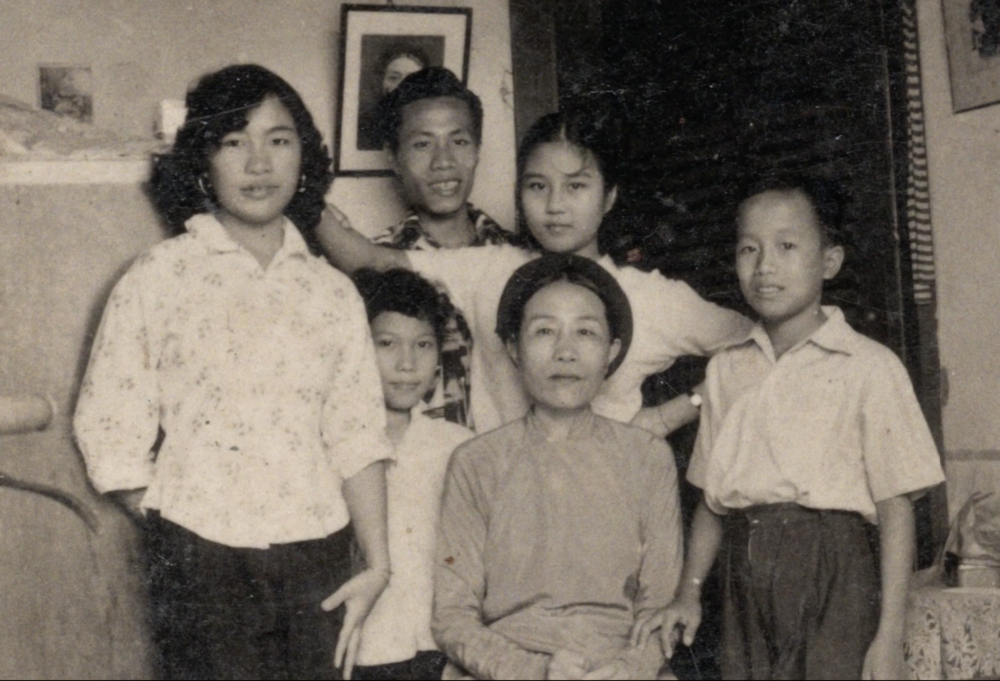 By the 1960s, Saigon had become a cultural epicenter—known as the “Pearl of Asia,” alive with music, performance, and creative exchange. Within this environment, only a handful of composers defined the era, and he was one of them. He would go on to write Saigon, Saigon, Saigon, often described as an unofficial anthem—a kind of hymn to the city itself.
But those who remember him do not speak only of his success. They speak of his character—his kindness, his generosity, his ability to let go of wrongs. As his daughter Ngọc Tuyền reflects, “look inwards before blaming others. Second, treat others the way you want to be treated. Finally, do your best, but understand you can’t escape destiny.” He himself believed that destiny had guided him into music, even though he once intended to study mathematics.
As the search deepens, it becomes shared. Her mother joins her, and what began as exploration becomes urgency. Pages are torn and rewritten. Coffee cups are constantly refilled. Cigarettes pile up. The sound of slurping cuts through the music, while her mother’s voice overlaps on the phone, gathering information, chasing leads. After many calls, a direction finally emerges: Nha Trang. A collector shares a deeply personal story of his parents’ tea shop, where music once filled the space and shaped his youth. The collection he holds is vast, and her reaction is immediate—she lights up, the kind of excitement that gives you goosebumps.
With that world comes names—collaborators who once stood beside her grandfather: bassist Lý Dược (Nguyễn Văn Dược), pianist and composer Vũ Trọng Hiếu, and singers Mai Lệ Huyền, Carol Kim, Connie Kim, and Phương Tâm. Their memories bring the era back into motion—performances on military bases, traveling by helicopter, heat, noise, crowds swelling with energy. Influenced by global movements like Woodstock, Vietnamese youth music flourished in its own distinct way—vibrant, expressive, sometimes a unique influence of a Western counterpart.
Through their accounts, his genius becomes clearer. He could hear and construct every part of a composition—every instrument, every layer—guiding ensembles of many musicians with precision. And yet, what made him remarkable was not complexity, but restraint. His songs were concise, often structured in eight bars—introduction, development, buildup, conclusion. Simple, exact, and complete.
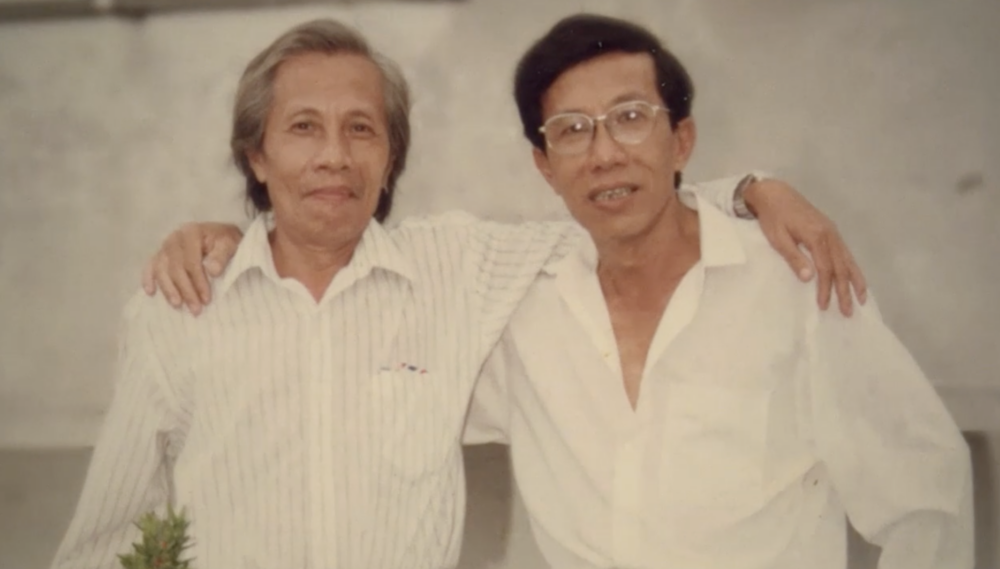
What she initially searches for on vinyl expands into something far greater. She discovers original reel-to-reel recordings—fuller, richer, closer to the truth of his sound. And through these discoveries, she uncovers over one hundred of his original recordings.
“Y Vân’s legacy can now be restored.”
But just as everything becomes visible, the film shifts. The landscape turns heavy—rain falling as she climbs a mountain toward a temple. The camera follows from behind, quiet and still, until the image fractures. The sound of helicopters cuts in. War fills the screen—bombing, motion, archival footage blending with cinematic memory. Stillness gives way to disruption. Reminding us that In 1975, everything changed.
Families left Vietnam for the United States with nothing. He remained. His music was banned. He was sent to reeducation for a few days, and when he returned, he stopped making music completely. He could no longer use his moniker—only his real name, Trần Tấn Hậu—a quiet shift from identity to anonymity.
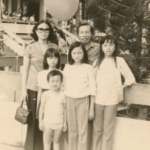
He worked tirelessly to support his family until he died of a stroke. It was destiny—he wrote 60 Năm, and died at 60 years old. It was a shock to the family—“he left in peace without a sign of sorrow.” She says it was his dream to build a house for Minh Lâm and their children—and once he fulfilled it, “he left.”
When he passed, everything was complete. The house was finished, built with no debt—that was enough for one life. “To him, a long life didn’t matter—just one that’s meaningful.”
Because of how deeply he loved his mother, the family kept his passing from her for the first few days. “No one dared to tell her.” Only days before the funeral did they finally share the news.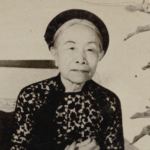 She gently touched his coffin and said, “it’s OK my son, rest in peace. You go ahead and I will follow you.” She passed away nine months later.
Khou’s mother had prayed for one more child. Her father passed away in November 1992 and in September 1993, Khou was born. Her mom saw the identical lines of her father’s palms on her daughters and at that moment she knew her father was close.
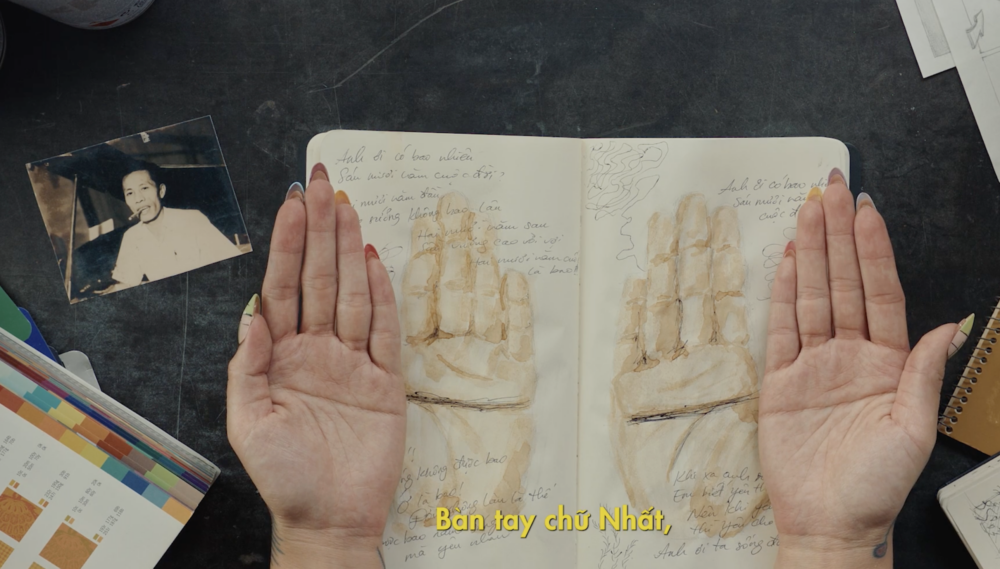 “Our connection is more than just the lines on our palms. Our fates are forever bound, and it’s my duty to preserve his legacy.”
From that moment, the work becomes clear. She builds an exhibition—walls filled with restored album covers, archival photographs, and pieces of his work arranged like an art gallery. Over ten years, she has archived hundreds of documents, reconstructing what was once scattered.
The exhibition transforms into a tribute concert—a gathering where people come together to remember and reconnect. She brings his music to a new generation, meeting with producers, a rapper, and musicians. A band forms, carrying his sound forward, reinterpreting it with care.
And in the end, it comes full circle. What was once silenced begins to return. What was once scattered is gathered again.
Y Vân’s music is now being restored and re-released to the world.