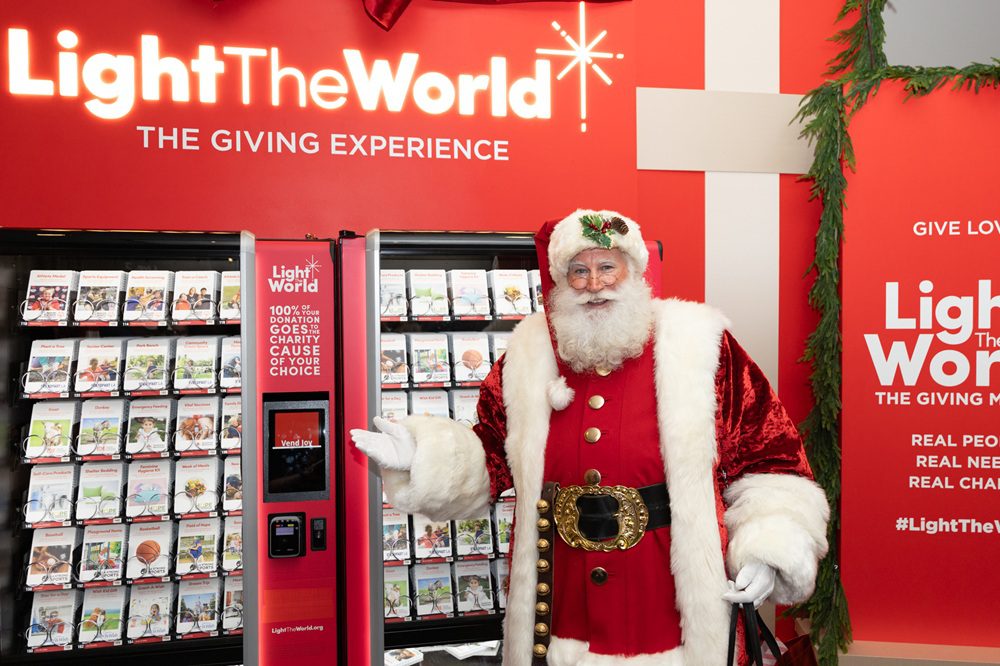
Are we raising consumers or givers? What if this holiday season, instead of buying a candy bar from a vending machine, you could buy a goat for a family in need in a developing country? Or school supplies for a homeless child in your community? Or help a family rebuild from the Los Angeles wildfires. Or help make a wish come true for a local child with a critical illness?
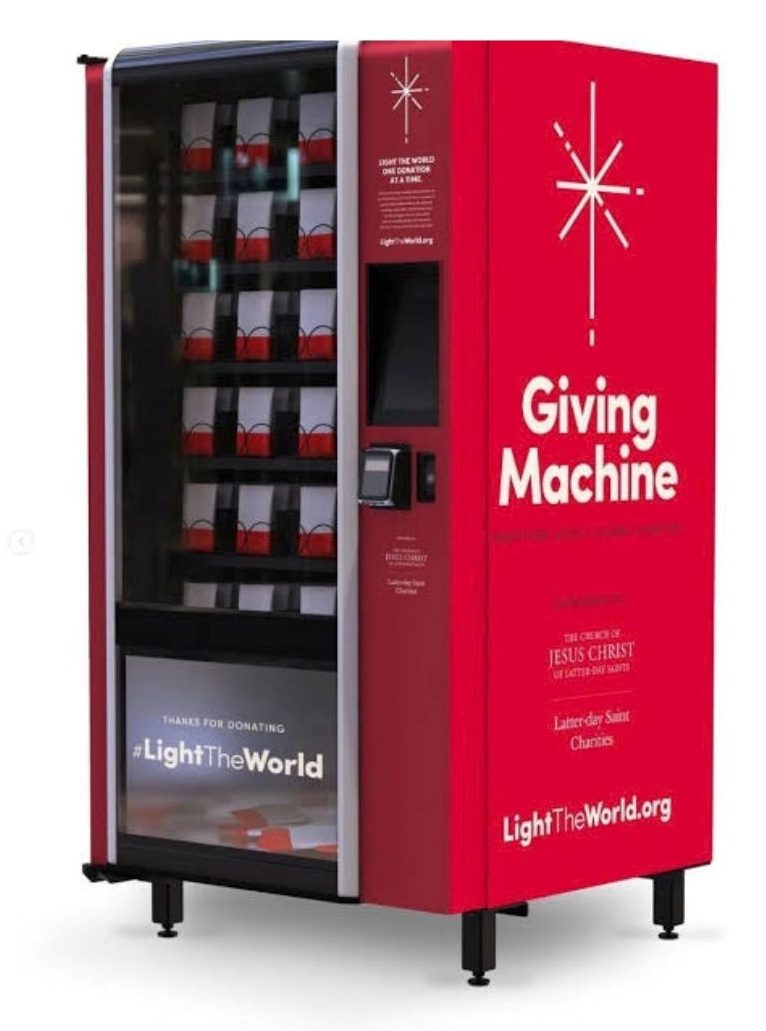
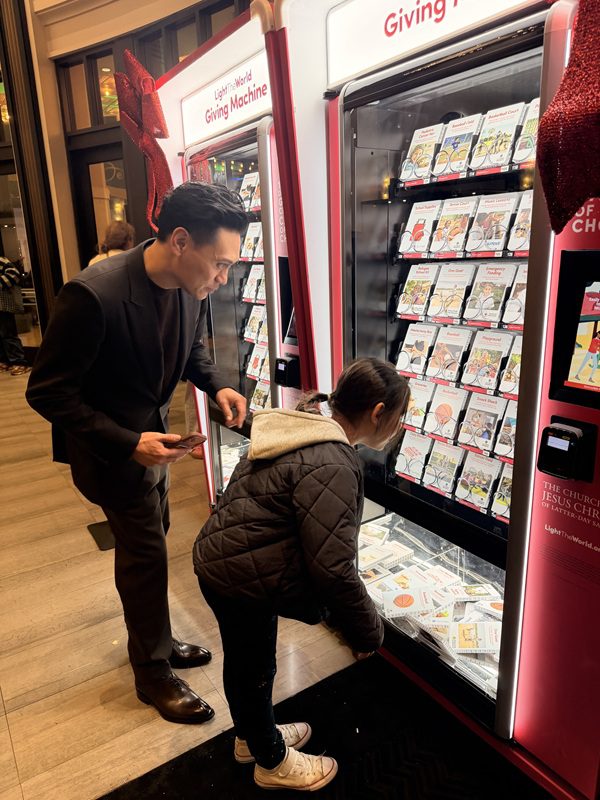
That’s the idea behind The Giving Machine—a vending machine where, instead of getting something for yourself, you choose something to give to someone else. With a swipe and the push of a button, families can turn an ordinary stop at a vending machine into a hands-on lesson in generosity. Instead of simply watching Mom or Dad write a check or tap a screen, children can choose what to give, see who it will help and take part in the act of giving themselves.
And for parents, it raises an interesting question: Can a few minutes of choosing a gift for a stranger teach children something lasting about giving?
The Psychology of Giving
Research suggests that parents play an important role in shaping charitable behavior. One study1 of adolescents found that children whose parents modeled and talked with them about giving were:
33% more likely to give
47% more likely to volunteer
Other research suggests that generosity can bring happiness at a surprisingly young age. In one study, five-year-olds were found to be happier after giving to others rather than after receiving themselves—and were happiest when they personally took part in the giving.² This may be related to the “warm glow” of giving—a positive neural response associated with helping others and observed across all socio-economic groups.3
The concept also taps into something researchers have long recognized: People often respond more strongly to specific, tangible acts of giving than to enormous, abstract problems—like “millions of people are starving” vs. $5 = baseball $15 = plant a tree $20 = emergency food $25 = a homeless self-care kit $50 = a goat (and more).
Children don’t have to “understand” philanthropy to begin learning about generosity. They can experience the joy of helping someone else.
It’s also the psychology behind why UNICEF USA brought back the iconic orange Trick-or-Treat for UNICEF box in 2024 after several years of emphasizing a digital experience, citing that families specifically wanted the physical box back because it made giving tangible and memorable.
All of these factors make The Giving Machine more than a fundraiser. It turns giving into an experience—something children can see, feel and participate in as a family.
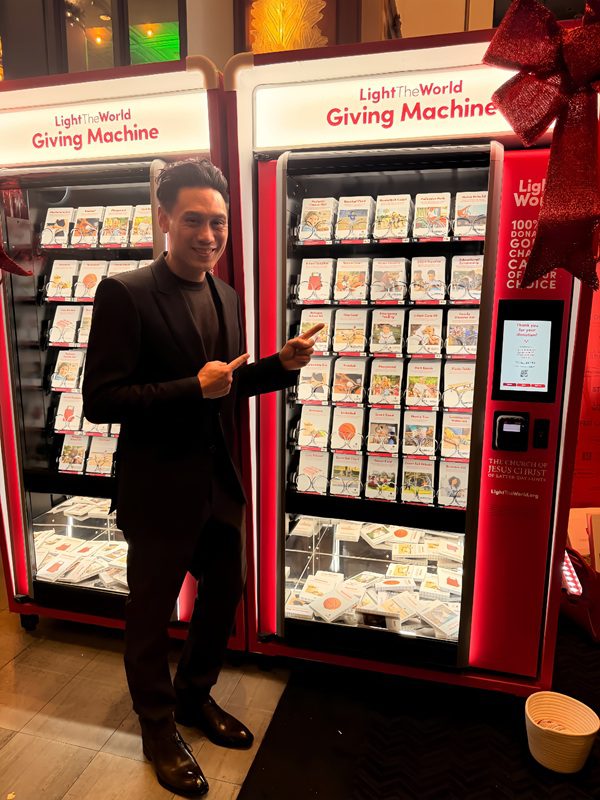
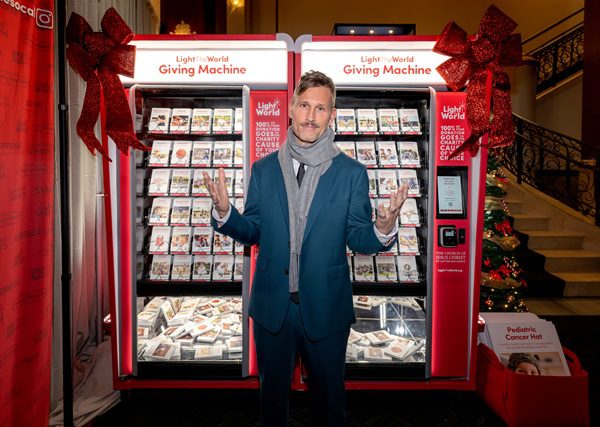
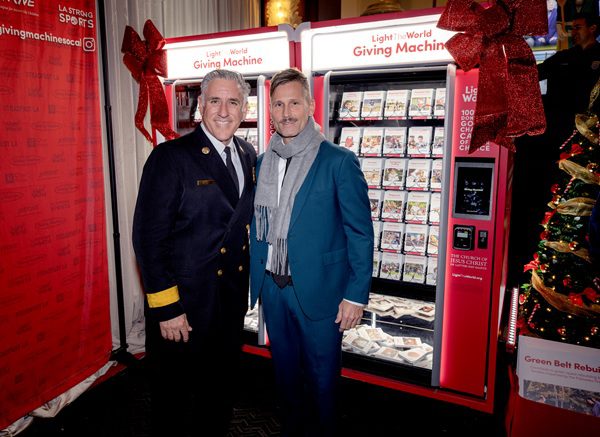
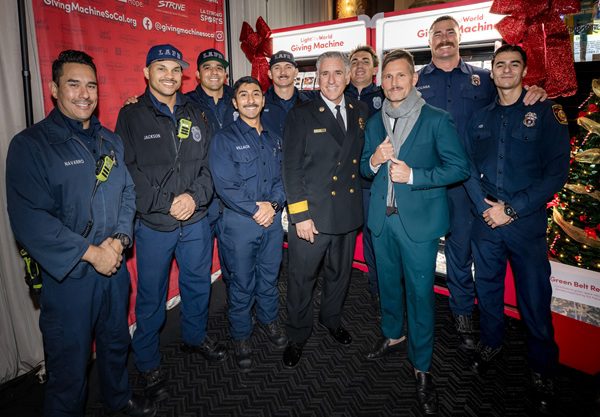
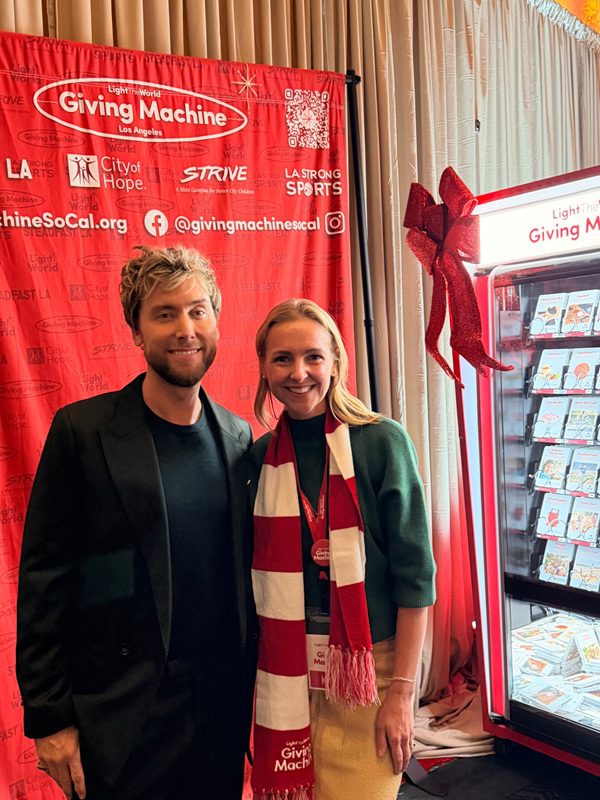
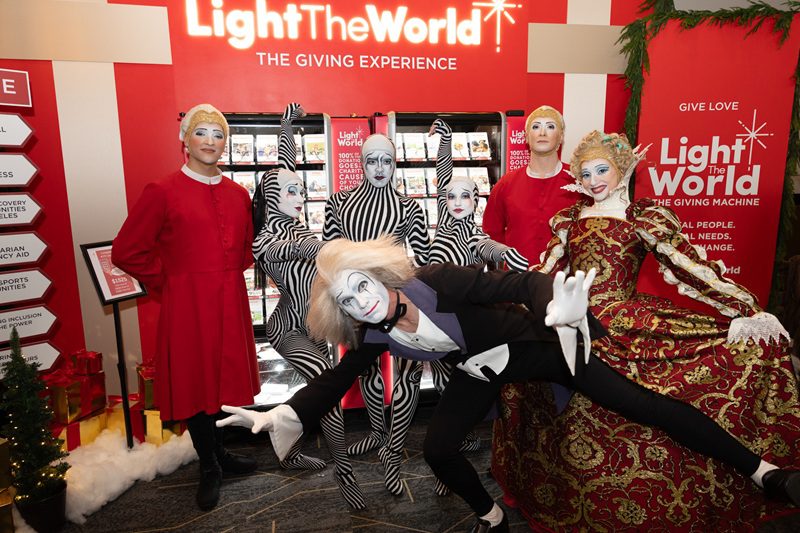
Launched by The Church of Jesus Christ of Latter-day Saints in 2017, Giving Machines have grown into a global charitable initiative on six continets. The church covers all operating costs, so 100% of donations made through the machines go to participating nonprofit organizations, which (in Los Angeles) include Steadfast LA, LA Strong, Make-A-Wish of Greater Los Angeles, Special Olympics of Southern California, iDE and Red Cross.
Sources:
1 Journal of Adolescence
2 Wiley Online Library
3 Science
Neural Responses to Taxation and Voluntary Giving Reveal Motives for Charitable Donations | Science
4 National Library of Medicine