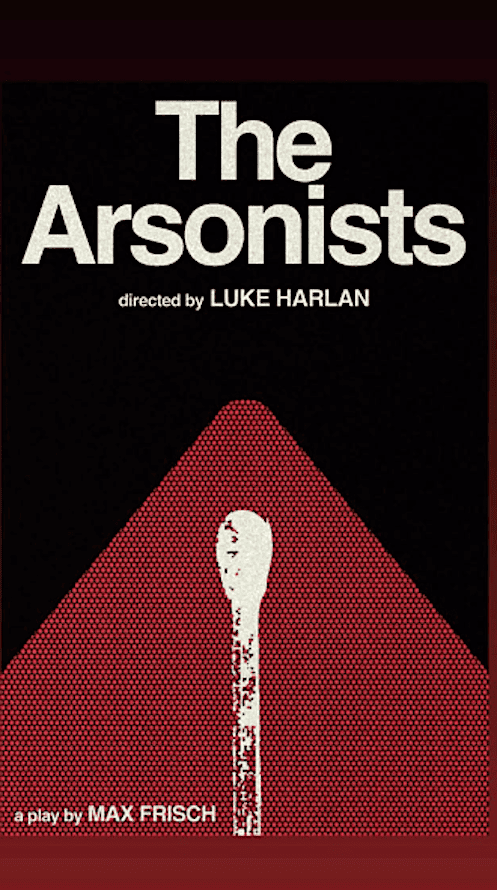
Thursday evening was the opening night of The Arsonists at the Skylight Theatre in Los Feliz. The Arsonists is a provocative production of Max Frisch’s classic absurdist play The Arsonists, or the Fire Starters. Max Frisch was a Swiss playwright and novelist best known for his novels brimming with irony written after World War II. His play The Arsonists was first performed in Zurich, Switzerland in 1958 and has been popular in Germany and Europe since. This chilling modern parable about self-deception is an absurdly funny piece of theatre akin to work of Beckett, Ionescu, Durrenmatt and Pinter. Emmy Award-winning director Luke Harlan used the recent Alistair Beaton translation of Max Frisch’s German play for this cautionary tale in which apathy, greed and weakness allow evil to flourish. The play is set in a nameless country, in a nameless city, at an unidentified time – but it is a time of civil unrest. Arsonists roam the streets setting fire to numerous, yet seemingly arbitrarily chosen, buildings.

This fine production of Max Frisch’s absurdist play is quite timely and open to many interpretations. Director Luke Harlan is producer and director of the award-winning HBO series The Gilded Age. He has drawn in the talented Andrew Hawkins as part of his creative team, as well as Jeff Marx from the series Old Show Queens. Several fine actors including Liam Rhodes and Trevor Jonathan Lovn make The Arsonists a play worth seeing. Frisch called The Arsonists a “morality play without a moral.” “That idea feels increasingly rare to me today,” said director Luke Harlan. “We live in a moment where we’re constantly told what to think, who the heroes and villains are, and where we belong in the story. This play isn’t interested in any of that. It just asks us to watch, to pay attention, to think. The Arsonists will be at the Skylight Theatre through September 20. Showtimes are at 8 p.m., Thursday through Friday; 5 and 8 p.m., Saturday; 2 p.m., Sunday. Tickets are $45. 1816 ½ N. Vermont Ave. Go to: skylighttheatre.org/the-arsonists.
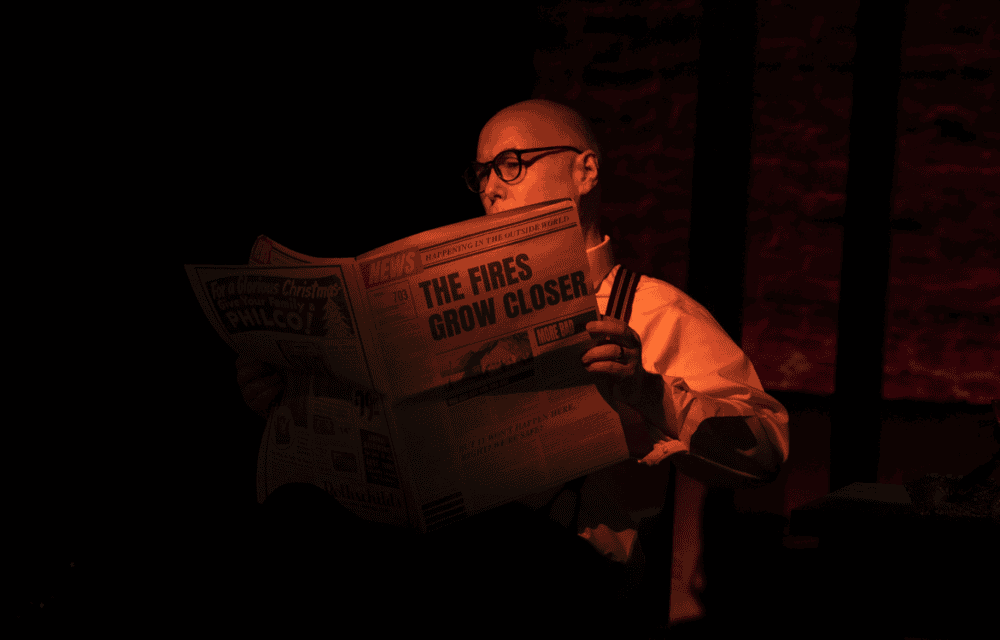
The main character of the play, Gottlieb Biedermann (which translates as “bourgeois man”) is masterfully portrayed by Brian Wallace. The conventional Biedermann lives a moral double life. Although he is smug about his correct, polite and decent family life, he is ruthless and brutal in his business life. He has become rich by marketing a men’s hair tonic to promote hair growth, while he himself is bald and dons a wig in public – an ironic statement of its own. He is married to Babette (Tessa Auberjonois), a high-strung woman comfortable with her bourgeoise existence and having a full-time maid Anna (Jazelle Villanueva) in the house. Babette tries too hard to be accommodating to this “guest” who her husband invited in the house, while Anna suspects trouble from the start.
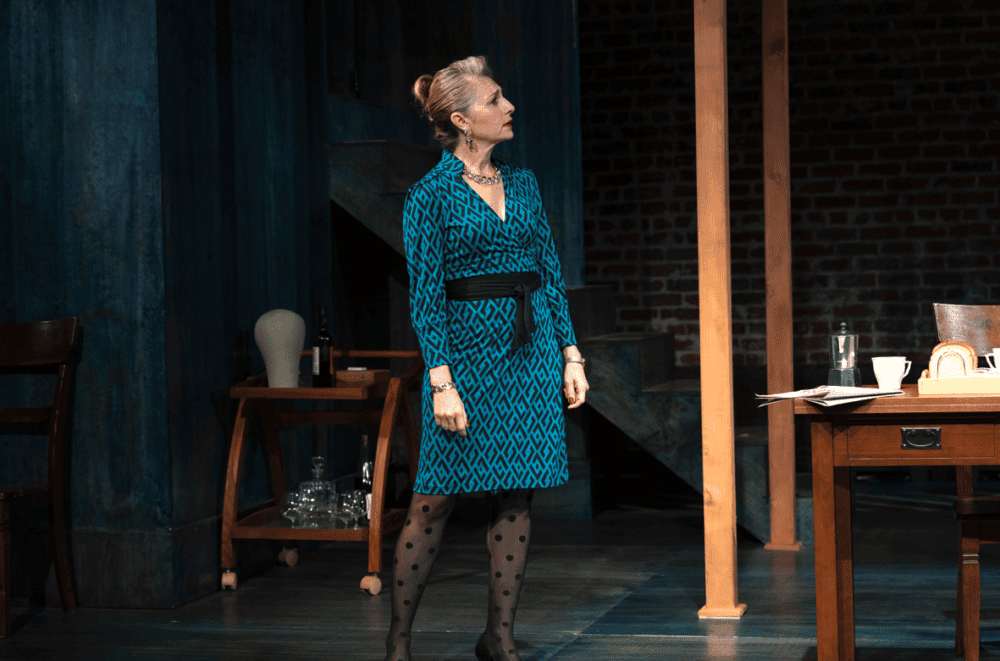
Biedermann is a man of contradictions. In the domestic arena, he tries to live a life of blameless middle-class decency. His sense of bourgeois propriety that renders Biedermann defenseless when two arsonists turn up at his house. He is heartless in suddenly firing his business associate who, in despair, commits suicide by sticking his head in an oven. Yet he attempts to show true hospitality to a complete stranger who shows up at his front door. When the first arsonist named Schmitz shows up at his front door, Biederman insists that he cannot offer this seemingly homeless man a bed and shelter from the rain outside. Biedermann is a sympathetic listener because he feels sorry for the man and eventually offers him room in the attic of his home. His wife Babette tries to accommodate the whims of this “guest,” as her very bourgeois sense of propriety dictates her actions of appeasement.
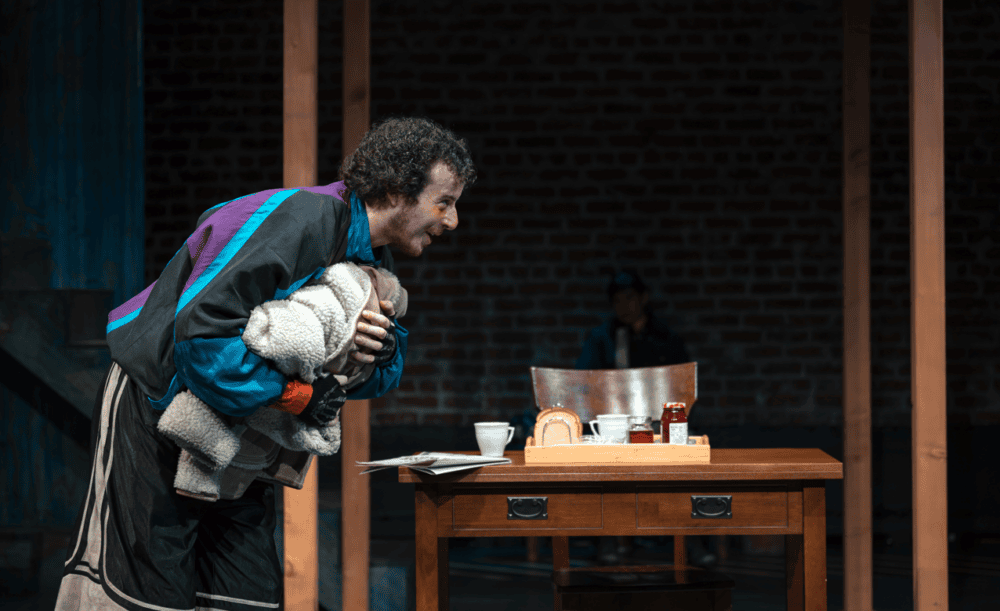
The stage does not attempt to create an illusion of reality, for Frisch proposed (in his own design for the set) a ‘split stage’ of living room and attic immediately above. In this production with set design by Stephen Gifford, we first meet Biedermann in his living room reading the morning newspaper about the latest arson in the city. Soon we discover the attic upstairs as he offers Schmitz a place to sleep. Later one, the audience sees the entire attic lit and inside of it large barrels which we come to understand are full of gasoline. Reminiscent perhaps of medieval morality plays, we might ponder if “heaven” is above and the arsonists with their anarchistic desires are in league with the devil. The rumbling noises that Biedermann hears in the night are more than a sinister omen of what is to come but the placement of gasoline barrels up into the attic by Josef Schmitz and his newly-arrived co-arsonist Wiliam Eisenring.
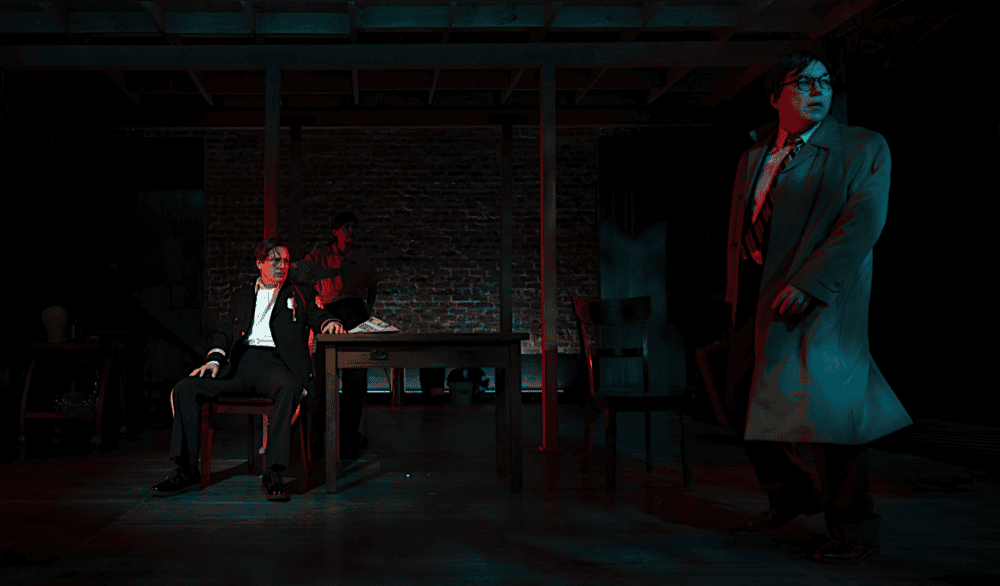
The play is precise is in identifying what happens when there is a private-public split in a person’s moral code. When Biedermann finally realizes that the men in his house really are arsonists, he is quite happy for them to go off and burn down someone else’s house, not realizing that he too will become one of the victims. The play itself is an extended metaphor about the weakness of personal ethics in the face of evil.
When two self-acclaimed arsonists (first-rate acting by Trevor Jonathan Lown and Liam Rhodes) breach the boundaries of Biedermann’s comfortable bourgeois home, he accedes to their cunning request to stay in the attic. His decision appears to be based on a combination of outward civility, appeasement and fear. After all, Biedermann seems to reason, if the arsonists are “guests” in his home, they may continue their mayhem elsewhere, but they will not harm his family.
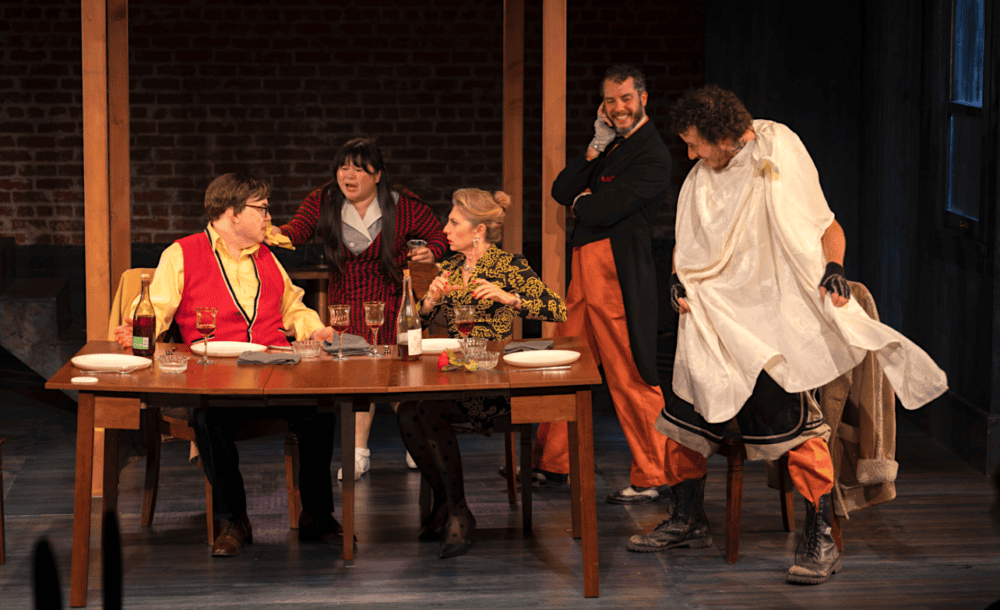
Both arsonists embody several features which seem totally out of place in pyromaniacs and their intellectual ramblings foreshadow the language of characters from a Beckett play. Schmitz (Trevor Jonathan Lown), for example, is far from being a pathetic pedlar. His clothes are mid- way between those for a prison convict and those for a circus clown. His uncouth appearance causes Biedermann to drop one of his beloved cigars. Schmitz claims to be a heavyweight wrestler, not a profession with which we associate sensitivity, and yet his taste is if anything more refined than Biedermann’s. He obviously takes more delight in fine cigars than Biedermann does, he correctly identifies the wine as Beaujolais, is able to suggest it is slightly too cool, and points out when its temperature is just right (a subtle change from the radio play, when Biedermann made all the observations. He may munch his food a little loudly, but he knows a good cheese when he sees one and he is very fussy about the condition of his boiled eggs.
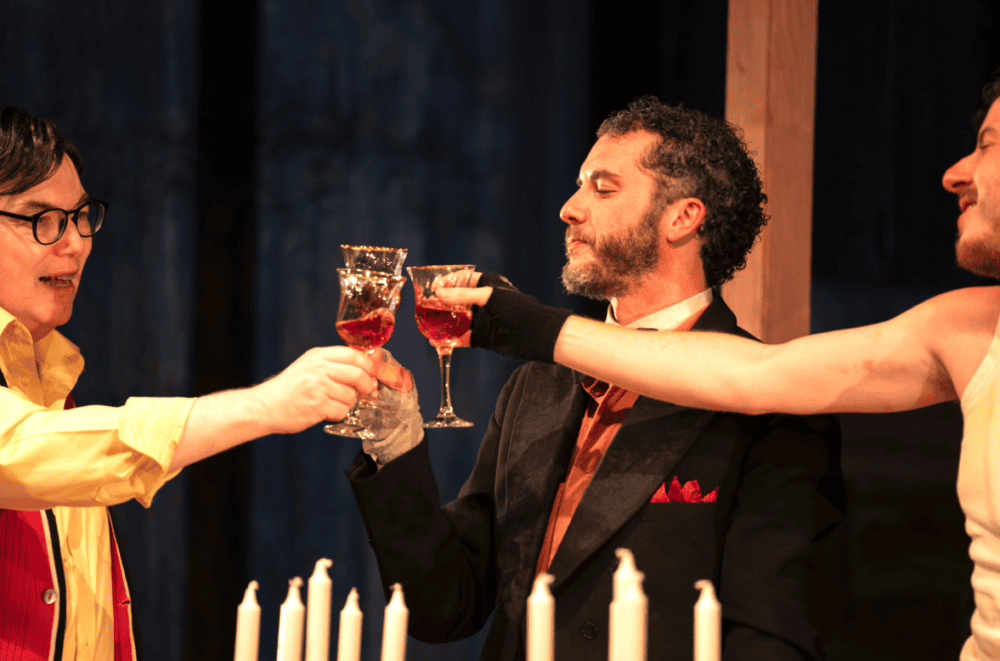
Eisenring (Liam Rhodes) too reveals a taste quite out of keeping with our expectations of a dangerous criminal. He dresses in a tail coat having been a waiter in a classy restaurant and is constantly trying to teach his accomplice good manners. When asked if he likes goose stuffed with chestnuts, he suggests cabbage as well. He doesn’t just ask for a fine damask table cloth, but one with a ‘frost flower’ pattern. And although he first just suggests that finger bowls would be a splendid addition.
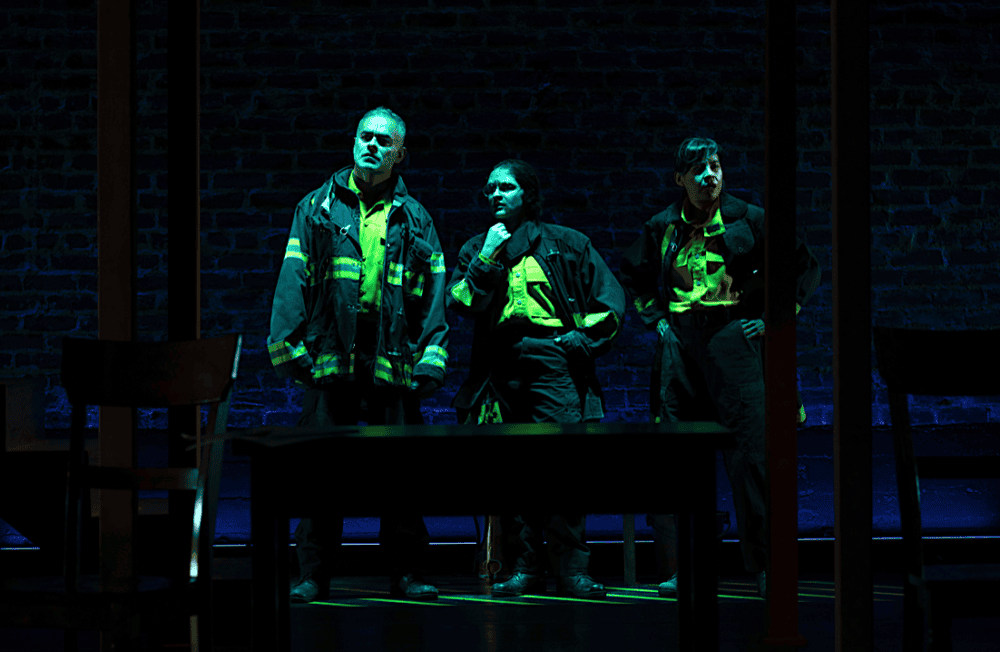
The Greek chorus composed of firefighters (Seamus Mulcahy, Moneer Yaqubi, Flor de Maria Chahua, and Molly Kirschenbaum) reflect the theatre of illusion and the influence of Bertolt Brecht on Max Frisch. His Chorus is in the background throughout, briefly taking the foreground at the beginning, at the end, and at the close of each scene, and at one point it actually participates in the action. They chant their lines in a comically non-realistic manner, their leader’s first remark is decidedly cynical, and the Chief Fireman (Seamus Mulcahy) is full of bombast and anachronisms. One of the main arguments of the Chorus is that we can change the course of events by thinking and acting – but they cannot change Biedermann. As the Chorus puts it in its final appearance, “In this story many are killed – but not all – And nothing is changed after all.” No one learns from the impending disaster.
The audience sees Biedermann’s naiveté immediately and watches in consternation and incredulity until the predicable fiery dénouement. You might say that the play is an extended metaphor, The Arsonists is part of the exaggerated “theatre of the absurd” in which people are victimized by outside forces and that they are reacting to a world that no longer has meaning.In his play, Frisch almost completely avoids any sort of reference which would restrict his play to a particular country or a particular age, although parallels have been noted to the rise of Hitler in the 1930s as well as the Soviet take-over of Czechoslovakia in 1948. Its continued relevance makes The Arsonists a fit study in the power politics of our own era – be it in the incendiary Middle East or in Washington D.C. The common factor is the “takeover” by shrewd individuals who do not disguise their real intentions. The linking factor here is the surrender of that power, which Frisch presents symbolically as a box of matches. Fire is a universal symbol of potential disaster, and these matches have maintained their suggestive power beyond any historical points of reference
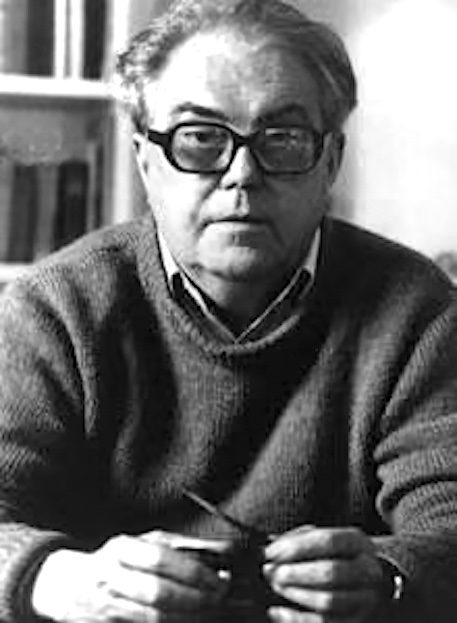
A final word about Swiss writer Max Frisch: He is most famous for his novel Homo Faber published in 1957. It was made into a film entitled Voyager as the 1991 English-language drama film directed by Volker Schlöndorff and starring Sam Shepherd, Julie Delpy, and Barbara Sukowa. Stefan Haupt’s adaptation of Max Frisch’s novel I’m Not Stiller (1954) had its world premiere at the 2025 Filmfest in Munich; its stars Paua Beer, Stefan Kurt, and Marie Leuenberger.