Dan Egan’s compelling River Valley Film Festival documentary honors the Bermudian football pioneer who broke racial barriers in England and helped shape professional soccer in America.
By Valerie Milano
Williamsport, PA (The Hollywood Times) 7/16/26 – Transforming the Beautiful Game: The Clyde Best Story is a stirring and long-overdue documentary about one of soccer’s most influential, and least widely recognized, pioneers.
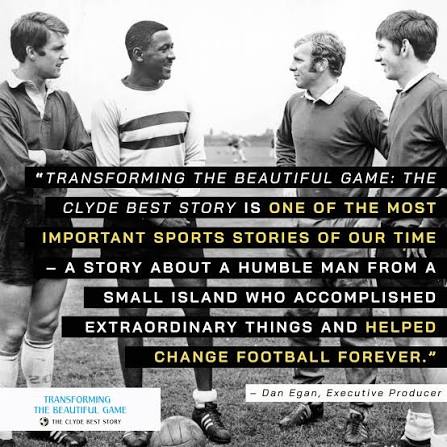
Produced and created by Dan Egan, the film chronicles the extraordinary life of Clyde Best, the Bermudian athlete who became one of the first Black superstars of the modern television era in English football.
Best joined West Ham United in 1968 at only 17 years old. He was often the only Black player on the field and, at times, the only Black face visible on British television.
Egan describes him as “the most impactful sportsman you never knew,” and the documentary makes a powerful case for why Best’s name deserves to stand alongside the most important barrier-breaking athletes in history.
Egan’s personal connection to Best began in 1983, when he played high school soccer in Maine with Clyde’s nephew, Jerry Best.
Jerry often described his uncle as “the Jackie Robinson of England,” a comparison that stayed with Egan for decades.
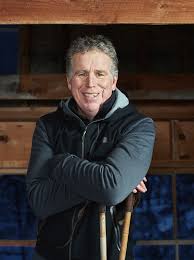
 “The movie is about teammates. It’s about mentorship. It’s about coaching,” Egan told The Hollywood Times. “Jerry and I are lifelong friends, and that’s what teams do.”
That personal history gives the documentary warmth and purpose. Egan is not simply recounting Best’s achievements. He is helping preserve a story that shaped his own understanding of teamwork, resilience and legacy.
Best faced vicious racism throughout his career, including monkey chants, bananas thrown from the stands and threats that acid would be thrown on him when he entered the field.
His response was to keep playing and keep scoring.
Best went on to score nearly 50 goals for West Ham United and became a club legend.
“Clyde’s thing was score goals,” Egan said. “The harder it got for him, the more goals he scored.”
Click below for our exclusive interview:
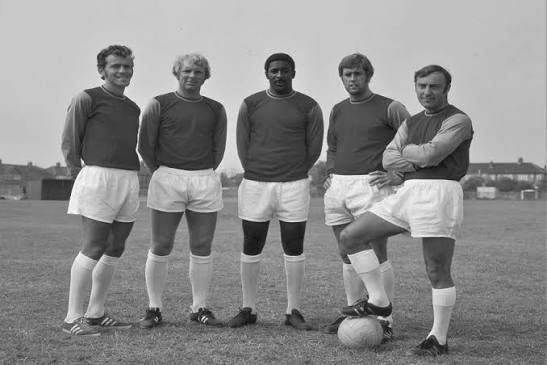
The film also examines the historic Easter Sunday match in 1972 when West Ham started Clyde Best, Clyde Charles and Ade Coker together.
It was the first time three Black players had started together in England’s First Division. The milestone would not be repeated for another six years.
The moment is presented not merely as a symbolic breakthrough, but as evidence of how slowly football institutions responded even after Black players had proven their talent and value on the field.
The documentary also explores Best’s impact on professional soccer in the United States.
Best played in the North American Soccer League and helped the Tampa Bay Rowdies win the Soccer Bowl in 1975 during the team’s inaugural season.
Egan argues that the growth of Major League Soccer and the popularity of soccer in America stand partly on the foundation built by the NASL.
At the time, the league was one of the most diverse professional sports organizations in the world.
The film also distinguishes Best’s influence from that of Pelé. While Pelé was a universal global superstar, Best held a different significance for Black and Brown communities. He arrived in America as a Black European star who had already challenged racial barriers overseas.
One of the documentary’s greatest strengths is its remarkable archival material.
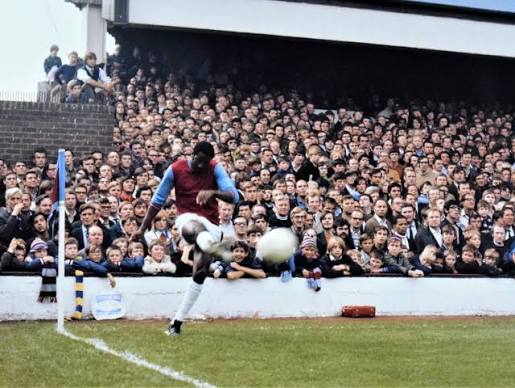 Egan’s team discovered footage from the 1967 Pan American Games, where a 15-year-old Best helped Bermuda reach the final against Mexico. Best struck the post in the 89th minute before Bermuda ultimately lost in overtime.
The film also includes commentary from West Ham’s manager surrounding Best’s debut, along with material from the BBC, Canadian broadcasts and Bermuda.
Some of the footage had never been seen by Best himself.
These discoveries give the documentary a sense of historical restoration. Moments that might have disappeared forever are returned to Best, his family and new generations of soccer fans.
Actor Tony D. Head, known for The Wire and Law & Order, narrates the documentary.
Raised in Roxbury during a period of racial tension in Boston, Head connected deeply with Best’s courage. He understood the significance of a 17-year-old Black teenager leaving Bermuda on a one-way ticket to an unfamiliar country, earning a place at West Ham and becoming a star.
The original score was created by Roy Hay, founding member of Culture Club and a lifelong West Ham fan.
Hay reached out to Egan while the production was filming in London and eventually composed the entire score. His Los Angeles studio, fittingly, is named Hammersound.
Together, Head’s narration and Hay’s music bring emotional depth to a story already rich in history.
The film has screened in Bermuda, England, Tampa, Portland, New York, Atlanta and Boston, drawing diverse audiences and generating meaningful conversations about racism, perseverance and sports history.
Egan arrived in Williamsport for the River Valley Film Festival after completing two nights of screenings in Atlanta with Best.
He hopes Pennsylvania audiences take away the idea that greatness can emerge from anywhere.
“From a small place, big things can happen,” Egan said.
 That message sits at the heart of Transforming the Beautiful Game.
Clyde Best came from Bermuda, but his impact stretched across England, the United States and the international soccer community. He helped redefine who could be seen, celebrated and accepted on the field.
Streaming offers are currently being considered, while the documentary’s festival journey continues through Cape Cod, New Hampshire, Bermuda, Grand Cayman, Jamaica and other locations.
Transforming the Beautiful Game: The Clyde Best Story is an inspiring, historically essential documentary that honors a man whose talent changed the sport, and whose courage made it possible for countless others to follow.