By Jimmy Steinfeldt
Los Angeles, CA (The Hollywood Times) 4-16-26
Jimmy Steinfeldt: How often do you clean your lens?
Michael Grecco: (laughs) I try not to get it dirty to begin with. When I was a photo journalist you were taught to put a UV filter on the camera. We try not to touch the lens very often.
JS: What photographers influenced you?
MG: As a kid I learned the craft at summer camp. I knew the technical thing, making prints, loading film. I didn’t have an aesthetic eye until I started stealing the Time Life On Photography books out of the Greenburg Public Library. I was awestruck by Avedon, Penn, Newton, Bruce Davidson. Those Time Life photography books covered the gamut. They exposed you to Jerry Ulsmann, Duane Michals who were my first influences. Also Robert Heinecken, Hiro and the older classic photographers who made interesting imagery.
JS: Who else influenced your photography?
MG: I was really into film. At the time I didn’t see a path that would take me into filmmaking in Hollywood. Those types of story were cliché. Scripts had a predictability to me. The film I liked as a kid with all the altruistic interests and art. I grew up in the 70s, a drug and counter culture era. That led me to the punk scene. I was into alternative Jazz. I was into the films of Myra Deren, Bunuel, Dali, surrealistic film.
JS: What was your first camera?
MG: Mamiya Sekor 101. A cheap 35mm that my parents convinced me to buy.
JS: Mine was a Minolta SRT 201.
MG: That’s the one I wish I had. But eventually I moved up to the Canon system. I shot with that for a long time. They were very heavy with the motor-drive and a potato-masher grip. Then when I was at the Boston Herald we photographers would switch systems. I shot with Nikon and then back to Canon. You had to learn both systems because Canon lenses focused clockwise and Nikon lenses focused counter clockwise. Later when I started to shoot portraiture I went to Hasselblad. I’ve also had the Fuji 680.
JS: What cameras are you using today?
MG: Right now I have a Hasselblad HD50 and two Sony a7R IV.
JS: If I have a client with a good budget I still love shooting my Hasselblad film camera. Also, I’m a Leica Ambassador. Have you shot with Leica?
MG: I’ve had two shows at the Los Angeles Leica Gallery. One of my panoramic work with the Leica S. I also had a show there in conjunction with my wife’s work. My punk rock photos and my wife shoots photos of strippers.
JS: I have attended many wonderful shows at the Leica gallery which is very well curated by Paris Chong. Some of the shows I’ve been there for include Norman Seeff, Julian Lennon, Nikki Sixx, Jeff Garlin, Anthony Friedkin, Neal Preston, Jesse Diamond, Jim Marshall and others.
MG: When you consider a gallery you have to think about the right fit.
JS: Tell me about the punk rock scene you photographed so much of.
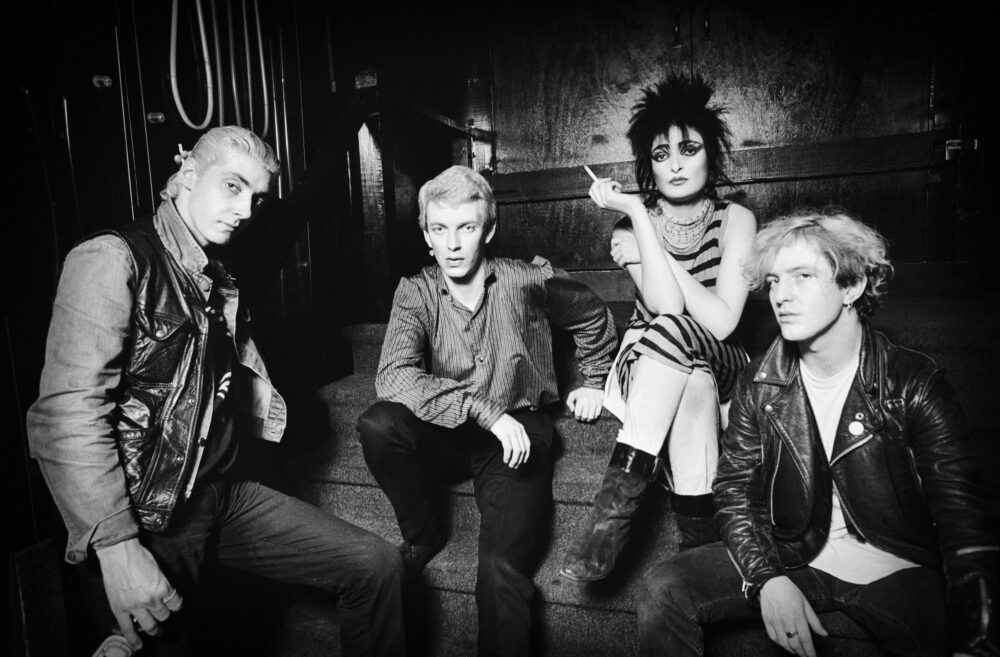
MG: I went to college in Boston so I was part of the punk scene there. I think it was bigger than any scene in the world. Boston has 70 institutions of higher learning and that means a ton of kids and around 20 clubs raging every night: Spit, Metro, The Channel, The Middle East, T.T. the Bears, The Rat, The Underground, Cantones, the Paradise Club, ManRay, the 1270 Club, etc. I think we eclipsed New York. I went to New York all the time and had friends there. I was the official photographer for Human Sexual Response out of Boston. We’d drive down together to the Mudd Club. Some of the photos in my book were shot at Bond’s in New York when the Clash played there.
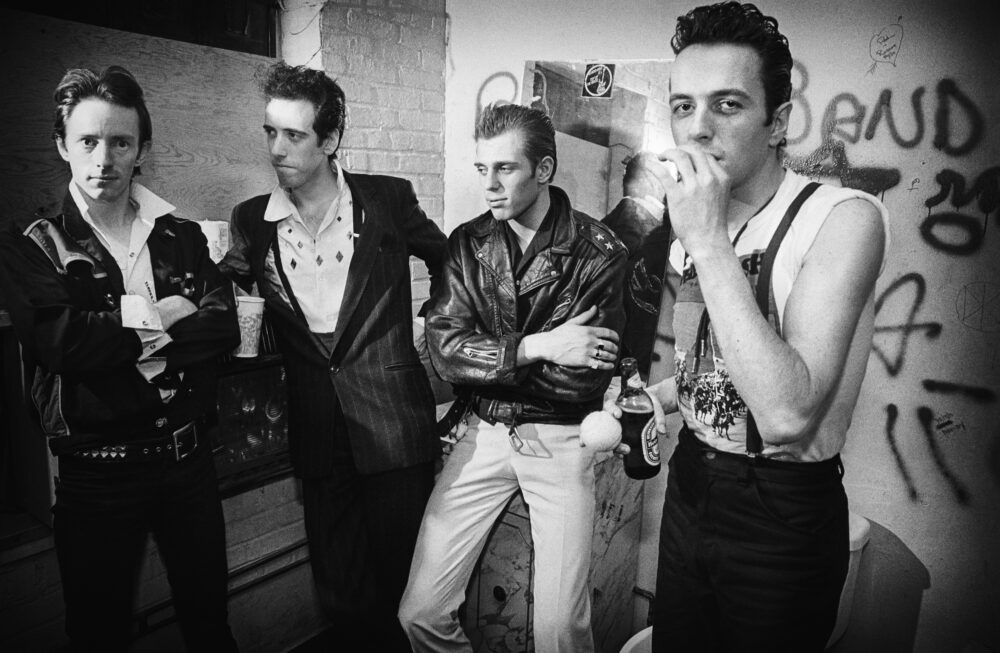
JS: I shot the Clash live in 1984. I got to hang out with them after the show and it’s not something you can forget.
MG: The editor of the magazine I was shooting for was my friend Tristram. He just passed away. He was smart enough to have Steve Jones come with us. We drove from Boston to New York and crashed on someone’s floor. I like to say I slept with Steve Jones (laughs). This gave us special access. I wasn’t just a kid assigned to shoot. I was friends with all these people. People like Billy Idol.
I knew all the DJ’s and that gave me street cred. The bands knew I was close with Oedipus and other DJ’s in town. Boston had the first punk radio show in the world. My friends in Oedipus started the radio show Nocturnal Emissions on the MIT radio station in 1975. John Peel was 1978. Rodney on the ROQ was 1978. MIT started another show The Late Risers Club that was 9-12 and was all new music. There was a big culture of people who liked this new music.
JS: Tell me about the Ramones
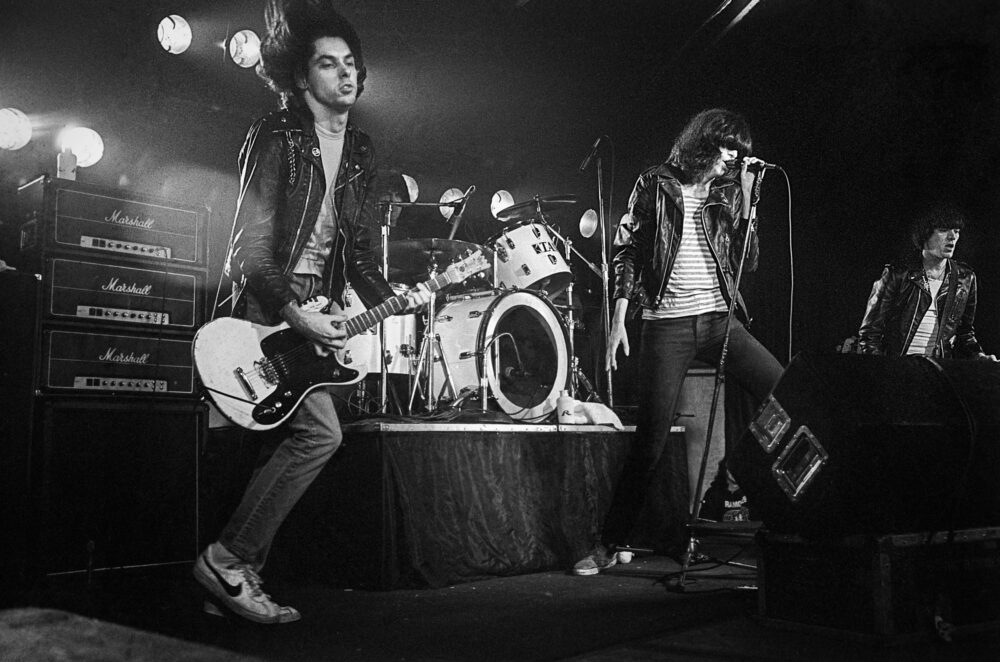
MG: I shot them live and they were my fist entry to the punk music. Me and my friends thought radio sucked. Styx, Journey, Kansas. My friends and I thought they were vapid. Not creative. They felt like music company produced bands. They were picked for their instrument playing ability and then fed songs. They seemed survey tested. Basically uninteresting. As kids we were into Jazz. We would go to the Village Vanguard, Sweet Basil’s and Carnegie Hall. Also, underground Jazz clubs like The Kitchen in SOHO. Acts like The Art Ensemble of Chicago. Ornette Coleman. I was into the Avant Gard. I appreciated things that were different and felt authentic. In Jazz every time a musician solo’s it’s authentic. Unless it’s some fusion artist like Chuck Mangione. The real Jazz musicians, their solos were a conversation. I’m interested in music that is creative and original. At the same time, I was really into the Velvet Underground, Bowie, the first Patti Smith album.
JS: Horses?
MG: Yes in 1975. Then I’m at my buddy Adam Strom’s house and he says “Listen to this, it’s wild” and I hear “Beat on the brat, beat on the brat, beat on the brat with a baseball bat oh yeah oh yeah oh yeah” I though holy shit, that’s not gonna get airplay, but it’s cool. That was my first exposure to what would be classified as punk. Later I got into Iggy.
JS: He just played at Coachella a few days ago.
MG: Cool. I really think however the Ramones were real punk. They took that extra leap. I look at Iggy as more along the lines of the MC5, a hard rock sound. The Ramones were more audacious and I think the first punk band. I shot them but didn’t get to meet them but they were the most important, they were the leaders of this music.
JS: I photographed the Ramones three times in concert and I spent several days photographing Dee Dee for his last album. Both in my studio and on location at his apartment and around Hollywood. I also did get a chance to hang out backstage with the whole band at a concert that became infamously known as Mudfest. The field in front of the stage had been rained on previous to the show. The punkers in the crowd threw mudballs at the stage all day in fact destroying many instruments and equipment. I had to protect my camera! Are you in the Cinematographers Union 600?
MG: Earlier when I moved to L.A. I took my photojournalistic skills and started working on set for CBS and HBO. Roxanne Edwards in New York was my photo editor at Business Week and then she went to work at CBS. She brought me in and told her friends about me. I did do some unit work on those sets because I was always interested in lighting and portraiture. I did some “Specials” photography where I brought a backdrop. Wish I had taken the initiative to do more.
I hated the politics in Hollywood however. You are the punching bag for the actor or whoever. You are the low hanging fruit that everyone gets to yell at. “You are in the way” “You are slowing down production.” An actor blows a line and says “Oh, the still photographer was in my eye line” I wanted it to be my set. I wanted to be the person who comes up with the ideas.
Later I did only “Specials” photography, portraiture gallery shoots as they call them and I came in with my own crew. I was viewed as a high-level professional. People looked differently at me and I got savy enough to get on the call sheet, a certain time of day on a set was scheduled for my taking pictures. A set might have 100 crew members working on a $15 million budget and you can’t slow stuff down. But once you’re on the schedule they have to give you time to do what is usually a brief photo shoot.
JS: How did you get into cross processing your film?
MG: I had an assistant Kevin McHugh and we experimented. I moved to L.A. in 1987 and until the early 1990s I was still doing photojournalism. I worked for People magazine as a regular. I had that moment where I had to say what will I do? I had moved here wanting to transition out of journalism. Part of that was defining my style and part of that was experimenting. Things like cross processing. My first cross-processed photo was of a poet as a hood ornament.
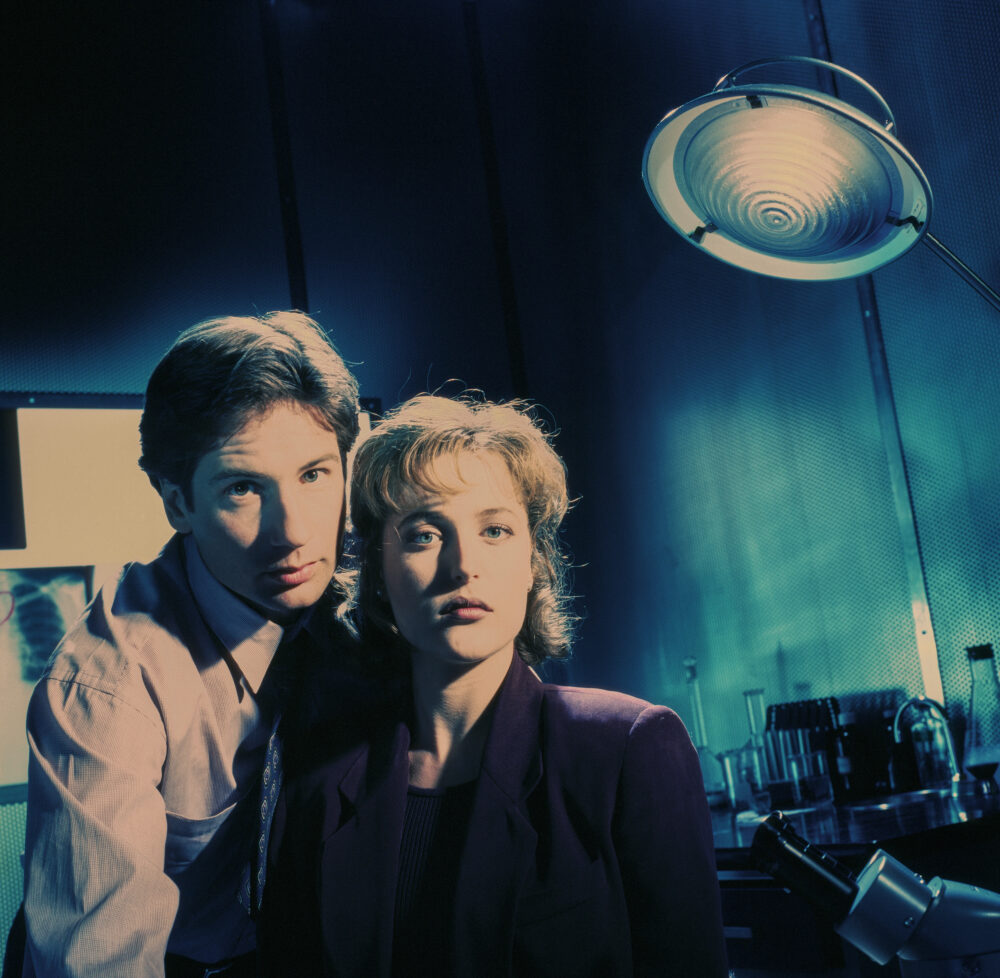
Then I did almost the whole first X-Files shoot cross process, and that got noticed. Eventually People magazine started to hire me for special issues like the 25 most intriguing people, the 50 most beautiful people. A lot of those issues I shot cross process. When I had to shoot Chris Carter my contact at Fox said Chris doesn’t like you. I said “Why doesn’t he like me? He’s never met me.” The guy from Fox said the executives loved the look you gave the X-files Gallery Shoot and they forced your look onto Carter. This was the first time I ever heard of a photographer setting the look of a show. I do a lot of research for every shoot and I looked at the X-files pilot and it looked like it was shot without much concern for the look itself. It didn’t have a strong look. They then incorporated my look from my advertising campaign into the show.
JS: Tell me about the process of doing a book.
MG: I’ve had different experiences with each of my books. I had gotten pigeon-holed into doing Sci-Fi looking photos. I decided my first book would be about my lighting. In addition to cross processing, I would take my Hasselblad and take the matte box and put black tape around it. I would put this vignette on it. Pump the whites way up. I didn’t know what my style would be but I experimented with color and black and white. This first book was black and white and called The Art of Portrait Photography. It immediately sold 5000 copies.
I didn’t want to put out a 2nd edition with the original publisher. I was lecturing for Photo District News at the Photo Expo in New York. They were owned by Billboard who also owned Watson-Guptill. They asked me to do a book with them. I made an updated edition of the Art of Portrait Photography, called Lighting and the Dramatic Portrait, which had a section of portfolio images in the back. This book was also successful. For these two books the publishers came to me. I was paid a royalty and didn’t have to put up any money.
For my third book I had gone to the adult video awards and expo. It was like a Fellini movie. Fellini happens to be one of my inspirations. I self-published that with a self-publisher called Rock Out Books (Jay Blakesberg.) I made a lot of mistakes. In design, the spine was hard to read on the shelf, I printed too many. The realization became “I’m not a book publisher and I don’t want to be.” There are things on which I partner with people where their expertise is greater than mine.
The fourth book I was going to do was a pay to play process and I would work with an art book publisher out of the U.K. I reached out to my friend Danny Clinch and he incredibly graciously introduced me to Michael Sand at his publisher Abrams. Within one week I had a book deal with an advance! Of course, most of the advance goes to hiring a publicist, a re-toucher, and someone for color correction. In the days of film I had to light for transparencies. Lighting had to be exact. Lighting has changed. Digital is so forgiving.
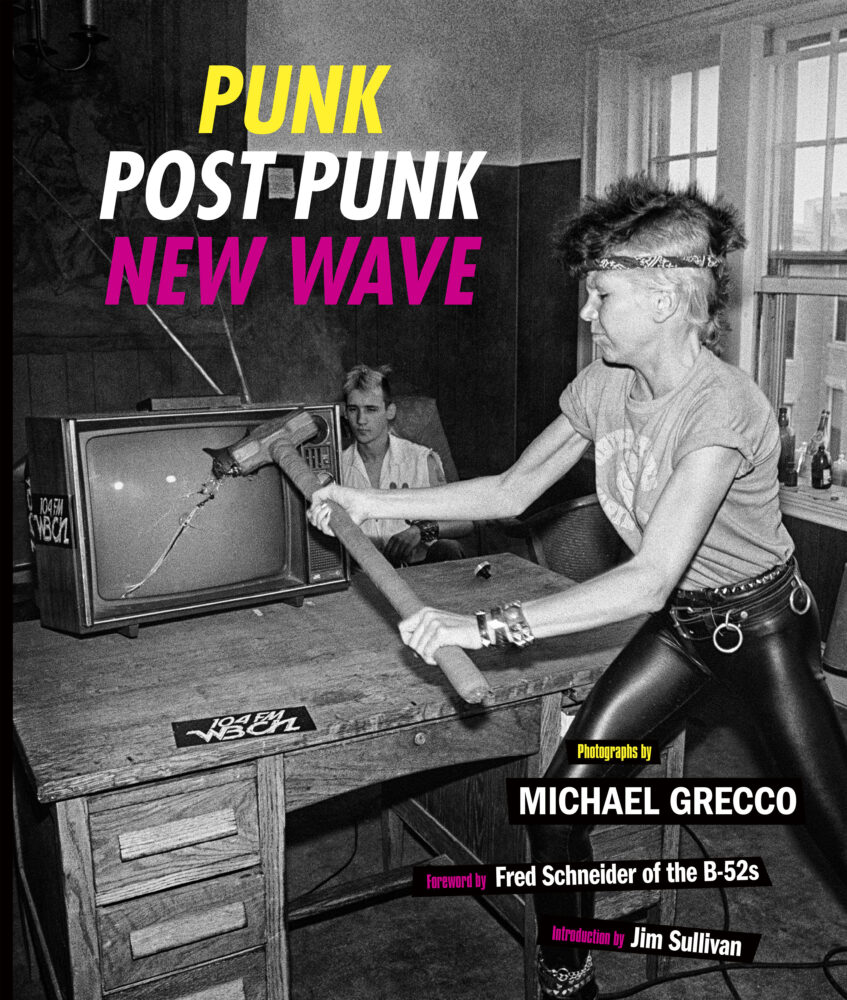
I don’t look at a book as a money-making thing. It’s a signature stamp, a legacy. I’m proud that the Rock & Roll Hall of Fame has confirmed a solo show in 2027 for that work. I’m working with a large computer manufacturer to also potentially do an experiential show. There will probably be a third printing of the book. We’ve sold 5500 copies. My 2nd lighting book sold 30,000 copies, for a niche lighting book! It was also published in Brazil, S. Korea and Taiwan.
JS: Tell me about shooting award shows.
MG: I did it a little when I first came to L.A. I would shoot for USA Today They wanted me to cover the Grammys, The Oscars, The Emmys. They realized I knew how to set up a radio remote control. I would set up backstage and take photos of people holding their Oscars.
JS: Did you know Steve Granitz?
MG: Yes.
JS: He was shooting many award shows when I started in L.A. and was also shooting those events. I often dressed in a suit and tie, a bit unusual for the summer in L.A. and he would call me Maxwell Smart. So, I came to calling him Siegfried. Are you a member of ASMP?
MG: I am now. I was asked to join the board of the Advertising Photographers of America (APA) in the 90’s. I joined the board and ran their advocacy committee for 20 years. Photographers are not good business people. They don’t really understand strategy. It was frustrating to work in that environment. I was the executive V.P. of APA and the President had no understanding of legal or strategy. My whole career as a photographer I knew the business side. I was freelance and had to learn it.
I started shooting for AP in 1978 and by 1980 I had joined Picture Group where Marcel Saba and his wife Jean were my agents. I got jobs with Business Week, including the first AI development in 1980. I shot the president of Polaroid. I shot for Time. I knew about guarantees, space rate, day rate, etc. People at the Boston Herald would come to me and say “What should I do, a German magazine wants to look at my photos?” I would say “Charge them a $500 guarantee, then $750 fee per page space rate, in addition.” I was like the go to man.
It’s natural for me to be a copyright advocate. I was first asked to be on the board of Editorial Photo where we successfully negotiated a raise for photographers. Eventually I realized there was no way to distribute Reprographic monies owed to U.S. photographers. Me and the APA lawyer at the time Jamie Silverberg started American Society for Collective Rights Licensing (ASCRL.). We now distribute Foreign Reprographic Right funds that are collected to photographer and illustrations for the first time in U.S. history.
JS: Tell me how you went about recovering fees for unauthorized use. By the way I contributed to Lynn Goldsmith’s legal fund. She of course pursued and won her case at the U.S. Supreme Court.
MG: I also contributed to her legal fund. Lynn is a friend and I love her. Many foreign countries charge a tax when you buy a printer knowing that you will probably print copyrighted material. Other countries charge colleges, universities and libraries a fee for lending rights. We in the U.S. are backwards in letting institutions use photographs for free. They can buy the book once and lend it to 2000 people. Other countries have that money sitting there and they would send it through the Copyright Clearance Center and then they would send it to the Authors Guild of America which would distribute it to the trade organizations because there was no way to get it to the artists.
So, me and Seth Resnik and Paul Learner sued the Copyright Clearance Center and had to withdraw the case. Then I thought of another way to solve this problem. Every country has a mandate to pay artists. That’s where ASCRL comes in. It has collected millions of dollars for photographers. The economy changed especially after 2008 and magazines died. Back in 2000 Seth and I saw the demise of the photography industry when photoshop came to be. Then digital cameras could focus and expose automatically. You didn’t need a high skill level anymore to be a photographer. That low skill level made a glut of photographers.
Every outlet I would shoot for: annual reports, magazine editorial, music packaging, magazine print advertising, these things disappeared. I was at a point wondering what the hell am I gonna do? When you run a business you always think the next year you will make more money. There are always external forces that have nothing to do with how great your pictures have been or who’s been hiring you.
About this time 10 years ago the technology came along to image match on the internet. One of the first companies I used was ImageRights. I had a consultant who was helping me with optimization on my website. He was also a partner in ImageRights. I put a bunch of images in there and it came back with 110,000 matches. Those were unauthorized uses of my photos! A photographer might do a $500 photo shoot because he knew that over the life of a picture he might make $30,000 or more in syndication. I was now able to get paid for tons of unauthorized uses.
JS: That’s why over my career I chose to own my copyrights. Even if it meant doing photo shoots for low fees or in the early days no fee.
MG: Well, that was really smart. So, in my case even in a gallery shoot where I might give a one year exclusive unlimited use, the rights would revert to me. Even then I would always hold back some images for syndication. Now you can find your images on the internet and start making a good income from it. Now we have a search team, that my wife has built of offshore workers who send me cases for me to review. I take a first pass at negotiating. If they won’t negotiate, I’ve got 20 law firms who are all expert in photography copyright. My wife who is very smart said to me “Why don’t we do this for other photographers?” We now have about 20 of the world’s biggest photographers: Celebrity, Music, Fine Art. We use four search engines because no one search engine finds all unauthorized use.
JS: You photographed so many greats in entertainment: Steven Spielberg, Martin Scorsese, Johnny Cash, Mel Brooks to name a few.
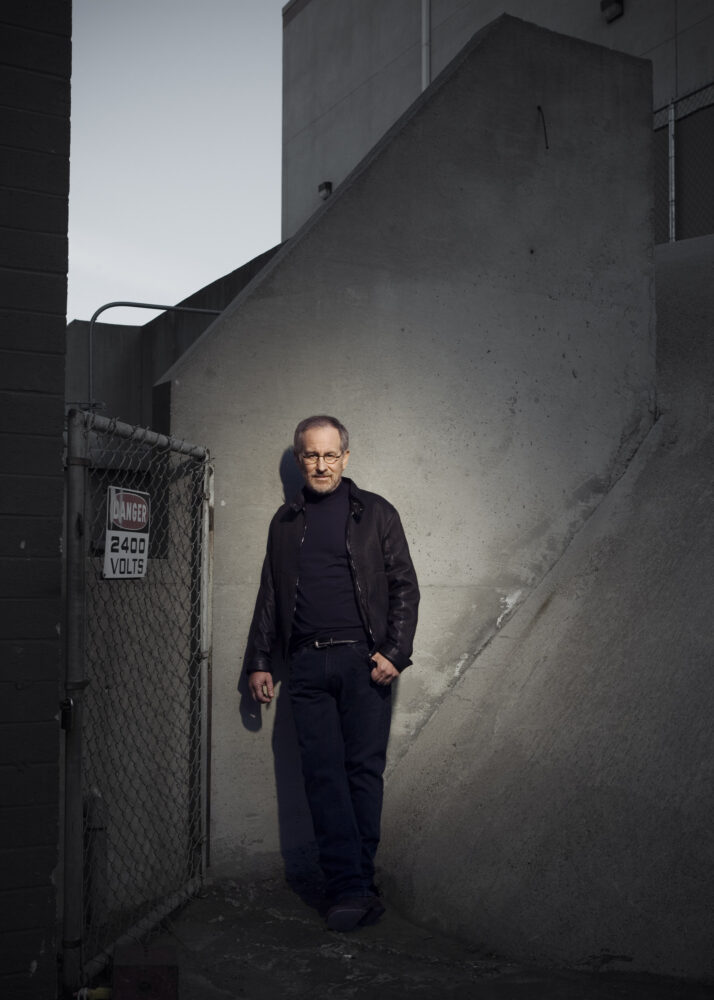
GM: I loved photographing Steven Spielberg. The first time I photographed him was for Time magazine. For a special issue that was shot on a movie set. The 2nd time was for a Time exclusive when he made the film Munich. They wanted the famous Pulitzer Prize winning picture (the terrorist wearing the hood on the balcony) as part of it. This was during Thanksgiving and I didn’t want to do it as a photo shop trick. I wanted to do it as an in-camera composite because I think they look better. Not many people know how to light to make it look real.
This was the ONLY press Spielberg was going to do for Munich. Time magazine had guaranteed him the cover. The story was by Richard Schickel and the photos would be by me. We scheduled a three-hour shoot and for one of the shots I had a Duratrans made on a piece of plexiglass and lit it from behind. I had one of the early Hasselblad HD II-50 cameras and after taking a few photos Spielberg and I started talking about digital technology. This was around 2007. Spielberg had a childlike wonder about the technology. Then something came up and he looks at me and says “Something really important has come up and I gotta go but I’ll be back in two hours.” He then left. His personal publicist said “He’s not coming back” The studio publicist said “He’s not coming back.” Well, he came back. Both publicists were dumbfounded. He gave us every second of time he promised. I thought this is a true professional.
I did another Time cover on the exploration of Mars. That was a composite because it had to be. We used a Mars photo and I matched the lighting and it looked great.
I love shooting directors because they are creatives. Scorsese was interesting also. I shot him in New York for Direct TV for the cover of their magazine. I also knew they were going to make a commercial out of the stills. I happened to be in New York two weeks before the shoot so I walked his offices since I was told it had to be shot there. This really called for an exterior environmental shoot. He’s the King of New York. It’s all about New York. I wanted to get him on the roof. His people said “We can’t ask Mr. Scorsese to go on the roof.” I said I’ll ask him. They said “Oh no you can’t ask him anything” I thought his people were really scared of him. I continued to scout locations and there was a balcony. It had a high rail but I built a stage of apple boxes and I shot him from behind and all you see is his eyebrow and that’s all you need to define who he is.
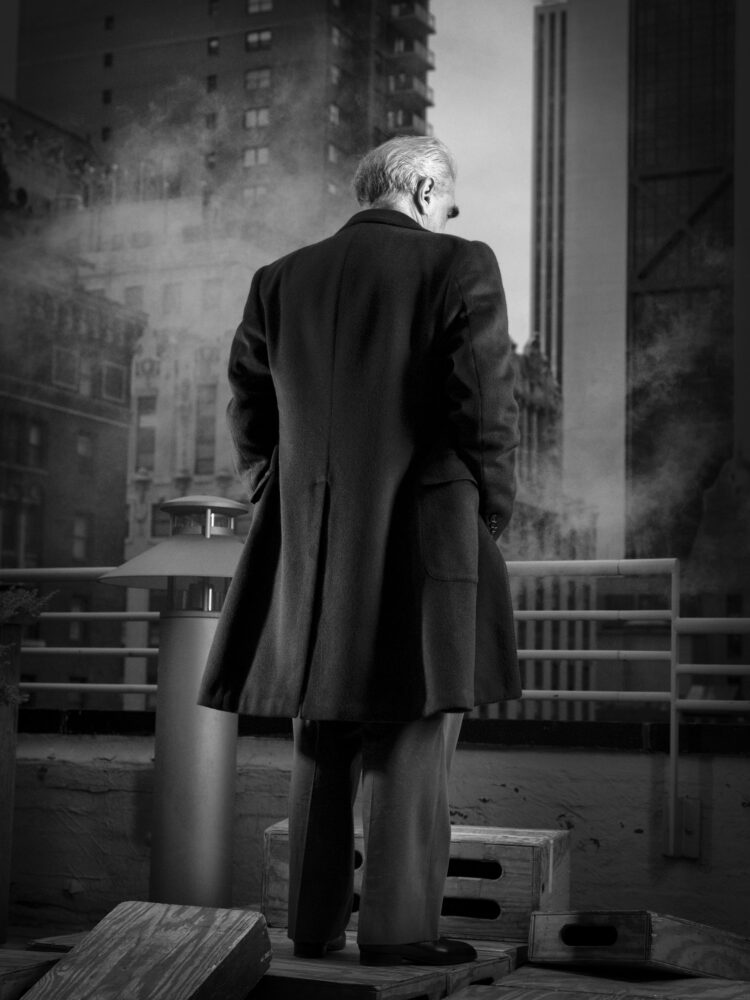
I told his people I was going to bring overcoats and give the shot a batman like look. They said “You can’t, it hasn’t been approved.” At that point I had enough of them worrying. We just brought the wardrobe our stylist had prepared. Sure enough, one of the coats he loved so much he wanted to keep it. He was the coolest. We did a series of shots of him talking, against backdrops in the interior offices and then I brought him to the balcony. On a one-to-one level he’s great. He knows how to pose.
There’s always a lot of red tape which I didn’t appreciate about Hollywood anymore. Everyone is there because they have an ego. I’ve talked about this with my partner at Petro advertising as we’ve been talking about the experiential show. They do more game design now because they were sick of doing movie posters and the egos that came with it. Everyone wants to throw their weight around and show who is more powerful. When I started doing straight advertising my life was nicer.
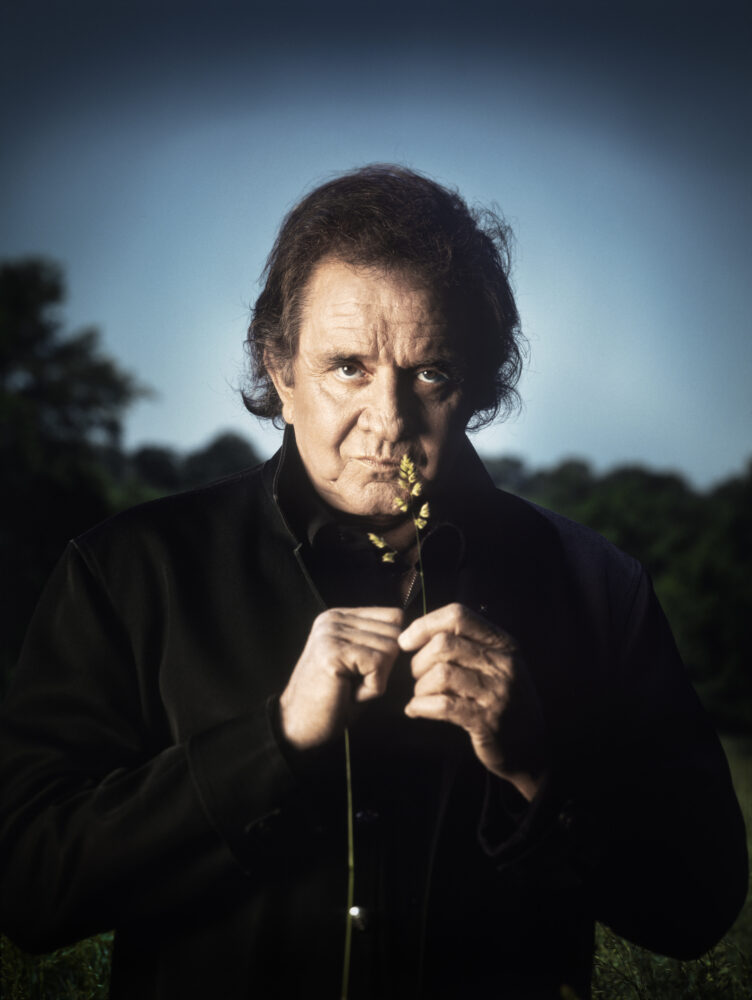
For Johnny Cash, me and my crew flew to Nashville and set up in a field across from his office. I was in my very dramatic black and white period with grid lights and hard spots and I knew his face was rugged so I set up a small soft-box. This was a very memorable moment in my life because he walked right up to me and said “Hi Michael, I’m Johnny Cash.” As a kid watching his TV show that’s what he said when he opened each show. I was transported back to being eleven years old.
Mel Brooks was one of those shoots that was for the 25 most intriguing people. The magazine put money into those shoots. They weren’t just black and white photos at the person’s home. Maddy Miller the editor of People magazine special editions, who I adore, called me up. “Michael The Producers is going to Broadway we like this idea of him in a tux like Fred Astaire in the movie Royal Wedding where the room spins.” I was a film student and I knew how they did it.
I said great but we have to build a set and turn it sideways. It doesn’t need to spin but that’s how it was done. We had Mel for three hours. When he got there, he had the makeup artist put spray tan on his entire body. Out of three hours, two and a half were in hair and makeup. I finally get him, he’s in a tux and he’s supposed to look like he’s upside down. He was gonna use a top hat and cane we supplied. I said “Mel, this is such a big concept already you don’t have to jazz it or oversell it. Give me a serious contemplative look.” He couldn’t do it! He’d give a big smile. So, the best photo was on an off moment, he’s going sideways.
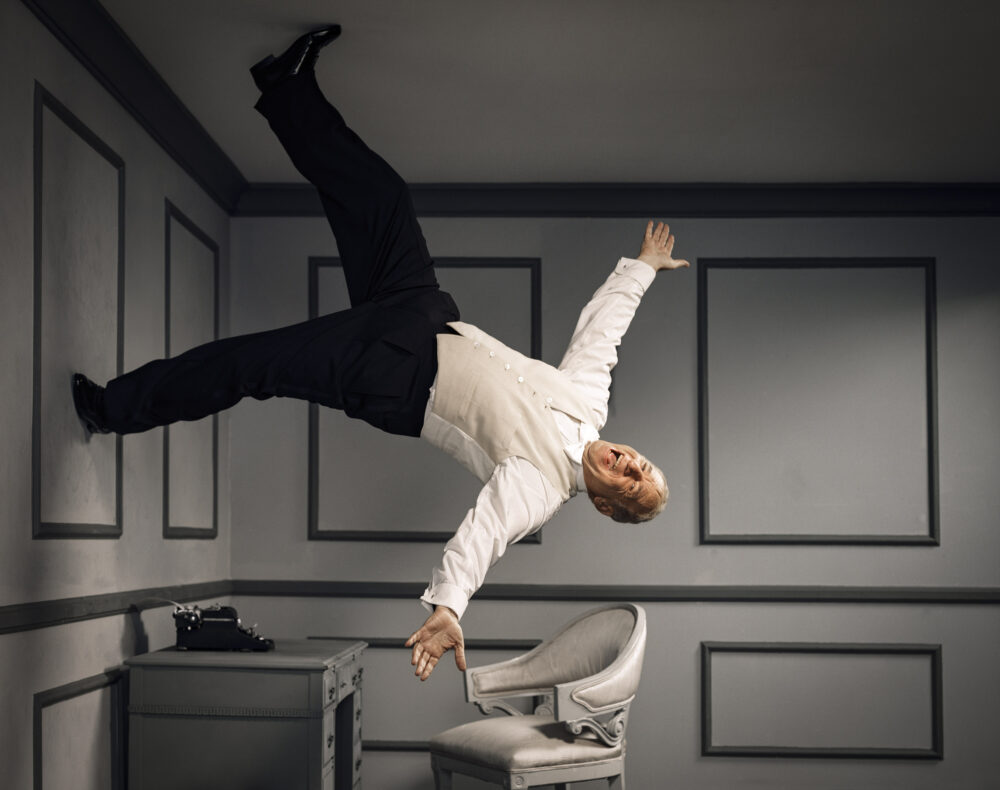
JS: What did Mel think when he came in and saw the Fred Astaire, Royal Wedding set?
MG: He knew that’s what was planned. We would never go to that expense before letting the talent know what the plan was. When I shot the Twister movie cover for Entertainment Weekly with Helen Hunt and Bill Paxton. I was told they don’t want to be in the studio together because they don’t like each other. We scheduled them separately so no problem. I wanted to use a big fan and rig them up so they look like they are flying. I was told Helen won’t allow it. The photo using the fan worked out great, but you simply have to let people know in advance what the concept is to avoid any problems.
Some of the highlights of my life are having done the movie posters. Chris Farley, the Mel Brooks documentary and others. To have shot the most quintessential photo of someone it’s a validation.
JS: What’s coming up next for Michael Grecco?
MG: I’m doing the copyright work for myself. My wife and I run https://titancopyright.com/ for a few high-end photographers by invitation only. I use that money and my staff to legacy build. I shoot and direct for my museum shows. The current museum show has a video series called “What is Punk.” Every time I go to a venue, I find a local band and I interview them. Those are the types of things I’m directing for myself. I am also scanning my archive. This takes up a couple days per week. We have a re-toucher and also someone working a copy-stand. I’m shooting my entire archive. From this we are planning more books and more shows. I’m working with a gallery here in L.A. I’m also building a high-end search engine licensing website called Content. It will be driven by search engine optimization called BrilliantContent.com
For more info on Michael Grecco https://grecco.com/