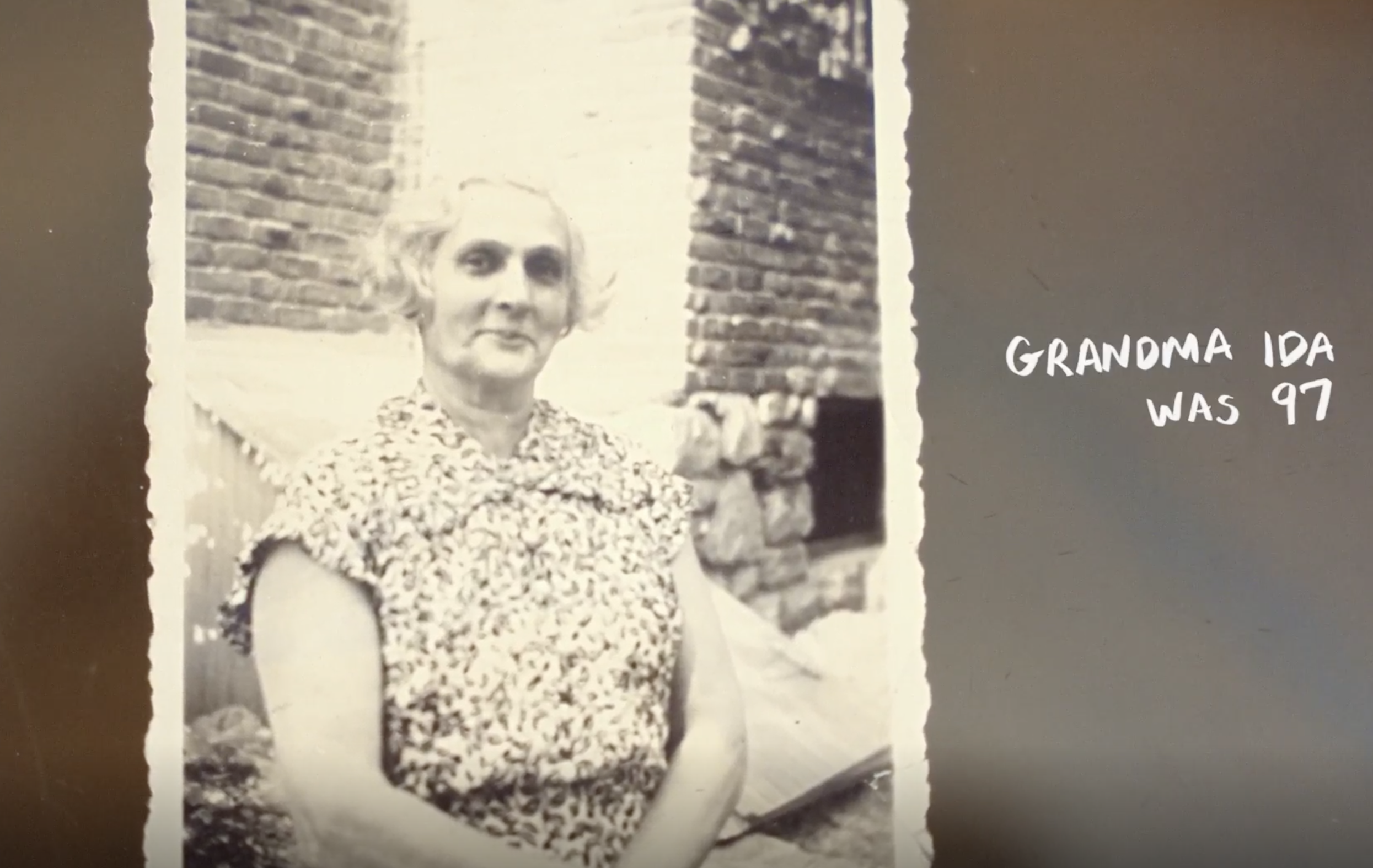
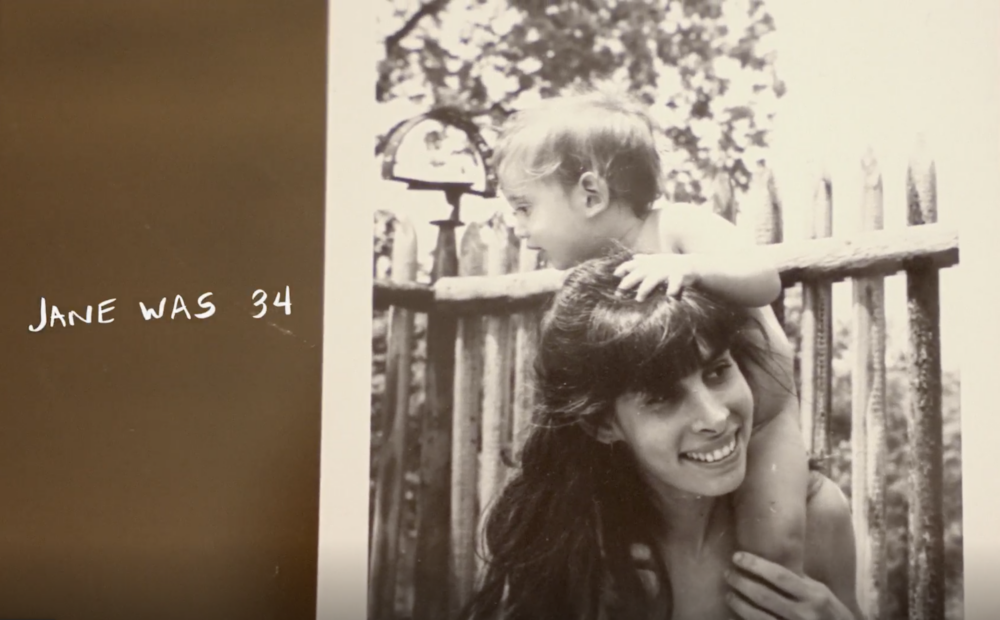
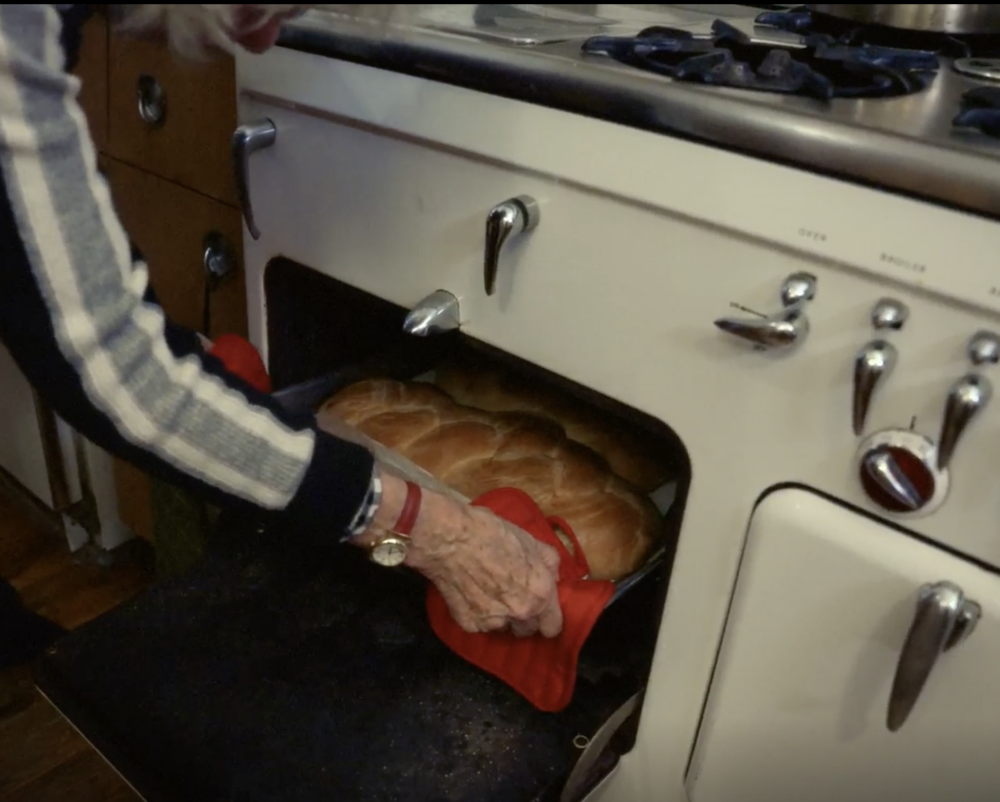
In 1975, Jane, then 34, films her grandmother, Ida Rosen—a young 97—standing in her kitchen preparing challah for Shabbos. It is remarkable to see her there, continuing what she has done her entire life. There is a sense that this is what she is meant to do, a mitzvah passed down through generations, reflecting the role of the Eishes Chayil within the home.
As she bakes, she remarks that women these days want everything already prepared—that they wouldn’t be in the kitchen baking like she does. There is also the tradition of hafrashat challah, rooted in the Torah (Parshat Sh’lach), where a small portion of dough is set aside. Which also brings to mind pe’ah (Parshat Kedoshim), the practice of leaving the corners of one’s field for those in need—both holding the same awareness of setting something aside for community. That same sense of care continues through the way she handles and measures the dough for her family.
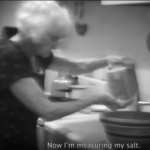 Grandmother Ida’s hand is her measurement tool. Watching the virtual recipe unfold, you can see the salt filling to a certain knuckle, guided by feel and familiarity. The water clearly explicitly noted to be lukewarm. Just enough to awaken the yeast as the amount is guided by experience. She pours, pauses, adjusts, and quickly she may have added too much, though it is impossible to see any measurements with precision. Oye – the interpretation has to be felt and experienced – even channeled.
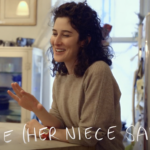 As Jane uses this video decades later as a reference tool for her first (and potentially only) time making challah. Returning to that footage with her niece, Sarah, and together they make the challah for the first time. The instructions are there, and so is the memory of watching. Sarah shares that she uses the same recipe and that it always comes out differently. What is passed down lives not only in ingredients, but in the hands that bring them together.
I feel verklempt watching this, absorbed in the presence of the dynamics and action. It brings me into a place of connection, of wanting to reach back into something that once lived so fully. I think of my mother and the stories she shared about her favorite aunts – sitting together sewing or crocheting, hands busy in the rhythm of the day, and then the moment would come: it’s time for Shabbos. Everything would be put down. The work paused, a transition into kedusha, preparing for a time held for Hashem and family. Making the challah became part of that connection, a way of entering into Shabbos even before it arrived. There was a methodical rhythm to Erev Shabbos, to the preparation itself, a clear presence of ritual. Grandmother Ida stands in her kitchen carrying forward something rooted in family and tradition. From Lithuania to the Lower East Side, her life holds movement and continuity, and each Friday she returns to prepare for Shabbos. The challah becomes more than bread; it becomes a thread of time, braided and shared.
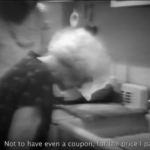 Then there are the moments that stay. Ida searches the flour for a coupon, certain it should be there, and when it is not, her tone sharpens —how could she have paid this much and not received one? There is a reflection of the world she came from – one where resources were carefully held, where even preparing challah carried meaning, shaped by a time of modest means and lived simplicity. That memory does not stay in words alone; it lives in the body, in the act itself, carried forward through what was seen, taught, and reinforced – even through the home film. It becomes a somatic ritual, something remembered through enactment.
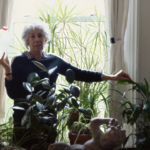 The film moves gently between generations and with it, a plant, once belonging to Ida continues to grow, pruned and shared among family members. It lives on, extending itself, a living presence that continues to exist year after year. In this way, it reflects the same continuity – held, carried, and still alive. Jane—who once filmed her grandmother—returns to this moment many years later, making challah herself for the first time alongside Sarah. It is a return that brings the past into the present in a tangible way.
Beginning with my mother’s generation, much like Jane’s, Challah making and other Shabbos rituals became something remembered, spoken about, and carried forward in a different way. But in this moment, there is a sense of coming full circle.
With today’s cinematic and digital archives, one wonders how many generations beyond Jane will return to this footage and participate in the same way. It becomes a kind of offering to the generations to come – an opportunity not only to see ancestry, but to experience it: not just a still image, but the personality, the movement, and the rituals of multiple moments of maternal lineage, held in one place.
 How to Make Challah will be available to stream on ChaiFlicks beginning May 3rd.