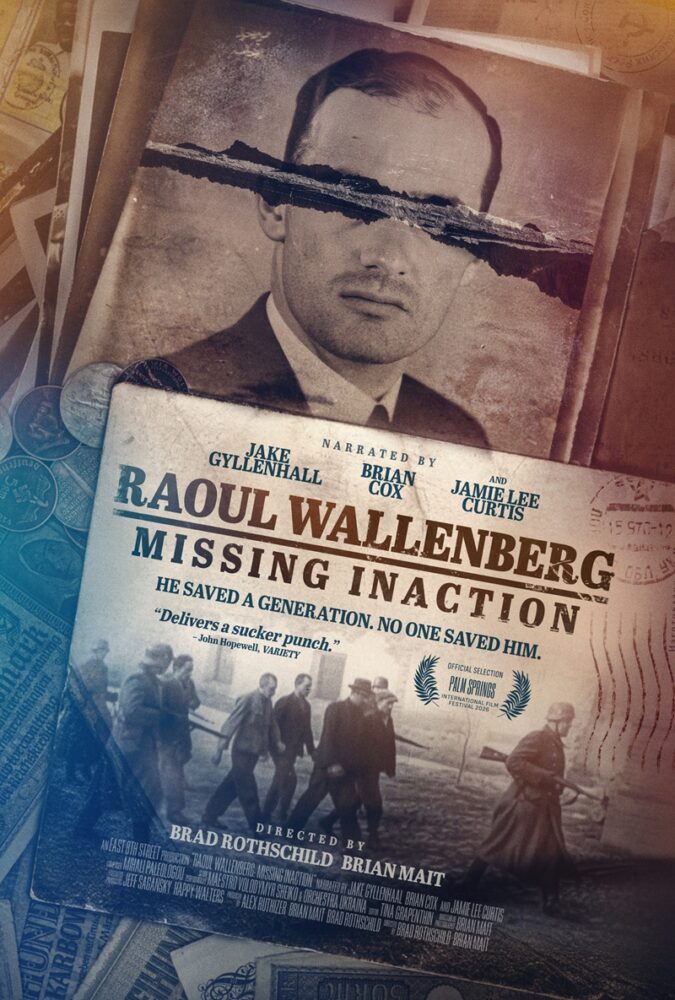
Palm Springs, CA (The Hollywood Times) 1/7/26 – Raoul Wallenberg: Missing In Action is a powerful, meticulously crafted documentary that brings long-overdue clarity to one of the most haunting moral failures of the 20th century. Screening at the Palm Springs International Film Festival, the film traces the extraordinary courage of Raoul Wallenberg, the Swedish diplomat who saved up to 100,000 Hungarian Jews during the Holocaust, only to disappear after his arrest by Soviet forces in 1945.
Directed by Brian Mait and produced by Alex Ruthizer, the film deliberately moves beyond traditional hero worship. As the filmmakers explained during our conversation, Wallenberg’s heroism is never in question; what demanded examination was what came after. “If you only know Wallenberg for rescuing tens of thousands of lives or for his disappearance,” Mait noted, “you only know half the story, and even then, half the truth.” The film reframes his vanishing not as an unsolvable mystery, but as a devastating case of global inaction.
Click below for our exclusive interview:
Originally conceived as a biographical portrait, the project evolved into a deeply journalistic investigation. Out of over 80 recorded interviews, only 23 remain in the final cut—each rigorously vetted for accuracy and corroboration. That editorial discipline underscores the film’s guiding principle: myth matters, legacy matters, but truth is paramount. The decades-long search for answers by Raoul Wallenberg’s family becomes the emotional spine of the narrative, grounding history in lived grief.
Narration by Jake Gyllenhaal, Brian Cox, and Jamie Lee Curtis adds gravity without overshadowing the story. Each voice was chosen not merely for stature, but for personal connection. Gyllenhaal embodies Wallenberg himself; Curtis voices his mother, Maj; Cox portrays his grandfather, Gustav. Curtis’ Hungarian Jewish heritage and real-life connection to Gyllenhaal lend an added layer of resonance, while Cox’s own history with Russian culture gives his performance a quietly pointed edge. Together, the performances are restrained, intimate, and profoundly human.
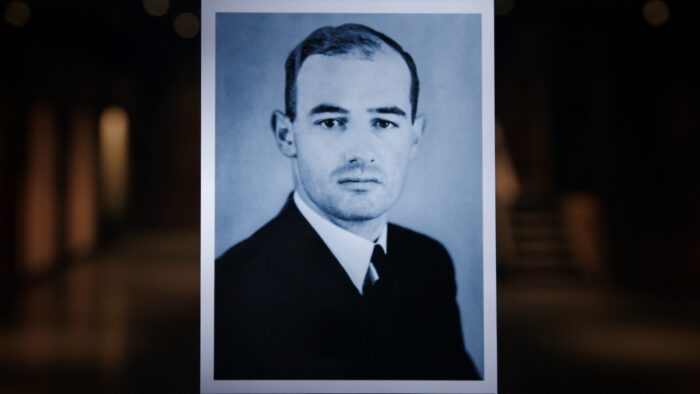
Visually, the film resists digital embellishment. With only around 40 known photographs of Wallenberg in existence, the filmmakers opted for practical photography rather than animation, reinforcing the documentary’s commitment to authenticity. That same philosophy extends to the score, one of the film’s most striking elements.
Composed by Mihali Paleologou over two years and performed by Orchestra Ukrainia, the music was recorded in Kyiv during an active war. Sessions were interrupted by air-raid sirens; musicians played amid real danger. What emerges is not just accompaniment, but protest, an emotional through-line linking Wallenberg’s abandonment to contemporary geopolitical failures. As Ruthizer shared, the decision was intentional: Ukraine’s ongoing suffering under aggression mirrors the consequences of silence and delay that doomed Wallenberg.
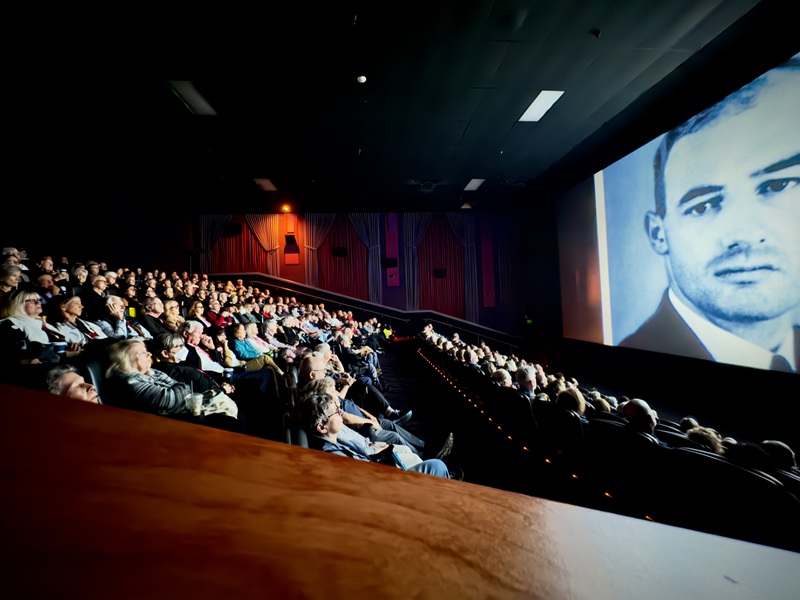
Audience reactions at Palm Springs underscored the film’s impact. Watching viewers gasp, fall silent, or audibly react to revelations was, Mait said, among the most gratifying moments of the 13-year journey. The film doesn’t just educate; it implicates. It asks modern audiences, and particularly policymakers what lessons have truly been learned.
Sold out screenings for “Raoul Wallenberg: Missing Inaction” at the Palm Springs International Film Festival
Raoul Wallenberg: Missing In Action is not only a historical reckoning, but a sobering reminder that courage without accountability is incomplete. Timely, revelatory, and deeply moving, it stands as essential viewing, an urgent call to remember that the cost of inaction is never abstract and never confined to the past.


 Originally conceived as a biographical portrait, the project evolved into a deeply journalistic investigation. Out of over 80 recorded interviews, only 23 remain in the final cut—each rigorously vetted for accuracy and corroboration. That editorial discipline underscores the film’s guiding principle: myth matters, legacy matters, but truth is paramount. The decades-long search for answers by Raoul Wallenberg’s family becomes the emotional spine of the narrative, grounding history in lived grief.