By Jimmy Steinfeldt
LaQuinta, CA (The Hollywood Times) 10/23/2025
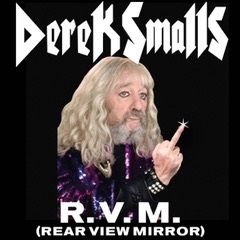
Jimmy Steinfeldt (JS): Congratulations on your new song “R.V.M. Rear View Mirror”. To my eye it brought a tearer.
Derek Smalls (DS): Ha, ha, I see what you did there. You’ve made it clearer.
JS: Derek, please correct me if I’m wrong but does this song suggest you are a bit bitter?
DS: No, not a bit bitter, very bitter. Many bits bitter. What would that word be? Bitterest? Bitterrific?
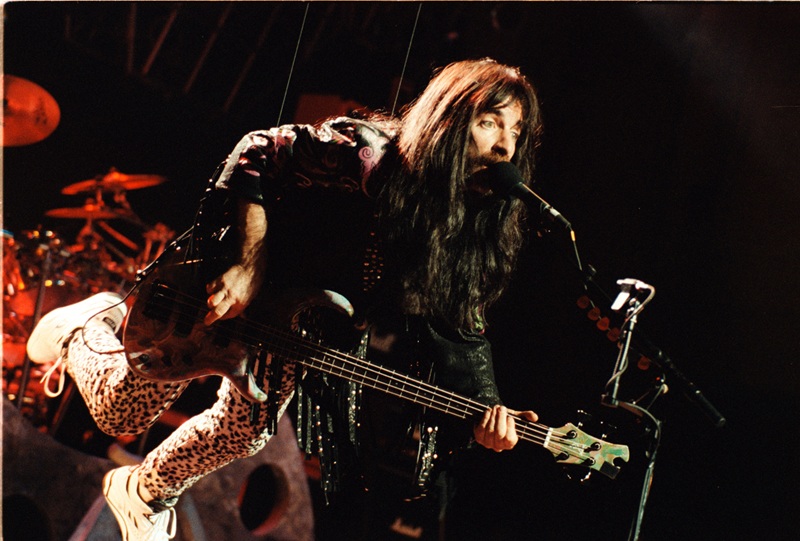
JS: It was my honor to photograph you on the 1992 Break Like the Wind Tour.
DS: Wow, where were you?
JS: Minneapolis. Spinal Tap performed at the Orpheum Theatre. Please recall for our readers a fond memory of that tour.
 DS: Fond you say? I think about it sometimes. It was our biggest tour, but I was always assigned the back of the bus, which is the noisiest part of the bus. The two Lords of the band, David and Nigel were up front where it’s quieter. My main memory of that tour is just the noise of the diesel engine going on all through the night.
I do however remember we played large venues or somewhat large venues and people would come up to the stage and sing the songs along with us. They knew the words. In fact they knew them better than us. Actually, it was inspiring because sometimes you could read their lips and figure out what to sing next.
JS: Your thoughts on the Spinal Tap movie sequel?
DS: We weren’t allowed to see it until it came out. I think they were a bit cautious, afraid of what we might say. Afraid of me in particular because I said the first film was a hatchet job. I’d say the sequel is a smaller hatchet.
JS: A jackknife?
DS: No, larger than that but smaller than an axe. Marty the director is supposedly a fan of the band, and I actually think we have to investigate that. In the first film he observed “These fuckheads can’t find their way to the stage. Oh, he’s got a thing in his trousers.” Now in the sequel it’s “Oh, Derek has a glue museum and he’s got a pipette stuck in his nose!” Marty doesn’t show the 45 minutes I spent explaining what glue is, how many different kinds there are, where glue comes from, and the multi-century history of glue. No! it’s just a bloody joke to him for his film. I think that sorta speaks in volumes. Or in volume.
JS: Back to “R.V.M.” It’s an excellent song. Great musicianship all around. Inspired songwriting.
DS: Thank you. I love playing with those geezers. There’s going to be digital singles coming out, like the kids do today. Marc Bonilla is a wonderful guitar player and Toss Panos is a great drummer. CJ Vanston is a long-time ally of mine and a great keyboard player. I diddled around on bass a bit.
JS: By the way CJ produced Jeff Skunk Baxter’s record for which I shot the album cover.
DS: Really? So, you’ve got stories to tell too
JS: I do. Next time you can interview me! I was impressed by the guitar solo on “R.V.M.” Sort of ZZ Top meets Slash.
 DS: Yes, Marc played with me on my first solo record. Which was called Smalls Change. Which came out a few years back. Then we did a mini concert tour that ended due to COVID. He’s just brilliant. Brilliant, brilliant. I said it three times so I mean it.
JS: Tell me about your songwriting process—Such that it is.
DS: Yes, such that it is, it is. Usually a title, comes first. Then I think whoa, what would that be like? And then, well, you know that period where you’re sleepin but your not really awake? I don’t know what they call that.
JS: R.E.M.
DS: Well, I don’t think it’s about a band. Anyway, little snippets will pop into my mind and if they stay through till morning I think great, that works.
JS: Do you sometimes play a bass with more than four strings?
DS: I’m a big fan of the 5 string. I love the easy access to the real bottom. It’s just easier to keep your hand in one position. Everything’s available all the way down. In the first film, that hatchet job, I played a double bass so that’s 8 strings! It just depends on how you’re counting.
JS: Do you have a favorite bass?
DS: I have eight identical Schecter basses each in a different color. When I do a performance I explain this to the audience. At most concerts you see guitarists changing guitars all the time, I don’t know why. But I say every song has its own color.
JS: That’s beautiful. Have you a favorite amp?
DS: I have a few depending on the size of the venue. During our recording sessions CJ brought in an Ampeg bass amp that looks like a baby amp. It looks like nothing’s going to come out of it. However, it’s remarkable and it sounds beefy and clean and straight ahead all up and down. It’s what I play when I’m home and in the studio. All the bass parts on my new songs I played on this amp.
JS: My first amp was a Fender Champ which I still have. It’s a small amp but an excellent amp. I believe it was the model of amp Jimmy Page used on the early Led Zeppelin records. If you mic that amp properly it’s amazing.
DS: Yes, turns out it’s not the size that matters. By the way I bought this Ampeg amp. It wasn’t given to me. I wouldn’t turn it down if they gave me one. Wink, wink, nod, nod.
JS: Are you still smoking the pipe or have you moved on to chew or the nicotine patch?
DS: I’m through with nicotine. By the time of the tour from the first movie it was there at the top of the bass guitar neck. In case I wanted to take a puff. It was there more for looks I have to admit. I just didn’t like the taste in my mouth. There are many things I don’t like the taste in my mouth. That’s one of them.
JS: Tell us about your arts education at LSD.
DS: A lot of musos in that era went to art school. In my case the London School of Design. I actually went there because I was attracted by the initials. I thought it might be an artadelic experience, if you know what I mean. I do love to draw a little bit with colors, did some photography but to say I dabbled would be an overstatement.
JS: You mentioned Marty DiBergi earlier. Tell me a little something about him.
DS: I don’t think he’s done any other movies besides the two about us. I’m not surprised, seeing what he’s come up with. I mean who wants to hire a director who’s supposed to make a real documentary but then turns it into a hatchet job? When he started his career he was making his little dog food adverts and I think that’s really his forte. Or fort? I’m not sure how you say that word.
JS: Actually, I hung out with your director when I photographed the inauguration of governor Arnold Schwarzenegger. This next subject is a bit sensitive but how are you doing regarding IA?
DS: You mean AI.
JS: No. I mean IA. Internetists Anonymous.
DS: Hmm. I don’t know what that means. I know what internet means and I know what anonymous means. I can talk about either of those.
JS: I read in your bio that you have an internet addiction.
DS: Oh yes, that’s true. I did two stints in treatment in a residential clinic. Denial of internet access is what it really was. Now the first time it didn’t take. The second time it did take so I don’t have to join Internetists Anonymous as you call it. After all I’m not a joiner. But then I’m also not a splitter.
JS: What’s next for Derek Smalls?
DS: I’ve got this series of songs that I wrote that belong to my Blue period. One of my beefs with Spinal Tap are the songs people really identify us with: “Big Bottom”, “Bitch School”, “Sex Farm”.
JS: Classics, all!
DS: Yes, but they all lie below the belt and the other blokes really don’t enjoy writing songs about that anymore. I don’t know if they’re too old to even remember that subject. For me however, if Rock N Roll isn’t living below the belt at least half the time then it’s out in the pantry getting a sandwich. Some of the songs I’ll be releasing after R.V.M. include: “Balls”, which has already been banned by the BBC which I’m very proud of. Another is called “Harder” and another is “She Wants To Be A Man”.
JS: I’m looking forward to hearing them all.