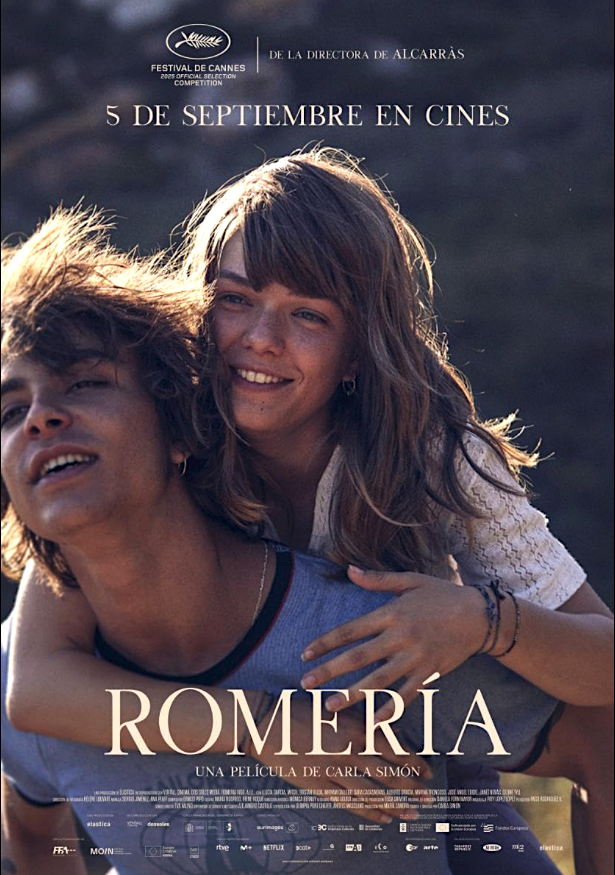
Featured at AFI FEST 2025 and fresh from its debut at Cannes is a new film from Carla Simón Romerío that recounts the story of a young woman who arrives in a Spanish coastal city of Vigo in search of her missing childhood. Orphaned at a young age and raised by her mother’s family in Barcelona, Marina travels to the coastal Galician city of Vigo, seeking to obtain the signatures of her paternal grandparents to have her name added to her father’s death certificate for a college scholarship application in Barcelona. Meeting uncles, aunts, cousins, and nieces for the first time, Marina learns things about her parents’ lives that contradict what she’d been raised to believe.
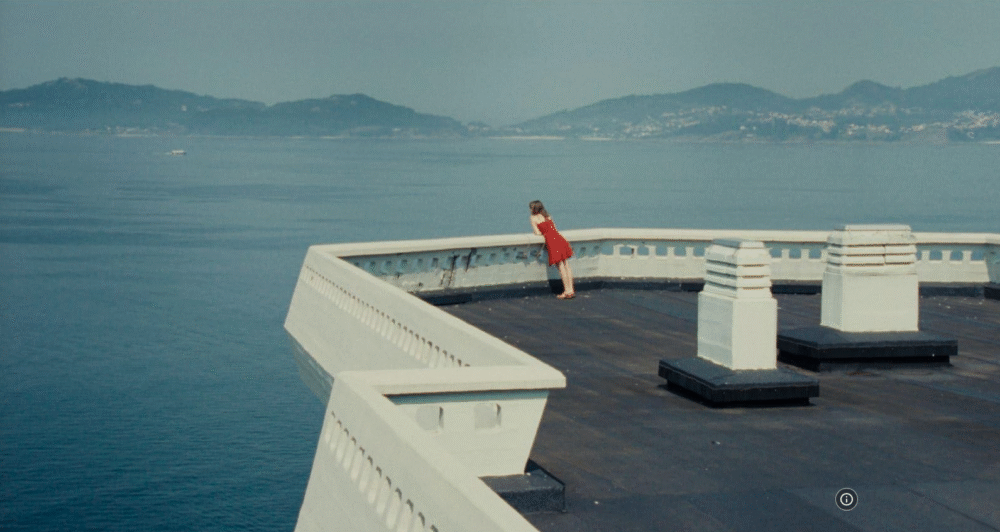
Carla Simón’s Romería is Spanish for pilgrimage, which points to the complicated nature of Marina’s (Llúcia Garcia) more than just physical journey across the film.
Set in 2004. Romería could be seen as a sequel of sorts to Simón’s autobiographical debut feature, Summer 1993, especially since some of the details of Marina’s backstory mirror those of Frida, the six-year-old orphan at the center of the earlier film. Marina lost her parents to addiction and AIDS, and just as the maternal relatives in Summer 1993 talk around Frida’s mother’s fate out of a sense of shame, so do Marina’s paternal relatives, particularly her grandparents (Marina Troncoso and José Ángel Egido), with some of the revelations about how they treated their son during his last years being especially disturbing.
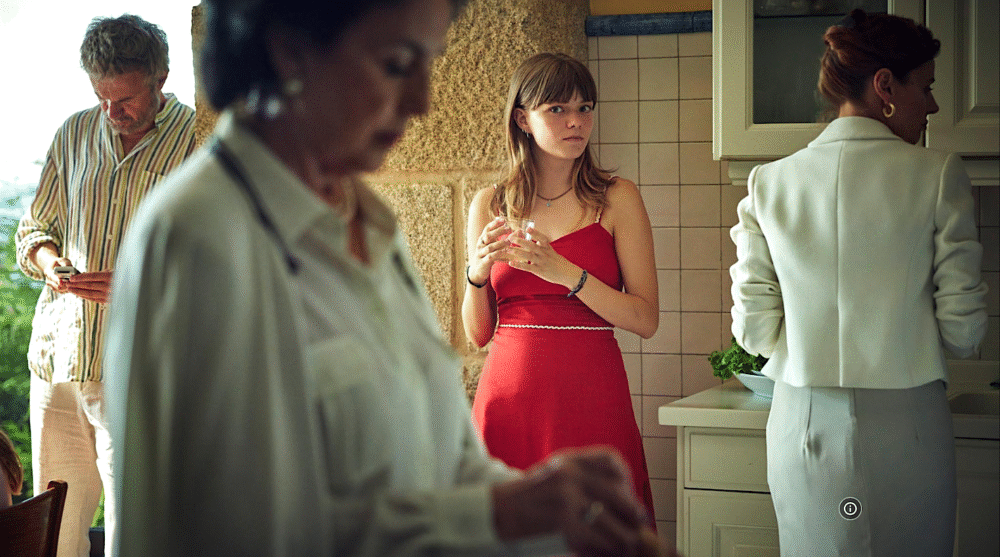
A big messy family with their own individual recollections of the past; Marina’s arrival is greeted with a mix of warmth and skepticism. Reading her mother’s diary, the truth about her parents and their romance slowly starts to reveal itself, exposing echoes of the past in a breathlessly staged flashback shot on Super-8 film stock. Simón’s return to the fervent ground of her childhood – here working with acclaimed cinematographer Hélène Louvart from La Chimera – is a powerful act of cinematic reclamation, interrogating familial myth making to chart a new path forward.
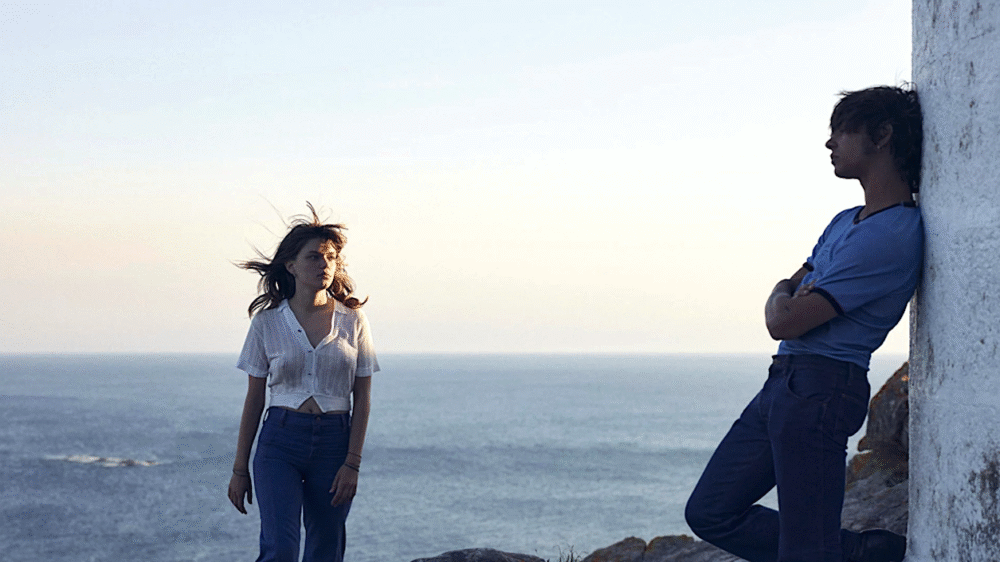
Marina visits her parents’ old haunts and speaks about her parents with her uncle, Lois (Tristán Ulloa), and her cousin, Nuno (Mitch Martín). An aspiring filmmaker, she also carries a camcorder with her, recording the area with a level of devotion that makes one believe she’s fearful of even this place disappearing. Similar to Simón’s Alcarràs, Romería is a vibrant film about all the scandals, divides, and connections that can be contained within families. Conversely, Romería is more dreamlike and fractured but no less emotionally direct. The provides a large part of the film’s pathos, transmitting an ebullient hollowness on her visage that defies any neat interpretation.
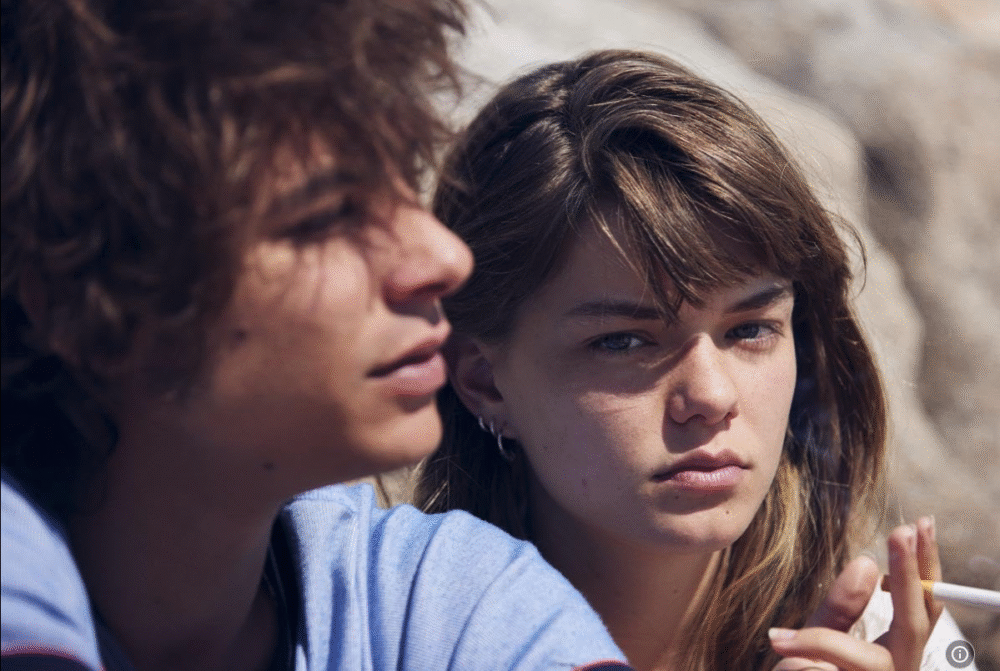
Simón’s instinct for sketching in crucial narrative and character detail within a naturalistic context is handled ever so subtly. That’s evident in everything from an aunt’s mention to her children of Marina possibly having a “blood disease” to the grandfather offering Marina a generous monetary gift to help fund her college education. The former points to all the shame this family turned into secrets over the years, while implicit in the grandfather’s gesture is his selfish desire for his granddaughter to stop poking around in the family’s past.
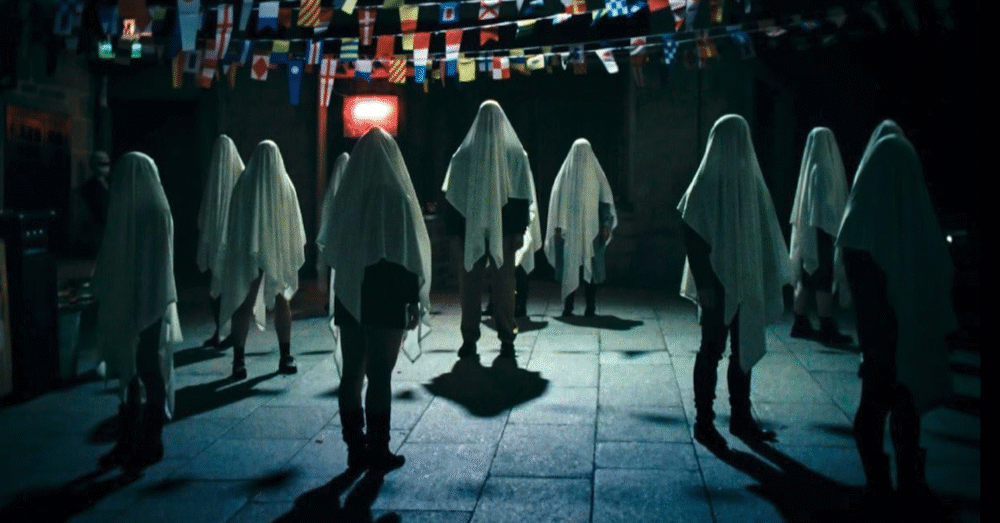
In the second half of the film, the film suddenly shifts towards the fantastical: The dark truths Marina learned about her parents are revealed in a grainy celluloid dream sequence with bits of animation and a strange musical number with dancing corpses. In these dream sequences, Garcia plays Marina’s mother and an actor named Mitch Martin plays Nino, a cousin to whom Marino seems to develop an unspoken romantic attraction, but also the dream-like incarnation of her own father. This is how Marina imagines what her parents’ life might have been like before her birth.
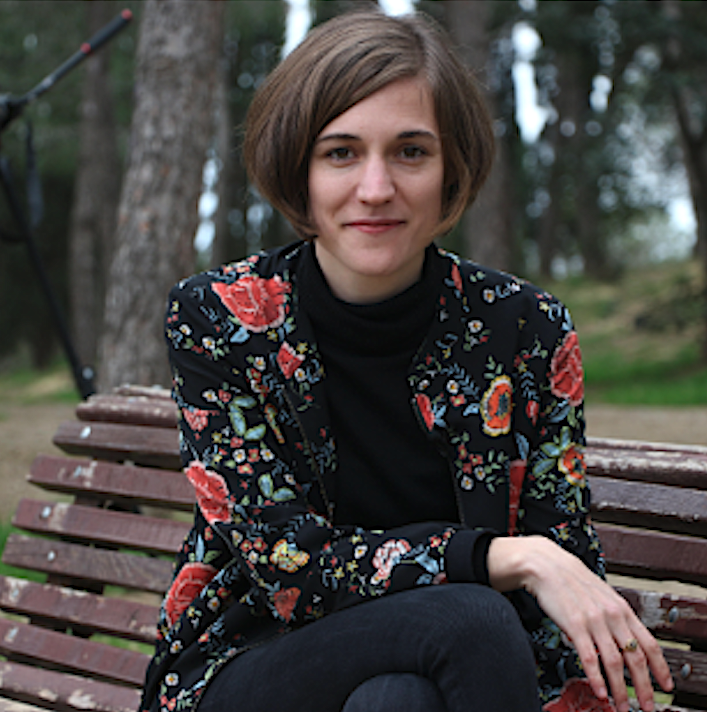
Remember that all these dream images are coming from Marina’s reading of her mother’s diary entries. They are read aloud on the soundtrack, suggesting the Marina has the willingness to confront the hidden corners of her family’s past. What is especially moving is the way that Marina reveals in these film images the work of an budding filmmaker drawing on her imagined reshaping of her parental stories to make her own artistic creation.